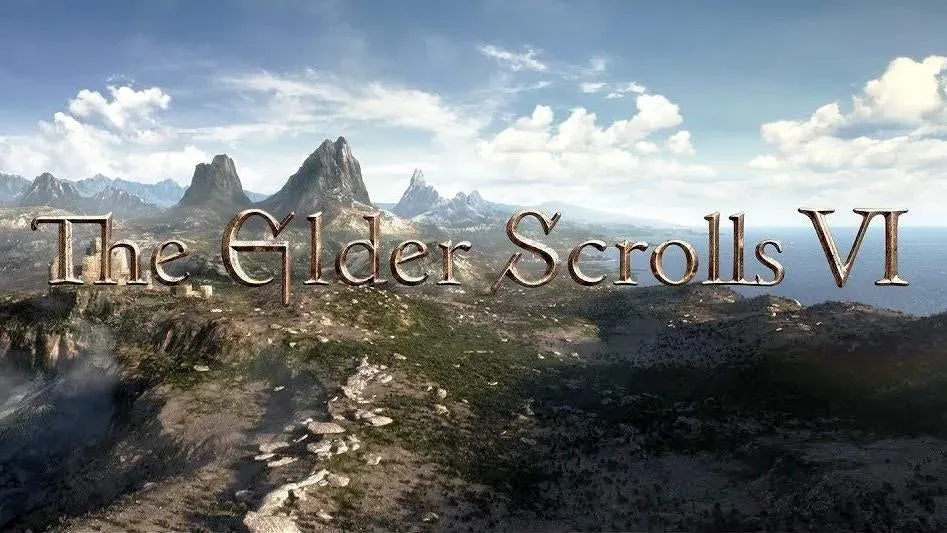
The Elder Scrolls 6: Sentinel now has a little more to work with than a title. A brief piece of in-universe text, presented after the game’s name was revealed in a Bethesda anniversary video, is dated 4E 206 and attributed to Yazar, a Moth Priest serving High Queen Iradne of Hammerfell.
That date is notable because The Elder Scrolls V: Skyrim is set in 4E 201. The new quotation therefore lands five years later on the series timeline. It is not a confirmed statement that Sentinel itself takes place in 4E 206, nor does it establish a plot, protagonist, or exact political situation. It does, however, put a specific post-Skyrim year into the conversation—and connects it directly to Hammerfell.
“The scroll offered only a shimmer, a veil thinly lifted to my eyes. A future lost. A victory undone. Sands of time scattered by fate.”
That is a compact tease, but it is unusually deliberate in its construction. The speaker is a Moth Priest, the addressee or ruler named is a Hammerfell monarch, the imagery repeatedly evokes the region’s deserts, and the date is visible rather than left vague. For a franchise in which eras, dynasties, prophecies, and disputed historical accounts routinely do narrative work, fans have good reason to inspect every word. They should also keep the brakes on: this is a clue, not a complete roadmap.
What is actually established
A few points can be stated plainly from the material shown:
- The next mainline game is titled The Elder Scrolls 6: Sentinel.
- A lore quotation is attributed to Yazar, identified as a Moth Priest of High Queen Iradne of Hammerfell.
- The quotation bears the date 4E 206.
- That year is five years after the 4E 201 setting of Skyrim.
- The text refers to a partially perceived future, a defeated or reversed victory, and time or fate being scattered.
Everything beyond those details belongs in the realm of interpretation. In particular, it would be premature to call 4E 206 the confirmed setting year. A quoted document can be written before, during, or after a game’s present-day events. It might introduce a historical crisis, record a prediction, frame a conflict that has already happened, or simply exist as background flavor. The date is meaningful because it is precise, but precision does not by itself tell us its function.
Why five years is an interesting gap
If 4E 206 does prove to be the game’s main timeframe, it would make for a comparatively tight transition between numbered Elder Scrolls games. The supplied series chronology paints a varied picture: Oblivion comes six years after Morrowind, while Skyrim arrives roughly two centuries after Oblivion. Earlier mainline jumps cited in that chronology include 22 years between the third game and its predecessor, plus six years between Daggerfall and Arena.
A five-year gap would therefore be the shortest among those examples. That matters less as a trivia answer than as a potential storytelling condition. A near-term setting can leave the political and cultural aftereffects of a previous game relatively fresh. Rumors, conflicts, institutions, and people affected by recent events have had less time to become distant history. But that is only a possible implication, not a promise that Sentinel will revisit any particular Skyrim plot thread.
Related coverage includes The Elder Scrolls 6: Sentinel Teases a Hammerfell Mystery Set Just Five Years After Skyrim.
It is also worth separating calendar proximity from geographical proximity. A game set five years after Skyrim could still tell a story with a distinct cast, landscape, and regional history. Hammerfell is not Skyrim, and the significance of the clue is not merely that the series may be moving a few years forward. The greater signal is that the text is explicitly rooted in a different province and royal court.
Hammerfell is the clearest thematic signal
The reference to High Queen Iradne of Hammerfell is the strongest reason to think the teaser is pointing toward the province as more than incidental lore. The new game’s subtitle, Sentinel, also makes the Hammerfell connection difficult to ignore. Still, the text shown does not formally spell out the game’s map or confirm every location players will visit. It establishes a Hammerfell political figure and a Hammerfell-associated priest in a dated document; that is strong direction, not a complete travel itinerary.
For players who know the series through its mainline releases, Hammerfell represents an area with substantial room for renewed exploration. The region has only been visited in The Elder Scrolls Online since Daggerfall, which creates obvious interest in what a contemporary mainline treatment could choose to emphasize. The teaser’s desert language—“sands of time scattered by fate”—leans into that identity without explaining whether it is metaphorical, prophetic, or both.
That ambiguity may be the point. Elder Scrolls lore often treats records and visions as imperfect things. Rather than presenting a clean forecast, Yazar says the scroll granted only “a shimmer” and a “veil thinly lifted.” The wording limits the speaker’s certainty. Whatever he saw was incomplete, which gives the line narrative flexibility while establishing that something about the future is troubling enough to be recorded.
Why the Moth Priest attribution matters
The title Moth Priest is doing a great deal of work in a very short reveal. Moth Priests are scholars associated with the literal Elder Scrolls. Their presence immediately places the quotation near one of the central ideas of the franchise: knowledge that can be profound, dangerous, partial, and difficult to interpret.
That distinction is important. The phrase “Elder Scrolls” in the series title does not automatically mean every reference is a straightforward prophecy with one fixed outcome. In this case, the text itself stresses uncertainty. Yazar did not receive a tidy account of the future; he describes a fleeting and obscured glimpse. “A future lost” may suggest a future that has been prevented, hidden, changed, or simply rendered inaccessible to the observer. “A victory undone” likewise could point to reversal, failure, manipulation, or a warning about misplaced confidence. The teaser does not resolve those alternatives.
The mention of the Ancient Moth also opens an avenue for lore fans to watch. The provided material notes that Moth Priests are not seen especially often, so placing one at the centre of the first meaningful Sentinel text could be a deliberate choice. It may signal a desire to explore their scholarship and rituals more deeply. Or it could remain a single evocative device intended to make a small lore fragment feel appropriately Elder Scrolls. Until more is revealed, both readings are plausible.
Technical term: the Fourth Era date
4E 206 is an in-universe date, with “4E” denoting the Fourth Era. The usefulness of the number is comparative: it lets players place the quotation in relation to other stories. Because Skyrim is set in 4E 201, the new text follows it by five years. What it does not establish alone is the exact moment when the player’s story begins. A dated in-world document is evidence of an event or a record at that date, rather than automatic confirmation of the game’s whole timeline.
Reading the quotation without turning it into a plot leak
The best way to approach the fragment is to divide its ingredients into signals rather than conclusions:
- Speaker: Yazar is a Moth Priest, lending the passage a connection to Elder Scroll scholarship and visions.
- Political context: He is tied to High Queen Iradne, placing a named Hammerfell ruler in the lore.
- Date: 4E 206 positions the document close to Skyrim in the overall chronology.
- Language: The passage evokes obscured foresight, a compromised victory, fate, and desert imagery.
- Unknowns: The game’s exact setting date, the meaning of the vision, Iradne’s role, Yazar’s circumstances, and the fate of the “victory” all remain undisclosed.
That last category is bigger than the confirmed one, which is normal at this stage. Speculation can be enjoyable, especially with a world as dense as Tamriel, but treating possibility as confirmation is how a one-paragraph tease becomes an imaginary feature list. There is no evidence here for specific quests, factions, systems, enemies, cities, platforms, or release plans. Nor does the quotation tell us whether its ominous outcome is already unfolding, has already occurred, or can be changed.
What it does accomplish is a more focused kind of excitement. The series has moved from an abstract sequel title to a named game with a tangible piece of Hammerfell-facing lore. The 4E 206 timestamp gives chronology-minded players an anchor. Yazar gives lore-minded players a figure to examine. High Queen Iradne gives the region’s political backdrop a name. And the deliberately incomplete vision gives everyone something to argue about without giving away the answer.
For now, The Elder Scrolls 6: Sentinel is presenting a mystery in the vocabulary the series handles best: a fragmentary record, an uncertain vision, and a future that may not stay still long enough to be read. Those wanting a refresher on how long-running games preserve strange ideas across projects may also enjoy this look at a Diablo 3 concept that found a later home in World of Warcraft.