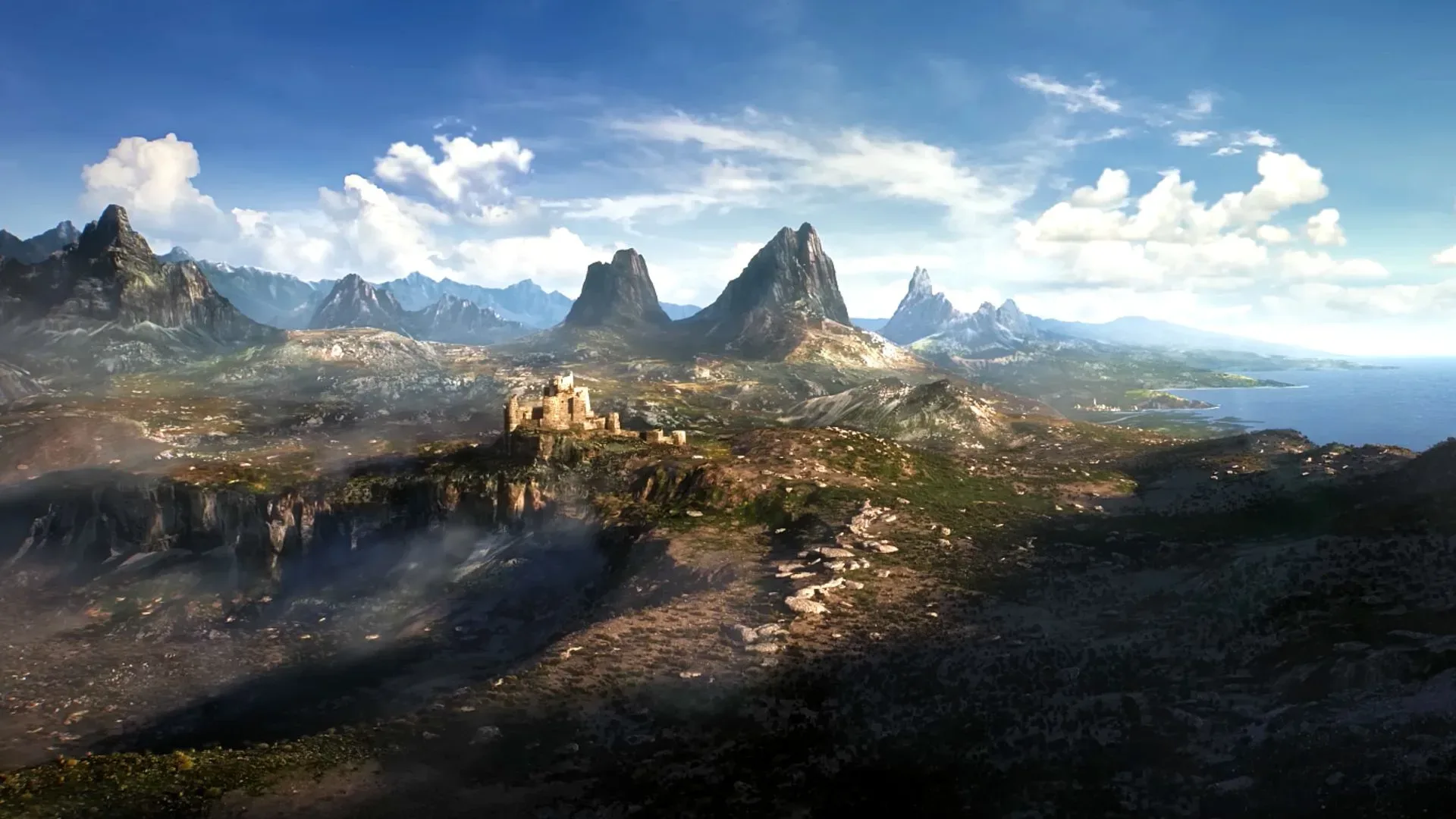
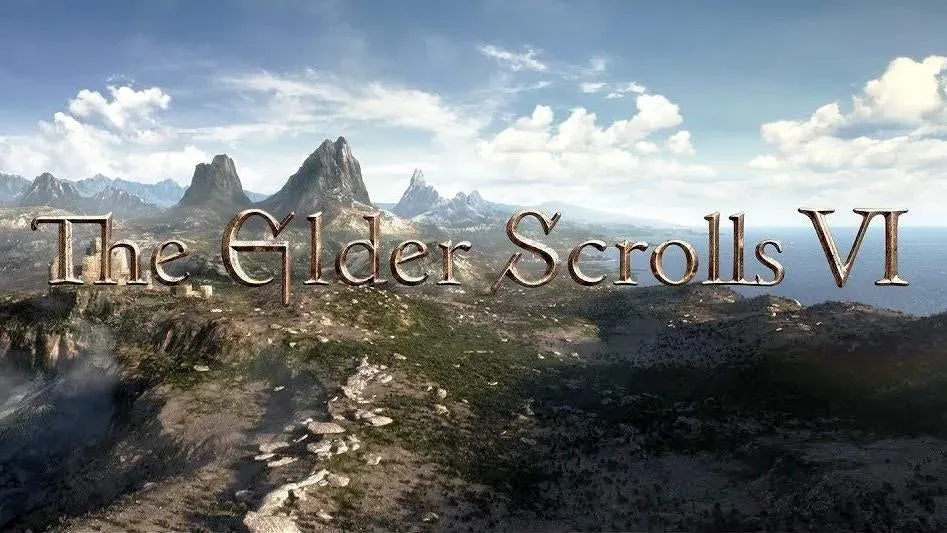
The Elder Scrolls VI now has a full name: The Elder Scrolls VI: Sentinel. Bethesda revealed the subtitle through its social channels alongside a video, music and a brief piece of in-universe text attributed to Yazar, Moth Priest to High Queen Iradne of Hammerfell, dated 4E 206.
That is a modest amount of concrete information for a game first announced in 2018, but it is meaningful. A title can establish a setting, a tone and a set of questions without confirming a map, a protagonist, a release window or any of the systems players will use. In this case, “Sentinel” is not merely a dramatic word: it is the name of one of Hammerfell’s nine major kingdoms and the capital of both the Alik’r Desert region and Myrkwasa region of the Alik’r.
The naming gives the next mainline Elder Scrolls a far more specific identity than “VI.” It also substantially strengthens the case for Hammerfell as an important part of the game’s world. That remains a conclusion drawn from the name and the lore reference rather than a complete official breakdown of the game’s setting. Bethesda has not provided a release date.
A subtitle that carries geographical weight
For a series with entries commonly known as Morrowind, Oblivion and Skyrim, Sentinel immediately sounds like it belongs. Those short names do more than fit on a box: they become a shorthand for the particular corner, conflict or concept each installment explores. “Sentinel” now has that same job.
Its direct connection to Hammerfell is the key detail. Hammerfell is the province associated with the new title’s lore framing, while Sentinel is described as one of its major kingdoms. It is also a capital tied to two regions of the Alik’r, including the Alik’r Desert. That makes desert environments a reasonable expectation, but it is important not to turn that expectation into a promise. The title does not establish the boundaries of the playable world, its exact regions, or whether the game will be set only in Hammerfell.
Still, titles are chosen language. Selecting a specific place rather than a broader abstract term places attention on that place before a player has seen a quest, character or city street. It suggests that Sentinel itself could be narratively important, whether as a destination, a political center, a historical reference or a symbol within the story. Which of those possibilities is correct has not been explained.
For readers tracking the emerging picture, an earlier look at Sentinel’s first lore tease provides added context on why Hammerfell has become central to the conversation.
The Moth Priest text: what it says, and what it does not confirm
The accompanying passage is attributed to Yazar, identified as a Moth Priest serving High Queen Iradne of Hammerfell in 4E 206:
“The scroll offered only a shimmer, a veil thinly lifted to my eyes. A future lost. A victory undone. Sands of time scattered by fate.”
The wording is intentionally evocative rather than explanatory. It invokes a glimpse of the future, then immediately stresses uncertainty: the future is “lost,” a victory is “undone,” and fate has scattered the “sands of time.” The final phrase naturally sits beside the title’s Hammerfell and desert associations, but it does not amount to a story synopsis.
A Moth Priest is a lore-facing designation used in the passage, and the explicit mention of a scroll helps frame the text as a prophetic or interpretive statement. At the plain-text level, the message describes incomplete knowledge, reversal and fractured destiny. Those are themes, not disclosed plot points. It would be premature to assign the “victory,” identify the opposing sides, or claim that time manipulation will be a game mechanic.
The date matters in a limited but useful way, too. “4E 206” is part of the quote’s attribution, placing the speaker’s record within the Elder Scrolls setting’s internal dating convention. It helps establish that the reveal is being presented in-universe, not simply as a modern marketing tagline. It does not, by itself, confirm when the game’s story occurs, who the player character will be, or the political state of Hammerfell when the game begins.
What can responsibly be inferred from Sentinel
There are now several solid, source-supported points around which discussion can be organized:
- The game’s official name is The Elder Scrolls VI: Sentinel.
- Bethesda shared the name with a video, music and a lore quotation.
- The quotation identifies Yazar as a Moth Priest to High Queen Iradne of Hammerfell and carries the date 4E 206.
- Sentinel is one of Hammerfell’s nine major kingdoms.
- Sentinel is the capital of the Alik’r Desert region and the Myrkwasa region of the Alik’r.
- No release date has been given.
From those facts, the careful read is that Hammerfell and desert locations are likely to matter. The game’s title points to a named place in Hammerfell, while the quote explicitly invokes Hammerfell and uses sand imagery. That convergence is stronger than a single ambiguous hint, but it is still not a full setting announcement.
Equally important is what is absent. There are no confirmed platforms, no confirmed launch period, no confirmed gameplay systems, no confirmed map structure and no confirmed roster of characters. Nothing in the new title establishes how players will travel, fight, build characters or interact with factions. The reveal answers one long-standing question—the subtitle—while leaving the biggest practical questions intact.
Why fans should separate setting clues from feature claims
A location name can generate a lot of understandable enthusiasm, especially in a fantasy series where geography is a major part of each game’s identity. Yet a subtitle is not a design document. “Sentinel” can indicate emphasis without revealing scope. A setting may contain deserts without making survival mechanics central. A prophetic passage may signal a theme without delivering literal time travel. A capital city may be vital to the plot without being the only major urban space.
That distinction is useful because it lets the reveal be interesting on its own terms. The confirmed material has enough texture to examine: a city and kingdom in Hammerfell, a named High Queen, a Moth Priest and language of obscured futures. There is no need to fill the gaps with invented features or false certainty.
The name also offers a practical vocabulary for future official details. When Bethesda shows a landscape, introduces a faction or discusses a conflict, viewers can ask whether it relates to Sentinel’s status as a capital, its regional connections in the Alik’r, or the ominous language in Yazar’s account. Those are concrete reference points, and they are more useful than treating every future detail as confirmation of a fully imagined version of the game.
A long wait, but a clearer label
The Elder Scrolls VI was originally announced at E3 2018, roughly seven years before this subtitle reveal. The formal name therefore arrives after a long period in which the project was principally known by its numeral. “Sentinel” gives the game an identity that can stand alongside the franchise’s familiar one-word entries.
That identity is deliberately loaded with place and possibility. Sentinel’s Hammerfell connection directs attention toward the Alik’r and its desert associations. Yazar’s passage adds a mood of uncertainty and reversal. Together, the two elements make the reveal feel like the start of a more focused phase of information—without actually setting out a schedule for that information.
For now, the official record is concise: The Elder Scrolls VI: Sentinel is the name, Hammerfell is directly embedded in its first lore text, and release timing remains unknown. Everything beyond that should be treated as analysis, anticipation or a question for the next reveal.