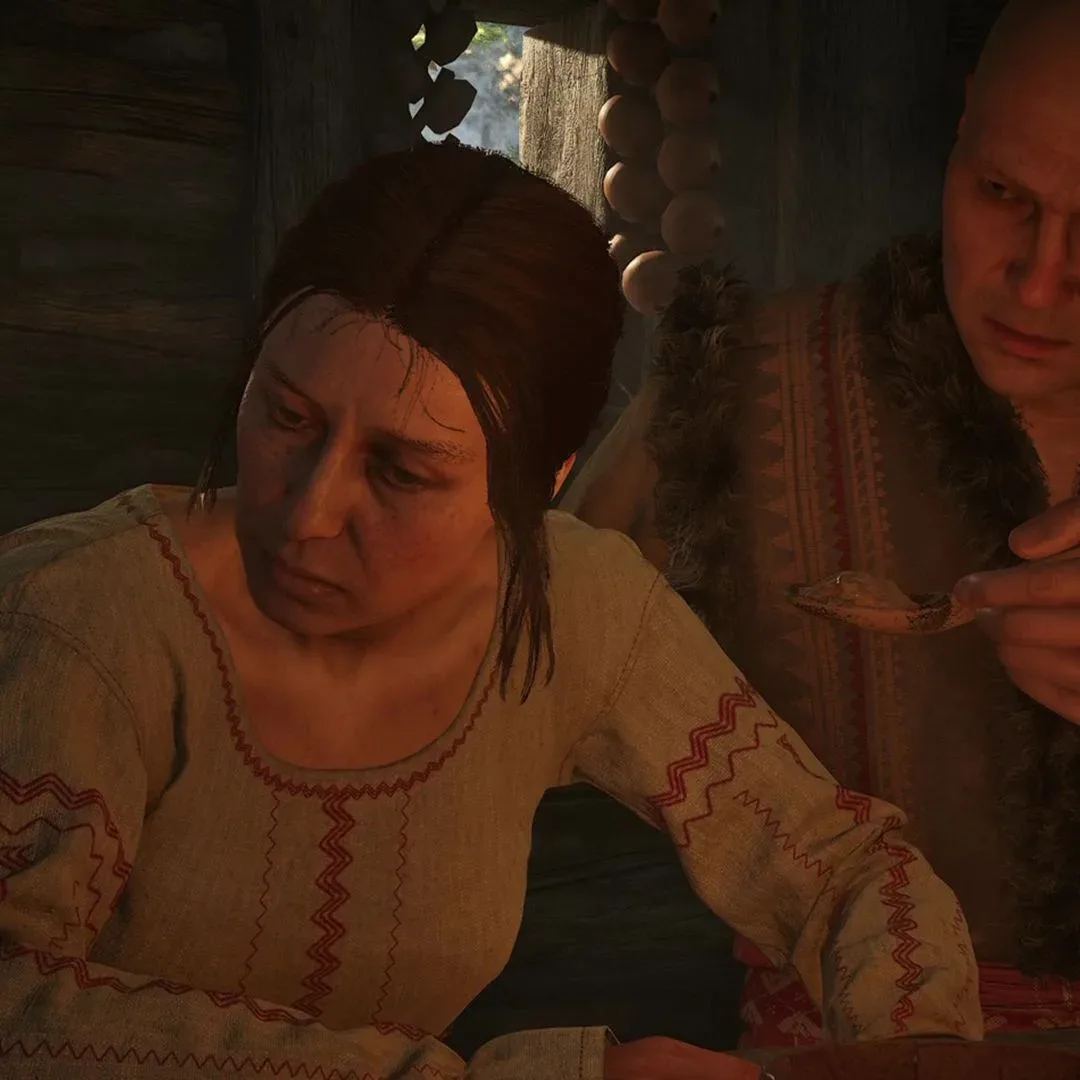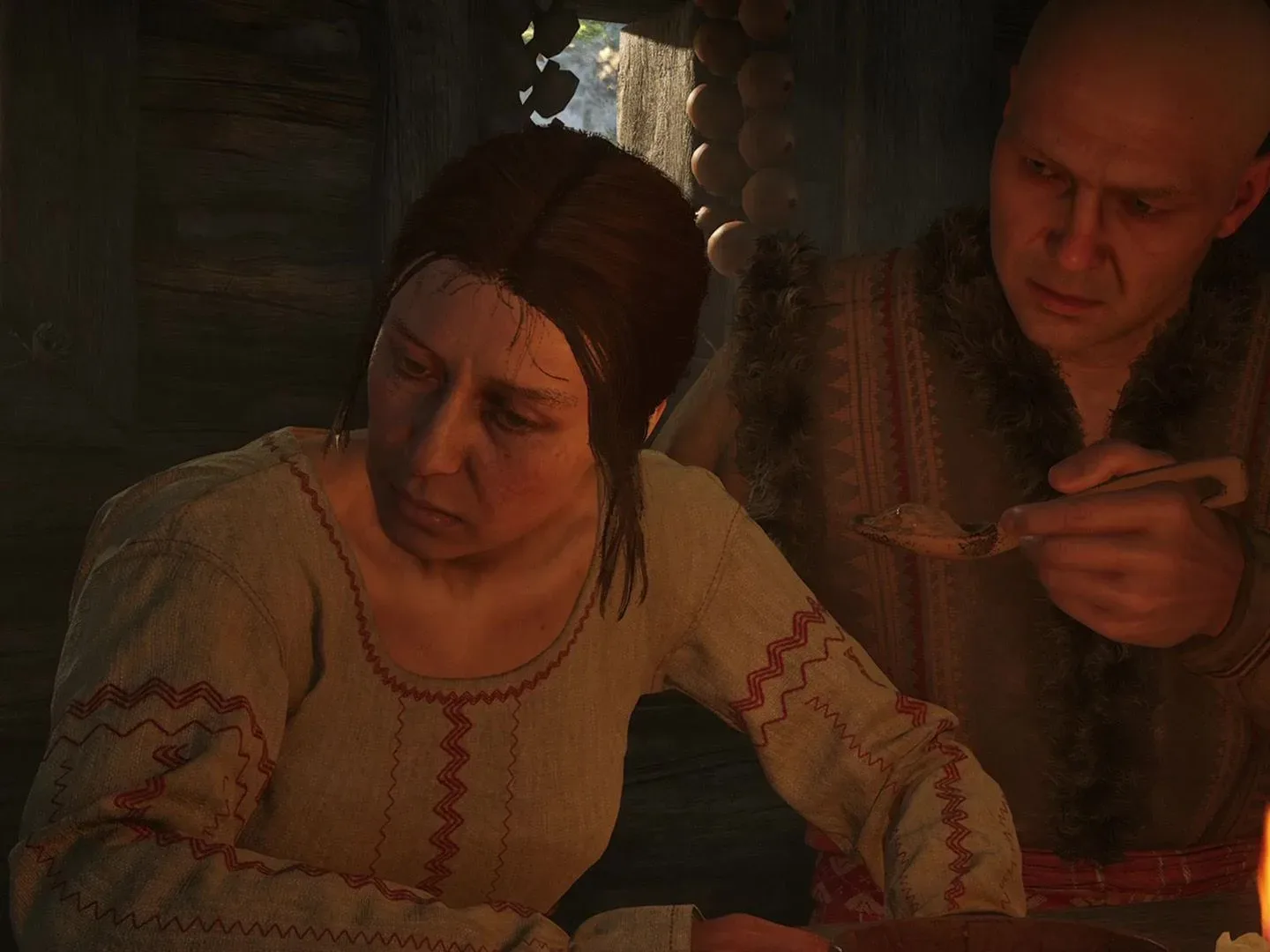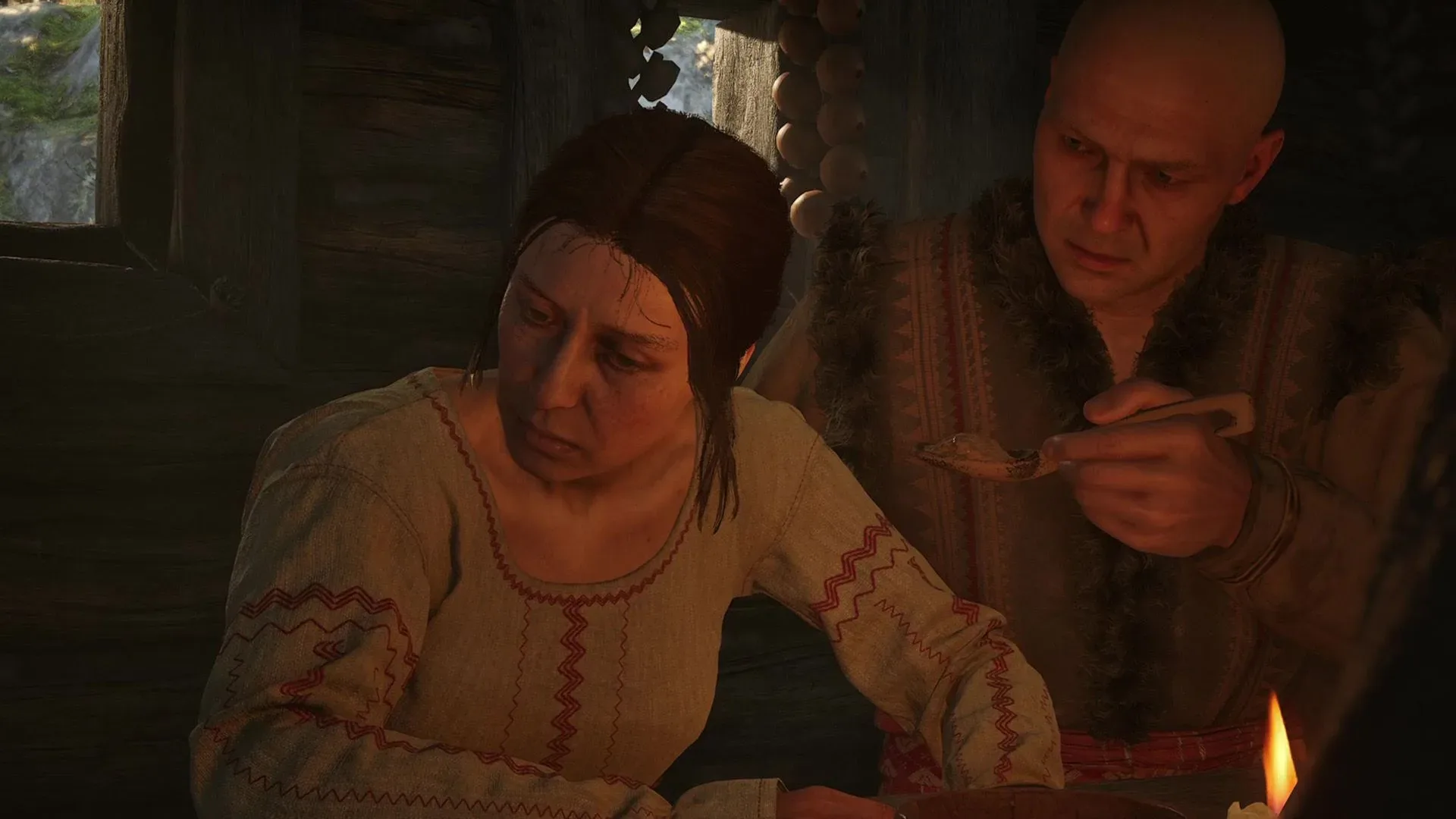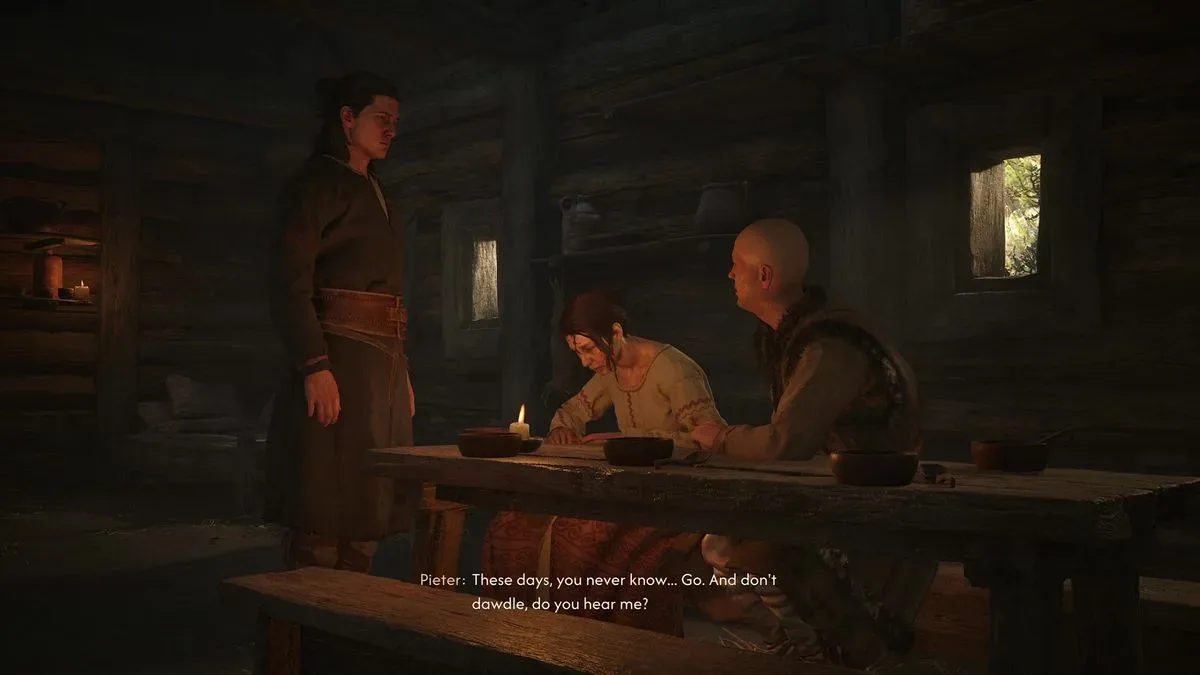
Short answer: choose “I won’t feed her against her will.” In the early Esme scene in The Blood of Dawnwalker, the available outcomes indicate that trying to force-feed Coen’s mother does not produce a better practical result. Esme rejects the food either way, and the story proceeds to the same immediate task: Coen must seek medicine for her.
That makes the refusal option the sensible pick for players who do not want to put Coen through an additional distressing interaction just to reach the same destination. It is a choice built to feel weighty, even if its near-term gameplay branch appears far less dramatic than its presentation suggests.
What is happening in the Esme feeding scene?
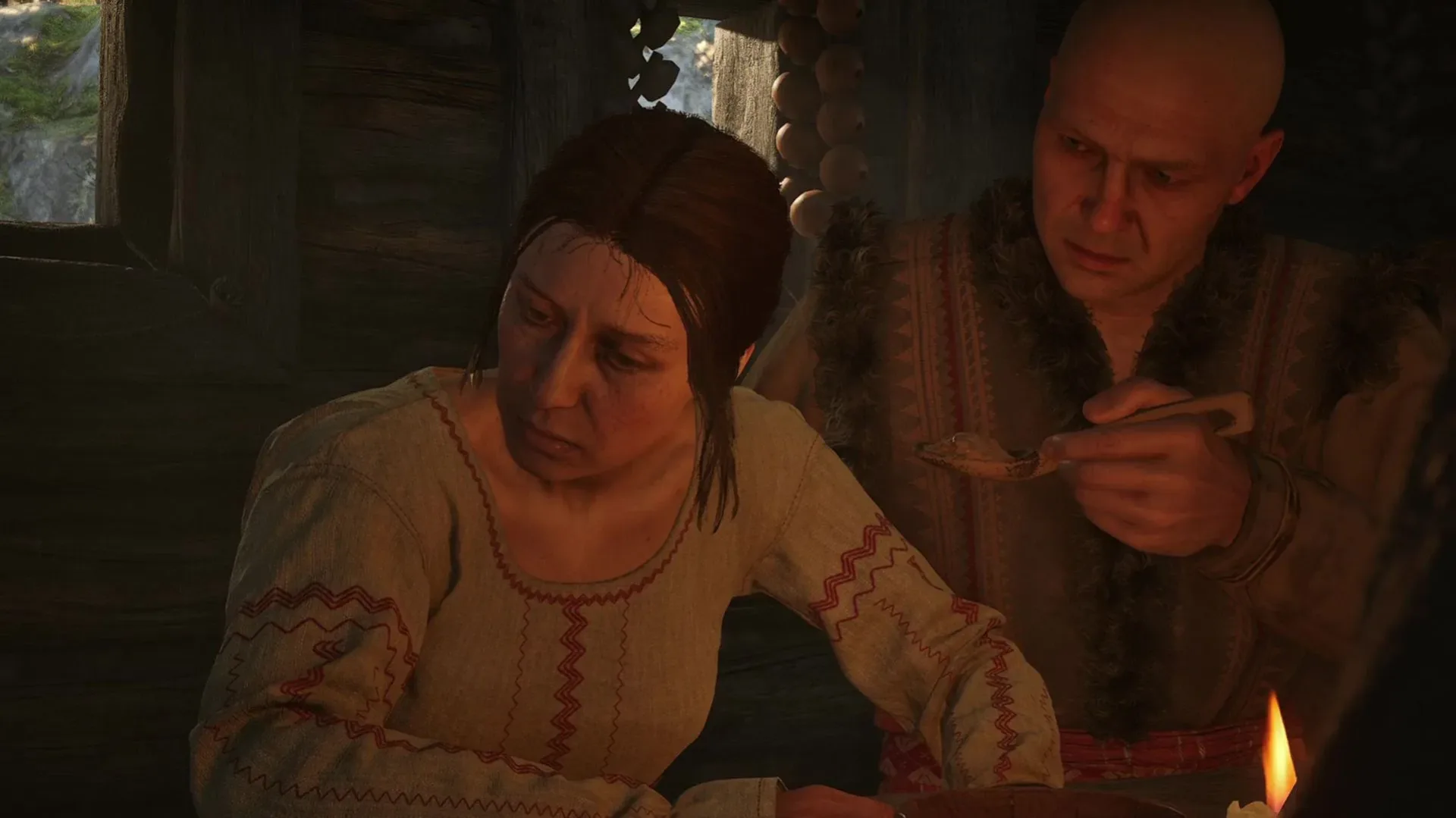
The moment takes place early in the game, when Esme refuses food. Pieter, Coen’s father, is desperate to preserve her strength. The family’s situation is especially precarious because Brencis, the vampire overlord, is presented as someone unlikely to tolerate perceived weakness.
That context matters. Pieter’s demand is not framed as casual cruelty or a random dialogue test. It comes from fear, pressure, and the sense that the family has little room to make mistakes. At the same time, Esme has expressed a clear refusal. The player is therefore asked to choose between respecting her wishes and attempting an intervention that Coen may believe is necessary for her survival.
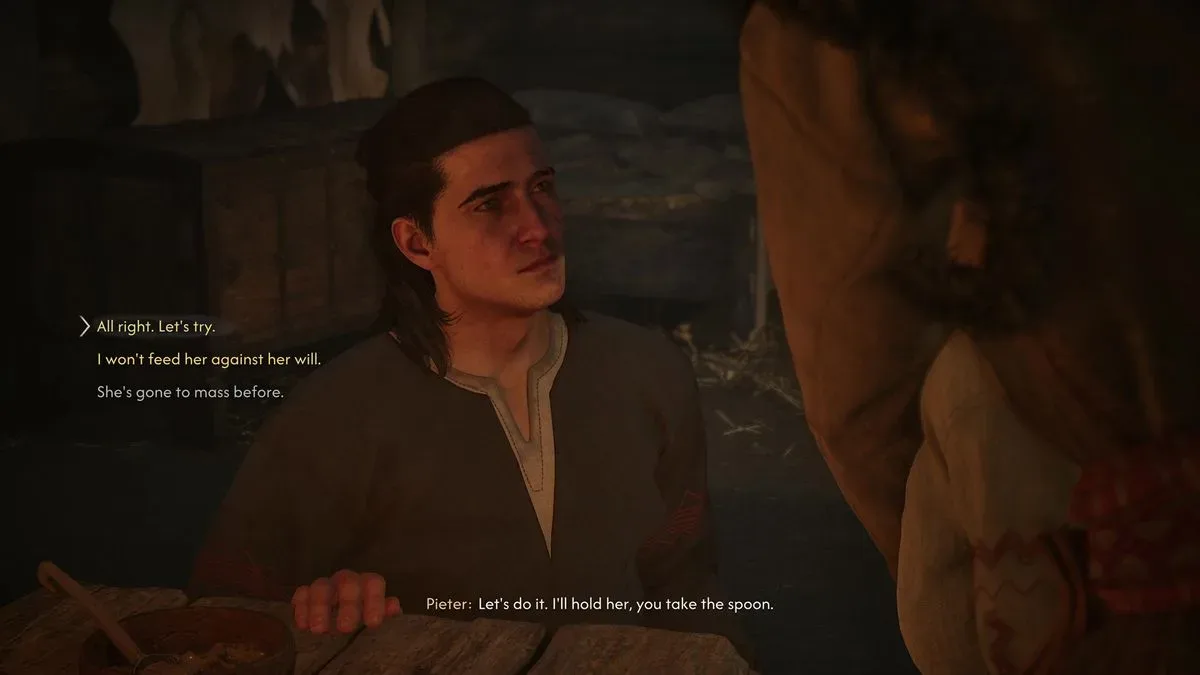
The game offers three dialogue responses:
- Agree to try forcing the food.
- Refuse to feed Esme against her will.
- Raise the point that she has attended Mass before, as an optional response.
The Mass response is not a separate lasting route. It loops the conversation back to the central decision: attempt the feeding, or refuse it.
What happens if you try to force-feed Esme?
Choosing to try does not result in Esme eating. She struggles and knocks the food away, so the attempted intervention fails. The scene remains emotionally harsher because Coen participates in an action Esme does not consent to, but it does not appear to improve her condition or open an alternate immediate mission.
Afterward, the plot still directs Coen toward obtaining medicine. In other words, the attempt does not spare the family the medicine search, create an apparent nutritional boost for Esme, or provide a visible shortcut through this early problem.
Players tempted to select the forceful response because it sounds proactive should keep that limitation in mind. This is not one of those role-playing-game choices where the aggressive option seems unpleasant but secretly offers a clean mechanical payoff. Based on the currently known outcomes, it is an upsetting route to the same short-term story beat.
What happens if you refuse?
Selecting the refusal keeps Coen from taking part in the attempt to make Esme eat. It does not solve the underlying crisis, but it respects the boundary Esme has stated. The immediate story then moves toward the same medicine objective seen after the force-feeding attempt.
For that reason, refusing is the recommended answer if your priority is either role-playing Coen as someone unwilling to override his mother’s wishes or simply avoiding a scene that does not seem to alter the next major step.
The practical takeaway is simple: Esme does not get fed in either version of the scene, and Coen is still sent to find medicine.
There is an important caveat, though. “Same immediate outcome” is not necessarily the same as proof that every possible later line, relationship flag, or hidden variable is identical across an entire game. The outcomes presently observed do not show a meaningful difference, and no confirmed long-term consequence is established here. Players looking for the least harmful visible choice should refuse; players chasing exhaustive branching data may want to retain a save before the conversation in case later discoveries reveal subtler effects.
Why the choice feels bigger than its result
The Esme decision is a useful example of how narrative games create tension without always creating a giant route split. The stakes are personal, the options are uncomfortable, and neither answer makes the situation feel good. Yet the scene’s function appears to be emotional and character-focused rather than a test with a major reward on one side.
That can feel deceptive if a player arrives expecting every dialogue choice to generate a radically different quest line. But it also fits stories built around desperation. Coen is not choosing between a perfect solution and a cruel one; he is choosing how to respond when neither response can restore Esme’s health. Medicine remains necessary because food was never going to fix the immediate problem.
There is also a worthwhile distinction between a choice that changes events and a choice that changes meaning. Even when the quest objective is unchanged, a player may care deeply about whether Coen tried to force food on his mother. The result is shared, but the player’s version of Coen—and their relationship to Pieter’s fear and Esme’s refusal—can be different.
That type of decision is familiar to anyone who has argued over a dialogue choice after passing a controller around the room. As our guide to the unwritten rules of couch multiplayer notes in a different context, games become social even before a choice has an obvious mechanical consequence. The Esme scene is exactly the kind of moment likely to produce a pause, a debate, and a firm “absolutely not” from at least one person on the couch.
Recommended choice and decision checklist
If you want the clearest route through the scene, use this quick guide:
- Pick: Refuse to feed Esme against her will.
- Why: The known immediate result still sends Coen after medicine, without making him attempt the force-feeding.
- Do not expect: A major immediate gameplay advantage from trying to force-feed her.
- Optional Mass line: It supplies extra conversation context but returns you to the two core choices.
- If you are cautious about hidden flags: Make a separate save before committing, if the game’s save structure allows it.
This is also a good reminder not to treat an intensely worded dialogue prompt as a guaranteed optimization puzzle. Sometimes the “best” answer is not the one that unlocks more loot, skips a quest, or produces an overtly better status outcome. Sometimes it is the one that avoids doing something the game itself presents as violating a vulnerable character’s wishes—especially when the attempt changes nothing tangible.
What comes next: medicine, not a feeding solution
Whichever response you choose, the next meaningful priority is medicine for Esme. Players moving through this section should pay attention to the early-game threads surrounding the prologue, Mass, and the recipe taught by Anca. Those pieces are tied to understanding why Coen is sent onward and what the game expects him to pursue after the family confrontation.
The medicine route also gives the early hours a clearer structure. Rather than lingering on the false hope that one meal can settle the crisis, the game redirects the player to a concrete problem-solving task. That does not make the feeding scene painless, but it does make its purpose clearer in retrospect: the family’s conflict reveals the pressure they are under, while the medicine objective supplies the first real avenue for action.
For players who enjoy documenting alternate dialogue before committing, this is an especially appropriate point to keep notes on what they saw. A simple record of the selected response, the scene’s outcome, and the next quest prompt can prevent confusion later. It is the same common-sense preservation instinct behind keeping a game collection organized enough to find and play: information is more useful when you can retrieve it, rather than relying on a hazy memory after several story chapters.
Does force-feeding Esme have long-term consequences?
No confirmed long-term difference is currently evident from the two outcomes. Both routes lead to Esme failing to eat and Coen being tasked with finding medicine. There is no established evidence here that forcing the attempt leads to a superior ending, a distinct early quest path, or an immediate material benefit.
Because branching narrative games can sometimes track choices quietly, it is fair to leave room for the possibility of later nuances not yet identified. Still, players should not choose the force-feeding option on the assumption that it is required to keep Esme alive or to progress efficiently. The known information points the other way: refusing is the less distressing choice, and progression continues normally.
So, when Pieter urges Coen to act, let Esme’s refusal stand. The medicine search is waiting either way, and the game does not presently show a gameplay reason to make this already bleak family moment worse.