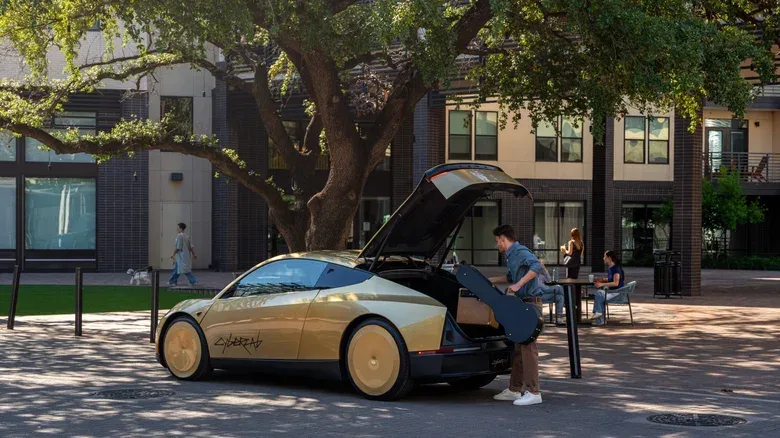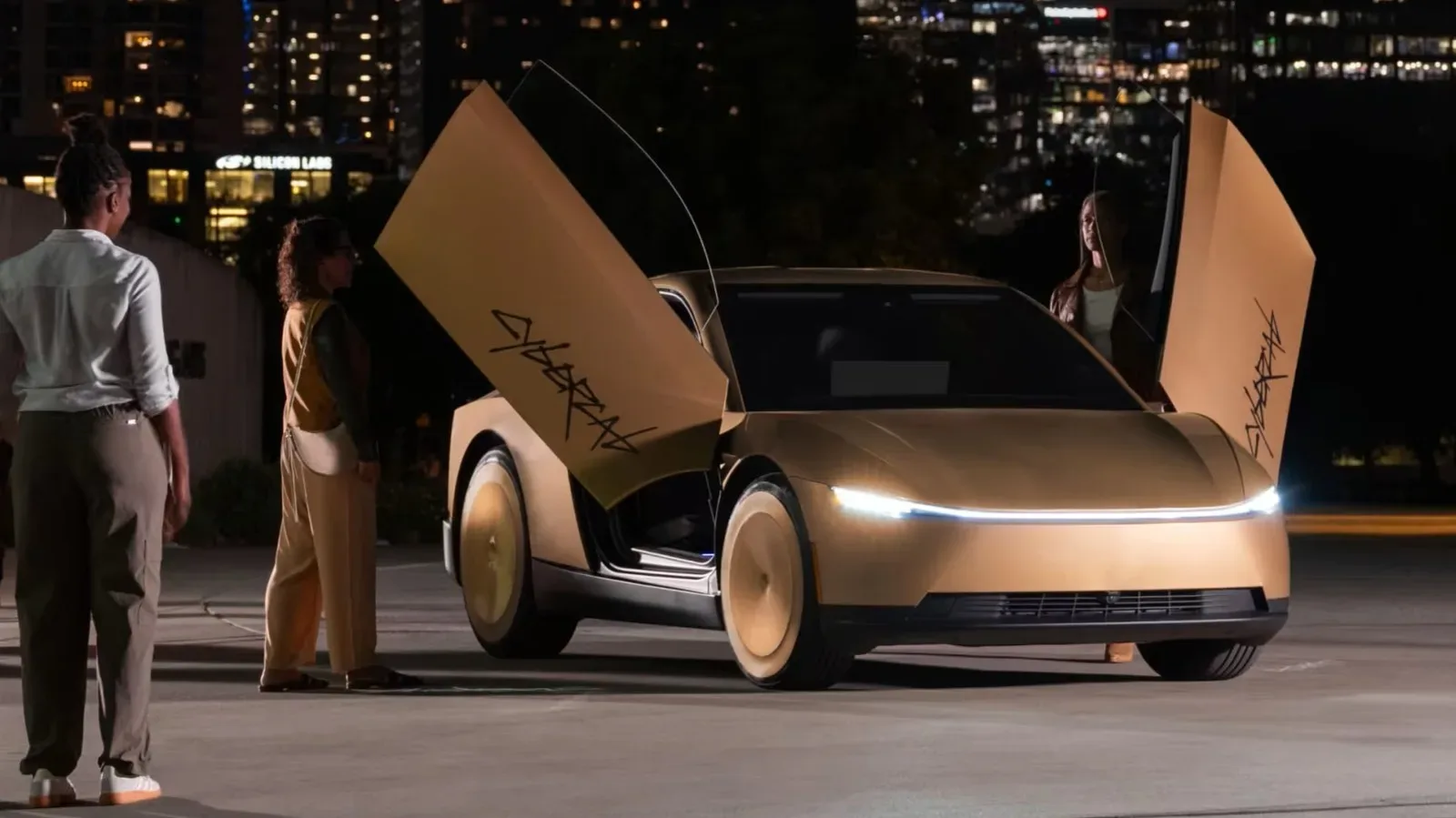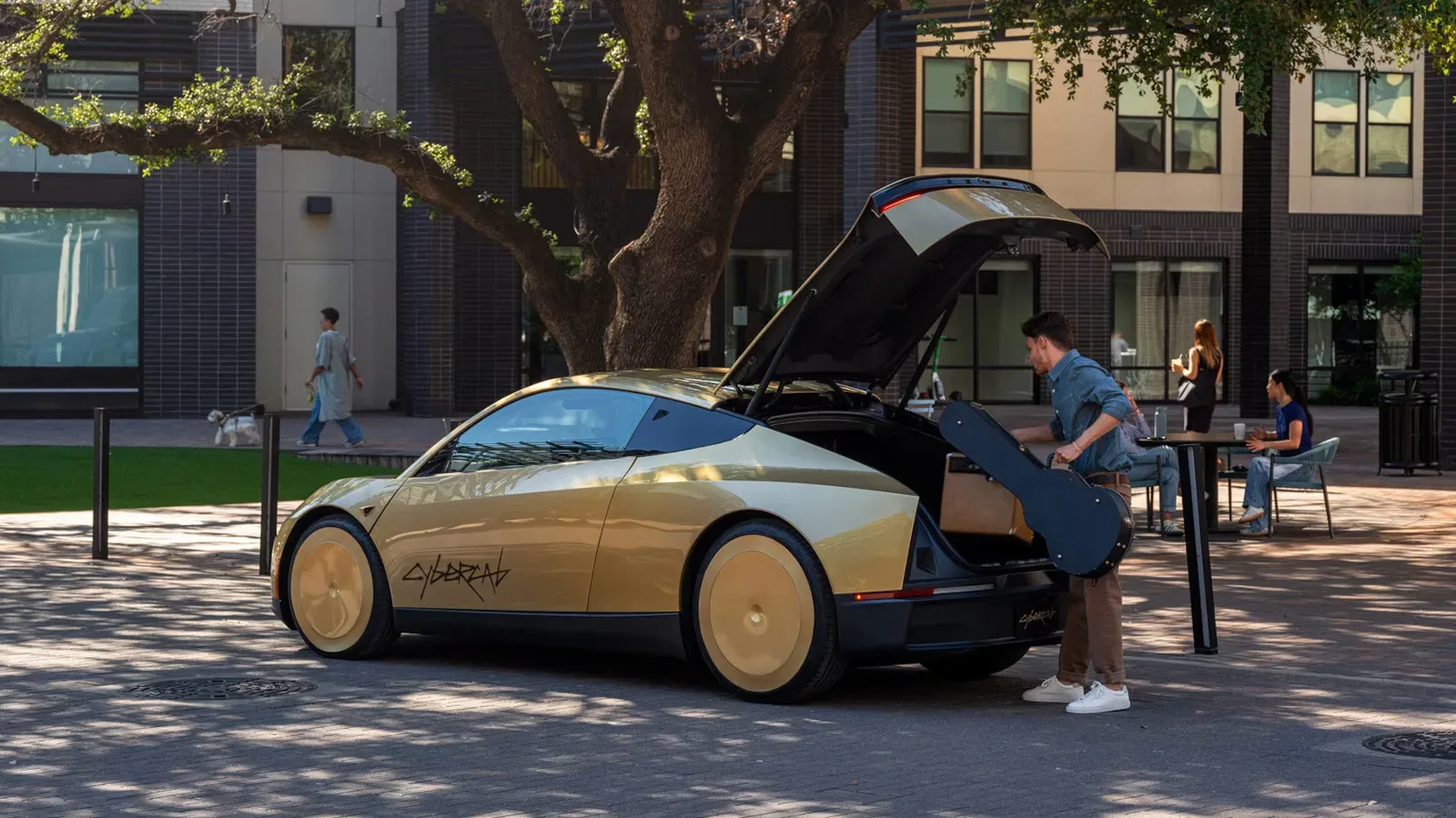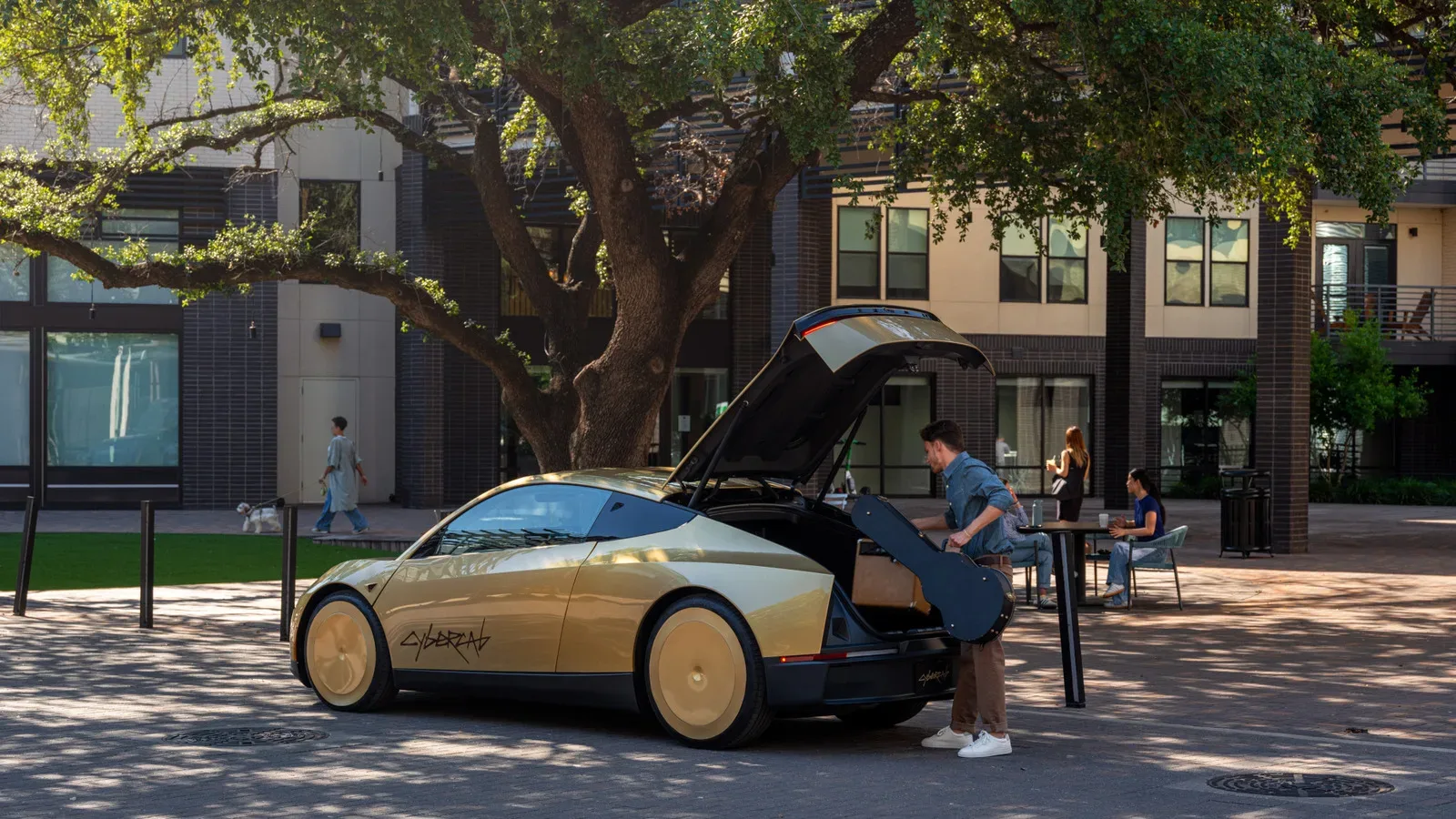
Tesla is aiming to begin selling its Cybercab before the end of 2026, though the company’s own comments point to a deliberately limited opening phase rather than an immediate mass-market rollout. The vehicles are already being built at Tesla’s Texas Gigafactory for its internal robotaxi fleet, and the company says any initial customer deliveries would start small while it learns how autonomous vehicles operate under outside ownership and fleet management.
That qualification matters. Tesla’s stated near-term Cybercab plan is not simply about putting a new vehicle on ordinary retail lots. The company has begun taking inquiries from prospective buyers that could help build its robotaxi network, suggesting that early sales may be focused on organizations able to operate fleets. Even if outside customers receive vehicles this year, Tesla expects the overwhelming majority of Cybercabs to remain effectively Tesla-owned and within its ride-service operation.
A sale target, not a confirmed broad launch
The end-of-2026 objective is an ambition, not confirmation that Cybercabs will be broadly available to individual buyers by then. Tesla has said it is trying to reach customers before year-end, and it has also stressed that the initial program would be small.
For a conventional car launch, a small initial allocation can simply be a production constraint. For Cybercab, the limited approach has a second purpose: it gives Tesla a narrower environment in which to understand the practical realities of customer-owned autonomous fleets. That includes the fundamental operational question of how a vehicle is owned while its potential role is providing rides through a network rather than being personally driven from place to place.
The distinction is especially important because the Cybercab is built around a use case that differs sharply from Tesla’s existing consumer cars. It has no steering wheel and no brake pedals. In plain terms, there is no intended human fallback driver sitting at the controls. The vehicle relies on Tesla’s Full Self-Driving software to function.
Supervised and Unsupervised Full Self-Driving are not the same thing
The key technical and practical dividing line in Tesla’s plan is the difference between Supervised Full Self-Driving and Unsupervised Full Self-Driving.
- Supervised Full Self-Driving is the version currently available to Tesla owners. It still requires a human driver behind the wheel.
- Unsupervised Full Self-Driving is the version Tesla intends for vehicles operating without a human driver. It is not yet available to consumers.
Because Cybercab does not have traditional driver controls, the absence of a consumer-ready Unsupervised system is central to what the first customer sales can mean. Tesla has indicated that the initial Cybercabs sold externally cannot yet be added to the company’s ride-hailing fleet. Its current expectation is to start activating Unsupervised Full Self-Driving on some of the first customer vehicles that join the Robotaxi fleet around the second quarter of 2027.
That creates a clear sequence in the company’s stated roadmap. First may come limited customer deliveries; later, if the planned software capability is activated on select vehicles, some customer-owned Cybercabs could take part in Robotaxi operations. Neither step means that every Cybercab purchaser will immediately receive the same functionality or access.
It also helps explain why Tesla’s early outreach appears focused on entities that can support a network. A fleet buyer may have a different role from someone buying a personal commuter car: the vehicle could ultimately be managed around availability, maintenance and robotaxi service rather than around a conventional owner-driver routine. Tesla has not detailed how that ownership or fleet-management arrangement will work in practice, so those details remain to be established as the small-scale program develops.
Cybercab has moved from reveal to Austin rides
Tesla first showed the Cybercab in 2024. In September 2026, it began offering rides in the vehicle through its Robotaxi app in Austin, Texas. The move from presentation to rides is significant, but it should not be confused with a confirmation of broad customer operation. Tesla’s latest timeline still separates its existing internal fleet activity, a possible limited customer-sales phase this year, and a potential 2027 activation of Unsupervised Full Self-Driving on some fleet-bound customer vehicles.
That layered rollout is worth keeping in mind for anyone reading “Cybercab sales” as a simple consumer-car release. The vehicle’s service model, its lack of manual controls and its dependence on a future software deployment make it a different proposition from buying an ordinary Tesla. A delivery would not, by itself, establish that the buyer can immediately use the vehicle as an autonomous taxi in Tesla’s network.
For a gaming-flavored comparison, hardware can reach players before every planned platform feature is active; the distinction between owning the device and having access to its full intended ecosystem can be substantial. Automotive products naturally involve much higher safety and regulatory stakes, but the rollout language here similarly points to staged capability rather than a one-switch, day-one transition. It is a very different kind of motoring story from the enthusiast appeal surrounding a Gran Turismo 7 anniversary DualSense: Cybercab’s defining question is not the feel of a controller, but whether and when software can operate a vehicle without one.
Federal safety review remains an important backdrop
The planned sales and software milestones arrive alongside a federal review. Shortly after Cybercab rides began in Austin, the National Highway Traffic Safety Administration opened a probe into the vehicles.
The agency said Tesla had self-certified that Cybercab complies with applicable Federal Motor Vehicle Safety Standards, commonly abbreviated as FMVSS. These are federal vehicle safety standards. Self-certification, in this context, means the manufacturer represents that its vehicle meets the relevant standards; the agency is examining the process and data Tesla used to make that certification and whether the vehicle does in fact comply.
The existence of a probe does not itself settle the outcome of that examination. It does, however, add an unresolved oversight question to a rollout already defined by dependencies: small-scale customer delivery, fleet-oriented buyers, the later planned availability of Unsupervised Full Self-Driving for some vehicles, and Tesla’s own substantial role as fleet owner and ride-service operator.
What to watch next
The immediate checkpoint is whether Tesla turns its year-end 2026 objective into actual initial Cybercab deliveries. If it does, the scale and identity of the buyers will be meaningful. Sales concentrated among fleet-capable organizations would align with the company’s stated effort to build a robotaxi network, while a broader individual-buyer program would represent a materially different step.
Beyond that, the more consequential date in Tesla’s current outline is around the second quarter of 2027. That is when the company believes it may begin enabling Unsupervised Full Self-Driving on some of the first customer vehicles intended for Robotaxi fleet participation. The wording remains selective: some vehicles, not all customer Cybercabs, and a target rather than a guarantee.
For now, the most accurate reading is measured. Tesla is manufacturing Cybercabs, operating them for rides in Austin and pursuing limited customer sales by the end of 2026. But the vehicle’s intended driverless, networked role depends on a software rollout Tesla is still targeting for 2027, while the federal review of its self-certification remains in progress.