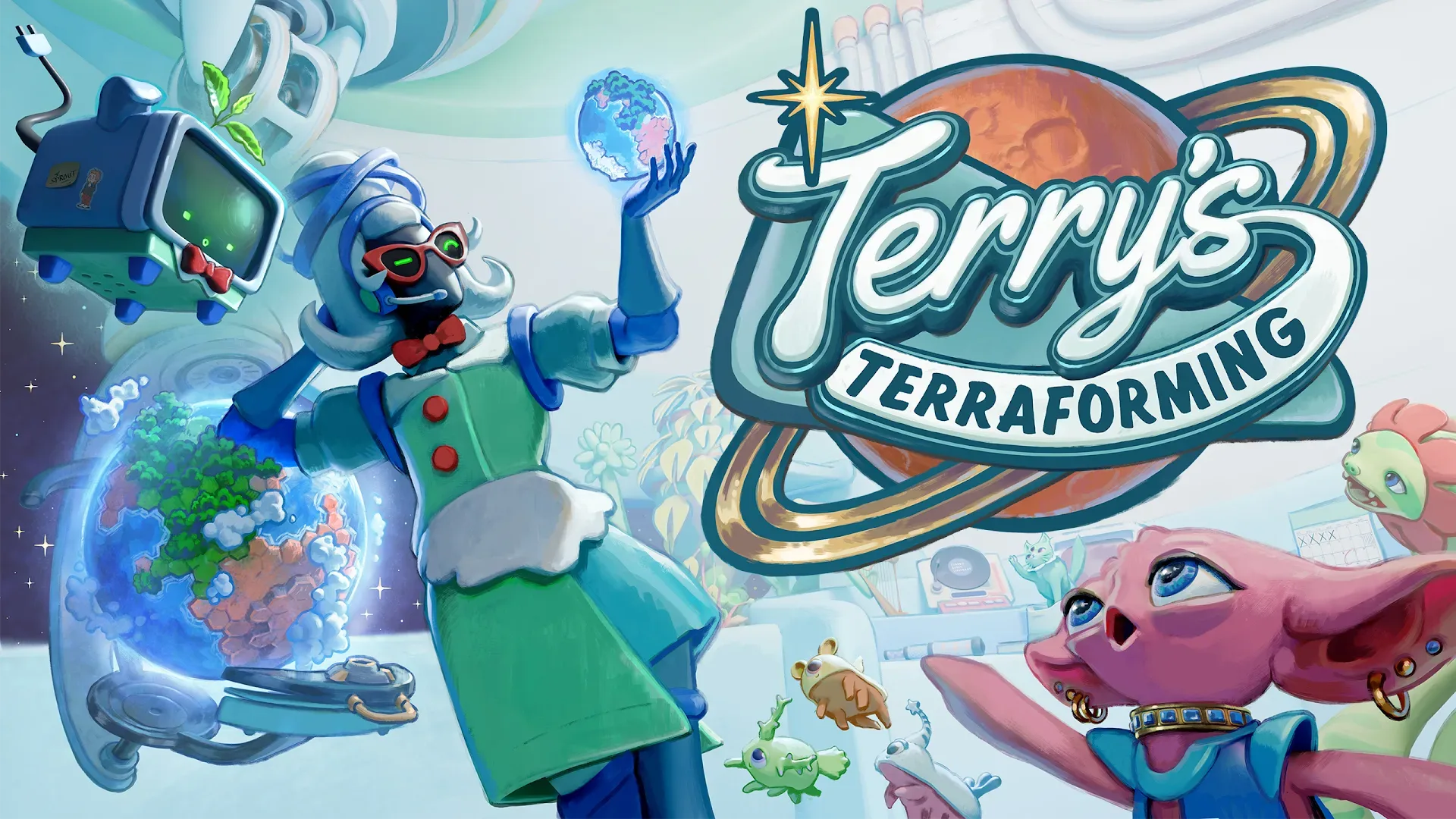
There is a certain comic bleakness to being handed a dying planet, a demanding alien client and what sounds suspiciously like a corporate performance target. Terry’s Terraforming, a VR narrative adventure from Really Interactive, is set to launch for Meta Quest 3 and Meta Quest 3S on October 22. Pre-orders are now available through the Meta store.
The listed introductory price is £6.99, presented as a reduction from £11.99. That makes the game’s initial pitch relatively straightforward: a compact, headset-specific adventure built around reviving worlds, working out what unusual extraterrestrial inhabitants need, and apparently ensuring the shareholders remain suitably pleased with the whole operation.
It is also a notably focused platform release. The announced version is for Quest 3 and Quest 3S; no other platforms are specified here. For people tracking the week’s wider slate, Joking Joystick’s games releasing today roundup offers useful context for how quickly release calendars can fill up, but Terry’s Terraforming has a particularly clear hardware requirement: a Quest 3 or Quest 3S headset.
A planetary repair job with a narrative wrapper
The central activity is terraforming: altering a planet so that it can support the environmental conditions its inhabitants require. In Terry’s Terraforming, the planets are dying, and the player’s job is not described merely as making them visually greener or tidier. The stated aim is to experiment with each planet’s conditions and satisfy needs that differ from species to species.
That matters because it suggests a problem-solving loop rather than a single fixed restoration routine. One alien client may require a different environmental result from another, so the intended play is likely to involve observing what a particular world or species needs, making changes, and assessing whether those changes produce an acceptable outcome. The exact set of tools and variables has not been detailed, so it would be premature to assume specific systems such as temperature management, water placement or resource chains. What is confirmed is the broader structure: experimentation is part of the job.
The premise also puts those ecological tasks inside a deliberately offbeat business framework. Players are working for quirky alien clients while balancing shareholder goals. “Shareholder goals” is corporate language for targets set around the interests of a company’s owners or investors. In a game about rescuing failing ecosystems, its inclusion creates an obvious tension: restoring a world may be an altruistic-sounding objective, but the job still comes with institutional expectations and pressures.
Whether that becomes sharp satire, a recurring joke, a scoring constraint or simply a narrative framing device remains to be seen. Still, it gives the game more character than a neutral construction sandbox. Terry’s Terraforming is being presented as a narrative adventure, meaning the campaign is expected to provide a story-led throughline around its individual planetary assignments rather than only a menu of disconnected simulation scenarios.
Sweetview is the route to the surface
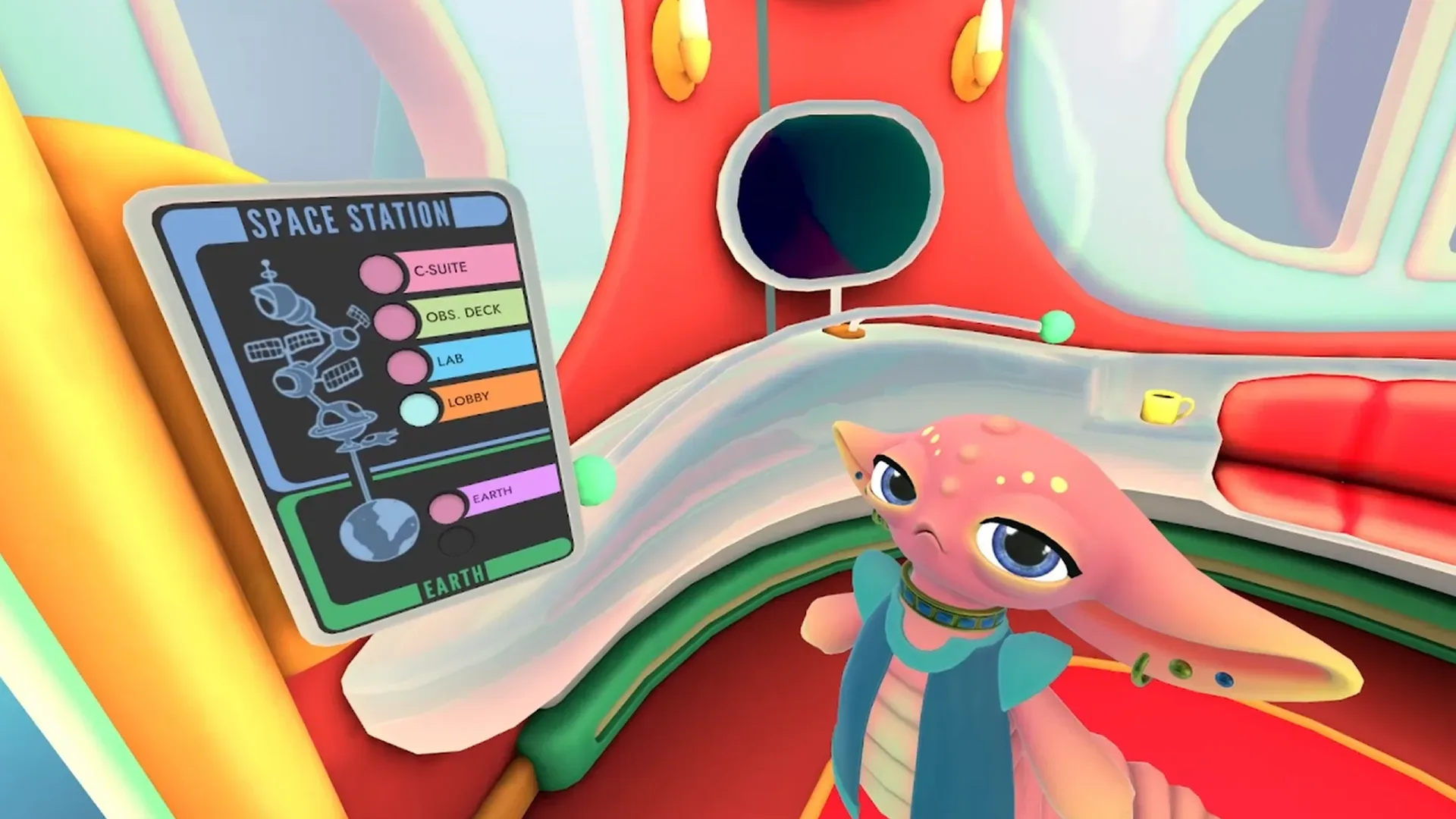
A named system called Terry’s Sweetview is said to let players travel instantly to planetary surfaces. The practical promise is clear: rather than treating movement between the broader setting and the actual worksite as a lengthy journey, Sweetview is intended to get the player down to the planet quickly.
Related coverage includes Terry’s Terraforming Sets October 22 Launch for Meta Quest 3 and 3S.
Instant travel can be especially useful in a VR game whose main appeal is hands-on interaction at the destination. It potentially keeps attention on surveying and changing the environment instead of on transit. It also gives the game a distinct fictional interface for the process, which is more memorable than simply calling the feature a fast-travel menu. Beyond its function, however, the announcement does not explain how Sweetview is activated, how often it is used, or whether travel itself has any strategic limitations.
That is an important distinction for prospective players: the available details establish the game’s premise and several major features, but not the precise moment-to-moment rules. There is no confirmed list of terraforming devices, no stated failure state, and no detail on how the shareholder element is measured. Those unanswered questions are not negatives by themselves; they are simply areas where the release information has not yet gone further.
Campaign scope and repeatable challenges
Really Interactive describes the narrative campaign as lasting roughly four to six hours. That is best read as an estimated range rather than a guarantee that every player will finish in exactly the same time. A campaign of that size positions the game as a comparatively contained VR adventure, potentially suited to players who want an authored story without committing to an enormous open-ended project.
The game is also planned to have activities beyond that campaign. Daily challenges will come with global leaderboards. A daily challenge generally means a repeatable objective that changes on a day-by-day schedule; a global leaderboard ranks recorded results against the wider player community. The announcement does not say what determines a higher ranking, such as speed, efficiency, a numerical score or another metric. It does, however, establish that the game will have a competitive repeat-play component alongside its narrative content.
For a title about adjusting planetary conditions, this could give players a reason to revisit the systems after the story ends. Daily formats can encourage short return sessions because each task has a defined focus rather than requiring players to start an entire campaign again. Leaderboards add a comparative layer, although their appeal will naturally depend on how clearly the game communicates scoring and whether the daily assignments stay varied. Those implementation details are not yet specified.
There is a second route to longevity as well: the game includes tools for creating and sharing challenges. In plain terms, players will be able to make their own scenarios and pass them along to others. This is separate from developer-set daily content. Daily challenges provide a shared, recurring official activity, while creation tools potentially let the community devise objectives or situations of its own.
That distinction could be one of the more meaningful parts of the package. A four-to-six-hour story has a defined endpoint; shareable challenges can extend interest if creators are given enough flexibility and players can easily find worthwhile creations. The announcement confirms the existence of the feature but does not define its boundaries. It does not yet say whether challenges can alter planetary conditions, client requirements, available resources, scoring rules or other parameters. Anyone mainly interested in user-made content should therefore treat the feature as confirmed while waiting for a fuller explanation of what the editor supports.
Hand tracking is part of the Quest 3 and 3S version
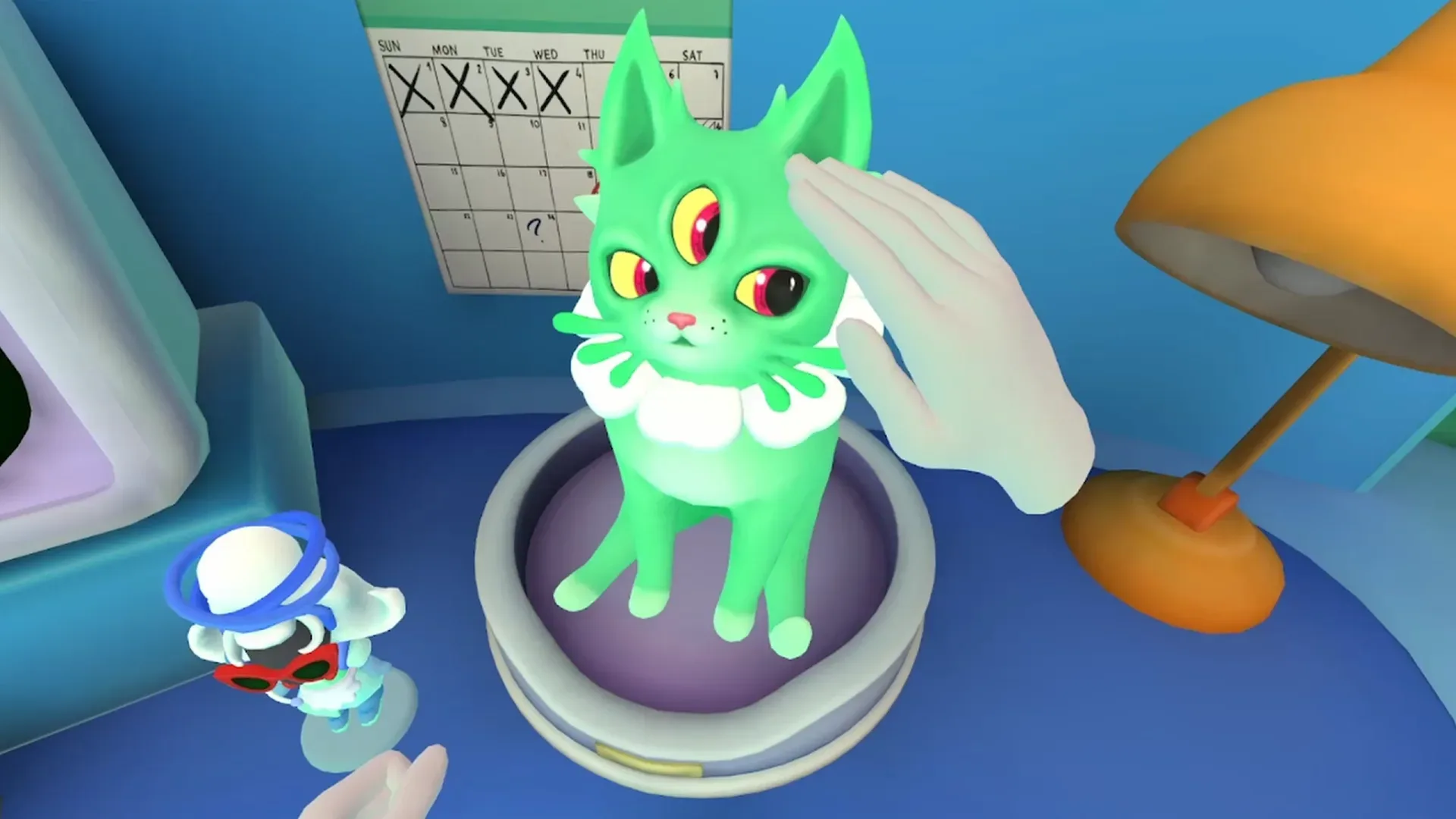
One of the clearest technical details is support for hand-tracking controls on Quest 3 and Quest 3S. Hand tracking allows a compatible headset to interpret the player’s real hand movements as input, rather than relying solely on handheld motion controllers. In a game centered on interacting with worlds and experimenting with solutions, that can make direct manipulation feel like a natural fit for the premise.
It is worth being precise about what has been confirmed. Hand tracking is supported; the release information does not say whether controllers are optional, required for certain actions, or whether every interaction is designed around hands alone. It also does not provide accessibility details, customization options or a list of gestures. Players who strongly prefer either controller input or controller-free play will need those specifics before deciding how the game will fit their setup.
Support on both Quest 3 and Quest 3S is significant because it ensures the feature and game are being announced across the two named current Quest models, rather than as an unspecified VR release. But platform support should not be expanded beyond that statement. There is no announced PC VR, PlayStation VR, or other headset version in the provided release details.
What is known before launch
- Release date: October 22.
- Platforms: Meta Quest 3 and Meta Quest 3S.
- Pre-order price shown: £6.99, discounted from £11.99.
- Genre and premise: a VR narrative adventure about terraforming dying planets for alien clients.
- Core ideas: instant trips to surfaces through Terry’s Sweetview, experimentation around species-specific needs, and shareholder objectives.
- Campaign estimate: four to six hours.
- Extra modes and tools: daily challenges, global leaderboards, and player-created shareable challenges.
- Input feature: hand tracking on Quest 3 and Quest 3S.
What remains unclear
The announcement leaves room for a more detailed look at the game’s actual systems. There is no confirmed explanation of exactly how terraforming actions are performed, how narrative choices may affect outcomes, how shareholder goals are evaluated, or what daily challenge scoring looks like. Likewise, the challenge-creation tools are confirmed without a published feature-by-feature breakdown.
Those are useful questions because they determine what kind of experience Terry’s Terraforming ultimately is: a relaxed environmental puzzle game, a score-driven optimization exercise, a sharply comic workplace story, or a blend of all three. The launch description supports elements of each, but it does not yet settle their relative weight.
For now, the game’s proposition is a concise VR campaign with a playful sci-fi repair premise and a repeatable layer built around daily and community-made challenges. Players with a Quest 3 or 3S can pre-order ahead of the October 22 launch, while those deciding whether it suits their preferences should keep the confirmed scope in mind: the story is estimated at four to six hours, with its longer-term appeal likely resting on the challenge systems and creation tools.