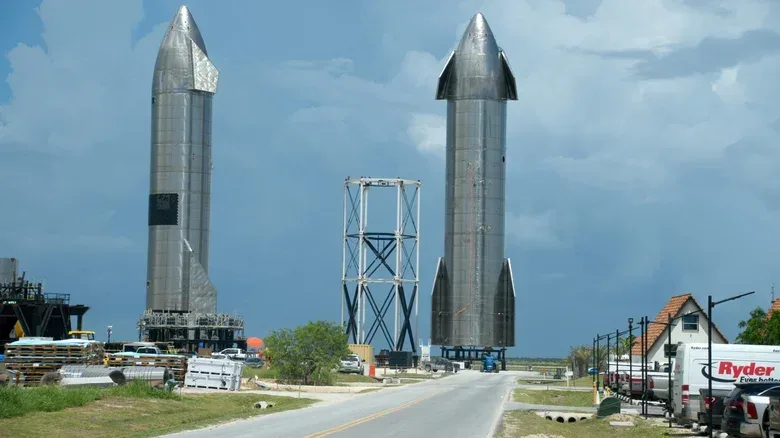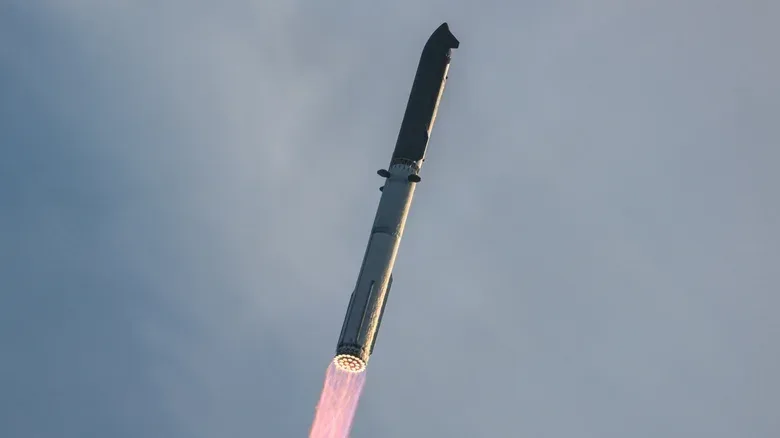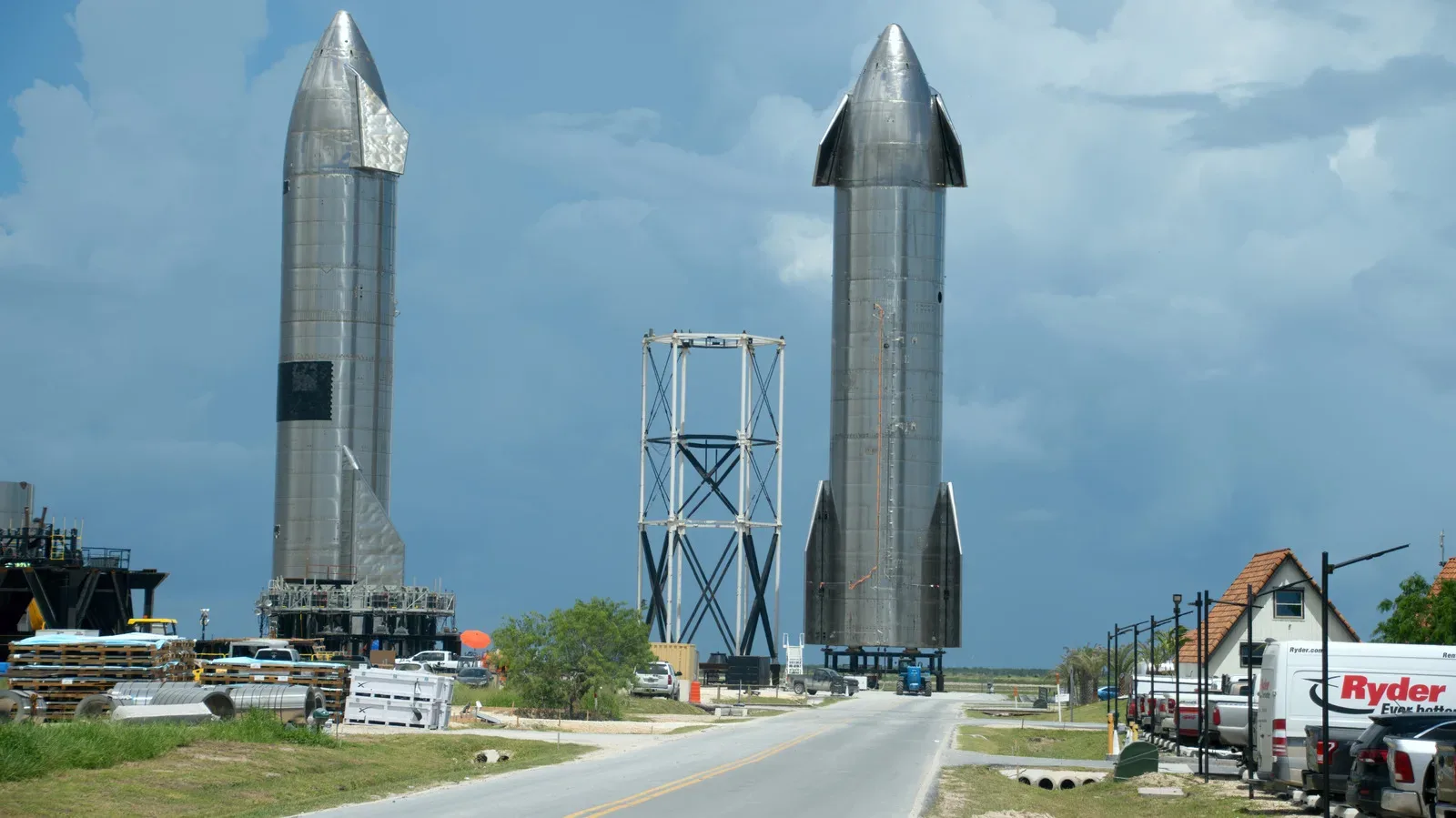
SpaceX’s Starship is enormous by any reasonable measure: a fully stacked vehicle stands 407 feet tall, making it the tallest rocket ever flown. It is also listed as the most powerful, with Super Heavy producing 18.1 million pounds-force of thrust at liftoff. Those statistics make an immediate impression, but they do not fully explain what the system is meant to accomplish.
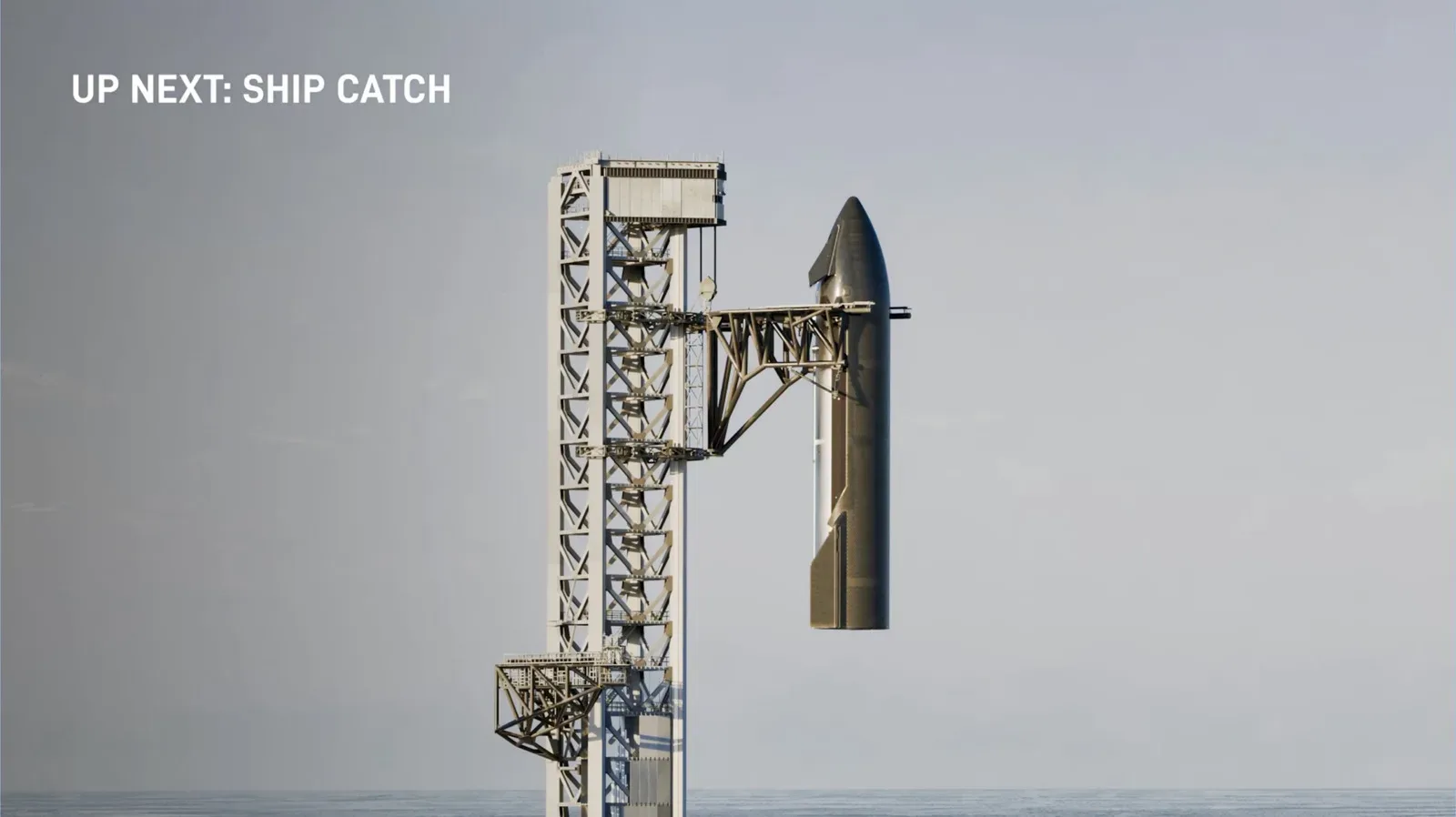
Starship is not simply a giant rocket built to go up once. It is a two-stage launch vehicle intended to carry very large payloads and, eventually, people and cargo beyond Earth orbit. Both stages are designed with recovery and reuse in mind. Its planned role in NASA lunar missions also turns the vehicle into part of something much larger than a launch: an orbital sequence involving tankers, a propellant depot, a lunar lander and Orion crew spacecraft.
That distinction matters. Height, engine count and thrust describe the raw scale of the hardware. The planned Moon mission architecture illustrates the operational challenge: getting a vehicle to orbit is only the beginning. The harder task is retaining, transferring and managing enough extremely cold propellant in space for the journey that follows.
Two stages, one exceptionally tall stack
The 407-foot figure is for the complete vehicle, not for a single spacecraft. The lower stage is Super Heavy, a 236.2-foot booster that provides the initial acceleration from the launch pad. On top is the 170.6-foot Starship upper stage, the spacecraft that continues after the booster separates.
That makes Starship’s height a useful but incomplete number. The booster exists to do the high-thrust work of getting the combined stack moving through the earliest phase of flight. Once it has done its job, it separates. The upper stage then continues toward space under its own engines.
Scale is not being pursued merely for spectacle. A vehicle designed for large payloads needs the engine power and propellant volume to lift a great deal of mass. It also needs a staged design because carrying empty tanks and engines after they are no longer necessary is inefficient. Staging is the practice of dropping a portion of a rocket once that portion has completed its role, reducing the mass that must continue onward.
Starship’s physical dimensions still provide a useful sense of just how unusual the vehicle is. At full height, it is taller than Hyperion, the tallest known living tree, and roughly one-third taller than the Statue of Liberty when the pedestal is included. But the relevant comparison is ultimately functional: the system has been designed around payload capacity, on-orbit operations and intended reuse rather than around being tall.
Where the 18.1 million pounds-force comes from
Super Heavy uses 33 Raptor engines. They burn liquid methane and liquid oxygen, commonly shortened to methalox, to generate the booster’s listed 18.1 million pounds-force of thrust. Thrust is the force produced when an engine expels exhaust; in this context, pounds-force is a measurement of force rather than a measure of the rocket’s weight.
Related coverage includes How Starship’s Size, Thrust and Refueling Plan Fit Together.
The figure applies to the booster at liftoff. It should not be casually added to the upper-stage number as though both stages fire together throughout ascent. The system works in phases. Super Heavy launches the full stack, then separates. Starship continues afterward with three standard Raptor engines and three Raptor Vacuum engines. SpaceX lists the upper stage at roughly 3.5 million pounds-force of thrust.
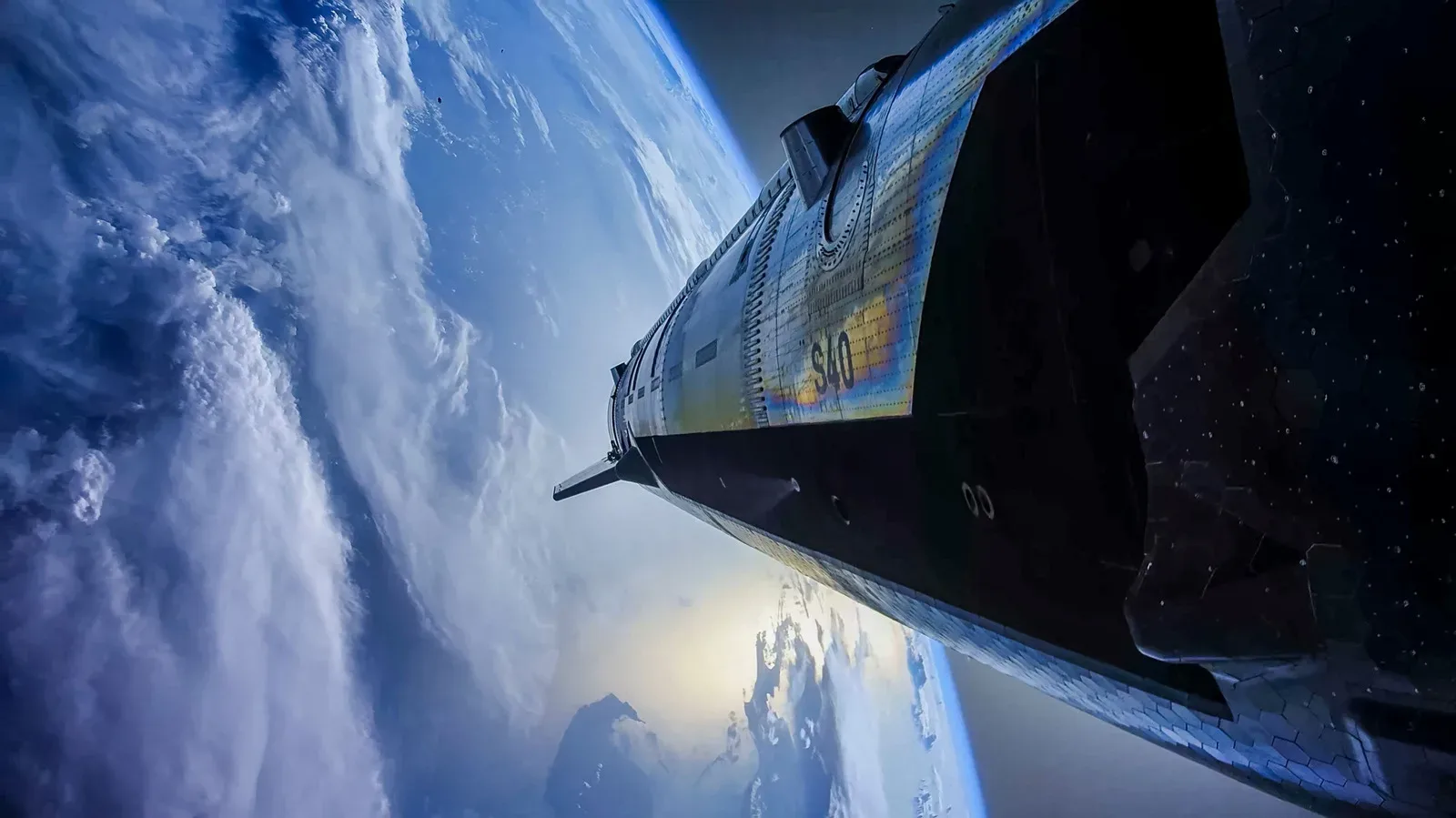
The word “Vacuum” is important. A Raptor Vacuum engine is intended to operate in space, where the surrounding environment differs radically from the atmosphere at the launch pad. The split between regular and vacuum-optimized engines reflects the fact that ascent is not one unchanging problem. Engines suited to the lower atmosphere do not necessarily represent the best approach once a vehicle is in space.
For perspective, NASA’s Space Launch System is listed at 8.8 million to 9.4 million pounds of maximum thrust. The comparison demonstrates why Starship’s liftoff figure is so notable: Super Heavy’s 18.1 million pounds-force is nearly double the upper end of that range. It is a measure of launch capability, though not a complete verdict on what any rocket can ultimately deliver or accomplish.
That much force also places extraordinary demands on ground infrastructure. During Starship’s first full-stack launch in April 2023, the booster’s exhaust shattered the concrete launch pad, excavated the ground below and sent debris across 385 acres. The booster on that flight was rated for 16.7 million pounds of thrust, below the 18.1 million pounds-force associated with the September 28, 2026 launch. The event is a direct reminder that a launch system is not only the rocket itself. Pad design, operations and pre-launch planning must all cope with the energy released at liftoff.
Propellant is central to the design
Starship’s engine numbers are only half of the equation. The system must also carry vast quantities of propellant. Super Heavy has a listed capacity of 3,650 metric tons, while Starship holds another 1,600 metric tons. Together, that is 5,250 metric tons of propellant capacity before considering the rest of the vehicle and its payload.
This is why raw thrust cannot be viewed in isolation. The rocket needs major power simply to accelerate its own propellant, structure and engines, in addition to any cargo. Much of the mission is therefore about efficiently managing mass. Staging removes hardware that is no longer needed; efficient engines make better use of the propellant carried; and detailed launch preparation aims to make the high-energy opening phase work as planned.
There is a useful gaming analogy here, though it has limits: Starship’s mission is less like equipping one character with the biggest weapon and more like preparing a team inventory for a multi-stage raid. The launch vehicle needs enough early power to get the entire stack moving, but its long-range objective requires resources to be positioned and used at later stages. The craft’s size is meaningful because it supports that mission chain, not simply because it wins a dimensional comparison.
Engineering at this scale also shows why capability is often a system property. A powerful engine alone cannot replace sufficient propellant. A huge propellant load alone cannot eliminate the need for efficient propulsion. And neither turns a vehicle into a lunar transport without a workable plan for orbit, rendezvous and transfer. Similar trade-offs appear in other enthusiast technology discussions, including the practical cost and material decisions explored in this look at whether a 3D printer can save tabletop gamers money: the headline specification matters, but the surrounding workflow determines whether it delivers on its promise.
Why a lunar Starship must refuel in orbit
For NASA’s planned lunar-landing missions, the Starship lunar lander will need to refuel after reaching Earth orbit. It uses a substantial portion of its propellant merely getting to orbit, leaving it unable to proceed to the Moon with the necessary reserves without an orbital refill.
This does not mean the vehicle lacks power. It shows the scale of the Moon mission. Reaching orbit is a major energy demand, and a lander still needs fuel for the next legs: traveling onward, operating around the Moon, descending to the surface and returning from it. The mission therefore shifts part of the supply burden from a single launch to an on-orbit logistics operation.
The planned setup includes specialized Starship vehicles with distinct jobs:
- A propellant depot launches first and waits in Earth orbit.
- Tanker Starships subsequently deliver fuel to the depot.
- The lunar lander launches later, docks with the depot and takes on propellant.
- Orion, carrying the crew as part of the Artemis program, launches after those preparations.
Once the crew meets the prepositioned Starship lander in Earth orbit, Starship is intended to push both spacecraft toward lunar orbit. The lander then carries two crew members down to the Moon’s surface and back.
The terminology is worth separating carefully. A tanker is a vehicle focused on delivering fuel. A propellant depot is an orbital location where that fuel is accumulated and held for a later user. The lunar lander is the version intended to conduct the crewed lunar portion of the mission. They are related components of one plan, but they are not interchangeable roles.
The technical hurdle is not just docking
Orbital refueling introduces several linked requirements. Vehicles must launch in the right sequence, successfully reach orbit, rendezvous and dock. The depot must receive propellant from tanker flights, preserve it, and later provide it to the lunar lander. Each part depends on the others.
The propellants involved are extremely cold, making storage and transfer in space a particularly demanding problem. This is more than moving liquid from one container to another. The mission must manage propellant under orbital conditions while keeping enough of it usable for a demanding trip. That challenge is why the lunar plan requires carefully staged support rather than a simple one-vehicle flight.
The practical implication is that Starship’s future lunar role should be assessed across the full chain: booster ascent, upper-stage performance, reuse ambitions, tanker flights, depot operations, refueling and crew rendezvous. A record-setting launch vehicle can be essential to that plan without making the rest of the plan automatic.
Starship’s headline numbers remain remarkable: 407 feet of height, a 236.2-foot Super Heavy beneath a 170.6-foot upper stage, 33 booster engines, and 18.1 million pounds-force at liftoff. Yet the most revealing figure may be the combined 5,250 metric tons of listed propellant capacity. It captures the nature of the undertaking. Starship is designed not only to launch with unprecedented power, but to turn that power into a repeatable transportation system whose most difficult work may happen after Earth is already far below.