
Rooftop solar has an easy pitch: make electricity at home, buy less from the grid and potentially give a property a boost in value. It can also provide renewable energy rather than relying entirely on conventional utility power. But a home solar system is not a universal money-saving cheat code. Its value depends on a stack of local, technical and financial conditions that deserve a much closer look before anyone signs an installation or lease agreement.
The central question is not simply whether solar panels are “worth it” in the abstract. It is whether a particular system works for this roof, this household’s power consumption, this utility’s compensation rules and this owner’s plans to remain in the home. A system that performs well in a sunny area with high retail electricity prices and favourable export credits may be a far tougher proposition for a low-use household in a location with weaker incentives, frequent shade or an older roof.
The entry cost is substantial before savings begin
A typical residential solar-power installation is estimated at roughly $20,000 to $27,000 before incentives and rebates, with a national benchmark of $3.36 per watt. “Per watt” is a way of expressing system cost relative to its generating capacity: multiplying the price per watt by the planned capacity gives a starting point for the equipment and installation outlay. It is useful for comparing proposals, but it does not answer the larger question of how much electricity the system will offset for an individual household.
The supplied figures also note that the former federal 30% tax credit was terminated prior to 2026. That makes it especially important not to start with a savings estimate that assumes a credit the homeowner cannot actually claim. State, local and utility incentives may still exist, but they are not interchangeable and should be verified for the specific address and utility account.
Electricity rates and consumption are the two immediate variables. If a household pays a high rate for grid power and uses a considerable amount of it, reducing purchased electricity has a clearer potential benefit. The source material identifies Hawaii, Maine, Massachusetts, California, Alaska, New York, Rhode Island, New Hampshire, New Jersey and Connecticut as the 10 most expensive states for electricity. That does not automatically make every house in those states a solar winner; it does mean avoided grid power can be more valuable there than in areas with lower rates.
Conversely, a smaller household with efficient appliances and modest monthly energy demand may have less expensive utility consumption available to offset. In plain terms, a large installation cost can be difficult to justify if the bill it is supposed to reduce was already small. The goal should be to compare the full pre-incentive system price, applicable incentives, expected output and realistic bill credits—not simply a headline promise of lower bills.
Net metering is a rulebook, not a guarantee
One of the most consequential local questions is whether the utility offers net metering or another export-credit program. Panels may produce more electricity than a home is using at a given moment. Net metering allows a homeowner to receive credits for that surplus sent to the grid, which can reduce and in some circumstances potentially eliminate a monthly electricity bill.
Yet the name alone does not tell a homeowner what the excess energy is worth. The most favourable structure described here is a one-to-one exchange: each unit exported earns a credit at the same retail rate charged for consumed power. Other programs use buyback arrangements, reduced compensation or net-billing structures, where exported energy receives only a portion of the retail rate. Those differences can materially alter the economics. A proposal based on one-for-one credits should not be evaluated as if it applies in an area where exports are paid at a lower rate.
Related coverage includes What to Weigh Before Putting Solar Panels on Your Home.
This is the practical homework list before committing: identify the current electricity rate, look at actual household usage, ask how exported power is credited, and confirm every available rebate or incentive. The details are not glamorous, but they are the system’s real difficulty setting.
Sunlight, heat, shade and roof condition affect the outcome
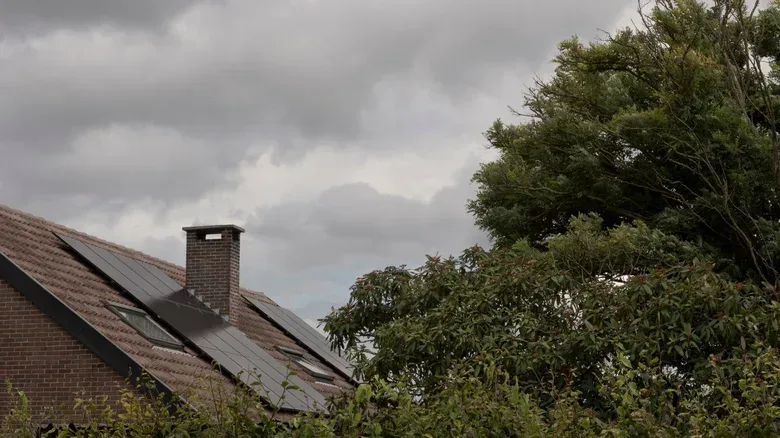
Solar technology needs an appropriate physical setting. Areas with reliable sunlight and moderate-to-cool temperatures are presented as the strongest candidates. Persistent overcast conditions can limit production, while excessive heat can negatively affect panel performance and lifespan. A sunny-looking location is therefore not the same as a complete performance forecast; climate and site conditions both matter.
The roof itself is equally important. Residential panels are commonly placed on south-facing roof surfaces with clear exposure to sunlight. Nearby buildings, trees and other obstructions can cast shade that undermines the system’s output. Prospective buyers should assess the actual roof plane intended for installation rather than assuming a sunny neighbourhood guarantees a clear solar path.
Roof age creates a separate, potentially expensive issue. Putting panels on an aging roof can mean facing removal and reinstallation when the roof later needs replacement. The supplied information says a new roof can cost from $4,000 to more than $35,000, depending on home size and roof type. If replacement is needed before solar goes in, it belongs in the total project budget. Treating roofing as a separate future problem can make an already major investment look artificially cheap.
Solar shingles trade one compromise for another
For homeowners who dislike the appearance of conventional panels, solar shingles offer an alternative that integrates energy generation into roofing materials. The trade-off is cost. Solar shingles are described as costing about twice as much per watt as standard panels and have also drawn negative press. At an installed $21 to $25 per square foot, covering a 2,500-square-foot home would be estimated at $52,500 to $62,500 before incentives.
That does not make shingles inherently unsuitable. It means they should not be treated as a cosmetic equivalent at a similar price. Their appeal may be strongest for someone already undertaking a major roofing project and prepared for the higher up-front commitment. For everyone else, the distinction is useful: solar panels and solar shingles solve related energy goals but present very different budget decisions.
A solar array does not automatically keep the house on during an outage
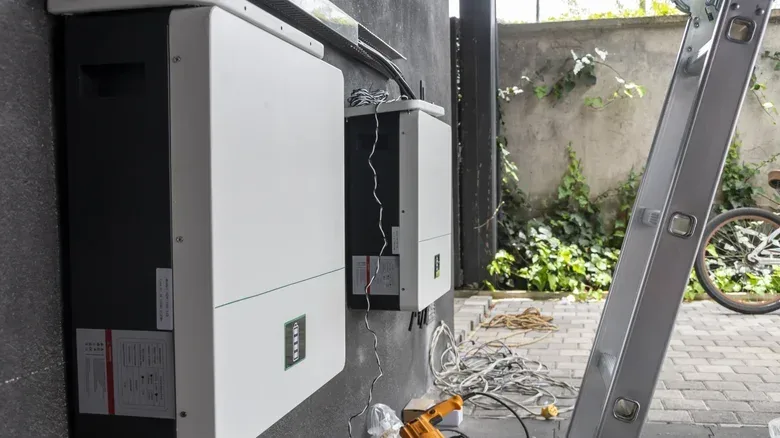
Backup power is one of the most common assumptions attached to solar, and it is where expectations need a reset. A rooftop system does not simply start powering the home when the grid goes down. To store solar generation and supply the house during an outage, the setup requires a battery backup system. That can move the project from an electricity-bill calculation into a much larger resilience purchase.
A single-battery system is estimated at $10,000 to $16,000. It can support core loads for an average home during an outage, including lights, a refrigerator, Wi-Fi and certain outlets. A whole-home, multi-battery configuration that can run HVAC equipment and all appliances is estimated at $22,000 to $40,000, plus routine maintenance costs.
The key phrase is core loads. It means choosing the essentials a smaller backup setup is intended to keep operating rather than assuming every device and appliance will behave as though utility service never failed. Households considering battery storage should decide what they want it to accomplish: preserving refrigeration and connectivity, providing selected outlets, or attempting whole-home operation. Each target implies a different cost profile.
Battery ownership also makes long-term planning more important. Storage can extend the solar system’s payback period—the time it takes for accumulated economic benefits to match the initial spending. Backup capability may still be valuable to an owner who prioritizes outage preparedness, but it should be counted as a deliberate resilience expense rather than slipped into the savings column by default. Hardware that stores power also comes with lifecycle considerations; for broader context on battery limitations in consumer devices, see why battery wear, seals and software support can matter as much as headline features.
Financing can become a home-sale complication
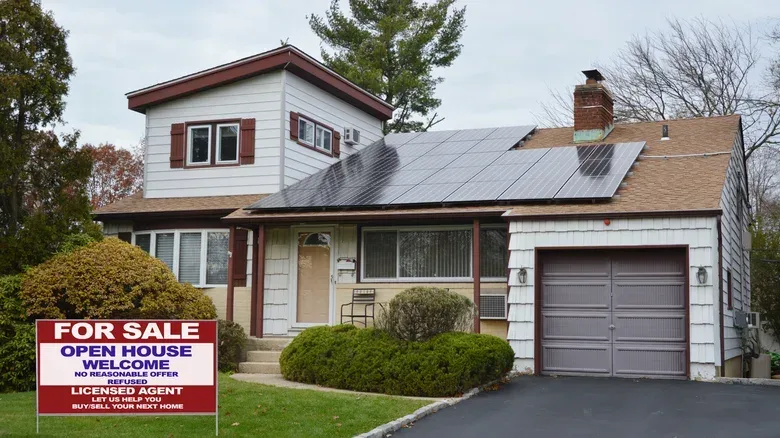
Solar can potentially improve resale value, but the arrangement used to obtain it can also complicate a sale. If the equipment has not been fully paid off, a buyer may need to assume the remaining obligation. This can happen when the homeowner financed the installation or entered a power purchase agreement, often shortened to PPA, with a utility company.
A PPA is a contractual setup tied to the solar equipment rather than a simple paid-off fixture. A buyer who does not want to take on that agreement can leave the seller facing the most straightforward but expensive remedy: paying the remaining balance. Anyone who may move before the system is paid off should treat the transfer provisions as seriously as the system’s projected output.
There is another approval layer, too. Mortgage approval does not automatically mean approval for a solar lease. The prospective buyer may have to qualify separately to take over the lease, and the process can take up to two months. If the buyer is not approved, the sale itself may be at risk. That creates an obvious scheduling concern: solar-contract transfer cannot be saved for the final days before closing.
The supplied material also flags a UCC-1 filing, commonly used by solar leasing companies, as a possible obstacle. It is essentially a lien connected to the solar equipment and can appear during property title searches. A buyer’s mortgage lender may decline to close while the filing remains active because it does not want another company’s claim positioned ahead of the lender if the property must later be seized and sold. That is not a minor paperwork detail; it can affect whether financing for the buyer is available at all.
Questions worth resolving before the installer arrives
Solar may still be a sensible choice, but a good decision requires specifics rather than a one-size-fits-all estimate. Before moving forward, homeowners should seek clear answers on the points most likely to determine the system’s value:
- What is the total installation price before and after verified incentives or rebates?
- How much electricity does the household actually use, and what rate does it currently pay?
- Does the utility offer net metering, a retail-rate exchange, a buyback program or reduced net billing?
- Is the intended roof surface south-facing, sufficiently clear of shade and in sound condition?
- Will a roof replacement be needed now, and has that cost been included in planning?
- Is backup power a genuine priority, and if so, which loads need battery support?
- Is the arrangement a paid purchase, financed purchase, lease or PPA—and what happens if the home is sold?
- Could a UCC-1 filing or lease-transfer approval interfere with a future closing?
The strongest solar case is built from answers to those questions, not from panels alone. Lower bills, cleaner generation and potential property value are real attractions, but so are high up-front costs, roof work, utility-rule variation, battery spending and contract obligations. A rooftop array can be a useful long-term home upgrade; it just needs to be evaluated as a complete infrastructure and finance decision, not an automatic upgrade unlocked by sunlight.