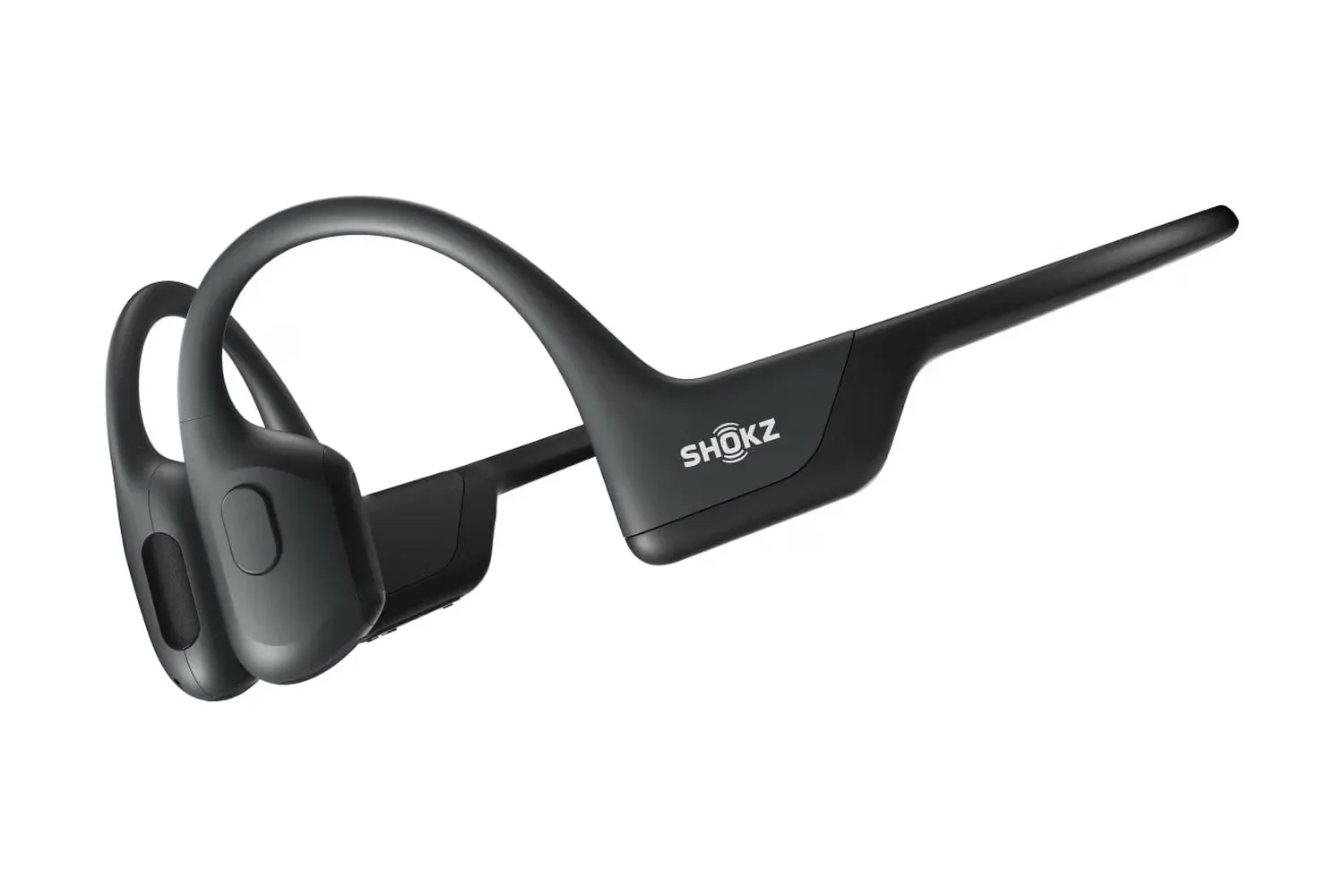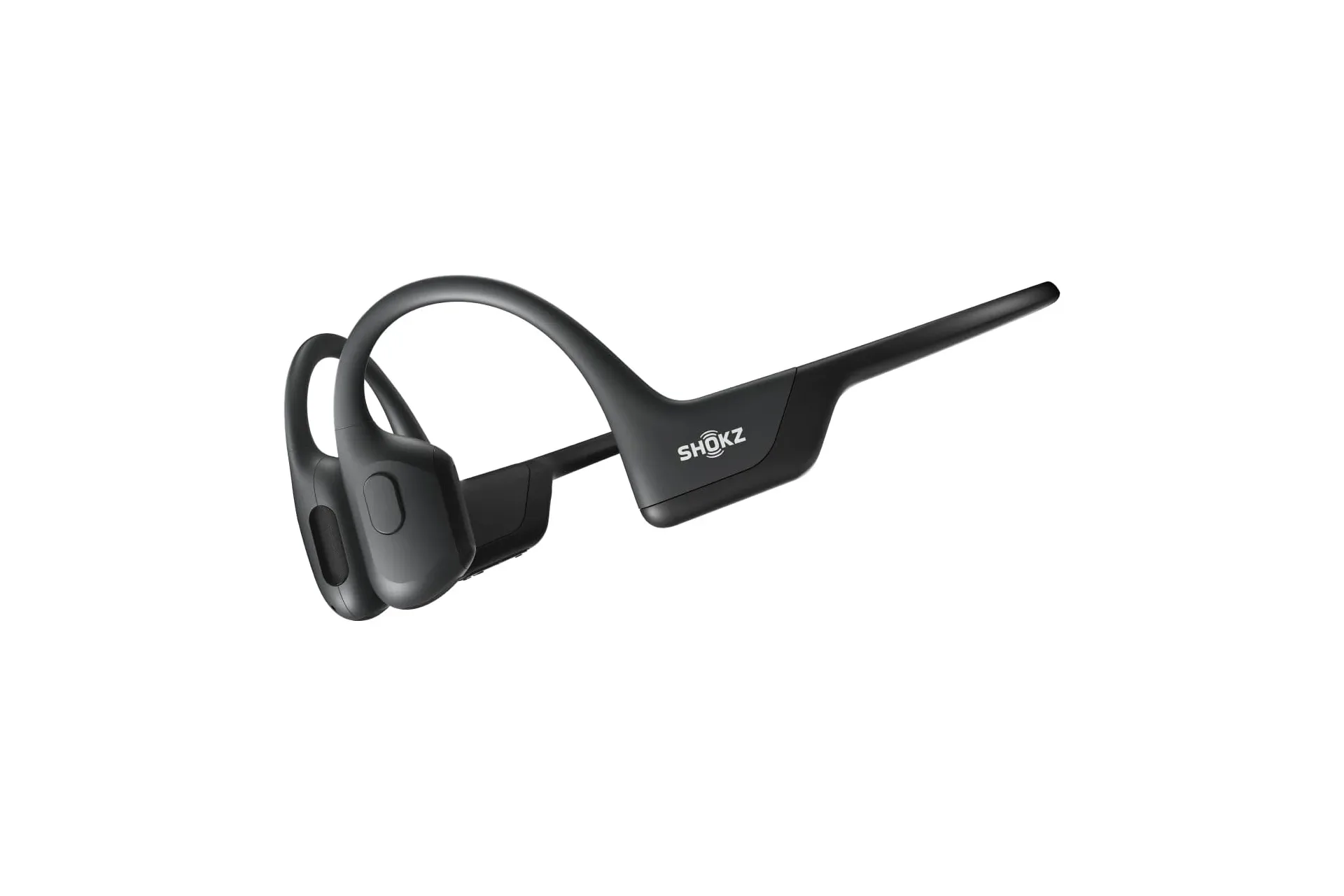
The Shokz OpenRun Pro have been listed at $110 in a limited-time retail promotion, down from a stated $180 price. That is a $70 reduction, or roughly 39%, on a pair of Bluetooth headphones built around a proposition conventional earbuds and over-ear cans do not usually offer: listening without putting anything into or over the ear canal.
For runners, walkers and anyone who spends time near traffic, that distinction is more practical than it first sounds. The OpenRun Pro use bone-conduction technology, sending vibrations through the area around the temples rather than relying on speakers that obstruct the ears. The result is an open-ear setup intended to let a wearer follow a podcast, music or other audio while retaining access to the ordinary sounds of the environment.
The offer was reported across all four listed colors: black, beige, blue and pink. As with any promotion described as limited-time, the quoted price and color availability should be checked before purchase rather than treated as a permanent new price.
What bone conduction means in everyday use
Bone conduction is a way of delivering sound through vibration. Instead of positioning a traditional speaker at the opening of the ear, this kind of headset rests against the head near the temples and transmits vibration through bone. The listener still experiences audio, but their ears remain physically open.
That is the defining design choice behind the OpenRun Pro. It is not merely a different fit for normal earbuds; it changes the relationship between personal audio and nearby noise. With earbuds, a seal or partially sealed ear canal can reduce the amount of environmental sound that reaches the listener. With an open-ear bone-conduction design, outside sound is not intentionally sealed out in the first place.
There are clear use cases for that approach. A runner moving along a road may want to hear an approaching car. Someone on a busy path may prefer not to lose awareness of other runners, cyclists, pedestrians or signals in the surrounding area. Music can help maintain a pace and spoken-word audio can make a longer route feel less repetitive, but neither has to require treating the rest of the world as background noise.
It is important not to turn that benefit into an absolute safety claim. Keeping ears open can preserve more awareness than blocking them with a conventional listening device, but it does not replace attention, visual checks or sensible choices about routes and volume. Audio of any kind can still be distracting. The practical advantage is simply that the OpenRun Pro’s physical design does not obstruct the ears.
A headphone category shaped by awareness
Most headphone buying discussions begin with isolation: how well a device can remove external distractions from music, calls or games. That can be useful at a desk, during travel or in a loud room. It is not necessarily the priority for exercise outdoors, where hearing what is happening around you can be part of the experience and part of navigating a route responsibly.
The OpenRun Pro sit on the opposite side of that choice. They are geared toward listeners who would rather have outside sound coexist with their audio. That makes the product’s appeal easier to understand than a generic claim that it is a “running headphone.” The crucial question is not whether every runner needs an open-ear design. It is whether the buyer wants situational awareness to remain available during listening.
There is also a comfort angle. Earbuds ask the wearer to tolerate an in-ear tip; over-ear headphones place cups over the ears. Bone-conduction models avoid both arrangements. For people who find those conventional approaches intrusive during movement, an open-ear band may be more appealing. At the same time, fit and personal comfort remain individual matters, and the supplied listing does not establish a universal comfort verdict.
Who the OpenRun Pro listing is most relevant to
- Road and path runners: People who want to keep some awareness of traffic and other route users while listening.
- Walkers: The same open-ear principle can matter on neighborhood streets, shared paths and busy public spaces.
- Podcast listeners: Spoken audio is specifically part of the intended use case, alongside music.
- Listeners who dislike blocked ears: The design avoids placing a bud in the ear canal or covering the ears with cups.
- Color-conscious buyers: The reported deal applies to black, beige, blue and pink, rather than limiting the reduction to one finish.
Conversely, someone shopping specifically to shut out a noisy environment should recognize the intentional trade-off. Open-ear awareness is the point here, not a side effect. Buyers seeking maximum separation from the sounds around them are considering a different set of priorities.
The discount is substantial, but the product fit matters more
A drop from $180 to $110 is significant in straightforward arithmetic: the buyer saves $70. The approximately 39% reduction also gives shoppers a clearer comparison point than promotional language alone. But a large percentage discount does not automatically make a product right for every listener.
In this case, the useful purchase check is simple. First, decide whether an open-ear format addresses a real need: outdoor awareness, a dislike of in-ear hardware, or a preference to hear the world alongside audio. Second, confirm that the current listing still shows the $110 price for the particular color desired. Third, remember that a limited-time offer can change without guaranteeing any ongoing discount.
The color selection is more meaningful than it may seem in a deal context. Promotions sometimes concentrate the lowest price on a single less-popular finish. Here, black, beige, blue and pink were all included at the stated $70 reduction. That gives buyers room to choose between a more understated black pair and brighter or lighter options without, at the time of the listing, sacrificing the advertised price.
OpenRun Pro and the wider Shokz open-ear approach
The OpenRun Pro are part of a broader open-ear category rather than an isolated concept. Shokz also has OpenFit 2 open-ear earbuds, a separate product discussed in coverage of the OpenFit 2’s awareness-focused pitch. The shared theme is preserving access to surrounding sound, but buyers should not assume that two products with “open-ear” in their descriptions use the same form factor or sound-delivery method.
That distinction matters because open-ear describes the listening arrangement—ears are not blocked—while bone conduction describes the mechanism used by the OpenRun Pro to transmit audio via vibration near the temples. They overlap in practical intent here, but they are not interchangeable technical labels.
For an outdoor exercise routine, that terminology can cut through confusing marketing. A buyer does not need to decide whether open designs are categorically better than earbuds. They need to decide what they expect from a session. If the goal is an immersive audio bubble, an open design is a mismatch by design. If the goal is to have motivating audio present without closing off the route, the OpenRun Pro’s core feature is directly relevant.
What is known—and what should not be assumed
The reported information supports several firm points: the OpenRun Pro are Bluetooth headphones; they use bone conduction; their open-ear construction leaves ears unobstructed; the stated promotion reduced the price from $180 to $110; and black, beige, blue and pink were named as discounted color choices.
It does not establish every specification a shopper might normally want, such as battery performance, water resistance, microphone behavior, sound tuning or the terms of any retailer return policy. Those are worthwhile details to verify on the live product page if they are central to the decision. They should not be filled in from assumptions based on the product category.
The same restraint applies to how any headphone will feel over a long run. Head shape, route conditions, listening habits and volume all vary. The strongest evidence-led reason to consider this deal is not a promise of universal performance. It is the combination of a clearly stated $70 discount and a purpose-built open-ear, bone-conduction design for people who want audio without plugging up their ears.
For the right listener, that is a tangible pairing: seasonal miles, a favorite playlist or podcast, and more awareness of what is happening nearby. For everyone else, the promotion is still a useful reminder to look past the discount percentage and ask what the hardware is actually designed to do.
Shop the products
Check current price, model and availability at the retailer.