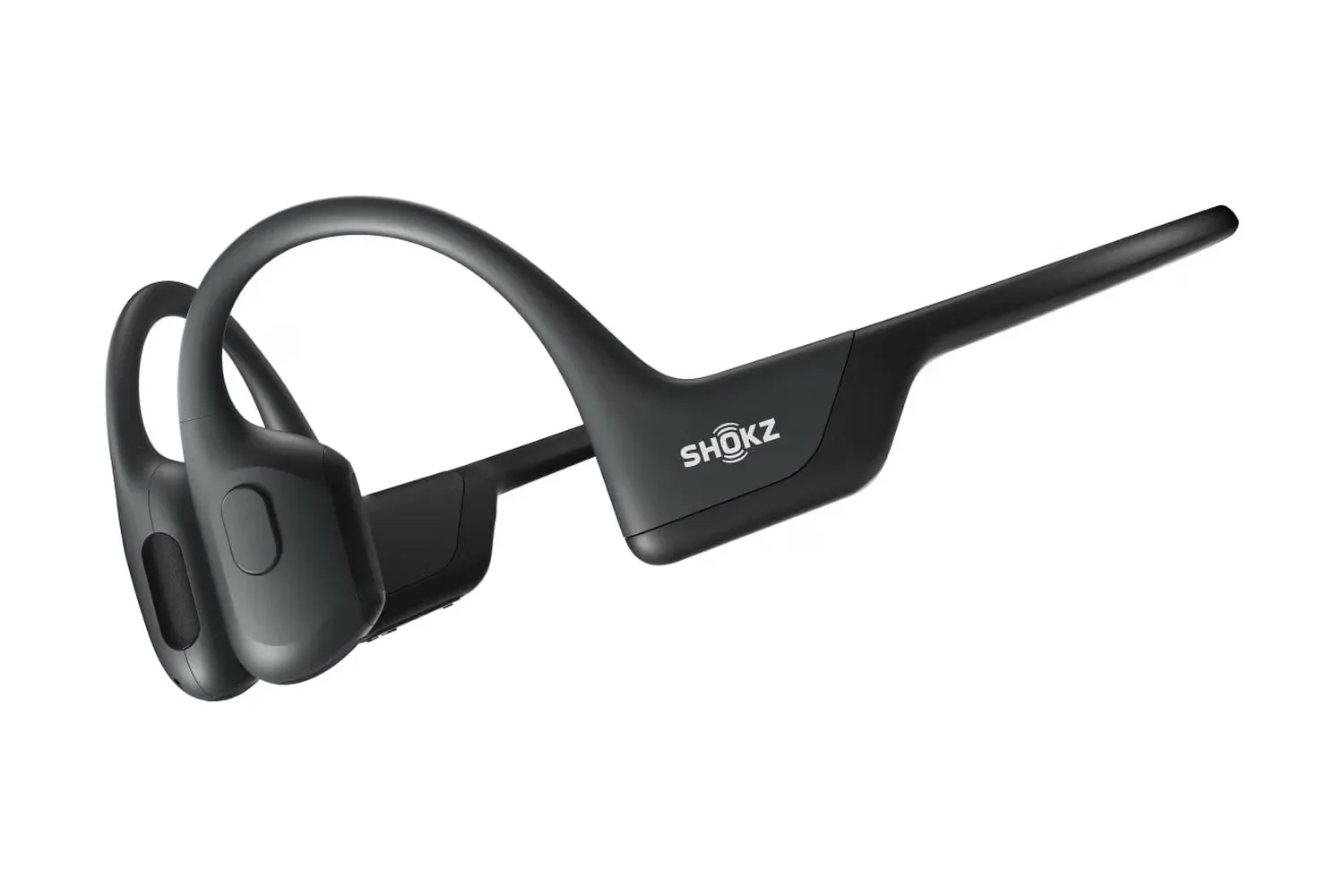
For runners, cyclists, walkers, and anyone who does not enjoy turning every crosswalk into a pause-menu moment, open-ear audio has an obvious appeal: music, podcasts, or an audiobook can continue while the surrounding world remains audible. The Shokz OpenRun Pro approaches that job with bone conduction rather than conventional in-ear buds, placing transducers just ahead of the ears instead of sealing the ear canals.
On September 8, the Shokz OpenRun Pro was listed at Amazon for $110, against a usual listed price of $180. That is a $70 difference, or roughly 39% off. Retail listings and promotional pricing can change quickly, so prospective buyers should confirm the current price, the selected model, and the seller before checking out.
The key proposition is not that bone-conduction headphones eliminate every outdoor safety concern. They do not. Attention, local rules, and sensible route choices still matter. Rather, the OpenRun Pro is designed so a listener does not have to physically block both ear canals to hear their selected audio. That distinction can be meaningful when traffic, another person, a coach, or a race announcement might need to cut through the playlist.
How the OpenRun Pro keeps ears open
Traditional earbuds and headphones deliver sound through the air and into the ear canal. Bone-conduction hardware takes a different route. Its transducers create vibrations against the area in front of the ear, sending those vibrations through bone toward the inner ear. The ear canals remain unoccupied, which is why external sounds can still be heard alongside audio playback.
It is a specialized fit for a specialized problem. Someone seeking maximum isolation on a train, deep bass for a living-room music session, or an entirely private listening experience may be better served by regular over-ear headphones or earbuds. But for outdoor exercise, the ability to retain more awareness of nearby activity is precisely the attraction. It also removes the familiar ritual of pulling one earbud out whenever a road crossing, conversation, or race marshal appears.
Shokz positions the OpenRun Pro around its TurboPitch technology. Bone conduction has often been associated with lighter low-end response than conventional headphones, largely because the physical delivery method and open-ear form factor are fundamentally different from a sealed in-ear design. TurboPitch uses two additional bass enhancers alongside the transducers in an effort to give lower frequencies more presence. The intended result is fuller-sounding music rather than the especially thin presentation listeners may associate with older bone-conduction products.
That claim is worth reading as a design goal, not a promise that physics has been defeated in a training montage. Open-ear bone-conduction audio remains its own category, with its own compromises. The useful question is whether its balance of awareness, comfort, voice listening, and musical weight fits the activity at hand.
Battery, charging, and the small cable caveat
The OpenRun Pro is specified for up to 10 hours of playback. For many people, that could cover several runs or workouts before a recharge is needed, though real battery life varies with volume, calls, connection conditions, and usage patterns. Its rapid-charge specification is also practical on paper: a five-minute charge is said to add up to 1.5 hours of listening time. That is potentially useful for the person who discovers a low battery shortly before leaving home and begins bargaining with every electrical outlet in sight.
There is a trade-off in the charging arrangement. The headset uses a proprietary magnetic charging connector rather than USB-C. Magnetic connectors can be convenient to attach and can help preserve the compact form, but they also mean the supplied cable is important. A USB-C cable is easy to replace from an already crowded drawer; a proprietary cable is the sort of item that deserves a known home rather than an expedition through the laundry basket.
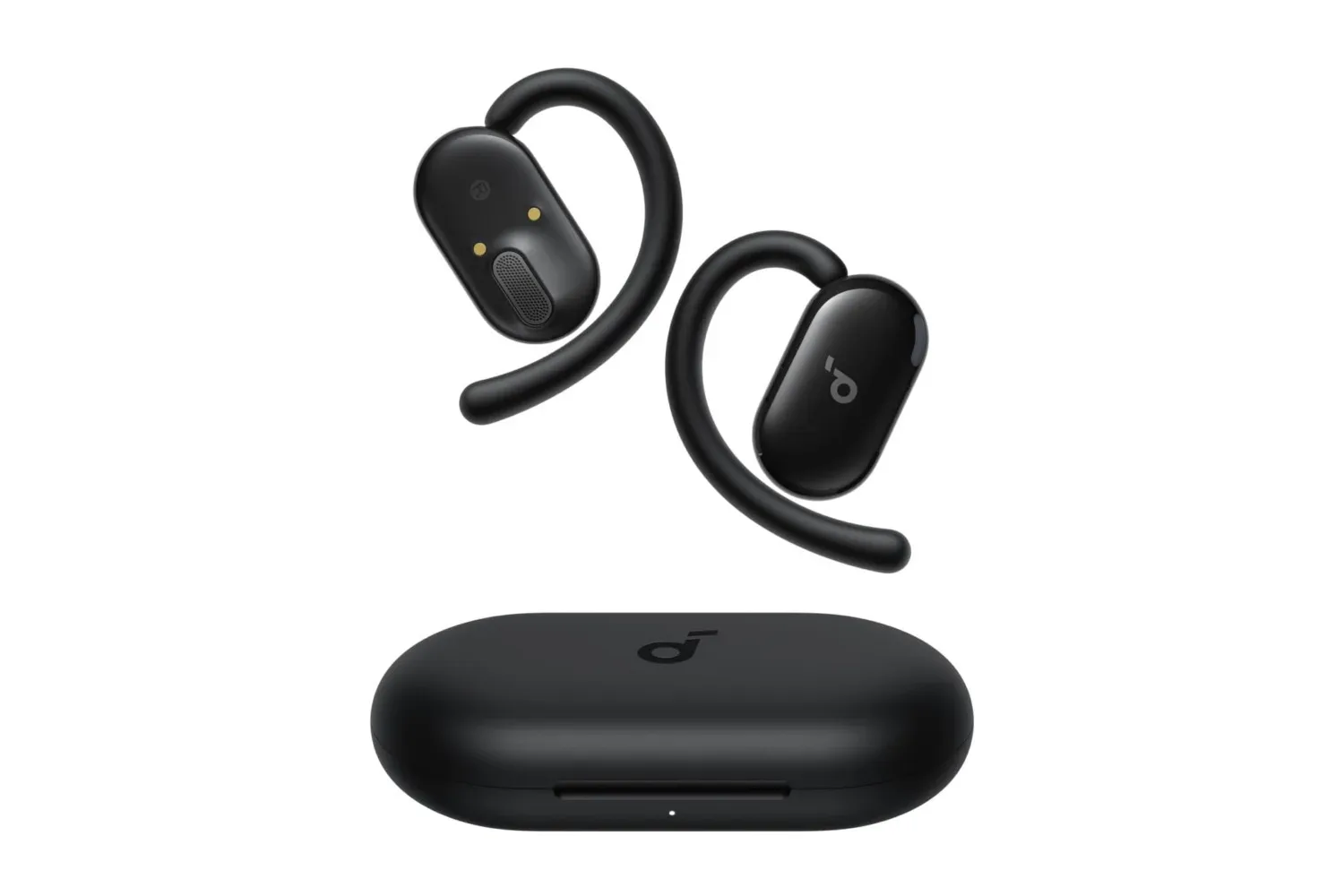
For shoppers comparing open-ear options, charging ecosystem is a legitimate consideration, not a tiny footnote. Another open-ear option covered in our hardware news, the Soundcore V20i earbuds, represents a different approach to keeping the ear area open. The OpenRun Pro instead focuses on a wraparound bone-conduction structure, so comfort, fit, audio delivery, battery expectations, and charging requirements should be compared on their actual merits.
Built for movement rather than a desk-chair campaign
The OpenRun Pro uses a titanium-alloy frame that wraps around the back of the head. This style is meant to stay in place during movement while flexing with the wearer. The complete headset weighs about one ounce, a figure intended to reduce the sense of wearing a substantial accessory during a run or extended workout.
Fit remains personal, especially with a behind-the-head band. Hair, hats, helmets, sunglasses, head shape, and the particular movements of an activity can all affect how a headset feels. A lighter design may be appealing for those who dislike the pressure created by buds inside the ears, but shoppers should still consider the return policy and whether a wraparound frame suits their normal gear.
The model carries an IP55 water-resistance rating. In practical terms, it is presented as protection against sweat and rain, both relevant companions for exercise headphones. Water resistance is not the same thing as permission to submerge the unit, however. Anyone using it around pools, showers, or heavy water exposure should recognize the difference between handling perspiration and rain versus being waterproof.
This construction also helps clarify the OpenRun Pro’s lane. It is not simply a wireless music device with an unusual mechanism. The combination of an open-ear setup, light weight, sweat-and-rain resistance, and rapid top-up charging is tailored toward active routines. It is a piece of kit for people who would prefer their soundtrack to accompany the quest without deleting all environmental audio from the map.
Calls, multipoint pairing, and spoken-word modes
Beyond exercise playback, the OpenRun Pro supports multipoint pairing. That allows a phone and laptop to stay connected at the same time. The supplied description says the headset can switch to an incoming phone call during a run, avoiding the need to manually disconnect one device before answering another.
Multipoint can be especially useful for people splitting their day between work calls and outdoor activity, though the exact behavior of any multi-device connection can depend on the phones, computers, operating systems, and apps involved. It is wise to confirm compatibility for a specific device setup rather than assuming every Bluetooth pairing scenario behaves identically.
The Shokz app provides equalizer presets and software updates. Available listening options include Standard Mode and Vocal Boost Mode, with the latter aimed at podcasts and audiobooks. That makes sense for an open-ear product: spoken-word clarity may matter as much as music performance to users running through a multi-hour show, reviewing a lecture, or finally tackling the lore video that has been sitting in the queue since the previous season.
For calls, the OpenRun Pro includes dual noise-canceling microphones intended to help preserve vocal clarity in windy conditions. This should not be mistaken for a claim that every call will sound pristine on a breezy road or trail; wind is a famously determined co-op opponent. Still, microphone handling matters on an exercise-focused headset, particularly for people who take calls between sessions or use voice features while moving.
Who should consider the $110 listing
At the reported $110 price, the OpenRun Pro makes the strongest case for listeners who specifically want open ears while exercising or spending time outside. Its cited strengths are straightforward: bone-conduction playback, TurboPitch bass enhancement, a 10-hour playback claim, a five-minute quick charge for up to 1.5 additional hours, IP55 resistance, multipoint pairing, and app-based sound modes.
The caveats are equally straightforward. Its magnetic proprietary charger has to be kept track of, and bone conduction will not be the universal answer for listeners whose highest priority is isolation or the sonic character of sealed earbuds. But for people who value environmental awareness and dislike objects inside their ears, the design solves a very real problem. The reported $70 reduction from $180 makes that specialized proposition considerably easier to consider, provided the offer is still active when checked.
Shop the products
Check current price, model and availability at the retailer.