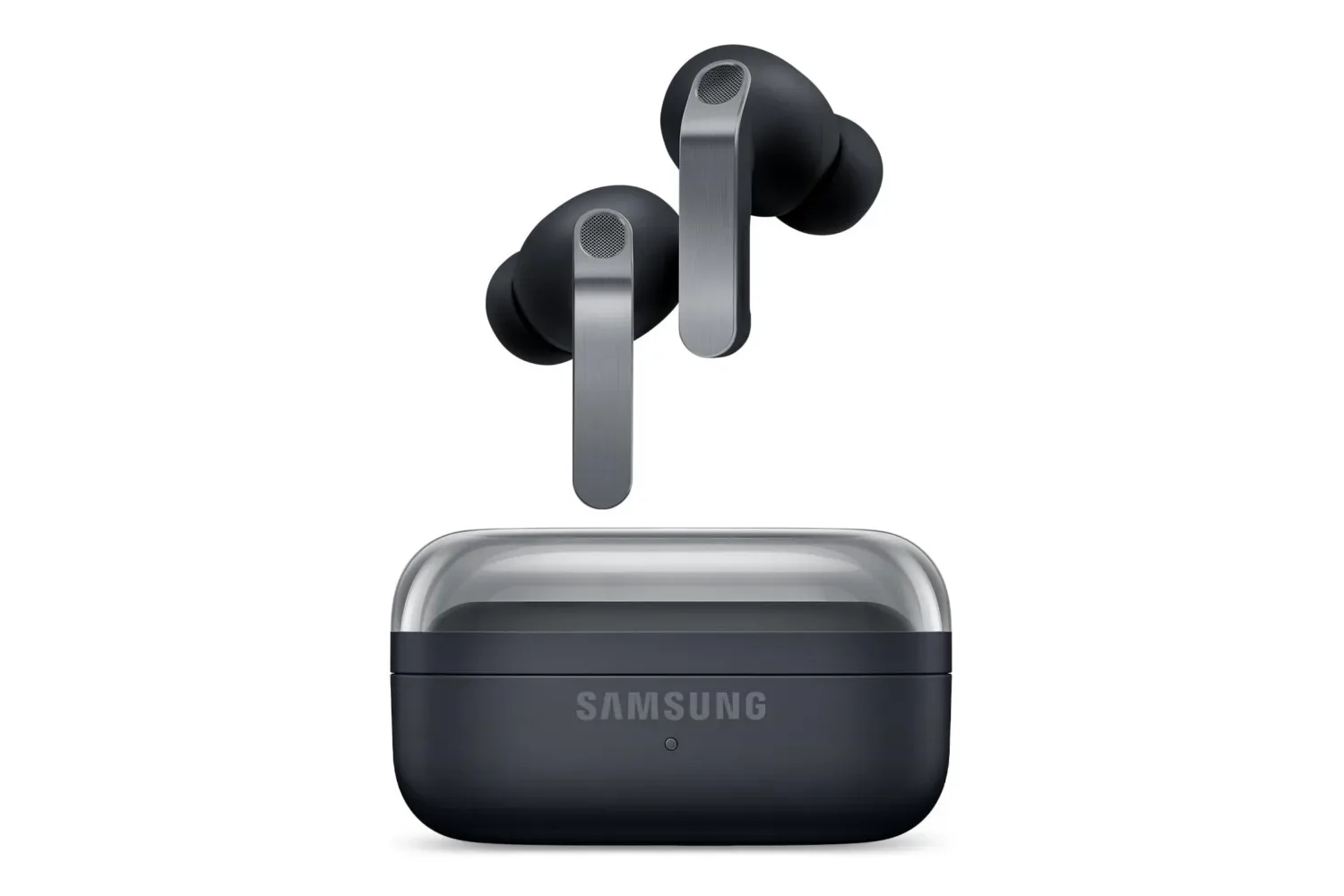
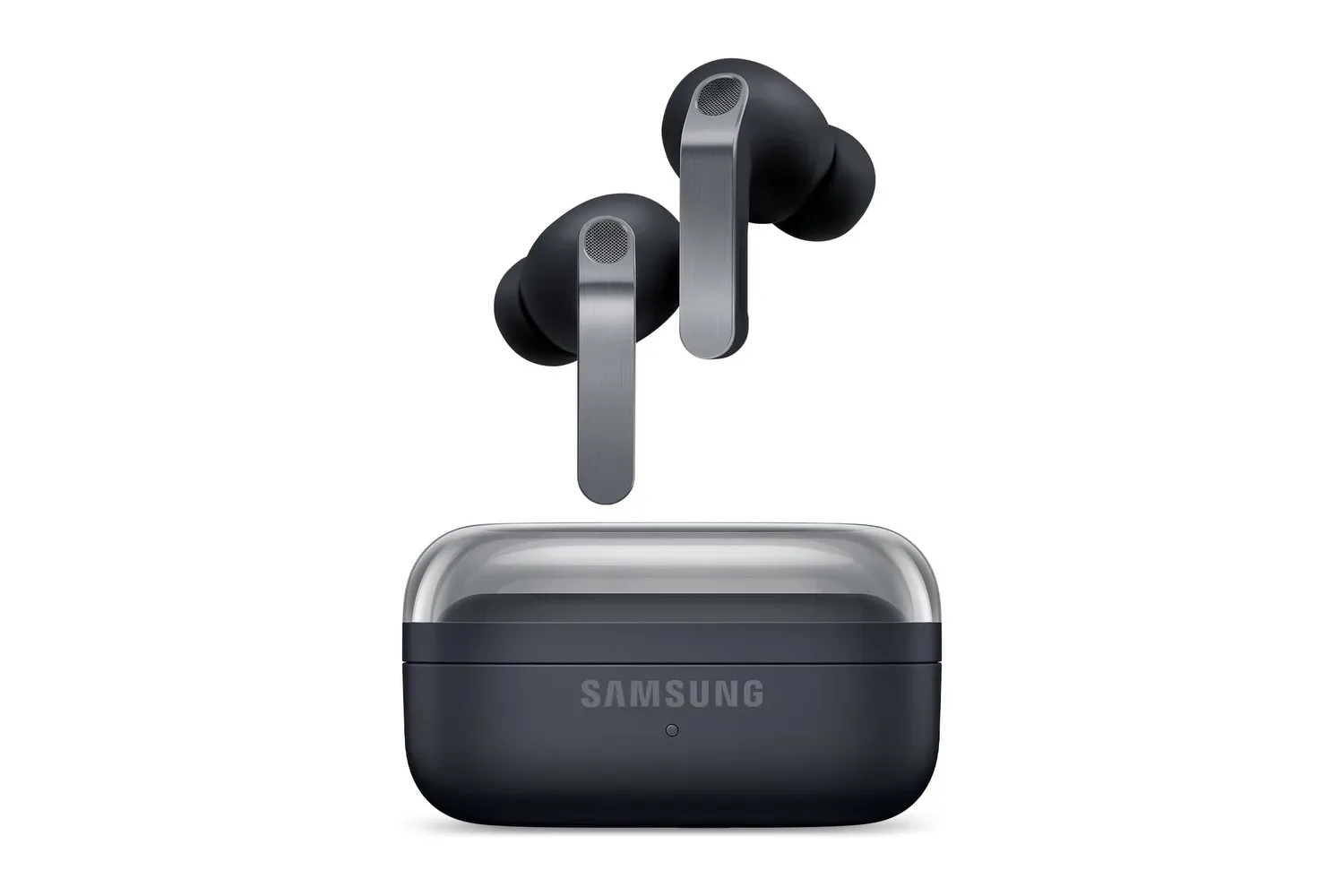
Samsung’s Galaxy Buds 4 Pro are listed at $170, down $80 from a stated regular price of $250. That is a 32% reduction for the wireless earbuds, which combine a two-driver audio design, adaptive active noise cancellation and a set of features that are most closely tied to Samsung’s Galaxy device ecosystem.
The price matters, but the compatibility details matter just as much. The Buds 4 Pro can function as wireless earbuds broadly, yet several of their headline capabilities require a compatible Galaxy product or rely on being signed into the same Samsung account. Prospective buyers should therefore treat the $170 listing as an especially relevant deal for someone already using a Galaxy phone, tablet, or watch—not simply as a specification-for-specification substitute for any kind of gaming headset.
What the $170 deal includes
The Buds 4 Pro use a two-way speaker system in each earbud. In plain terms, two separate drivers divide the sound duties: a larger woofer is intended to handle lower-frequency audio, while a planar tweeter is designed for higher frequencies. Samsung also specifies separate amplification for each driver.
That division is meant to help low-end effects and high-frequency detail coexist rather than forcing one small driver to reproduce the entire range alone. For games and movies, the practical appeal is straightforward: bass-heavy moments, dialogue, music, and sharper effect detail all compete for attention. A multi-driver approach is built to give those elements dedicated hardware roles. It does not, on its own, establish how every game, phone, or streaming app will sound, but it explains the intent of the earbuds’ audio setup.
When paired with a compatible Galaxy product, the earbuds support 24-bit/96 kHz audio using Samsung Seamless Codec. The numbers refer to digital audio resolution and sampling frequency: 24-bit describes the potential precision of amplitude information, while 96 kHz refers to how frequently audio is sampled. The key caveat is the codec requirement. This is a Galaxy-compatible feature, not a universal promise for every Bluetooth source.
The earbuds also include a nine-band equalizer and adaptive EQ. An equalizer changes the level of selected frequency ranges, allowing listeners to tune sound toward more bass, clearer mids, or more emphasis in the treble. With nine bands available, there is more room for targeted adjustment than a simple bass-or-treble slider. Controls for playback and volume use pinch gestures and can be customized in the Galaxy Wearable app.
Adaptive ANC is aimed at changing surroundings
Active noise cancellation, usually shortened to ANC, uses microphones and processing to reduce unwanted environmental sound. Samsung calls its system Adaptive ANC 2.0. Rather than requiring the user to manually select a setting whenever their surroundings change, it is designed to adjust its mode of operation as the environment shifts—for example, when going from a quieter café to a louder train platform.
The practical benefit is not silence in an absolute sense. It is reducing background distraction so that a listener can follow music, dialogue, a video, or game audio without continually raising the volume. The system’s usefulness will naturally depend on the surrounding noise and how it responds in that moment, but the feature set is focused on environments where a fixed noise-cancelling level can become inconvenient.
There are also context-aware options around awareness. Voice Detect reduces the earbuds’ volume and raises ambient sound when the wearer speaks, intended to make brief conversations easier without removing an earbud. Siren Detect switches to Ambient mode when an emergency vehicle approaches. Ambient mode means microphones intentionally pass outside sound through to the listener instead of trying to reduce it.
That distinction is meaningful for players or commuters deciding when to use earbuds. Noise cancellation can make a long flight, a noisy street, or a shared indoor space less intrusive; ambient sound is the counterbalance when awareness is more important. Neither approach should be mistaken for a replacement for paying attention around traffic or other hazards, but the automatic mode changes are designed to reduce friction between immersion and awareness.
Battery, water resistance and the case
With ANC enabled, Samsung rates the Galaxy Buds 4 Pro for approximately six hours of battery life from the earbuds and up to 26 hours in total with a fully charged case. With ANC turned off, the estimate rises to seven hours from the earbuds and up to 30 hours with the case.
Those figures make the ANC choice an explicit battery trade-off. A buyer who expects noise reduction to be on for most listening should assess the six-hour estimate rather than planning around the higher ANC-off number. The case supports wireless charging and uses magnetic docking intended to make reseating the earbuds simpler.
The Buds 4 Pro carry an IP57 rating. The first digit, 5, indicates protection against dust ingress at the stated classification. The second digit, 7, covers temporary immersion in fresh water: roughly three feet for around 30 minutes as described for these earbuds. That rating provides a measure of resilience for everyday mishaps, but it is not a reason to treat the buds as equipment for deliberate underwater use. The supplied description specifically refers to fresh water and a limited depth and duration.
Calls and hands-free controls
Each earbud contains three microphones, for six in total. Samsung pairs that array with DNN noise reduction and Super Wideband calling. DNN, or deep neural network, noise reduction refers to processing intended to distinguish voice from unwanted sound. Super Wideband calling is positioned as a way to deliver more natural-sounding conversations.
The main promise here is voice clarity when conditions are less than ideal, rather than simply a longer feature checklist. Anyone regularly joining voice chats, taking calls while walking, or moving between locations may find the microphone system more relevant than premium music specifications alone. Results can still vary with the environment, connection, and the other person’s call setup, so it is best understood as hardware and processing designed to help, not a guarantee of studio-quality communication.
Samsung also includes head gestures: nodding can answer a call and shaking one’s head can decline it. That is a focused convenience feature for moments when hands are occupied. The pinch controls remain the direct way to manage playback and volume, and customization through Galaxy Wearable gives owners a route to tailor those inputs instead of accepting a single fixed layout.
Gaming and entertainment implications
For Galaxy users who watch films or play games on a supported device, 360 Audio with head tracking is among the more entertainment-oriented features. Head tracking changes the perceived position of audio as the listener moves their head, with the goal of maintaining a more screen-anchored presentation. Its purpose is spatial presentation during content consumption, not a claim that the earbuds provide an all-purpose competitive gaming advantage.
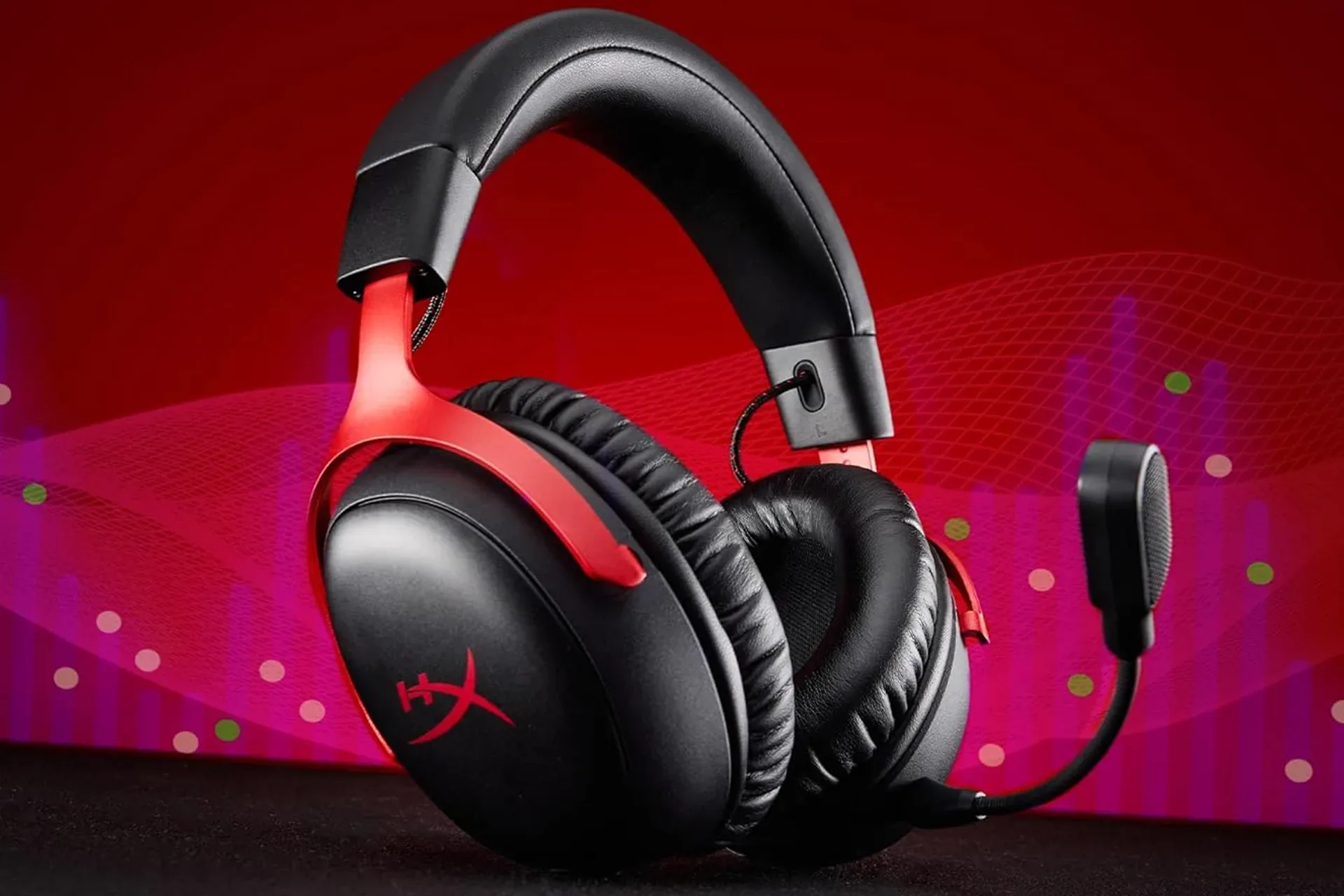
That distinction is worth making. The available details describe audio quality, immersive playback features, calls, translation tools and device switching, but do not provide latency figures or establish performance in a particular game. Shoppers looking specifically for a dedicated wireless gaming headset should evaluate those needs separately. For an overview of a purpose-built alternative in that category, see our coverage of the HyperX Cloud III S Wireless headset.
For players already using a Galaxy phone or tablet, the Buds 4 Pro proposition is instead about an everyday pair of compact earbuds that can also add spatial audio during supported viewing or gaming sessions. Auto Switch can move the connection between Galaxy products logged into the same Samsung account, which may be handy for someone alternating between a phone and tablet. The feature is ecosystem-dependent, so its value grows with the number of compatible Galaxy devices a person actually uses.
Translation features and the Galaxy ecosystem
Interpreter and Live Translate support real-time translation in 22 languages. The translated words are delivered through the earbuds while text appears on the phone. This is a different kind of feature from audio playback or ANC: its value is situational, aimed at conversations and comprehension rather than media listening.
As with the Samsung Seamless Codec and Auto Switch, this feature reinforces the central buying consideration. Galaxy Buds 4 Pro are not presented merely as isolated earbuds. Their advanced functions are interwoven with a Galaxy phone, tablet, watch, compatible software, and Samsung account where applicable.
At $170, the current listing lowers the entry price by $80 while retaining the full specified package: dual-driver audio, Adaptive ANC 2.0, wireless charging, IP57 protection, microphone-based call features, head gestures, translation tools, and 360 Audio with head tracking. For someone committed to Galaxy devices and wanting noise-cancelling earbuds for music, calls, travel and occasional mobile entertainment, that combination is the deal’s clearest appeal. Buyers outside that ecosystem should weigh the standard earbud fundamentals against the fact that several marquee features are expressly designed around compatible Samsung hardware.
Shop the products
Check current price, model and availability at the retailer.