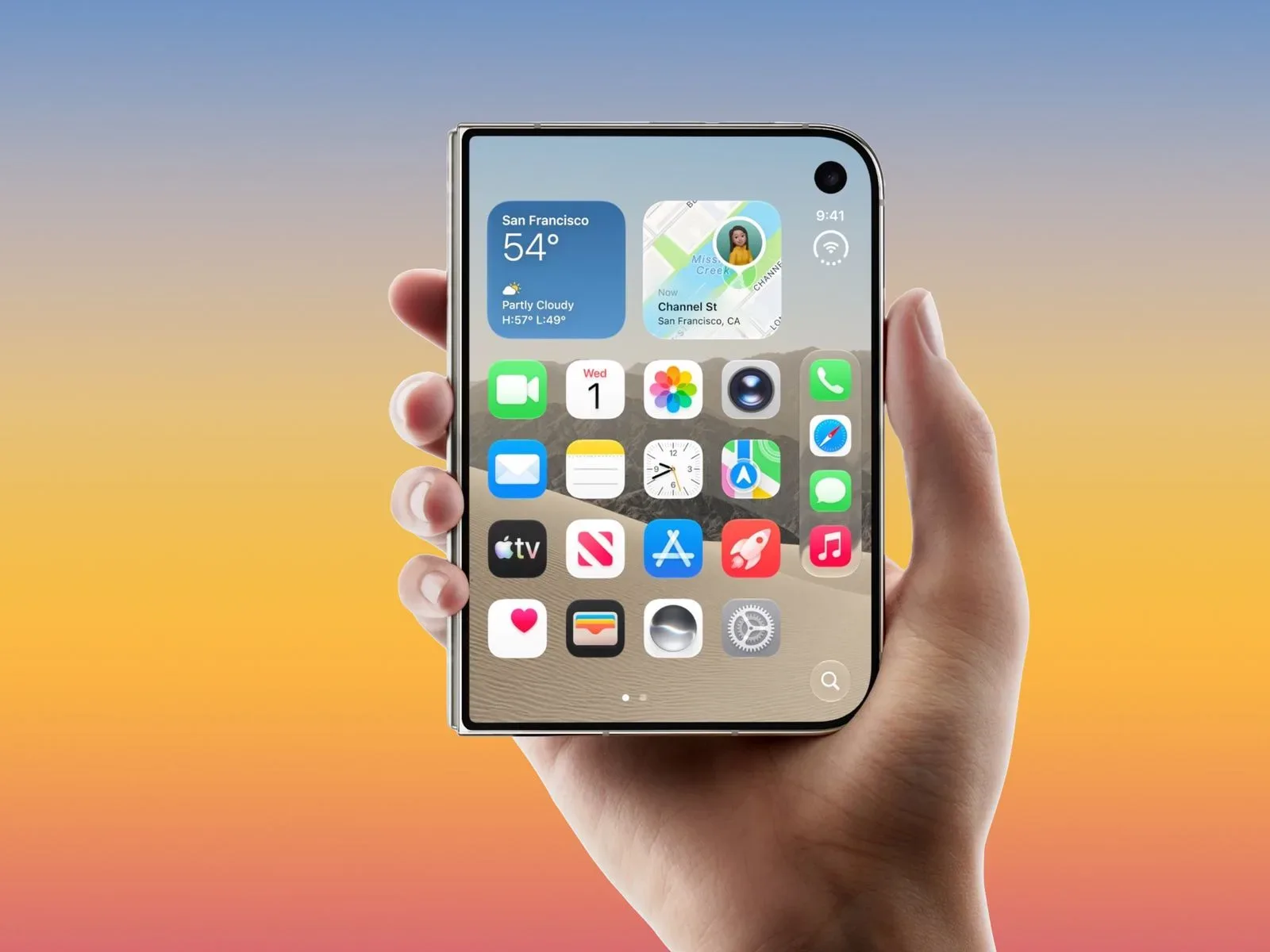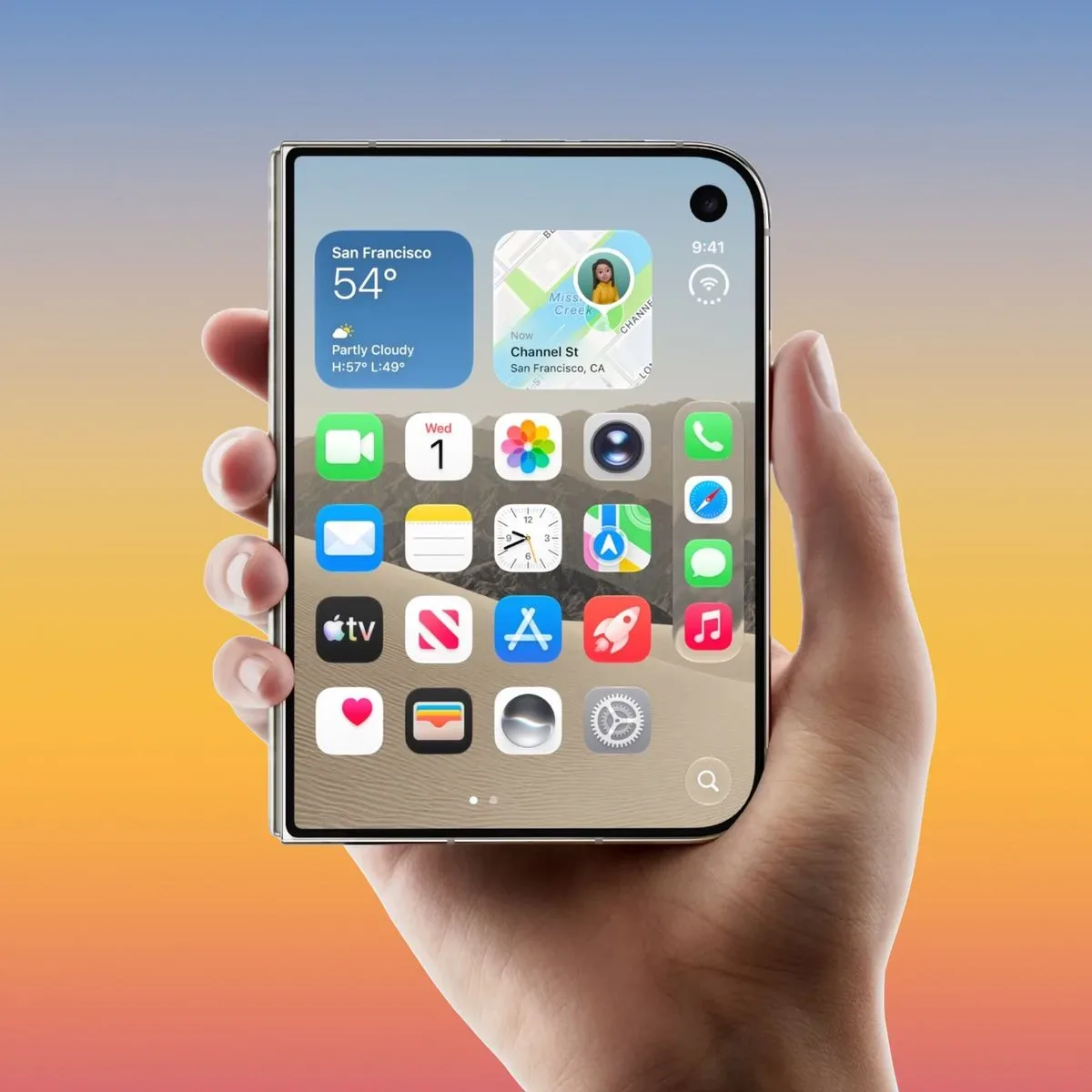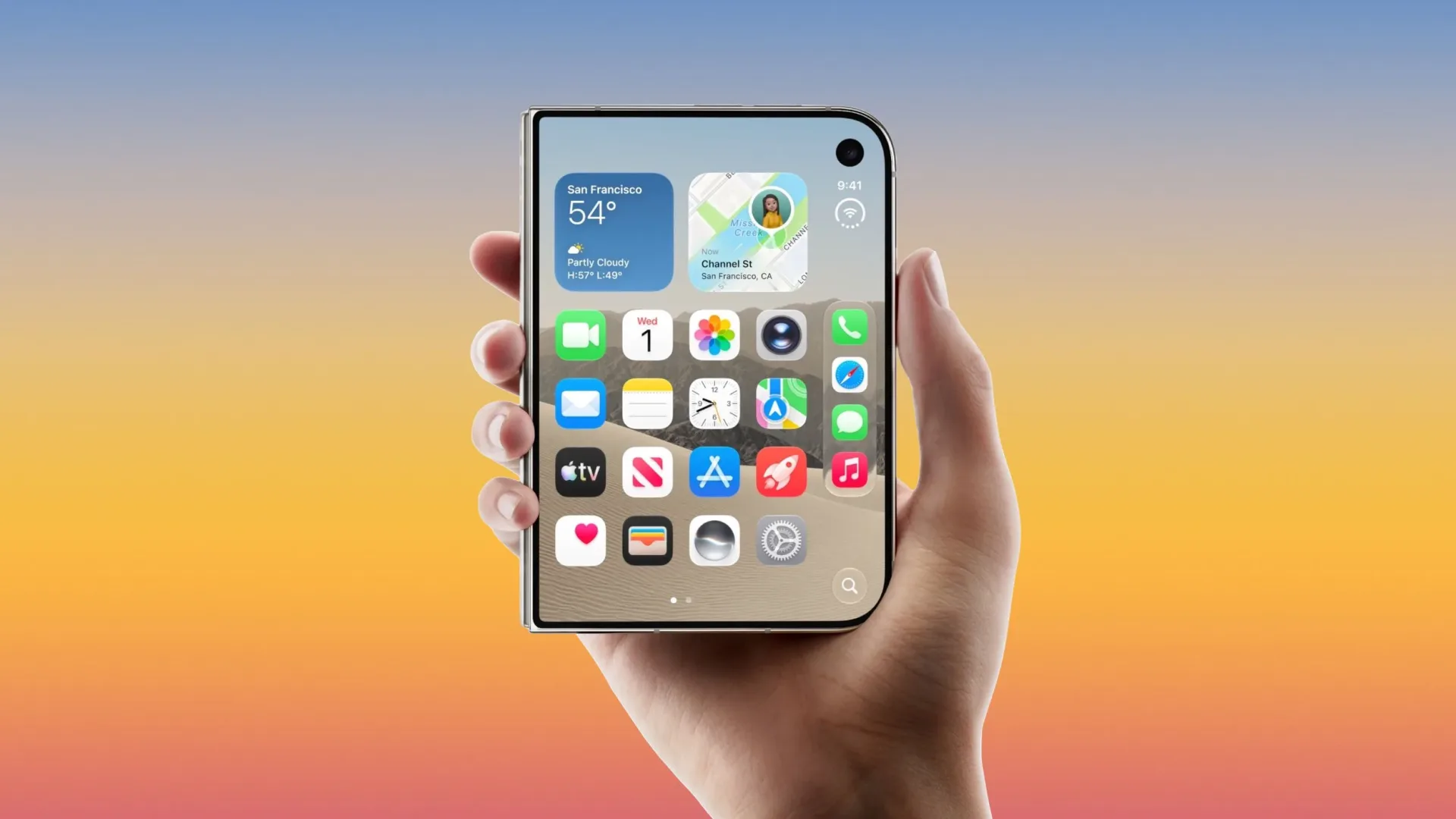
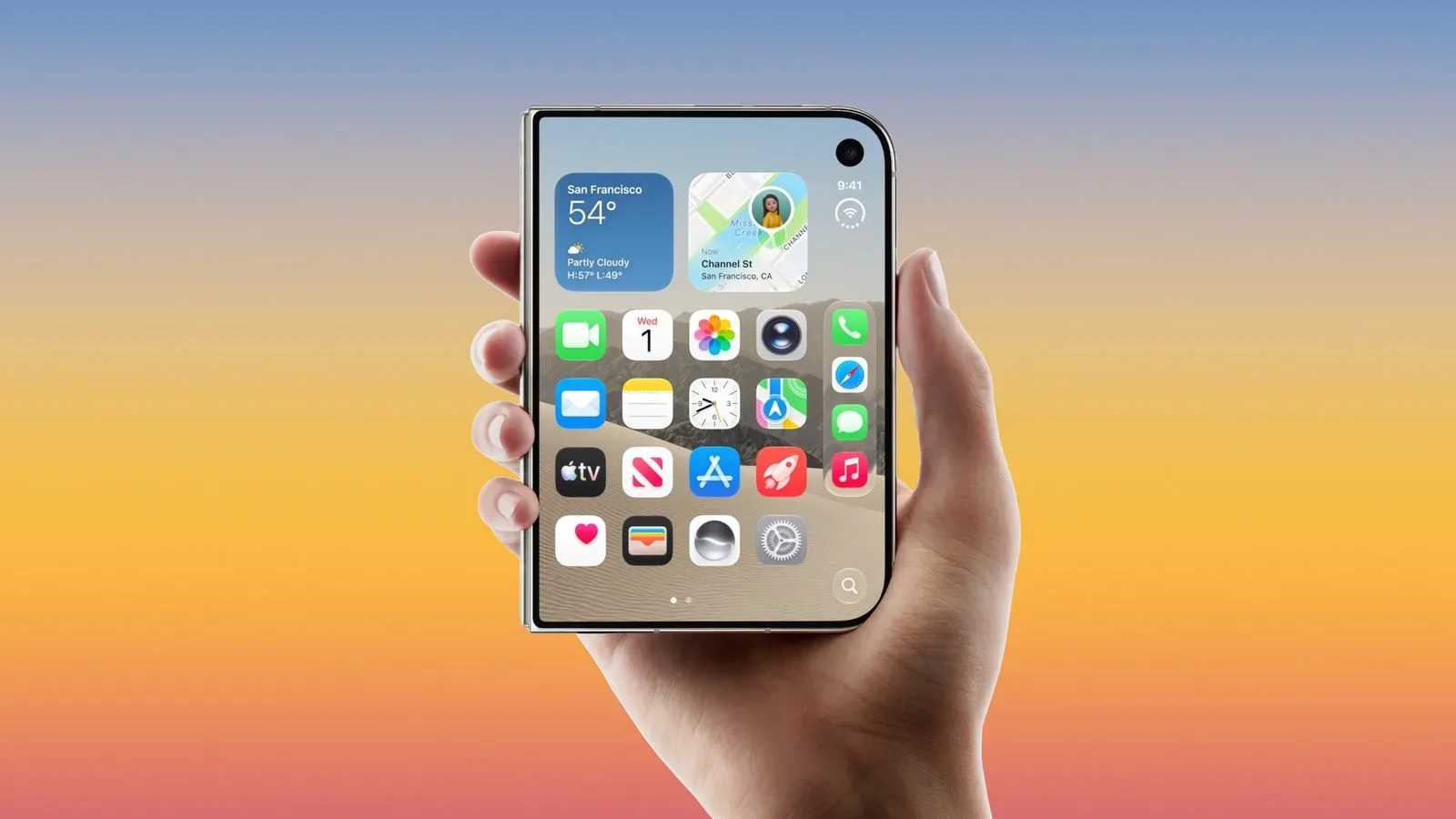
A future non-folding iPhone might become shorter without becoming narrower, if one speculative design idea ever finds its way beyond the sketchpad. The proposal is simple in physical terms but ambitious in software terms: remove about a status bar’s worth of screen height, move certain interface controls upward beside the time and system indicators, and aim to preserve the amount of information visible on-screen.
The idea comes from the leaker known as Instant Digital, who has explicitly framed the layout and its proportions as personal speculation rather than a confirmed product plan. That distinction matters. There is no indication here of an announced handset, a release timetable, or a settled Apple design. Still, the theory usefully highlights a question that becomes more relevant as phones reduce their visible camera cutouts: once the top of the display is less interrupted, should a handset simply gain more screen, or could the hardware itself become more compact?
The proposed trade: less height, not less information
Current iPhones use an approximately 19.5:9 display aspect ratio. Aspect ratio describes the relationship between a screen’s width and height, not its absolute size. A move toward roughly 18:9 while keeping the same width would make the phone physically shorter. In the concept, that reduction is about the height normally associated with the status-bar region.
That sounds like a straightforward loss of screen real estate, but the proposed iOS change is intended to offset it. Many app interfaces currently place a row of navigation or contextual controls immediately below the status bar. The speculative arrangement would combine that app-level row with the system row that contains the time and status indicators. In other words, the top edge would become a more densely shared area rather than a pair of separate horizontal bands.
For a user, the potential benefit is not a radically different phone category. It is a familiar device with less vertical reach. Keeping the width intact could preserve much of the typing and landscape viewing space people are accustomed to, while reducing the distance from the bottom of the phone to the far top corner. That could make one-handed use more comfortable for some people, particularly when reaching for controls near the top of an app.
The cost would be a tighter interface. Status information, application controls, and camera hardware all compete for the same valuable strip at the top of the screen. A design that saves physical height would need to remain immediately readable and avoid making important controls too small or visually confusing. It would also need to work across apps with very different interface demands, rather than merely looking neat in a concept mockup.
Why the camera cutout is central to the theory
The shorter-iPhone notion depends on the display becoming visually simpler at the top. Instant Digital imagines the change after an iPhone reaches a single camera hole or moves the front-facing camera entirely beneath the display. An under-display camera places the camera components behind the active screen area, with the goal of avoiding a permanently visible hole or pill-shaped cutout.
Whether Apple can or will make that transition on this schedule is unresolved. Another leaker, Digital Chat Station, has said Apple is testing under-display camera technology and has described an interim approach that would retain a visible front camera hole, similar to the iPhone Duo. Testing is not the same as a product commitment, and the supplied claims do not establish when such a technology would ship, if it ships at all.
Predictions for 2028 are also in conflict. In a follow-up discussion, Instant Digital said some sources indicate that the cutout could disappear in 2028. But display analyst Ross Young has separately expected 2028 iPhone Pro models to retain a centered camera cutout. Another commenter anticipated iPhones keeping both a camera cutout and the 19.5:9 ratio through 2027 and 2028. Taken together, these reports point to uncertainty, not a reliable countdown to a cutout-free iPhone.
That uncertainty changes how the shorter-body theory should be read. It is not evidence that Apple has decided to shrink the next iPhone. It is a design hypothesis built around a possible future display milestone. The front camera’s placement could influence more than the appearance of the top edge, but it does not by itself prove that Apple would alter the phone’s proportions.
iOS has already adapted to unusual top-screen layouts
There is nevertheless a practical basis for thinking that iOS can change its top-of-screen behavior as hardware evolves. Apple has already adjusted this territory on the iPhone 18 Pro and iPhone Duo. The smaller Dynamic Island on the iPhone 18 Pro can support up to three simultaneous Live Activities, compared with two on earlier models.
Live Activities are persistent, glanceable updates from supported apps. The relevant point here is not merely the higher number. Supporting three at once shows that the system interface can change how it distributes attention, notifications, and ongoing app information around an altered camera-and-sensor area.
The iPhone Duo provides an even clearer example of software working around an unconventional display layout. Its outer display uses a compact status bar in one corner and places the Dynamic Island vertically along the side. That arrangement demonstrates that the traditional full-width horizontal strip is not the only way iOS can present basic system information. It does not confirm a future shorter slab-style iPhone, but it makes the proposed rearrangement easier to imagine as an interface problem rather than an impossibility.
For game and app developers, this kind of evolution has a practical implication: safe areas remain important. A safe area is the portion of a display where an app can place important controls and text without colliding with camera hardware, rounded corners, system indicators, or gesture regions. If Apple further varies where the Dynamic Island and status information live, adaptable layouts matter more than designs that assume a single fixed top edge.
This is especially relevant for mobile games, which frequently use the full screen for touch controls, maps, score displays, timers, and chat or party indicators. A shorter screen could reduce vertical room for these elements even if general-purpose apps recover some space by merging interface rows. Developers would need to decide what deserves permanent visibility, what can move into menus, and what should shift when the device changes orientation.
That does not mean a shorter phone is automatically worse for games. A reduction in height could make a device easier to grip, and a more deliberate status-bar layout may reduce dead space in some apps. The actual result would depend on the eventual hardware dimensions, operating-system rules, and each game’s interface choices—none of which are established by the current speculation. For a glimpse at how the iPhone Duo is already being considered for portable gaming, see this look at a Game Boy emulation project targeting the device.
A broader redesign may be the more consequential claim
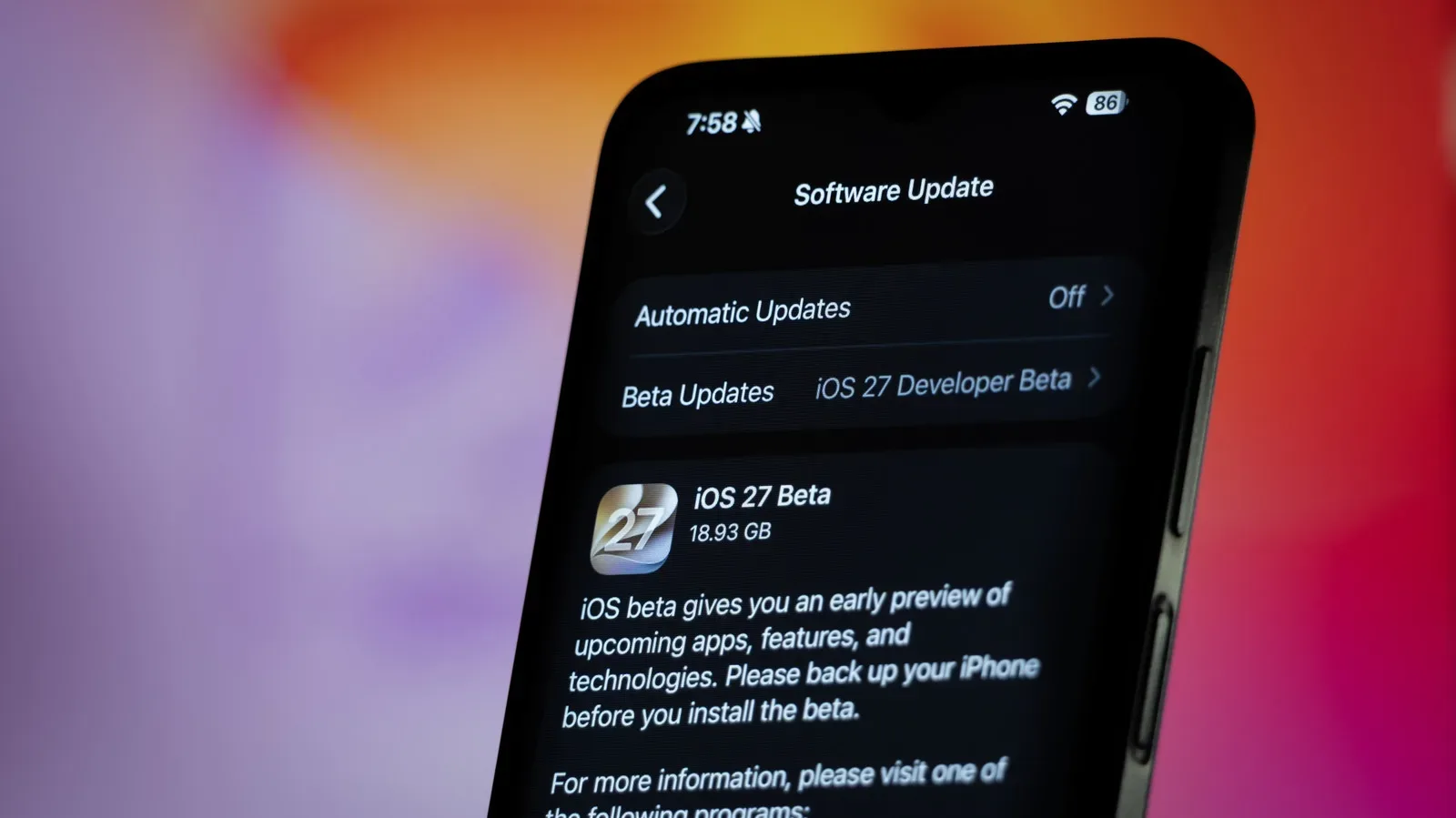
In a separate post, Instant Digital said they increasingly expect substantial iOS changes after the 20th-anniversary iPhone arrives in 2027, affecting both appearance and interaction. That is another prediction, not confirmation, but it fits the larger logic of the shorter-phone concept: a major hardware redesign can make old software assumptions feel outdated.
The anniversary model itself has been linked in reporting to curved glass and thinner bezels, described as the largest overhaul of the Pro line since the iPhone X. Digital Chat Station has also said Apple was testing an approximately 7-inch display for the largest anniversary model, using the same aspect ratio as the iPhone 17 Pro Max. These details point in a different direction from the proposed shorter device: a large model can keep a familiar ratio while other future models potentially experiment with a different physical balance.
Neither claim establishes a complete product lineup. They do, however, underline that screen shape, bezel size, display curvature, cutouts, and software navigation are connected decisions. A phone may have more screen area yet feel easier or harder to use depending on where its interactive elements sit. Conversely, a physically smaller footprint can feel less compromised if the operating system eliminates redundant space.
The iPhone X remains the useful precedent
The strongest historical parallel in the available information is the iPhone X. Apple removed the Home button in 2017, and iOS 11 introduced swipe-up navigation for that device. The lesson is not that every iPhone redesign demands a new gesture language. It is that a meaningful hardware change can require the software to rethink behaviors users had treated as permanent.
The Home button was both a physical component and a familiar interaction anchor. Removing it altered how people returned home, switched apps, and understood the bottom edge of the display. A future redesign of the top edge would pose a different challenge. Rather than replacing a core navigation method, it could ask users to accept a more compact and information-dense header. The adjustment may be subtler, but it could touch almost every app if the system changes the relationship between status indicators and in-app controls.
For now, the responsible reading is narrow. A leaker has offered an intriguing concept for a shorter, same-width iPhone and an iOS layout designed to compensate for lost height. Current reports do indicate continuing experimentation around camera placement and unusual Dynamic Island arrangements, yet they also contain direct disagreement over when—or whether—a cutout-free display will arrive. The shorter iPhone remains a theory, while the broader takeaway is more immediate: as display hardware changes, iOS may have to keep finding new places for the information users expect to see at a glance.