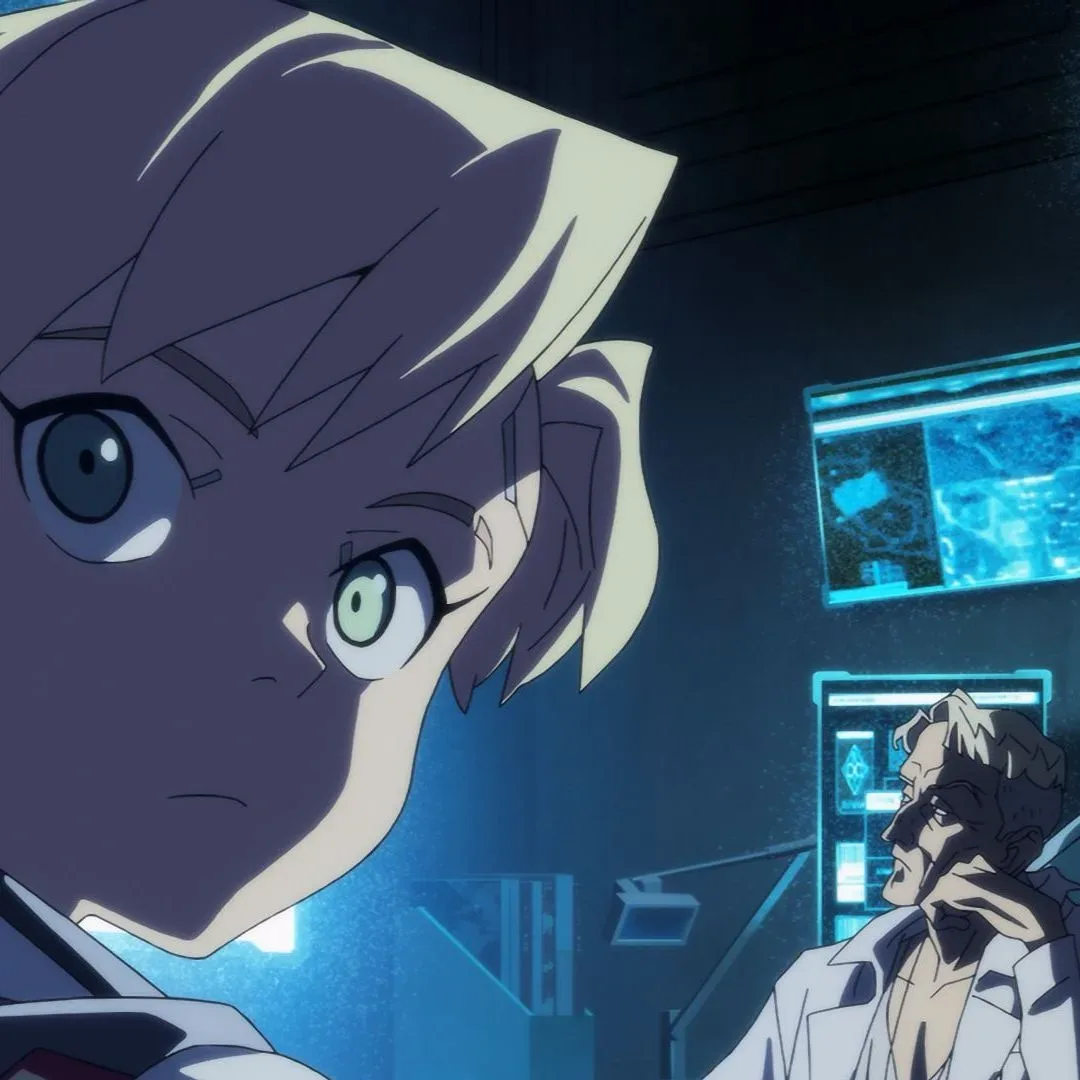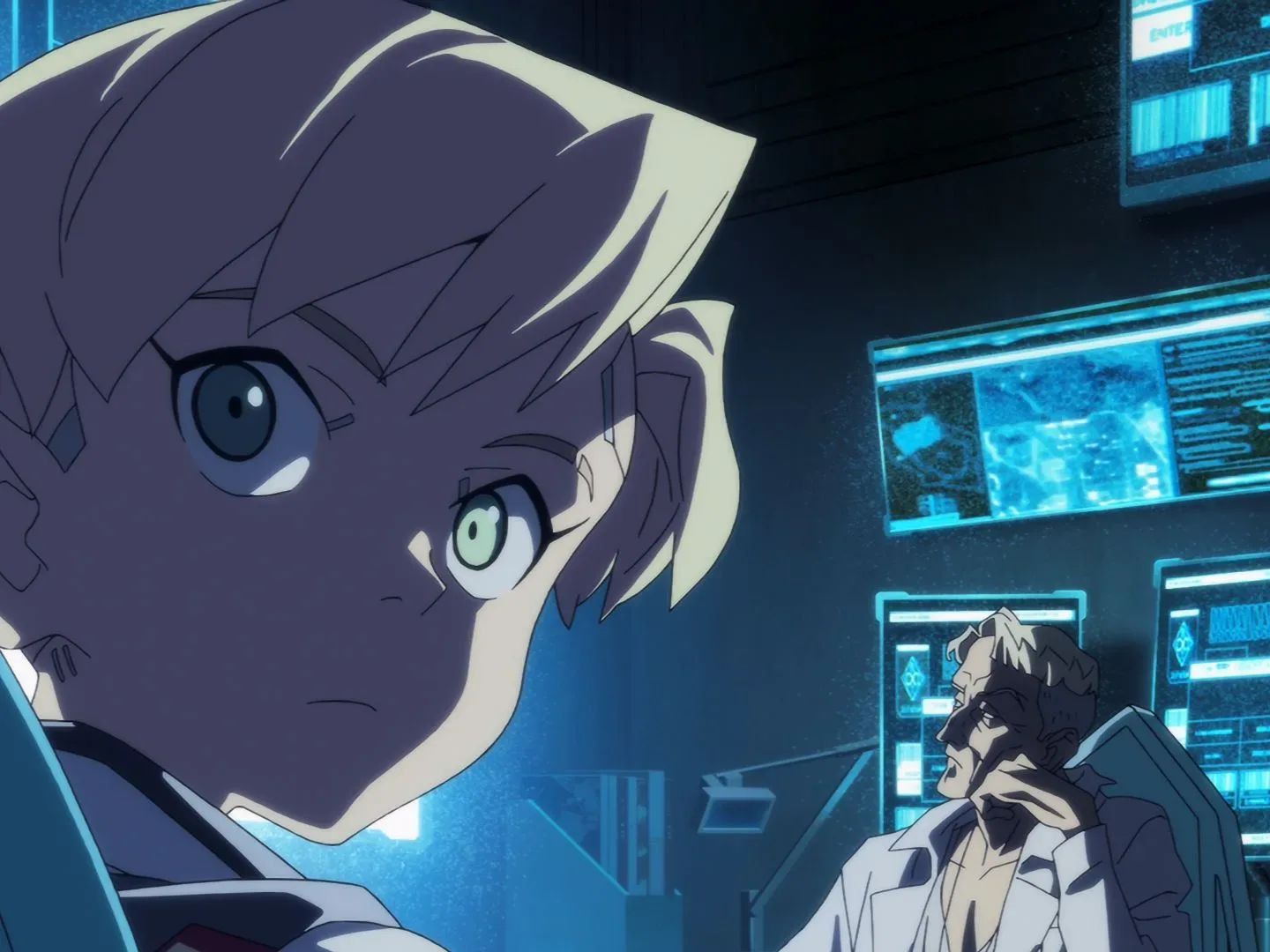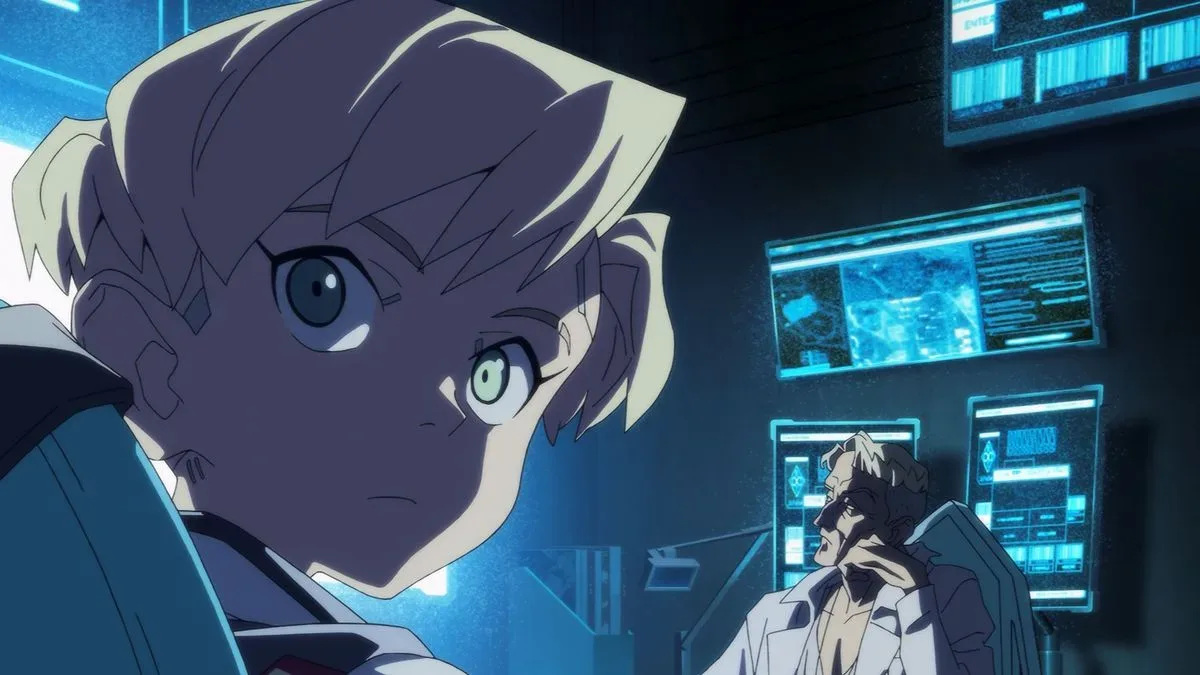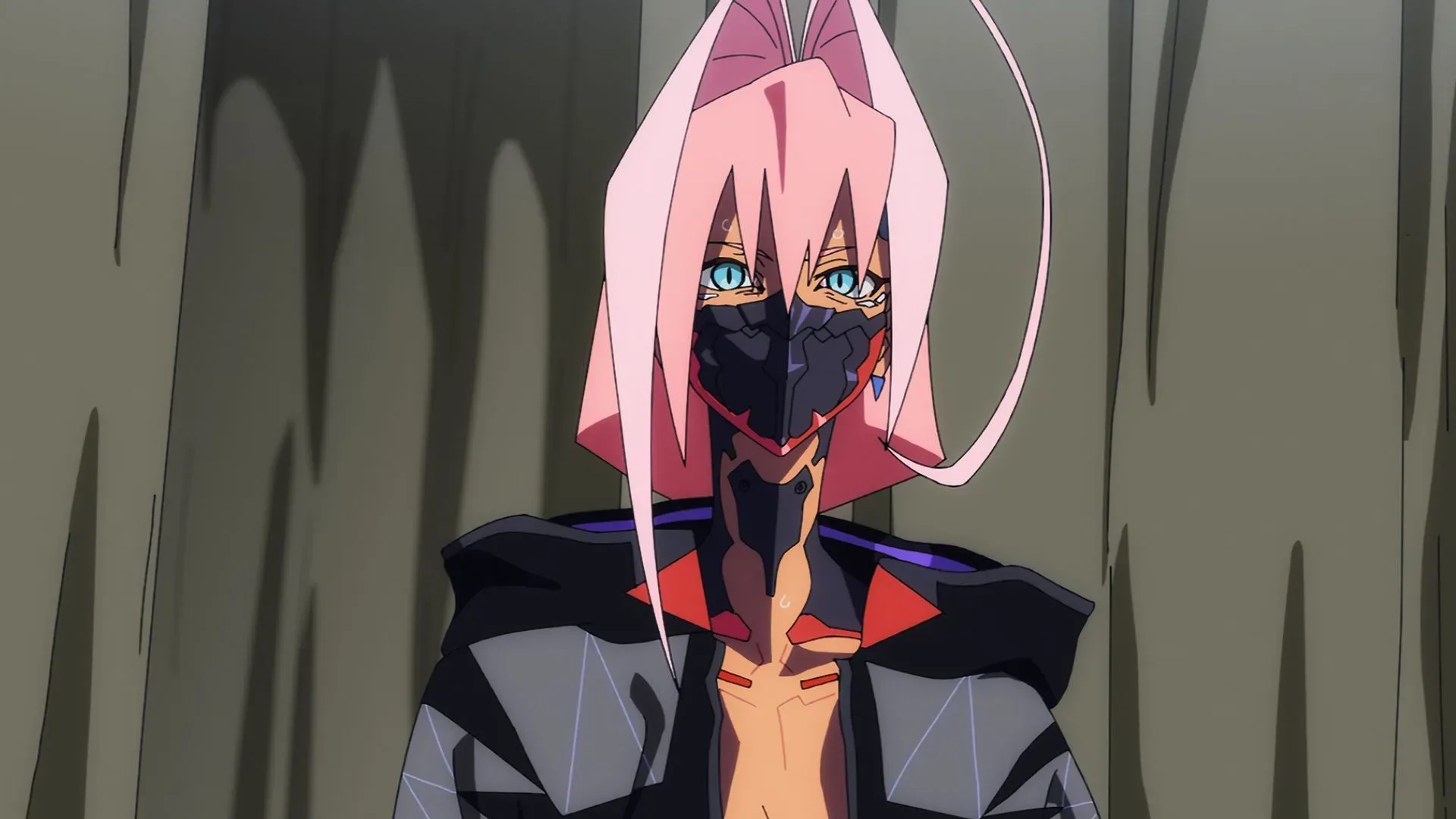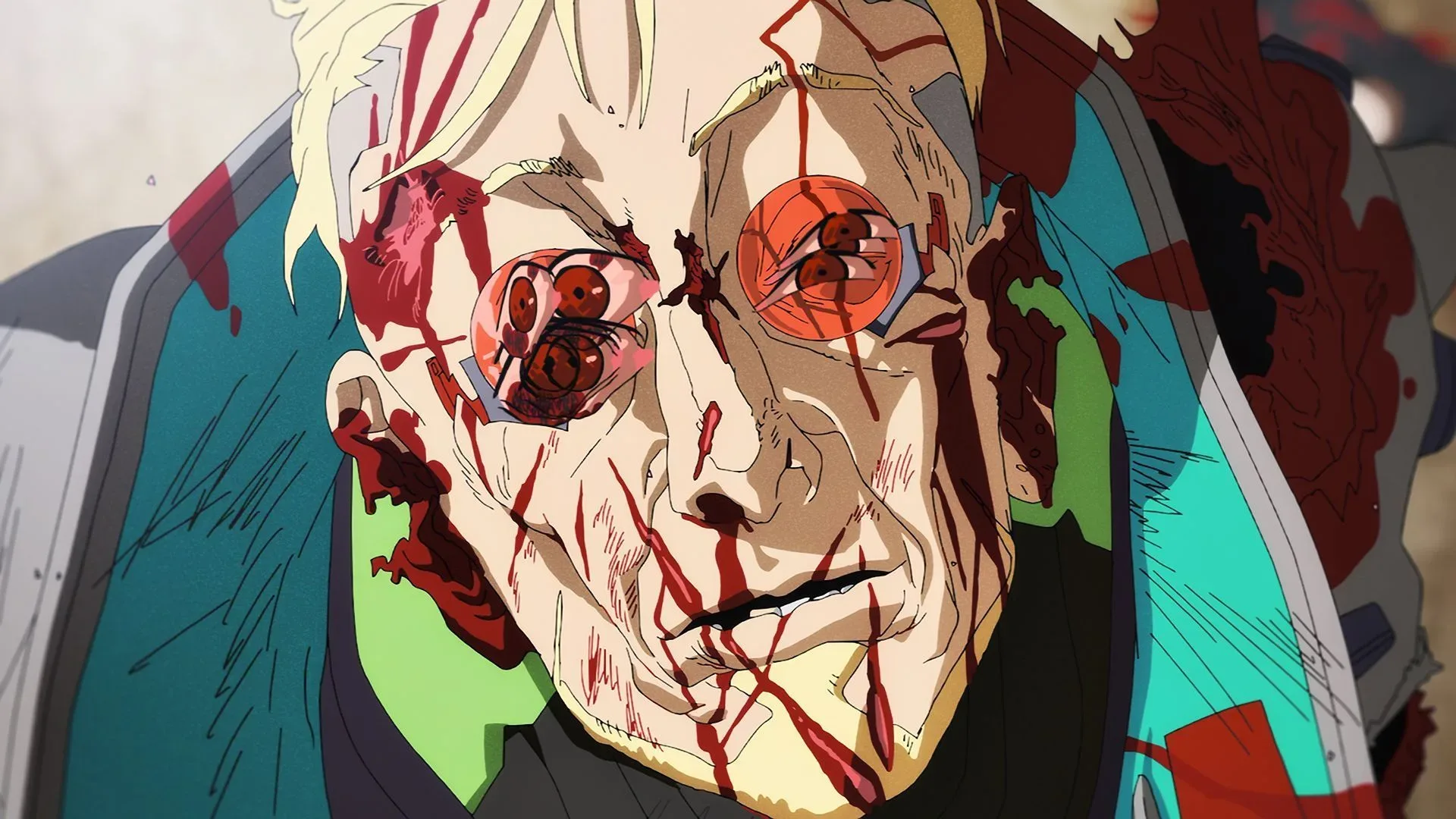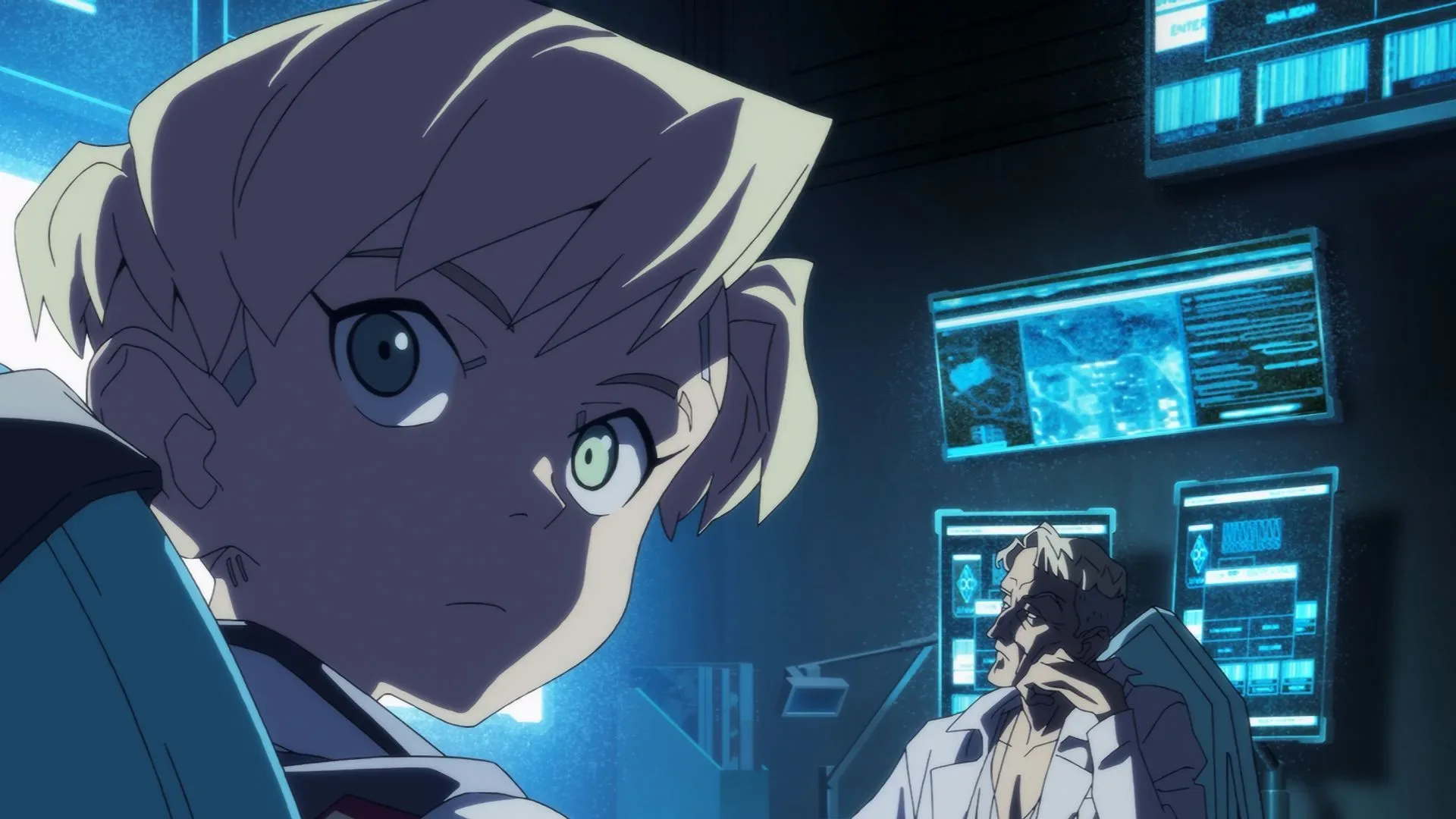
Cyberpunk: Edgerunners season 2’s Roman was not part of the project’s initial pitch. Showrunner and franchise VP Bartosz Sztybor has explained that the analog-film-loving Night City resident emerged later, during an extended period of story development with series director Kai Ikarashi. The practical reason was simple: the ensemble needed someone capable of bringing its disparate characters into the same orbit. The creative reason was considerably more romantic: a shared enthusiasm for cinema and physical media.
That combination gives Roman an unusually fitting role in Cyberpunk’s world. Night City is defined by invasive technology, commercial power and braindances—recorded sensory experiences that can be played back with a degree of immersion ordinary film cannot offer. Roman’s preference for analog film is therefore more than a character quirk. It gives the new cast a human-scale focal point, and it provides a counterpoint to a setting where experiences are often packaged, transmitted and consumed as products.
Sztybor said Roman was created during roughly 18 months of back-and-forth while the storyline took shape. Discussions with Ikarashi included films such as Magnolia and A Clockwork Orange, eventually leading the team to make Roman a movie obsessive. In short, the character grew out of the creators’ own conversations rather than being a fixed component of the earliest plan.
“Roman was not in the original pitch of Edgerunners 2. He was born out of passion for cinema,” Sztybor said.
For more context, explore John Carpenter to Receive ACE Golden Eddie Filmmaker of the Year Honor.
A late addition with an early-story job
Writers and showrunners frequently use a phrase such as “the glue of the group” for a character who enables an ensemble to function. That does not necessarily mean the person is the strongest fighter, the plot’s main target, or its moral authority. It means their relationships create routes between people who otherwise might never remain together long enough for a story to develop.
Roman appears to have been designed explicitly for that task. Sztybor described the need for a figure who could bind the characters together, and Roman’s place in the story reflects it. He films Snake Nation nomad D. as D. pursues revenge against those responsible for murdering his clan. Roman also forms a connection with Talia, who is obsessed with chrome, and crosses paths with veteran edgerunner King, also known as Weak Kingsley.
Those details make Roman’s function clear without reducing him to a mere narrator. D.’s revenge mission, Talia’s fixation on cybernetic augmentation and King’s veteran status point toward different pressures within the setting: grief, self-transformation and survival experience. A filmmaker can stand beside each of those characters with a different purpose. He can document, observe, participate, and—crucially—provide a reason for scenes and people to intersect.
That is an especially valuable role for a new ensemble. Rather than asking viewers to absorb every relationship through exposition, a connective character can make meetings feel motivated. D. has a chronicler for his journey. Talia has someone with whom to share a personal bond. King has a link into the younger or less-established members of the circle. The result is not simply that Roman is present around the group; his interests give the group a shared frame.
Why analog film belongs in Cyberpunk
The contrast between analog film and braindances is one of the most revealing parts of Roman’s premise. Within Cyberpunk, braindances are far beyond conventional screen media: they record subjective sensations for playback. They represent an intensely mediated and technologically advanced form of entertainment. Analog film, by comparison, is tactile and limited. It does not claim to replace the viewer’s senses. It shows a constructed image and asks an audience to meet it halfway.
Roman’s enthusiasm for film and physical media therefore carries thematic weight. It does not mean that older technology is automatically purer, safer or better. Nothing in Sztybor’s comments suggests the season turns that preference into a simple anti-technology manifesto. Instead, it gives one character a particular way of looking at the world. Roman is interested in framing life, preserving it and turning events into a movie. In a city built around sensation, commerce and augmentation, that perspective can make him distinct.
There is also a useful storytelling difference between recording somebody’s experience and controlling it. A filmmaker chooses where to point the camera, what to include and what to leave beyond the edge of the shot. That makes Roman’s presence beside D.’s revenge pursuit potentially meaningful even before assigning it any specific plot outcome: the act of documenting can shape how an audience sees a mission. Roman is not just near the action; he is associated with the question of how action becomes a story.
The choice also fits the playful tension at the heart of a cyberpunk setting. A future crowded with advanced media still has room for an enthusiast who treasures something older and physical. Roman is not described as technologically naïve. He is a boy in Night City with a distinctive cultural obsession. That is a much more interesting idea than treating him as a museum piece dropped into the future.
From creator conversation to character design
The account of Roman’s creation offers a small but useful look at how animation development can evolve. An original pitch establishes a direction, but it is not necessarily the final blueprint. Over many months, a team can discover that an ensemble lacks a relationship, a perspective or a tonal element. The answer may not be to expand an existing role; it may be to create somebody new who solves several story problems at once.
Roman seems to be that kind of addition. He answers a structural need—the cast needed binding—and brings a creative interest shared by the people making the show. The references to Magnolia and A Clockwork Orange should not be read as confirmation that Edgerunners season 2 copies either film’s plot or style. The supplied details only establish them as part of the conversations that helped inspire Roman. But the examples do underline that the character was born from film discussion, not added as a detached piece of franchise machinery.
There is a neat irony in the outcome. The character who was absent from the original pitch became, by Sztybor’s description, central to holding the eventual ensemble together. It is a reminder that production development is not merely a matter of removing material. It can be a period of finding the missing connective tissue—then recognizing that the solution has a personality, a hobby and a point of view.
Roman’s story extends into Cyberpunk 2077
The season’s new faces did not remain confined to the anime. A Cyberpunk 2077 2.5 update brought them into the game’s wider world through a quest in which V takes a job from King. Players can also wield King’s gun, Coronation.
That crossover is important for the franchise’s continuity, even if its scope should not be overstated. The available information confirms a quest connection with King and access to his weapon; it does not establish that every plotline or character from the season receives the same treatment in the game. Still, it creates a concrete bridge between the show’s cast and Cyberpunk 2077’s player character.
For fans, that means King has a presence that can be encountered through gameplay rather than only watched in animation. Coronation is an especially direct form of crossover, because it turns a character-associated item into something V can use. A quest tie-in can provide narrative context, while a weapon gives players a persistent mechanical reminder of that connection.
It also puts Roman’s connective role in a broader franchise context. Within the anime, he is positioned as someone who helps join D., Talia and King. Beyond it, King’s appearance in Cyberpunk 2077 creates another connection, this time between an animated ensemble and the game. That does not make Roman personally responsible for the game update, of course, but it illustrates how a well-connected cast can make cross-media storytelling feel less like an interruption and more like an extension.
The Night City ending that stayed on the drawing board
Another discarded possibility was far larger in scale. Studio Trigger pitched an ending that would have destroyed Night City and Arasaka. That idea did not make the final cut.
The fact that it was considered says little by itself about the precise path the season ultimately takes, and it should not be treated as evidence of a hidden alternate canon. It is best understood as a development-room possibility that was rejected. Yet its scale does sharpen the contrast with Roman’s origin. On one side was an idea involving the destruction of the city and one of its dominant powers; on the other was a character conceived through a love of movies and the need to join people together.
Cyberpunk stories can accommodate both impulses: institutions and cities operating at enormous scale, alongside individuals attempting to make sense of their lives through memory, relationships and art. Roman’s analog-film fixation sits squarely in the second category. It gives the new season a character whose reason for existing is not simply to raise the stakes, but to make the people caught in those stakes cohere.
For a related report on Roman’s late addition to the season, see this coverage of the character’s role in uniting the cast.
What Roman’s addition suggests about Edgerunners 2
The most persuasive takeaway from Sztybor’s comments is not that every late-created character will become a fan favorite. It is that a franchise as sprawling as Cyberpunk still benefits from highly specific personal interests. Roman is not described in abstract terms alone. He is defined by analog film in a braindance age, by an urge to record D.’s journey, and by his ties to people with radically different motivations.
That specificity is likely why the “glue” concept works. Characters cannot meaningfully bind a cast together just because the script says they are friendly. They need a believable reason to seek people out and remain interested in them. Roman’s movie obsession supplies one. He sees value in making a feature out of Night City life, even when that life is dangerous, painful or messy.
And while the original pitch did not include him, the development process found a place where he was needed. In a story world famous for chrome, corporations and overwhelming sensory technology, a movie buff carrying a love for physical media may be exactly the kind of strange, grounded connector an ensemble needs.