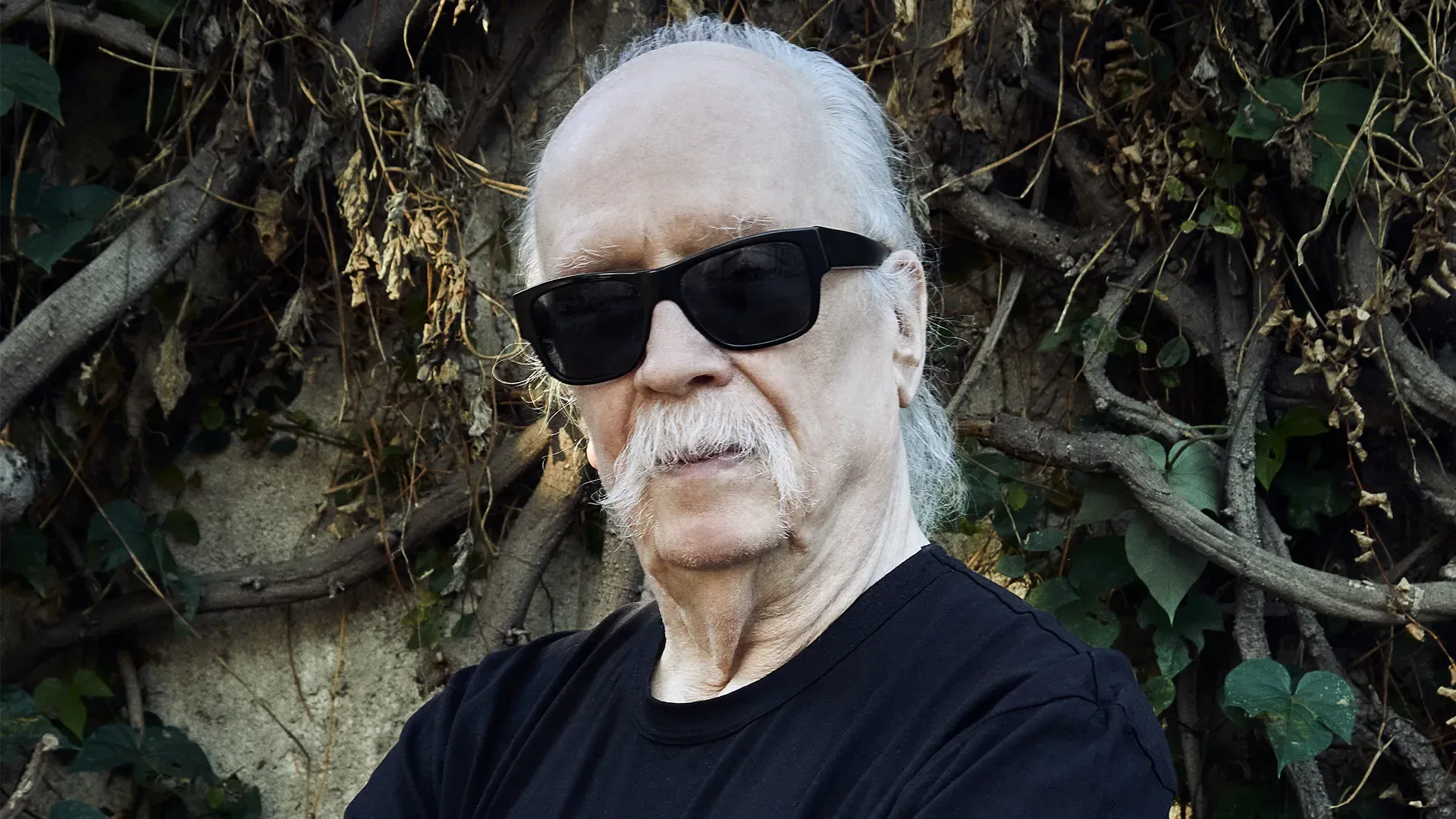
John Carpenter will be recognized with the American Cinema Editors’ Golden Eddie Filmmaker of the Year award at the 77th annual ACE Eddie Awards. The ceremony is scheduled for February 6, with Patton Oswalt set to return as host.
The honor places Carpenter’s work in a particularly fitting light. He is widely associated with directing, writing, producing and composing, but the award’s focus on editing draws attention to another essential part of why his films endure: their control of pace. Whether a scene needs to build dread, sustain a chase or let a striking image hang in the air, editing determines the rhythm audiences feel from moment to moment.
That connection was central to the organization’s explanation of the selection. ACE president Sabrina Plisco said Carpenter’s films “get under your skin and stay there,” pointing to Halloween, The Thing and Escape from New York as works that have affected generations of viewers and filmmakers. Plisco also emphasized Carpenter’s understanding of “rhythm, tension and restraint” and his trust in editors as creative collaborators.
Why an editors’ honor suits Carpenter
Film editing is sometimes misunderstood as simply cutting away unwanted footage. In practice, it is the process of organizing shots, performances, sound and time into a finished dramatic experience. Editors help decide when a viewer receives new information, how long a reaction should last, when a cut accelerates action, and when withholding a cut creates discomfort or anticipation.
For genre filmmaking, those choices can be foundational. Tension often comes from controlling what the audience can see and when it can see it. A scene can be frightening because the camera stays on a character a beat longer than expected, because a reveal is delayed, or because an abrupt cut breaks a period of quiet. The same principle can make an action sequence feel propulsive without making its geography incomprehensible.
Carpenter’s directing credits cited in connection with the award include The Fog, The Thing, Vampires, Escape from New York and They Live, alongside the 1978 breakout Halloween. These are films commonly grouped under horror, science fiction and action, but the honor recognizes the filmmaking construction underneath those labels. A genre premise may provide the monster, the threat or the dystopian setting; editorial rhythm is a major part of turning those ingredients into suspense.
Restraint is especially important in that equation. It does not mean a film must move slowly. Rather, it means choosing moments of emphasis carefully. If every beat is treated as the biggest possible beat, escalation stops meaning anything. If a film gives viewers room to scan an empty hallway, absorb a strange detail or sit with uncertainty, the eventual disruption can have greater force.
That is why recognition from editors has a different emphasis from an honor centered exclusively on a director, performer or franchise. It acknowledges a filmmaker’s broader relationship to the finished shape of a motion picture—and, in Carpenter’s case, a career in which atmosphere and timing have been central to the appeal.
A career that extends beyond the director’s chair
Carpenter’s creative work has never been limited to one job. He has worked as a filmmaker, screenwriter, producer and composer. The musical side remains active as well: he composed Lost Themes in 2014 and Cathedral earlier this year.
That range matters when considering how movies establish a recognizable mood. Editing and score are separate disciplines, but they meet at the level of rhythm. A cut can land on a musical cue, delay a cue, interrupt it or allow a motif to continue across a change in image. Even when viewers do not consciously identify those decisions, they can feel the results as tension, momentum or unease.
There is no need to reduce Carpenter’s influence to a single technique. The cited films encompass different kinds of stories and settings. Still, the common thread described by ACE is an economy of expression: the ability to generate excitement or dread through deliberate timing instead of treating every scene as an opportunity for maximum volume or speed.
Carpenter joins a previous group of Golden Eddie Filmmaker of the Year recipients that includes Jon M. Chu, John Waters, Spike Lee, Quentin Tarantino, Christopher Nolan, Lauren Shuler Donner, Guillermo del Toro, Steven Spielberg, Vince Gilligan, J.J. Abrams, Nancy Meyers, Martin Scorsese, George Lucas and the Sundance Institute. The range of prior honorees reflects the award’s broad definition of filmmaking influence across movies and television.
The recognition also arrives during a period when screen storytelling remains a major point of discussion across entertainment, from films and television to major institutional projects. For another recent example of the sector’s wide footprint, Kathleen Kennedy’s planned role in 2028 Los Angeles Olympics ceremonies and content illustrates how film-industry leadership can extend beyond conventional releases.
Career Achievement awards for Bonnie Koehler and Christopher Nelson
The February ceremony will also honor two veteran editors with ACE Career Achievement awards: Bonnie Koehler and Christopher Nelson. Their recognition reinforces the event’s core purpose, which is to celebrate editing achievement across film and television.
Koehler’s career spans more than 40 years. Her credits include 15 feature films, nine primetime television series and eight movies-of-the-week. Among the projects named in connection with the award are One Flew Over the Cuckoo’s Nest, The Empire Strikes Back, Return of the Jedi, Poltergeist, L.A. Law and Law & Order: Special Victims Unit.
Those credits show how editing careers can travel across formats, genres and eras. A feature film, an ongoing network drama and a movie made for television each impose different storytelling demands. A serialized drama must balance the immediate shape of an episode with the larger arc of a season. A feature must create a complete dramatic movement within its running time. Long-running series also require consistency, since the visual and dramatic language of the show needs to remain legible even as individual stories change.
Plisco noted Koehler’s path from American Zoetrope to an Emmy nomination for L.A. Law and an ACE Eddie nomination for Law & Order: Special Victims Unit. The latter series was described as television’s longest-running primetime drama.
Nelson’s credits cover more than 70 television series, movies and pilots, in addition to his work as a producer, director and editor. He received a Primetime Emmy for editing the series finale of Lost. His additional Emmy nominations include work on Lost, Six Feet Under, China Beach, Mad Men and the pilot of The Greatest American Hero. More recent cited credits include Bates Motel, Waco and Godfather of Harlem.
A series finale is among the more difficult editorial assignments in television. It must function as an episode in its own right while delivering some sense of resolution to viewers who have invested in the show over time. A pilot presents the opposite challenge: it must establish a world, tone, characters and an invitation to keep watching. Nelson’s cited work therefore represents both ends of a television production’s life cycle.
Plisco described Koehler and Nelson as editors admired by their peers, highlighting Nelson’s Lost finale and work on Six Feet Under and Mad Men, and crediting both honorees for generosity toward the editing community. Career Achievement awards are not merely about an isolated credit; they recognize sustained work, professional standing and a contribution that reaches beyond one production.
What happens next
The ACE Eddie Awards recognize the year’s film-editing achievements across film and television. Nominations for the 77th annual ceremony are due to be announced January 14, ahead of the February 6 event.
For Carpenter, the Golden Eddie frames a long-running legacy through the craft of editing: a reminder that the impact of Halloween, The Thing, Escape from New York and his other work is inseparable from how carefully those films manage time, image, sound and suspense. Alongside the career honors for Koehler and Nelson, the ceremony will put three distinct but connected bodies of work at the center of an evening dedicated to the people who make screen stories cohere.