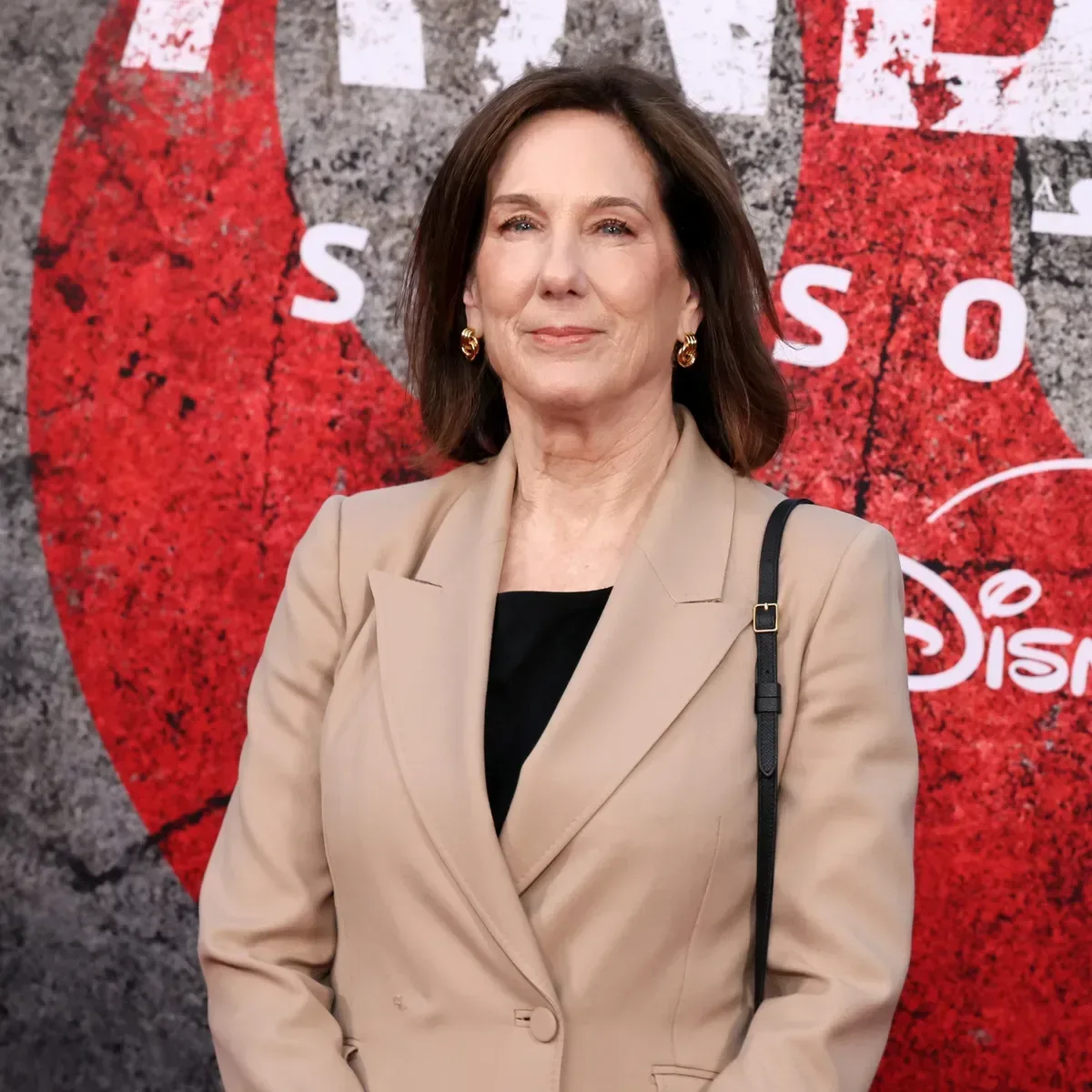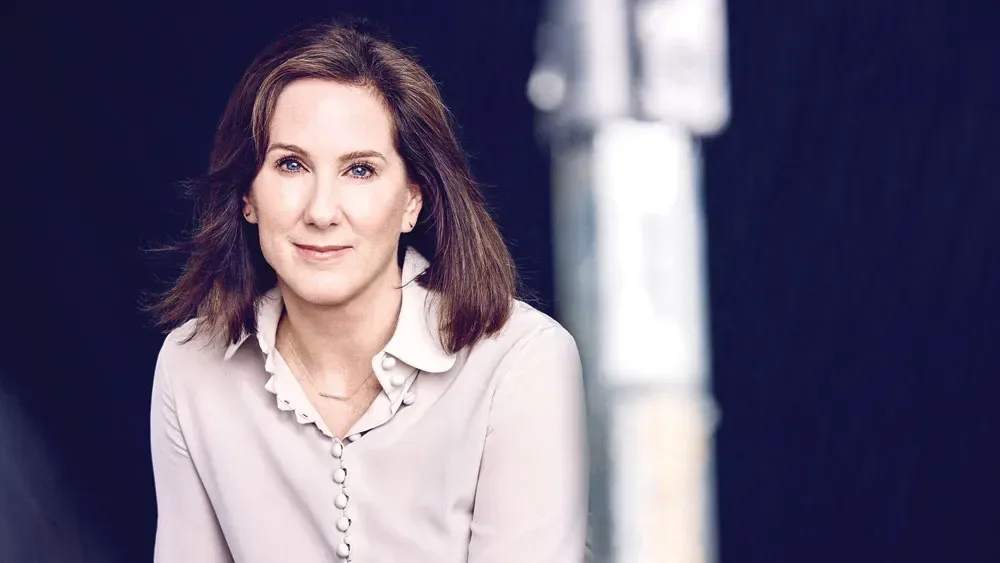
Kathleen Kennedy will lead ceremonies and content for the 2028 Los Angeles Olympic and Paralympic Games, taking on one of the most visible creative assignments attached to the event. The former Lucasfilm president is set to oversee delivery of all four ceremonies: the Olympic opening ceremony on July 14, 2028, the Olympic closing ceremony on July 30, the Paralympic opening ceremony on August 15, and the Paralympic closing ceremony on August 27.
The appointment puts a veteran film producer at the center of the creative presentation for a global sporting event hosted in a city inseparable from the entertainment industry. LA28 chairperson and president Casey Wasserman described Kennedy as a Hollywood great and said the organization was looking to her to bring that creative heritage to the Games.
“When the stars align to focus the world’s attention on Los Angeles for the 2028 Olympic and Paralympic Games, I can’t think of anyone better to conjure the magic of Hollywood than Kathleen,” Wasserman said.
What Kennedy’s new role covers
“Ceremonies and content” is a broad remit, but the confirmed responsibility is clear: Kennedy will lead the delivery of the Olympic and Paralympic opening and closing ceremonies. Those four productions are distinct events, each with its own place in the overall Games calendar.
The opening ceremonies introduce the Games and their host city to the world. Closing ceremonies mark the end of competition and bring a particular edition of the event to a close. The Paralympic ceremonies are not an add-on to the Olympic program; they frame the separate Paralympic Games, with their own opening and closing dates. Kennedy’s role therefore spans the entire ceremonial cycle rather than a single opening-night showcase.
She succeeds Peter Rice in the ceremonies and content position. Rice has been hired as Netflix’s chief content officer after taking over from Bela Bajaria, but will remain involved in the LA28 effort as an executive producer. Kennedy said Rice had established a strong foundation and that she was eager to work with creative director Ben Winston and the wider LA28 team.
From Lucasfilm leadership to LA28
Kennedy left Lucasfilm at the end of 2025 after 14 years as president. The company is closely associated with Star Wars and Indiana Jones, two franchises with enormous cultural reach and demanding expectations from audiences. Her new LA28 position does not sever that relationship: her recent credits include last summer’s The Mandalorian and Grogu, and she is also credited on the forthcoming Ryan Gosling-led Star Wars: Starfighter.
Her career also extends well beyond Lucasfilm. Kennedy worked closely with Steven Spielberg on films including E.T. the Extra-Terrestrial, Jurassic Park, and Lincoln. At Lucasfilm, she helped select J.J. Abrams to direct 2015’s Star Wars: The Force Awakens, a film that took more than $2 billion globally and restored the franchise as a major theatrical force.
That background does not reveal what an LA28 ceremony will look like, and no creative details have been announced. It does, however, explain why a producer with Kennedy’s experience is being asked to lead the work. Large franchise filmmaking requires many creative and technical disciplines to move together toward a fixed public release. A ceremony has a different purpose from a film, but it similarly depends on a cohesive plan, a clear visual idea, and leadership capable of coordinating a very large production.
It is also important not to flatten Kennedy’s Lucasfilm tenure into a single success story. It included major highs alongside projects that did not land as strongly, including 2018’s Solo: A Star Wars Story and 2023’s Indiana Jones and the Dial of Destiny. For LA28, the relevant takeaway is not a claim that a particular screen franchise formula can simply be transferred to sport. Rather, Kennedy brings a long record of managing high-profile storytelling under intense public scrutiny.
A Los Angeles event with a Hollywood-facing creative brief
Wasserman’s remarks frame the appointment around Los Angeles itself. The 2028 Games will place the city in front of an international audience, and the ceremonies will inevitably carry expectations to reflect the host. Kennedy’s experience in film production gives LA28 a leader steeped in an industry for which the city is globally known.
That is a practical consideration as much as a symbolic one. The public tends to remember ceremonies as concentrated cultural moments: a city gets a limited window to establish tone, celebrate its identity, and make an impression that reaches far beyond the venues where athletes compete. The creative team must make choices that work for spectators present at the event while also making sense to people watching elsewhere. Kennedy will lead the delivery process, while Winston is the named creative director.
Those titles describe related but different functions. A creative director generally steers the artistic concept and overall creative language. Leading delivery means ensuring the ceremonies themselves can be realized across all four dates. Neither label, on its own, tells the public the content of the production, but together they point to an effort combining artistic leadership and execution.
The change also comes during a period of high-level movement across the entertainment business. Rice’s move to Netflix is part of the immediate reason for the LA28 transition, while other corporate changes continue to shape the wider sector, including the developments covered in Skydance’s finance planning after the Paramount–Warner Bros. Discovery merger. Kennedy’s appointment is separate from those developments, but it reflects the continued overlap between major entertainment expertise and projects designed for enormous global audiences.
Kennedy’s personal connection to the Games
Kennedy called the Olympics a “touchstone” in her life and characterized sport as a unifying shared experience. She said that she and her husband, Frank Marshall, have attended virtually every Games since Los Angeles hosted in 1984.
That history gives the job a personal dimension. The 2028 event will return the Olympics to Los Angeles for the first time since the 1984 Games Kennedy cited. Still, the assignment is future-facing: the work now is to prepare four ceremonies for 2028, not recreate an earlier edition of the Games.
Her comments also emphasize the Olympic and Paralympic program together. Since the role explicitly includes all four ceremonies, its success will not be measured solely by the Olympic opening on July 14. It includes the Olympic closing, then the Paralympic opening and closing in August, giving the creative operation responsibilities across more than six weeks of milestone events.
What remains unknown
There are no announced themes, performers, venues, production partners, technology plans, or programming specifics for the ceremonies in the information available so far. It would be premature to assume that Kennedy’s history with science fiction, adventure films, or a particular studio franchise signals any specific artistic direction for LA28.
What is confirmed is the leadership structure at this stage: Kennedy is head of ceremonies and content; Rice remains an executive producer; and Winston is creative director. The schedule is also set for the four ceremonies. Beyond that, the eventual shows remain to be developed.
For Kennedy, the LA28 job marks a significant move after her 14-year Lucasfilm presidency. For the Games, it is a deliberate bet on a producer whose career includes some of modern Hollywood’s biggest and most technically demanding films. The task is different from launching a blockbuster: the outcome will be live, tied to a host city, shared across the Olympic and Paralympic calendars, and built to welcome the world to Los Angeles in 2028.