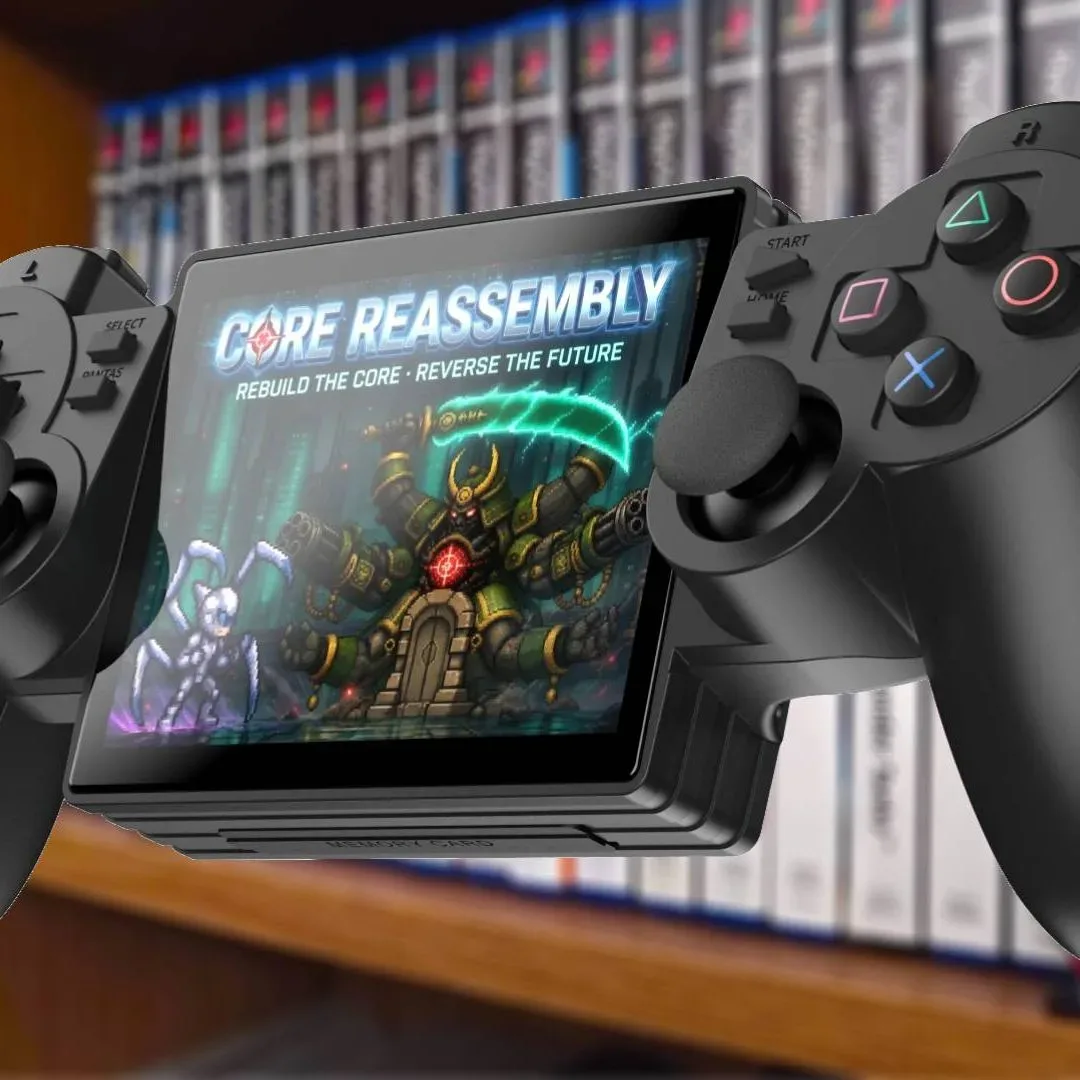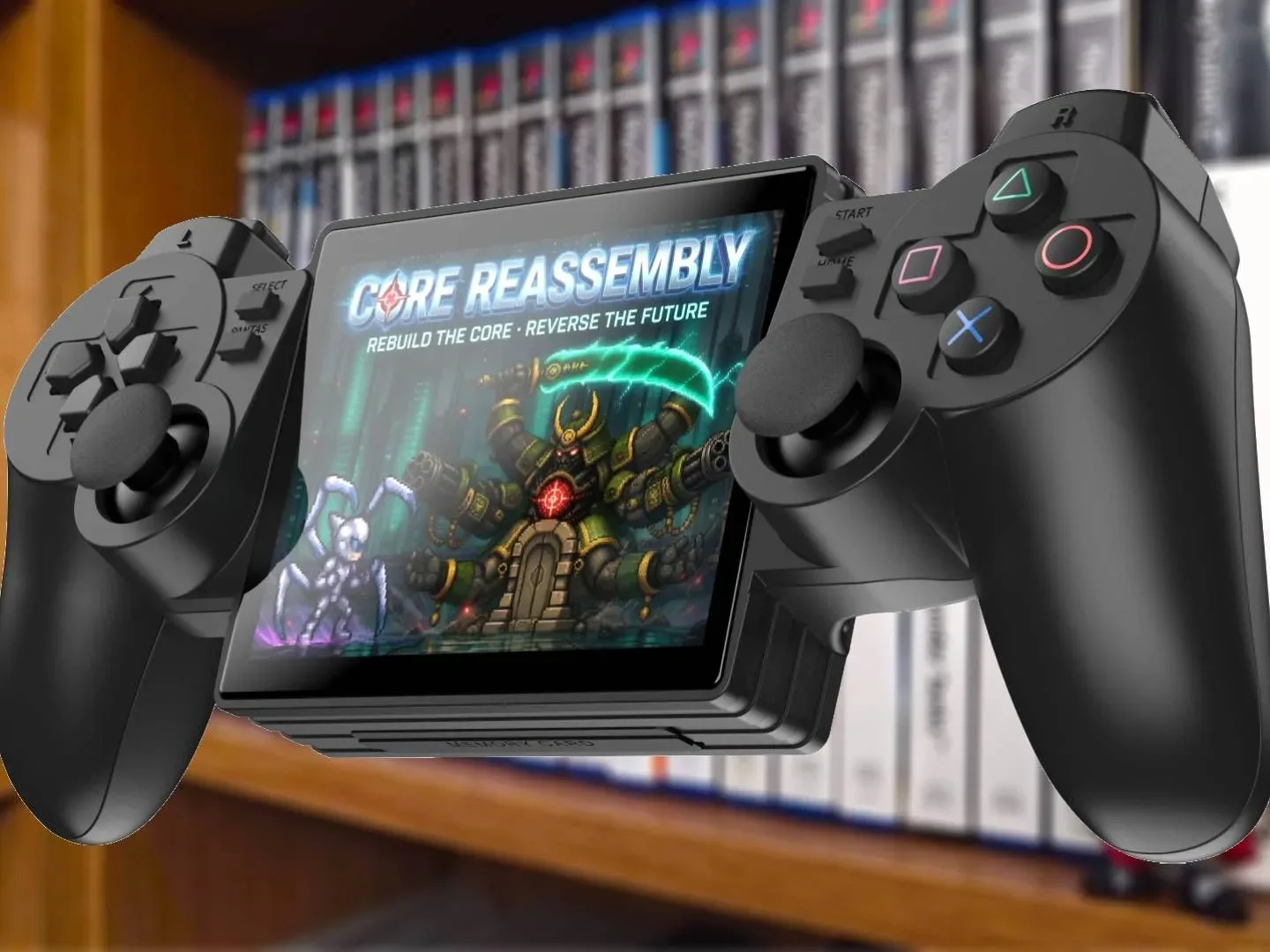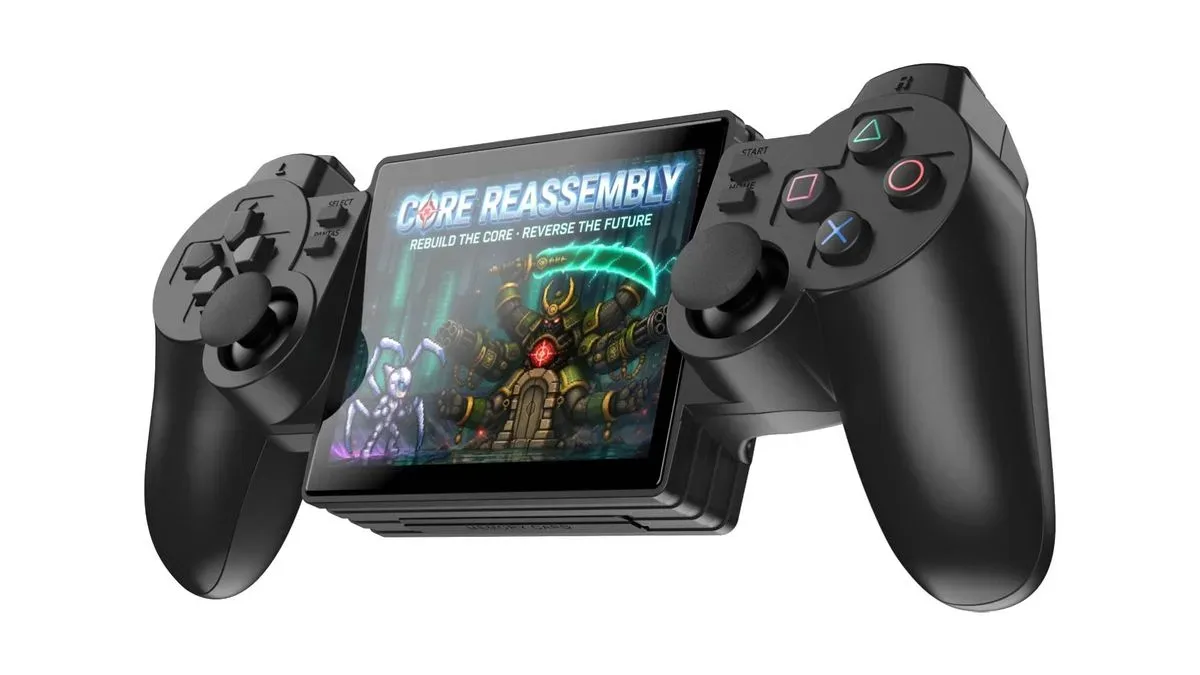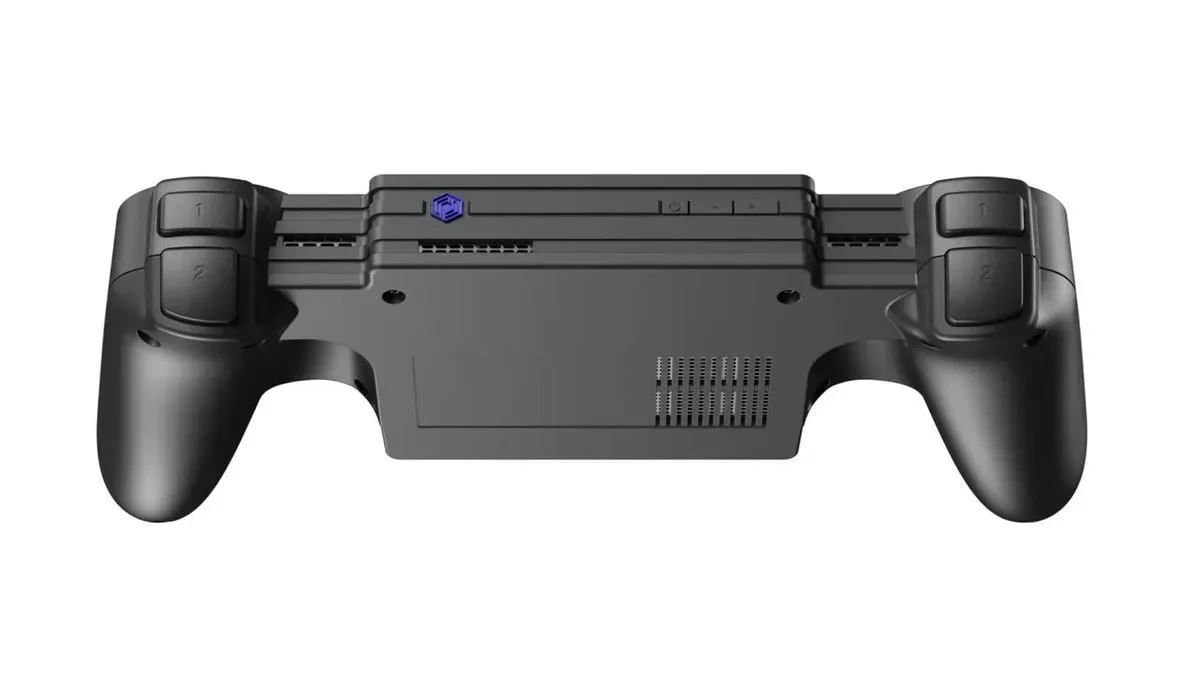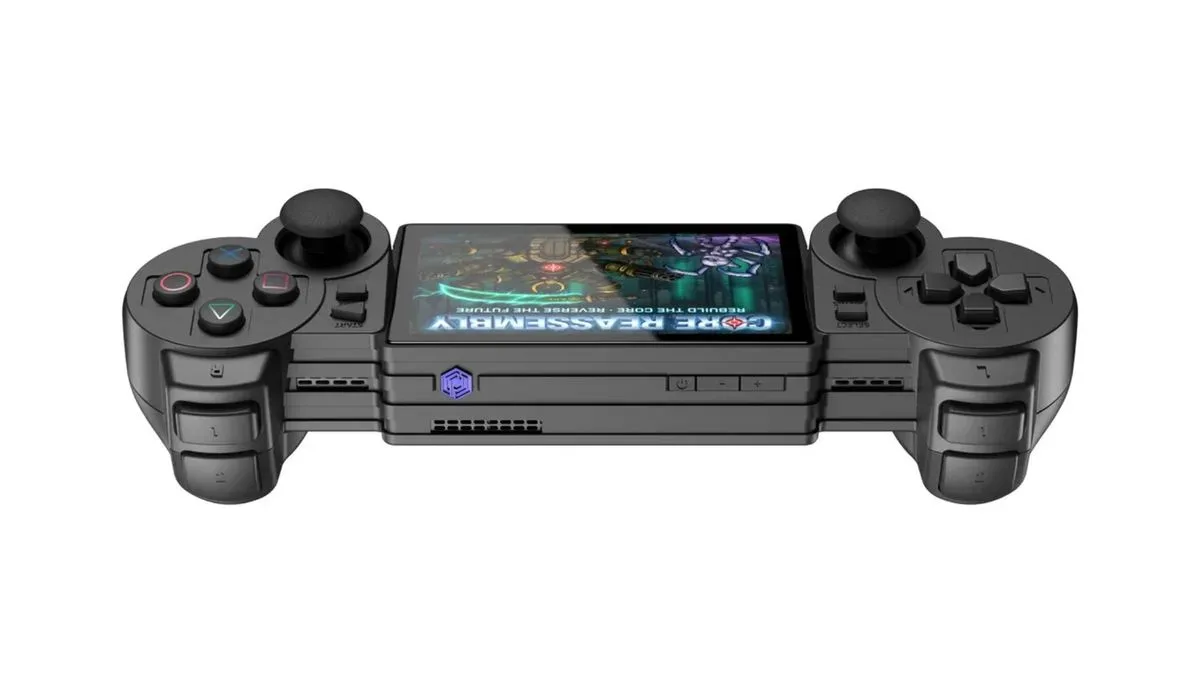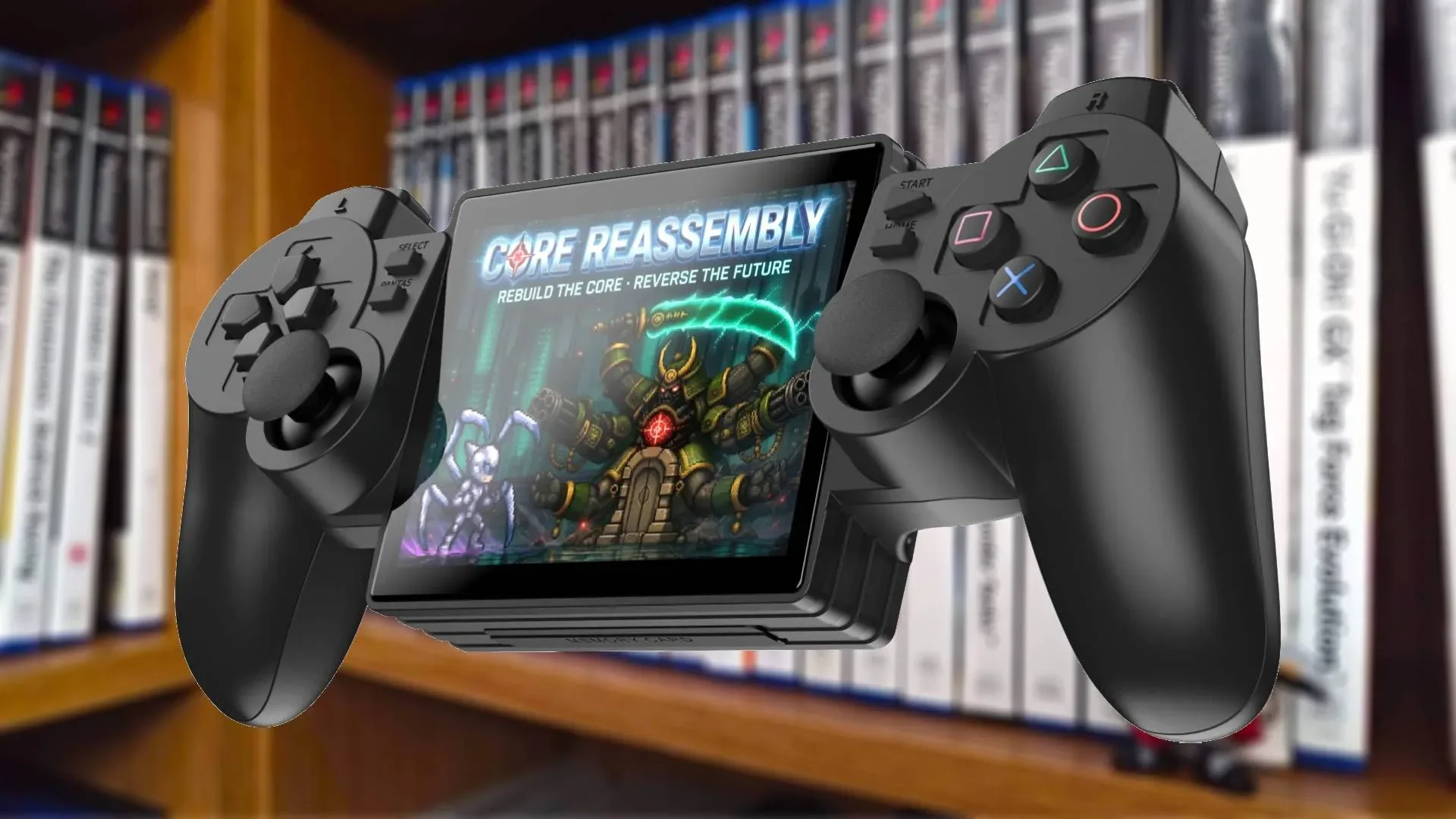
A handheld that resembles a PlayStation 2-era controller with a display parked between its grips is immediately going to attract attention. That is the entire pitch suggested by Yoniq’s Portal Handheld Gaming Console: a portable machine whose renders borrow heavily from the visual language of the DualShock 2, while its name and screen-forward setup evoke Sony’s PlayStation Portal.
The trouble is that a silhouette is not a specification sheet. Yoniq’s product material reportedly presents an apparent 4.5-inch central display and a claimed early-bird price of $199.99 / £148.99, but it does not provide the processor, memory, operating system, battery information, display resolution, wireless features, or a compatibility list. For a handheld seemingly intended to appeal to people who want PlayStation 2 emulation in a controller-shaped package, those omissions are the whole ball game.
A familiar controller shape, taken unusually literally
Retro handheld makers regularly borrow broad ideas from older hardware: a d-pad here, a transparent shell there, a color scheme that sets nostalgic alarm bells ringing. Yoniq’s Portal appears to go further. Its basic layout closely resembles the original PS2 DualShock 2, with a screen integrated where the controller’s center area would normally be.
That approach has an intuitive appeal. The PS2 controller remains a natural mental template for playing games made around its twin-stick layout, shoulder buttons and face-button arrangement. A device shaped around that template could feel more purposeful than a generic rectangular handheld, at least in principle. It is also an unusually direct way to communicate the device’s intended audience without needing a lengthy sales pitch: this is meant to make players think of the PS2.
The design flourishes extend beyond the overall outline. Images show a flap labelled Memory Card covering the area associated with the microSD slot, headphone jack and USB-C connection. It is a charming reference to the original console’s hardware rituals, translating a piece of PS2 nostalgia into storage and connectivity for a modern portable.
There is a fine line, however, between a respectful visual homage and a product that seems too close to an established controller design. That line matters especially when the design language includes the instantly recognizable PlayStation face-button symbols.
Why the face buttons could become the awkward part
The renders apparently use circle, cross, square and triangle face-button imagery associated with PlayStation controllers. Those marks are far more than generic controller decoration. Sony has maintained licensing requirements around PlayStation controller branding and related design elements, including the long-standing button-symbol identity.
That does not establish what, if anything, will happen to Yoniq’s device. There is no confirmed legal action described here, and a product render is not necessarily a final retail unit. But the resemblance creates an obvious risk: if the handheld reaches market, its buttons may be redesigned with modified symbols or other visual changes that preserve the general PS2-inspired look while putting greater distance between the product and Sony’s controller branding.
Related coverage includes Yoniq Portal Retro Handheld Channels the PS2 DualShock 2, but Key Details Are Still Missing.
It would hardly be unprecedented for a third-party retro device to use alternative face-button markings. The practical question for buyers is not whether the machine has a triangle-shaped button specifically; it is whether the controls are comfortable, durable and properly mapped in the software. Still, the symbolism has marketing value. The closer a render gets to a famous controller, the faster it earns attention—and the more scrutiny it may invite.
The Portal name itself also makes the comparisons unavoidable. Sony already sells a PlayStation Portal product, although Yoniq’s apparent concept is fundamentally different: this device is positioned through retro handheld styling and apparent emulation ambitions, rather than simply being identified as a PlayStation accessory. With so little technical information available, though, it is best to treat the product’s positioning as a visual proposition rather than a settled feature set.
PS2 emulation is the technical question that matters
Emulation is software that recreates the behavior of one system on another piece of hardware. In this case, the attraction would be running software designed for the PlayStation 2 on a modern handheld. That is demanding work compared with many earlier systems because the host device must do enough processing to reproduce the target console’s behavior while also handling graphics output, controls, storage and an operating system.
That is why the absence of specifications is more concerning than the lack of polished marketing copy. A 4.5-inch display and a familiar controller outline say almost nothing about performance. The important details would include the chipset, the amount of RAM, thermal design, software configuration and whether the device has been tuned for the particular emulators it may use. Without those details, no one can reliably infer how well it might run PS2 games, or whether it is intended to run them at all.
A prospective buyer should also resist treating “PS2 emulation” as a single yes-or-no claim. Performance can differ substantially between games and settings. A handheld may handle some titles well but require compromises elsewhere, such as lower rendering resolution, frameskip, altered settings or compatibility workarounds. The relevant standard at roughly $200 is therefore not merely whether a device can boot something. It is whether it can deliver consistently playable results across the games a buyer actually wants to revisit.
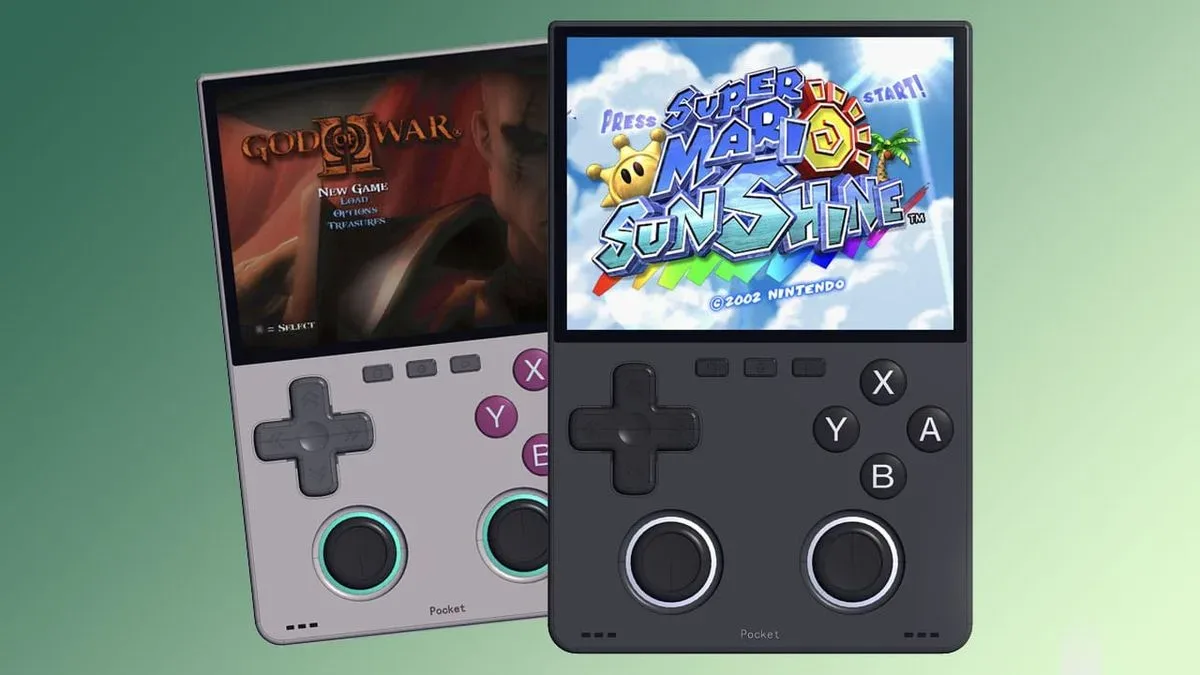
There are already handhelds cited in this price conversation. The Anbernic RG Cube is listed at $169, while the Retroid Pocket 5 is listed at $219. The Ayn Odin 2 is also raised as a more powerful point of comparison. These products matter because they establish the real question facing Yoniq: what does the Portal offer beyond a striking shell?
If its internal hardware is competitive, the PS2-controller-inspired ergonomics could be a meaningful differentiator. If not, buyers may reasonably choose a more documented device with clearer performance expectations, even if it lacks the Portal’s unusually specific nostalgia appeal.
The listing raises more questions than it answers
The currently described page includes directions for using a Gamepatch membrane touchscreen button overlay. In straightforward terms, that refers to on-screen controls displayed over a touchscreen, allowing taps on virtual buttons to stand in for physical inputs. Such overlays can be useful for games or applications designed around touch, but their prominence is odd for a machine whose renders emphasize full physical controls.
It may simply indicate unfinished product-page material, a shared software feature, or a placeholder while Yoniq prepares fuller information. None of those possibilities can be confirmed from the available details. What can be said is that touchscreen-overlay instructions are not a substitute for core hardware information.
Yoniq was reportedly showing a dual-screen Nintendo DS-style clone at Gamescom the previous month, which is at least a sign that the company has been publicly associated with handheld hardware concepts. But it does not answer the Portal’s unanswered questions, and it does not provide a basis for judging this model’s performance, build quality or release status.
That distinction is worth keeping clear. A visible prototype or render can show design intent. A full specification sheet, final software, independent reviews and retail availability are what turn that intent into a purchasing decision.
What to look for before treating the price as a bargain
The claimed early-bird price may sound plausible beside other retro handhelds, but price only becomes meaningful after the underlying proposition is known. Before ordering, interested players should wait for answers in a few key areas:
- Processor and memory: These are central to whether the handheld has the performance headroom expected for PS2-era emulation.
- Operating system and emulator support: A physical design cannot compensate for confusing software, weak compatibility or poor controller mapping.
- Display details: Screen size alone does not reveal resolution, brightness, aspect-ratio handling or image quality.
- Battery and charging: USB-C is a welcome modern inclusion, but buyers still need battery-capacity and real-use information.
- Controls and ergonomics: The DualShock-inspired shape is the headline feature, so stick quality, trigger design, d-pad feel and grip comfort should be examined carefully once review units exist.
- Final branding and button art: The published renders may not match a final production model, particularly if design changes are made to avoid legal complications.
There is also a broader practical point around emulation. Hardware capable of running emulators does not automatically come with rights to distribute games or system software. People interested in retro handhelds should understand the rules that apply where they live and use software and game files they are entitled to use. The legal and technical sides of retro gaming are often discussed together, but they are separate issues: one concerns the machine’s capability; the other concerns what content is used with it.
A smart idea that still needs proof
Yoniq’s Portal is easy to understand as an idea. The PS2 is an enormously evocative reference point, and building a handheld around a controller shape associated with that era is more distinctive than releasing another anonymous black slab. The Memory Card-style flap, central screen and familiar layout are thoughtful visual cues rather than random retro decoration.
But a retro handheld lives or dies by execution. At this stage, the Portal’s claimed price and appearance are much clearer than its capabilities. Until Yoniq publishes meaningful specifications and final details, and until independent reviews can assess performance and build quality, it is more sensible to view it as an intriguing concept than a proven PS2-on-the-go solution.
The situation also belongs in the wider conversation about unofficial projects using recognizable game-brand aesthetics. As seen with a browser-based Crash Bash project facing questions around monetization, familiar PlayStation-era imagery can generate instant interest while also bringing intellectual-property concerns to the foreground. For Yoniq, the hardware question and the branding question are now inseparable.
For the moment, the sensible stance is enthusiasm with the volume turned down. The Portal could yet become a neat, competitively priced handheld with unusually appropriate PS2 styling. It could also emerge with altered buttons, modest hardware, or a feature set that does not justify its asking price. The render is doing its job brilliantly. Now Yoniq needs the specifications to do theirs.
Shop the products
Check current price, model and availability at the retailer.