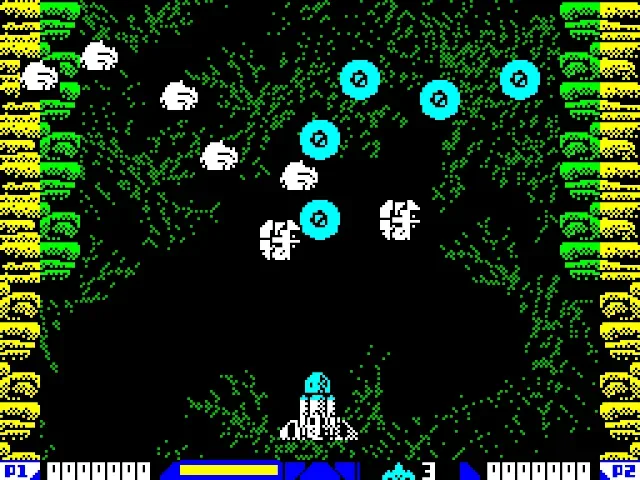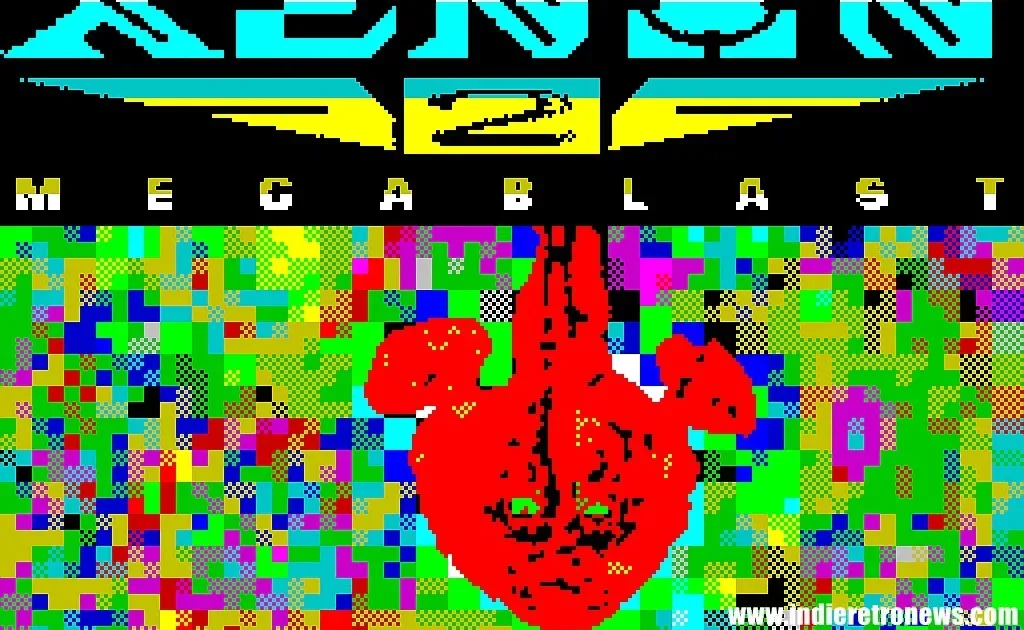
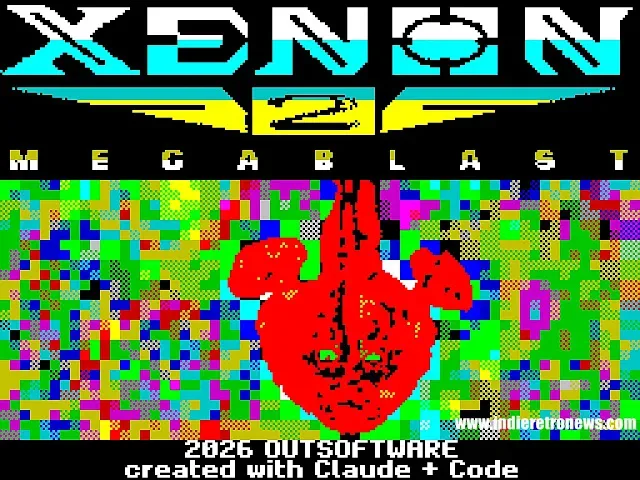
Xenon 2 Megablast appears to have finally reached the ZX Spectrum 128K more than three decades after an official Spectrum conversion was abandoned. Developer Outsoftware is behind the newly released version, turning an especially intriguing loose end in 8-bit game history into something Spectrum players can load today. It is a notable return for a shoot-’em-up whose would-be conversion had long been associated with a technical demo, a publisher rejection and a quietly shelved ambition rather than a finished release.
The importance of this release is not simply that another older game has been adapted to an older machine. The Spectrum version had a genuine development path in 1991, when Commodore 64 coder and musician Dave Spicer built a demo intended to persuade publisher Mirrorsoft to support the project. That attempt did not succeed. Now, Outsoftware’s conversion gives the ZX Spectrum 128K a version of Xenon 2 Megablast after the machine missed out when it mattered commercially.
A promising 1991 Spectrum pitch that went nowhere
Spicer’s original demonstration was designed as a serious case for bringing the game to Sinclair’s 8-bit platform. It used early, minimalist artwork by Jason Brashill and ran full-screen at 25 frames per second. For the hardware, that was an ambitious target and helped the demo make a strong visual impression.
Frames per second, usually shortened to fps, describes how often a game updates its displayed image in one second. A higher update rate can make movement appear smoother and can be particularly meaningful in a fast-moving shoot-’em-up, where the player needs to read incoming hazards and react quickly. The supplied history characterizes the 25 fps full-screen demo as remarkable on Spectrum hardware, which explains why the project was considered a credible pitch rather than a mere curiosity.
Yet technical promise does not guarantee a commercial release. Mirrorsoft was reportedly not interested in funding 8-bit conversions at that point, and it rejected the proposed Spectrum version. That decision left the demo without the publisher support it needed to become the official port Spicer had hoped to make.
Speed first, then a parallax alternative
Spicer did not stop after the initial rejection. He later revised the demo to include parallax scrolling, aiming to bring its presentation closer to the game’s 16-bit editions. The upgrade came with a small performance cost, reducing speed compared with the earlier standard build.
Parallax scrolling is a visual technique in which background layers move at different rates. A closer layer might slide by more quickly while a distant one moves more slowly, creating an impression of depth as the action travels across the screen. In a scrolling shooter, it can make the world feel more dynamic than a single flat backdrop. It also asks more of a system, because the game must manage additional movement and visual information.
That trade-off is central to why the two demo builds matter. The standard version prioritized speed, while the parallax version sought a richer approximation of the presentation associated with more powerful 16-bit machines. Neither approach was inherently the definitive answer; each represented a different answer to the same development question: should the Spectrum version devote its resources to fluidity or to extra visual depth?
Related coverage includes Xenon 2 Megablast Reaches ZX Spectrum 128K More Than 30 Years After Cancellation.
Spicer reportedly planned to send both versions to Your Sinclair. The idea was straightforward: coverage could show what the Spectrum was capable of, build enthusiasm among readers and perhaps put pressure on Mirrorsoft to reconsider. The planned publicity effort never came together, however, and the project was shelved.
Why this revival carries more weight than a routine conversion
The newly released version is compelling because it connects to a specific, unrealized moment rather than only to general nostalgia. It follows a game that was actively pitched for the Spectrum, supported by a fast proof of concept and subsequently improved with an alternate graphical approach. The original effort did not fail because there was no attempt; it stopped after publisher interest did not materialize.
That distinction matters for retro players. A cancelled game often exists only as a title on a list, or as a rumor detached from any evidence of what might have been. Here, the documented path includes a 1991 demo, named contributors, measurable performance and a clear explanation for why the official port did not proceed. Outsoftware’s work therefore gives players a route into a previously missing platform chapter for Xenon 2 Megablast.
It also illustrates how a platform’s library can continue to change long after its original commercial era. The ZX Spectrum 128K is a classic 8-bit computer, but fresh work can still revisit games and projects that never received their intended release at the time. This is not the same as rewriting the machine’s history: the original Mirrorsoft-backed conversion was not released. Rather, it preserves the importance of that lost effort while giving modern enthusiasts a new way to engage with the idea.
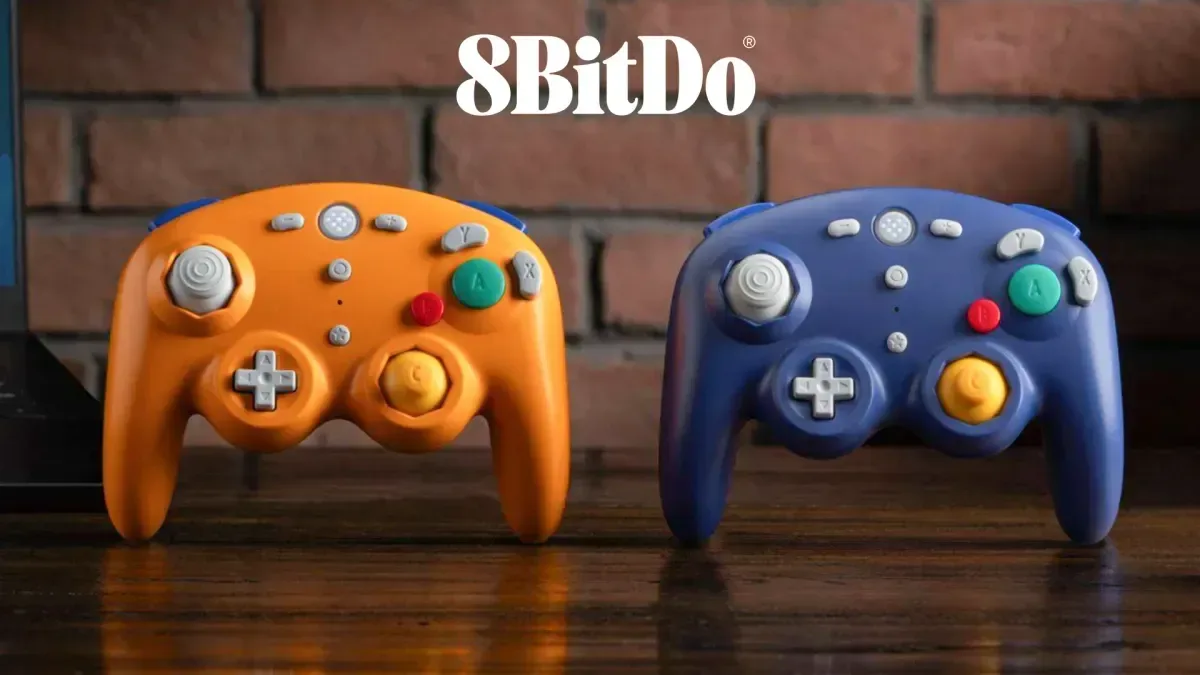
For players interested in the wider afterlife of classic hardware, projects like this sit alongside modern accessories and continuing platform support. For example, new GameCube-style controller hardware shows that older design traditions remain relevant well beyond their original systems. The Xenon 2 Megablast conversion is a different kind of revival—software rather than a controller—but both reflect the lasting appetite for gaming history that can still be used rather than merely remembered.
ZX Spectrum 128K and ZX Next 3 interest
The release is positioned as something that may be worth loading on a ZX Spectrum or a ZX Next 3. That makes the story relevant to players with original-style Spectrum interests as well as those following later hardware built around the platform’s legacy. The central point remains the ZX Spectrum 128K conversion itself: a game that many expected never to appear on Sinclair’s classic machine now has an unofficial route there.
There are sensible limits to what this news establishes. The available account identifies Outsoftware as the developer of the new conversion and outlines the history of the cancelled 1991 pitch, but it does not provide a detailed feature comparison between the release and Spicer’s demos. It also does not establish that the new version is a direct restoration of either the 25 fps standard demonstration or the later parallax build. Those are important technical and historical questions, but they should not be answered by assumption.
What is clear is that the original Spectrum effort involved meaningful experimentation. The first demo was full-screen and fast; the later version tested parallax scrolling while accepting a slight reduction in speed. Those details underline the challenge of adapting a shoot-’em-up to constrained 8-bit hardware. They also show why the abandoned port retained interest for so long: it had already demonstrated enough potential to make its absence feel like a genuine loss.
What the release means for retro-gaming fans
For a player, the immediate appeal is the chance to experience Xenon 2 Megablast through a platform lens that was missing for decades. For enthusiasts of development history, the appeal is equally strong: the release brings renewed attention to Spicer’s original work, Brashill’s early visuals and the decision that ended the official project before it could reach the public.
The practical lesson is that historical game libraries are not always closed books. A cancelled conversion can remain dormant for years, then return through modern development work and community interest. That does not erase the original cancellation, nor should it blur the difference between a period release and an unofficial later conversion. But it does mean that players can finally explore a version of Xenon 2 Megablast that the ZX Spectrum 128K was once denied.
For this particular story, the long gap is part of the appeal. The Spectrum port went from an ambitious 1991 proposal, through a rejected pitch and an abandoned magazine-coverage plan, to a new release credited to Outsoftware. It is a reminder that a project can be historically important even when it was never commercially completed—and that, occasionally, an old missed opportunity can get another shot.