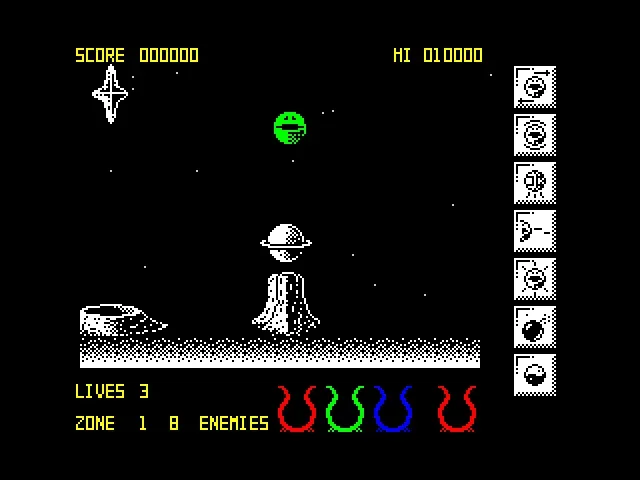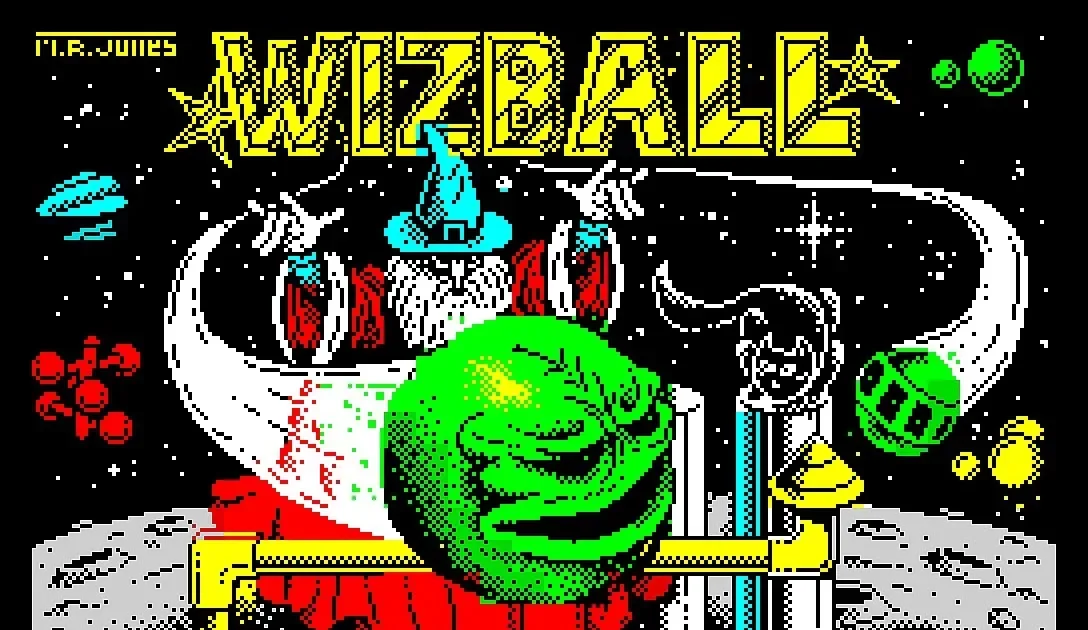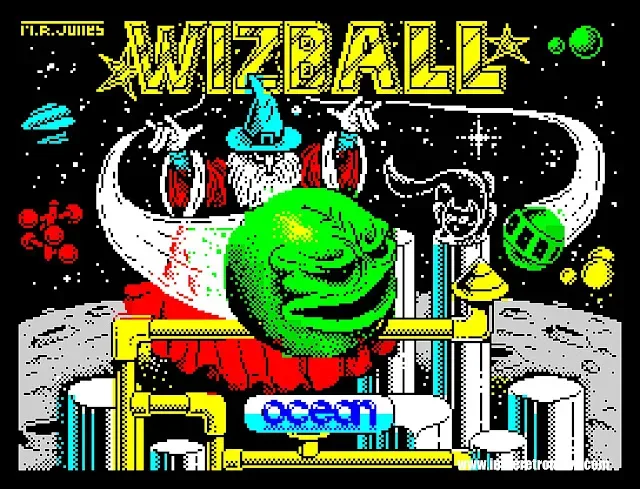
Wizball Enhanced Edition is now available for the ZX Spectrum 128K, giving the 1987 scrolling shooter a carefully revised return rather than a wholesale remake. Gravious’ new build is described as fully decompiled and bug-fixed, with content restored from the original release, gameplay balance adjustments and quality-of-life improvements.
That framing matters. Wizball is not being repositioned as a contemporary retro-inspired game that merely borrows an old name. The enhanced edition remains rooted in the original arcade adventure created by Jon Hare and Chris Yates at Sensible Software and published by Ocean. Its unusual central premise is intact: players guide a bouncing green sphere through a hostile world drained of colour by the villain Zark.
The goal is not only survival. Players blast the game’s strange enemies, acquire power-ups and work with Catellite, a feline companion that collects coloured droplets. Those droplets are central to the game’s visual and mechanical identity, as the player attempts to return colour to an otherwise monochrome environment.
A restoration-minded update for a 128K classic
The headline feature is the effort to reinstate material cut from the 1987 release. The supplied details do not specify exactly which content has returned, so it would be premature to promise particular stages, items, behaviours or audiovisual elements. What is clear is that this is positioned as a restoration project as much as an enhancement: it seeks to bring back omitted material while repairing bugs in the released game.
Decompiled is an important term in that context. A decompilation is a process of working back from a compiled program toward code that can be inspected and altered. For preservation and enhancement work, that can make it more practical to identify faults, understand how systems interact and reintroduce material that was not present in a final commercial build. It is distinct from simply applying a small patch to a game file; the stated work suggests a deeper examination of the original program.
Bug fixing is equally significant for an older action game. In a shooter built around movement, enemy attacks, collection and power-up progression, even a small technical error can change how a run feels. The release also includes balance tweaks, although no individual changes have been detailed. Balance in this kind of game can cover the relationship between challenge and player capability: enemy pressure, the usefulness of upgrades, collection demands or the rate at which the player can recover from setbacks. Until a changelog identifies the precise adjustments, the safest expectation is refinement rather than a claim that every difficulty concern has been redesigned.
The phrase quality of life refers to features intended to make a game less awkward to access or operate without necessarily changing its core rules. No specific feature list has been provided for this edition. Still, their inclusion signals an attempt to make a four-decade-old program more accommodating for current players and for those returning to original Spectrum hardware.
Why Wizball’s structure still stands out
At a glance, the setup sounds familiar: a side-scrolling shooter with an enemy threat, upgrades and a villain at the end of the premise. But the bouncing sphere, the gradual restoration of colour and Catellite’s droplet-collecting role give Wizball a character that reaches beyond simple score chasing.
Related coverage includes Wizball Enhanced Edition Restores ZX Spectrum 128K Classic.
The player’s actions serve two linked purposes. One is immediate: destroy threats and stay alive. The other is restorative: gather what is needed to make the world colourful again. This makes the palette-recovery idea more than background story. Catellite’s role also divides the game’s activity in an interesting way, with the main character handling combat and the companion helping support the broader collection objective.
That design is especially suited to an enhanced edition that aims to preserve the original. The appeal is not dependent on replacing the game’s eccentricity with a standard modern shooter format. Retaining the green, bouncing protagonist and its feline helper preserves the parts that make the game recognisable, while bug fixes and usability work can address friction that does not define its creative identity.
Download formats and ways to play
Wizball Enhanced Edition is offered in .z80, .tap and .tzx formats. Providing more than one file type is practical for a retro release because players do not all use the same setup. The available formats allow the game to be used through modern ZX Spectrum emulators, flash-cartridge arrangements and original hardware workflows.
- Modern emulators: Players who run Spectrum software on current systems can load a compatible version without requiring an original machine.
- Flash cartridges: The release specifically identifies the DivMMC as an example of hardware that can be used to load the game.
- Original Spectrum hardware: Owners of a compatible machine can record the files to a traditional cassette tape and load the enhanced edition in the manner associated with the platform’s original era.
That cassette option is more than a novelty. It leaves room for a player to choose the ritual and constraints they want from retro gaming. An emulator offers convenience; a flash cartridge can offer a hardware-based route without the tape process; recording to cassette recreates an experience closely tied to Spectrum software distribution. The game itself is the common destination, but the journey there can be tailored to the player’s equipment and patience.
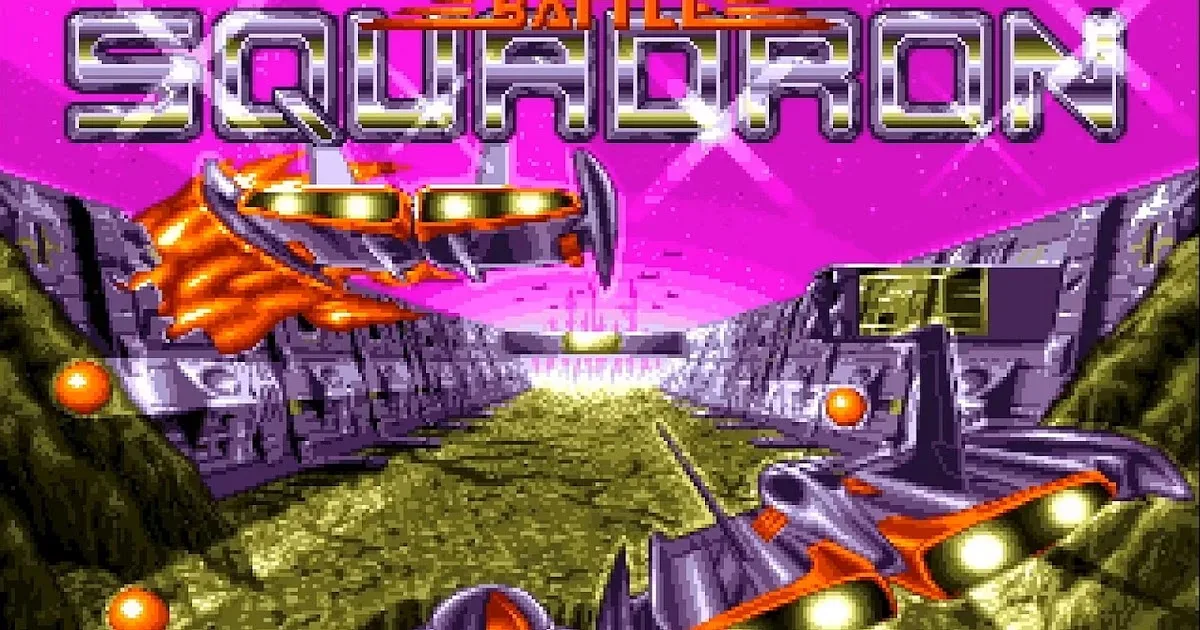
For anyone building a small library of recent projects for vintage systems, this approach fits alongside other efforts to keep older platforms active through new releases and reworks. The continued attention to legacy hardware is also visible in projects such as Battle Squadron CD32 Remix, which revisits a shooter for a different period machine.
What the enhanced label does—and does not—promise
“Enhanced” can mean radically different things from one retro release to another. Here, the confirmed scope is focused: restored cut content, fixes for bugs, balance changes and quality-of-life additions. Those are meaningful changes, but the available information does not establish new art, new sound, altered plot, new levels or support for platforms beyond the ZX Spectrum 128K release. Retro players should therefore approach it as a more complete and polished edition of Wizball, not as evidence of a ground-up remake.
That narrower remit may be exactly the attraction. Preservation-oriented updates are often at their strongest when their changes are legible and bounded. Restoring missing material can give players a fuller version of a familiar work. Fixing defects can make intended behaviour more reliable. Careful balancing can smooth the game’s rhythm. Quality-of-life additions can reduce barriers around an old program without erasing what made it a product of its machine and moment.
There is also a useful distinction between accessibility and simplification. The release says it includes modern convenience features, not that it makes the game easy. A work can become easier to load, more stable to run and clearer to use while retaining the challenge that its action design demands. With no feature-by-feature breakdown available, that distinction remains an analytical lens rather than a claim about any individual change.
A welcome route back to colour
Wizball Enhanced Edition gives ZX Spectrum 128K owners and emulator users a new way to revisit an imaginative shooter whose objective is as visual as it is combative. Zark’s theft of colour, the green spherical hero, bizarre enemies, power-up hunting and Catellite’s droplet gathering remain the heart of the adventure.
What Gravious adds is an effort to make that adventure more complete and more dependable: the game has been decompiled, bugs have been addressed, cut content has been reinstated, and both balance and convenience have received attention. With downloadable .z80, .tap and .tzx files supporting contemporary emulation, DivMMC-style loading and even cassette recording for original hardware, the release accommodates several distinctly retro ways to play.