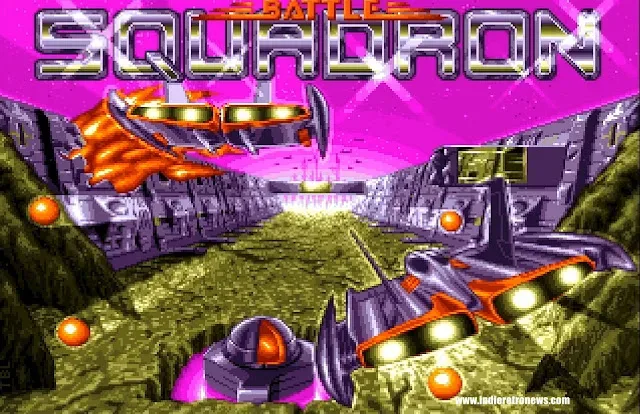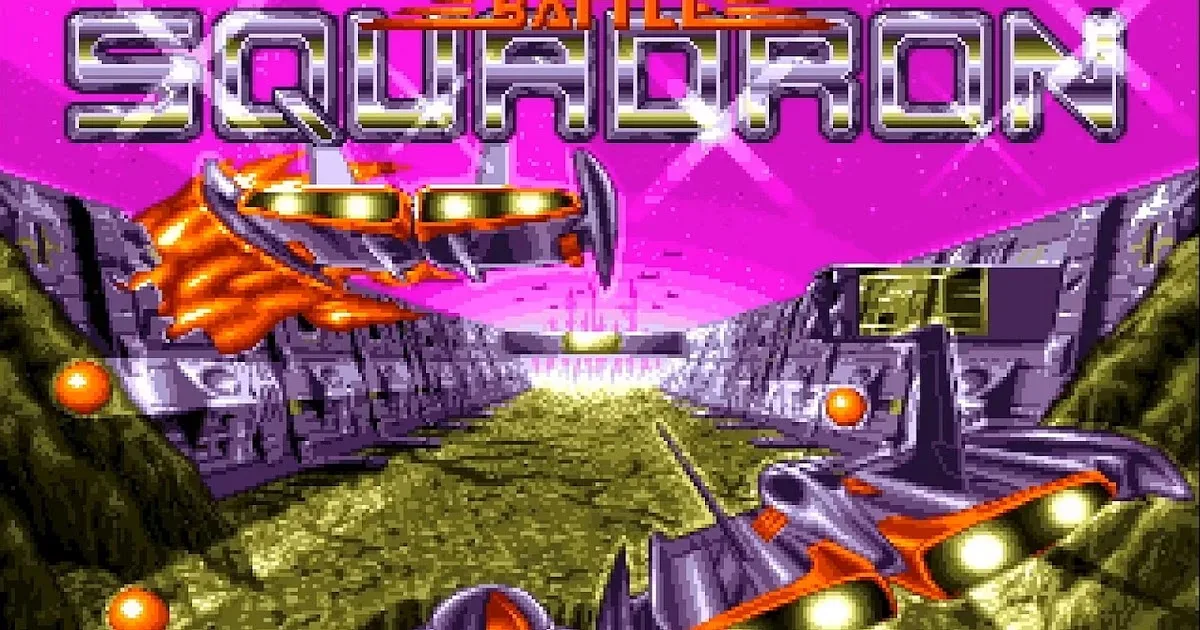
Battle Squadron CD32 Remix v1.0 is a fan-made adaptation of the 1989 vertically scrolling shooter Battle Squadron, rebuilt around the Amiga CD32’s disc-based format and controller setup. Created by ABG, the project retains the original game’s identity while changing the surrounding experience: it boots from disc, uses a custom loading presentation, reworks its menus for the CD32 joypad, and adds native two-player co-op with two controllers.
That makes this more than a simple repackaging exercise. The remix’s stated changes span controls, visual presentation, music playback, supplementary features and physical-style packaging material. For a game whose reputation was built on speed, busy destruction effects and a forceful soundtrack, the split between what remains original and what has been newly adapted is particularly important.
A sequel with an Amiga-era identity
The original Battle Squadron was designed by Cope-Com and published by Innerprise Software in 1989. It followed Hybris and belongs to the vertically scrolling shooter tradition: play proceeds through stages that continually move upward, requiring players to respond to incoming enemies, projectiles and screen hazards while managing their own firepower.
The game was noted for its rapid pace, detailed explosion animation and bass-heavy music. Those traits explain why a CD32-oriented version has to make choices beyond merely getting the game running from optical media. A scrolling shooter’s controls need to feel immediate, its screen action needs to remain readable, and its sound has an outsized role in setting the rhythm of play. The remix approaches each area separately rather than replacing the entire original presentation with one uniform update.
Disc booting and controller-first interface changes
On the practical side, the package is built to boot directly from the disc. It includes a custom loading screen and progress bar, giving the transition into the game an explicitly CD32-focused presentation rather than treating loading as an invisible technical detail.
The menus and the “nova missile” interface have also been reconfigured for the CD32 joypad. That matters because an interface designed around a different Amiga input arrangement does not automatically translate neatly to a console controller. The stated goal here is clear: essential navigation and the nova missile function have been reconsidered around the buttons available on the CD32 pad.
The remix additionally supports native two-player co-op using dual controllers. “Native” in this context means the two-player arrangement is presented as a direct supported mode for this CD32 version, rather than being described as an improvised workaround. In a shooter built around constant movement and split-second survival, a second player changes the visual density and coordination demands of the game, so having both players on matching controller setups is a meaningful platform-specific adjustment.
For retro hardware fans, this is the part of the project that may be most immediately useful. It is not only an archival effort focused on preserving old code and original assets; it is also trying to make the game’s entry points—starting, navigating and playing alongside someone else—fit the target machine. That distinction is often where a conversion either feels purpose-built or merely compatible.
Related coverage includes Battle Squadron CD32 Remix Brings a 1989 Amiga Shooter to CD32.
AGA art expands the presentation around the game
The visual refresh is concentrated in the title sequence and menus, where the remix adds 256-colour AGA artwork. AGA refers to the Advanced Graphics Architecture associated with later Amiga hardware, including the CD32. Here, the term describes the graphic capability being used for the new presentation art, not a claim that every part of the underlying game has been visually remade.
The project also adds colour intro and end sequences, plus new screens beneath the ending text. These additions frame the shooter with more elaborate opening and closing material. That is a sensible place for a remix to visibly establish its own identity while respecting an older game’s active play areas and recognizable moment-to-moment look.
There is a useful practical implication in that approach. Title, menu, introduction and ending screens are the parts of a game players see before committing to a run and after finishing one. Refreshing them can make a disc release feel cohesive without requiring the project to claim that its new art supersedes every original visual element. The supplied details point to an enhancement of the package and its presentation flow, rather than an assertion of a wholly new visual game.
CD audio for music, Paula for effects
Audio is where the remix draws its clearest technical line. The original in-game sound effects and jingles remain powered by the Amiga’s Paula chip, while the background music moves to CD-audio tracks. Paula is the Amiga’s well-known audio hardware; preserving its role for effects and short jingles maintains a direct connection to the machine’s characteristic sound during active play.
Meanwhile, using CD audio for the music allows the project to present higher-fidelity tracks through the disc format. This is not described as the game abandoning its musical past. Instead, the 17 selectable tracks combine Ron Klaren’s original arrangements with new contributions from the AmigaRemix community.
Players can move through those music choices on the status bar with forward and reverse functions. In other words, track selection is not limited to a separate menu before play begins; it is accessible through the game’s on-screen status area. That is a notable quality-of-life choice for a version whose soundtrack is designed to offer alternatives. A player can select a preferred arrangement from the available set while retaining the familiar gameplay effects and jingles underneath it.
The division of labour is also conceptually neat. Effects communicate immediate game events—shots, impacts and pickups—while music carries the broader atmosphere. Keeping the former on Paula while putting the latter on CD audio gives the remix a hybrid sound design: old Amiga character in the reactive sounds, and a broader selection of higher-fidelity music in the background.
Trainer options and a complete disc-style package
Battle Squadron CD32 Remix includes a built-in trainer menu. The supplied information does not specify which options the trainer contains, so it should not be assumed to offer any particular adjustments. Its confirmed presence does, however, make it part of the package’s accessibility and replay-oriented toolset.
The release also includes print-ready CD cover inserts illustrated by Wachi. These are printable materials, not a statement that a physical commercial edition is being sold or distributed. Their inclusion nevertheless fits the project’s broader CD32 framing: the remake is intended to look and feel like a disc-oriented release from boot screen through cover art.
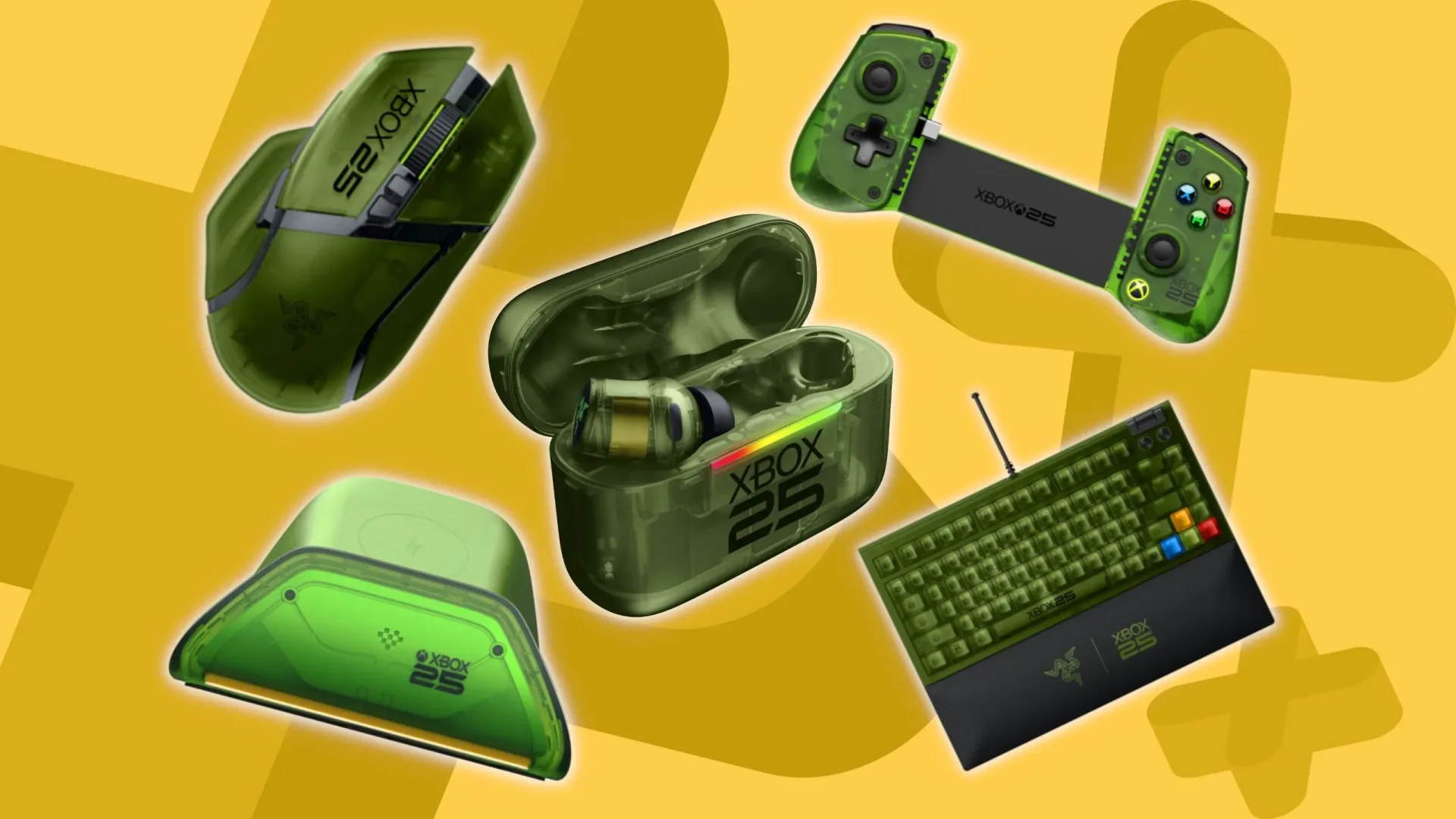
That preservation-minded attention to the object around the game is one reason old platforms continue to invite fan projects. Hardware identity is not only a processor specification or a controller port. It also includes the loading screen, audio format, menu behavior and even the insert a player might place in a case. The same instinct behind hardware-specific nostalgia can be seen in more modern console design discussions, such as Xbox’s anniversary focus on translucent green gaming gear, although Battle Squadron CD32 Remix is rooted in a much older Amiga format.
What the remix is—and what it does not claim to be
The strongest way to understand Battle Squadron CD32 Remix is as a platform-targeted fan conversion and tribute. It carries forward a 1989 sequel to Hybris, but revises how that game is loaded, controlled, introduced, scored and packaged on Amiga CD32 hardware. Its additions are specific: direct disc booting, a loading display, joypad-focused menu and nova missile changes, dual-controller co-op, AGA title and menu art, colour sequences, selectable CD music, a trainer menu and printable cover inserts.
Just as importantly, the available details do not establish a newly designed campaign, redesigned enemy behavior, altered stage layouts, new weapons, changed difficulty balance, modern-platform support or commercial availability. Those are not safe assumptions merely because the project is called a remix. The confirmed work is already substantial, but it is best described precisely.
For players interested in how fan creators can revisit a classic without severing its ties to the machine that defined it, the combination is the story. Paula-driven effects remain in place, Ron Klaren’s music is represented alongside community contributions, and the CD32’s disc and controller format shapes the updated experience. Battle Squadron CD32 Remix v1.0 is therefore less about replacing an Amiga shooter’s history than translating its celebrated energy into a tailored CD32 presentation.