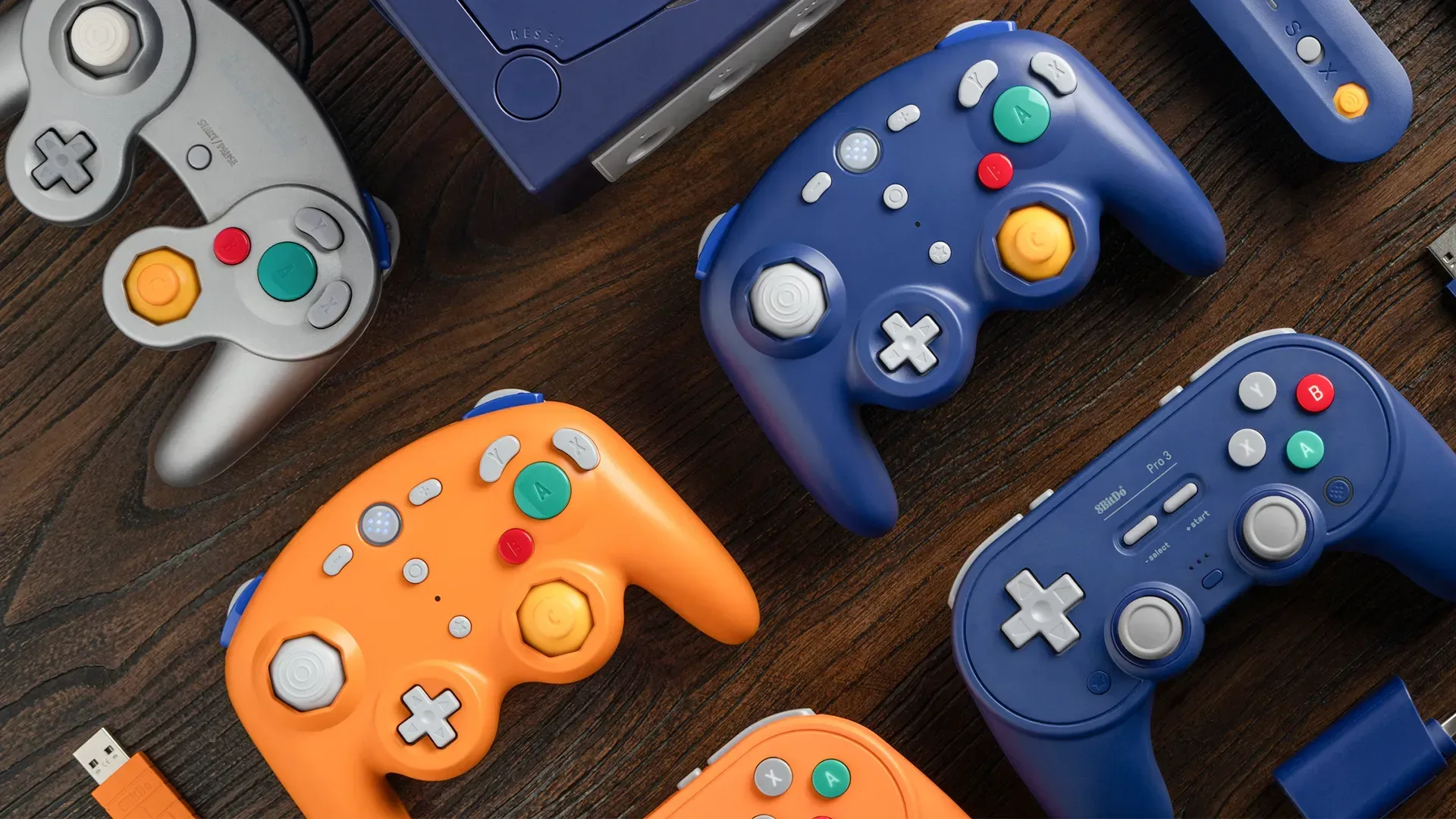
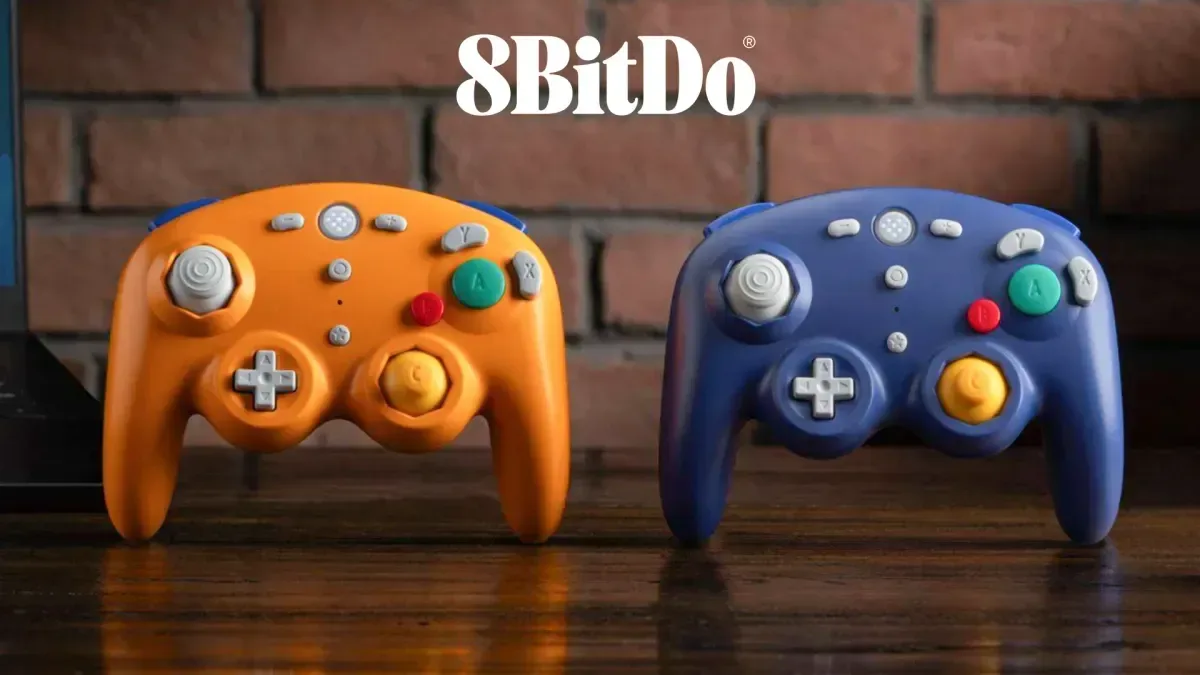
8BitDo has detailed the GC Bluetooth Gamepad, a $49.99 controller that borrows the instantly recognisable silhouette and control philosophy of the GameCube pad while aiming at current Nintendo systems and Windows PCs. It is scheduled to release on December 10 and is available to pre-order now in purple and orange.
The controller is compatible with Nintendo Switch, Switch 2 and Windows, with 2.4 GHz wireless, Bluetooth and USB-C wired connection options listed. It can also be used with an original GameCube through 8BitDo’s Retro Receiver, meaning the design is not limited purely to modern hardware. That range is the central appeal: a controller constructed around a very particular classic layout, but with contemporary connection methods and sensor technology.
A GameCube layout, deliberately preserved
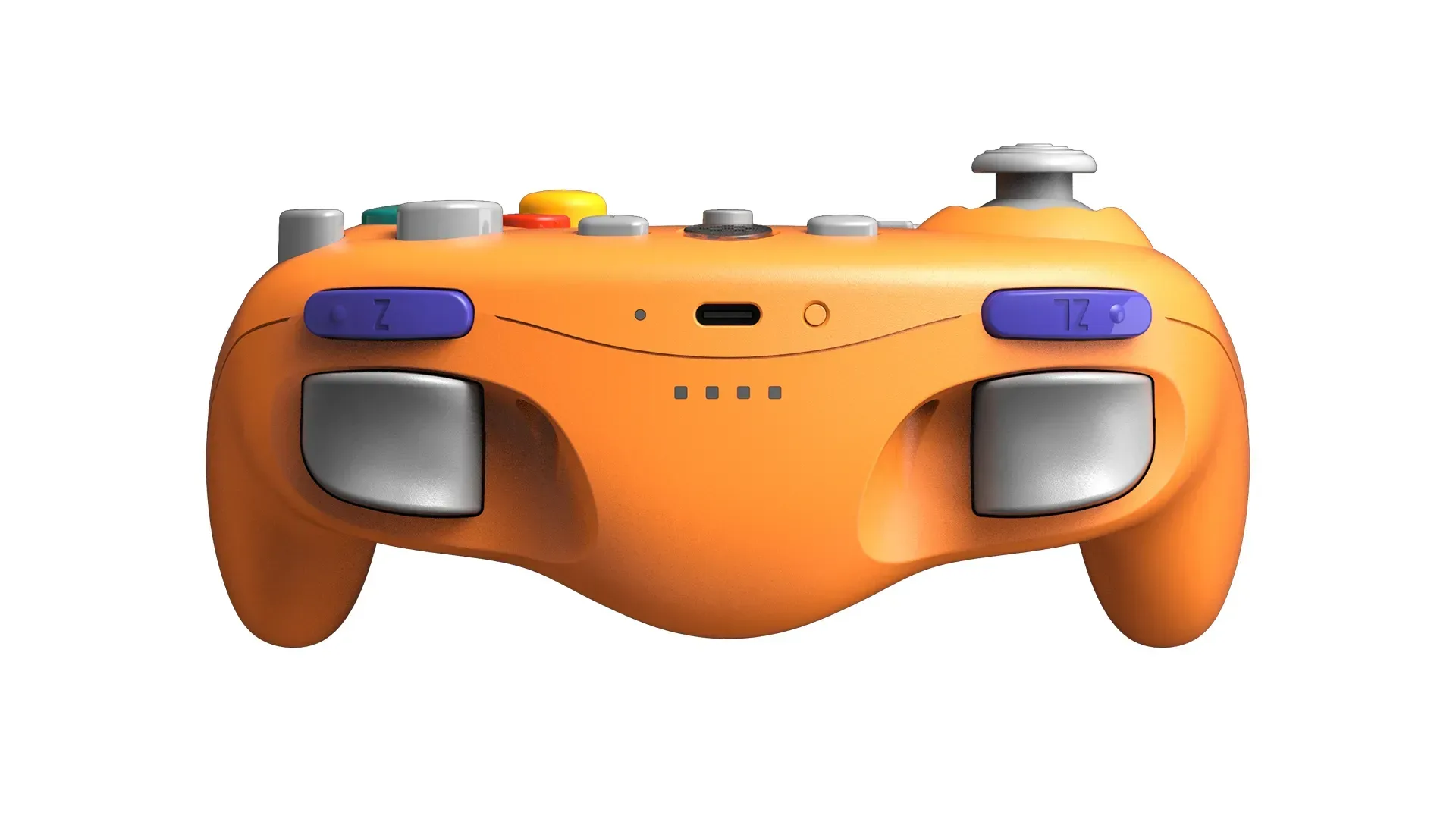
This is not simply a modern gamepad wearing a purple shell. 8BitDo has retained several defining elements of the GameCube controller’s physical arrangement: the familiar ABXY face-button layout, octagonal gates around the sticks, a cushioned D-pad and trigger resistance intended to evoke the older pad’s directional feel. It also lists symmetrical Z and ZL bumpers, single-rotor rumble, a capture button and a turbo function.
The octagonal stick gates are especially important to the controller’s identity. A gate is the physical surround that guides a thumbstick’s movement. Rather than a smooth circular opening, an octagonal gate has eight directional edges. The supplied specifications position that feature as a way to retain a classic GameCube-style directional sensation while using newer analogue-stick hardware underneath.
8BitDo says the controller is intended to feel familiar rather than merely resemble the original. Its stated tactile choices include a fine matte surface, familiar shell texture and cushioned D-pad, alongside rumble tuned around a single rotor. Those details matter because retro-inspired hardware can reproduce a button diagram without reproducing the physical cues players associate with it. Here, the company is explicitly presenting the shell, gate shape, triggers and surface treatment as part of the product rather than decorative nostalgia.
Modern components underneath the retro exterior
The GC Bluetooth Gamepad uses TMR joysticks with a 10-bit ADC sampling chip, plus Hall Effect linear triggers. These terms are technical, but they describe the two input areas most likely to attract attention from people weighing a new controller: the analogue sticks and the analogue triggers.
TMR, or tunnel magnetoresistance, is a magnetic sensing approach for the sticks. In broad terms, the controller measures stick movement magnetically rather than relying on conventional contact-based position sensing. The supplied information frames the result as precise and consistent input. The product also specifies a 10-bit ADC, short for analogue-to-digital converter. An ADC converts physical analogue movement into the digital values a console or PC can read; 10-bit resolution corresponds to 1,024 potential values across the range being measured. That figure describes the sampling system’s potential granularity, not a guarantee of a particular in-game result.
The listed Hall Effect linear triggers similarly use magnetic sensing. “Linear” means the trigger input can report degrees of pull, rather than functioning only as an on/off button. That distinction is relevant wherever software reads a partial press, and it also fits 8BitDo’s stated goal of retaining a GameCube-like trigger feel while updating the underlying mechanism.
Related coverage includes 8BitDo GC Bluetooth Gamepad Brings GameCube Styling to Switch, Switch 2 and Windows.
In other words, the company’s pitch is a hybrid: classic ergonomics and button geography on the outside, newer stick and trigger sensing inside. It is a more specific approach than simply offering a generic wireless controller in retro colours.
Connection options and platform scope
The controller supports three listed connection methods: Bluetooth, 2.4 GHz wireless and a wired USB-C connection. Bluetooth is the standard wireless option most players will recognise; 2.4 GHz wireless generally refers to a dedicated wireless connection rather than Bluetooth. USB-C gives users a cabled alternative. The specifications also mention support for multiple simultaneous gamepad connections, though no exact number is supplied.
For current systems, the named compatible platforms are Switch, Switch 2 and Windows. The presence of a capture button is consequently useful in a Nintendo-style layout: it is intended for screenshots and recording. The turbo function is also included, although the supplied details do not define which buttons can use it or how its settings are configured.
Switch users who are keeping an eye on the wider software side of the platform can also find coverage of a recent update to the HATS Switch homebrew bundle. That is a separate software topic, but it underscores why clear platform and connection information matters when a controller is marketed across old and new Nintendo-adjacent setups.
Original GameCube compatibility comes with one important condition: the GC Bluetooth Gamepad can connect to that console using the 8BitDo Retro Receiver. The receiver is named as the route to GameCube use, but its price, whether it is included, and further setup details are not provided in the available specifications. Buyers interested specifically in original-console play should therefore treat the receiver requirement as a key part of the setup to verify before ordering.
What is confirmed, and what remains unspecified
The confirmed hardware list is substantial. Alongside the retro-inspired form, users are getting TMR sticks, octagonal gates, Hall Effect linear triggers, rumble, wireless and wired connectivity, a capture button and turbo support. The pad measures 140.1 × 102.95 × 67.6 mm and weighs 218.1 g.
There are also a few practical limits to what can be concluded from the announcement. No battery-life figure is listed. There is no supplied information on charging time, included accessories, remapping options, software configuration, receiver availability, or whether every listed feature behaves identically on each platform. Likewise, the words “precise” and “consistent” describe the manufacturer’s intent and component choice, not independent performance testing.
That does not diminish the clarity of the broader proposition. The GC Bluetooth Gamepad is aimed at players who want the character of the GameCube controller—particularly its distinctive button layout, gated sticks and trigger-focused feel—without giving up present-day platform compatibility and connection choices. It is also relevant to owners of original GameCube hardware, provided they factor in the Retro Receiver.
Colours, price and release timing
8BitDo lists two colourways: purple and orange. Both are described as available only through the 8BitDo eShop. The controller costs $49.99, is available to pre-order, and is scheduled for release on December 10.
At that price, the product’s value proposition rests less on plain nostalgia than on how specifically it combines a GameCube-influenced design with modern input hardware. Plenty of gamepads can connect to a PC or Nintendo system; far fewer make octagonal gates, the ABXY arrangement and analogue trigger character the defining premise. For players who prefer that particular control language, 8BitDo’s new pad is positioned as a purpose-built option rather than a visual throwback alone.
GC Bluetooth Gamepad specifications at a glance
- Price: $49.99
- Release date: December 10
- Platforms: Nintendo Switch, Switch 2 and Windows
- Original GameCube use: Via the 8BitDo Retro Receiver
- Connectivity: Bluetooth, 2.4 GHz wireless and USB-C wired
- Colours: Purple and orange, listed as 8BitDo eShop exclusives
- Sticks: TMR joysticks with octagonal gates and a 10-bit ADC sampling chip
- Triggers: Hall Effect linear triggers
- Other controls: Symmetrical Z and ZL bumpers, capture button and turbo function
- Feedback: Single-rotor rumble
- Size: 140.1 × 102.95 × 67.6 mm
- Weight: 218.1 g