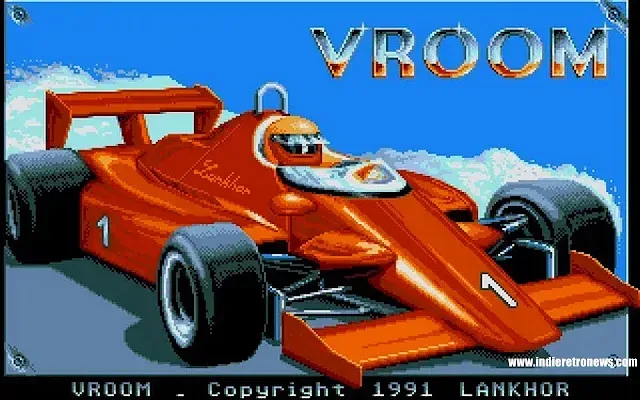
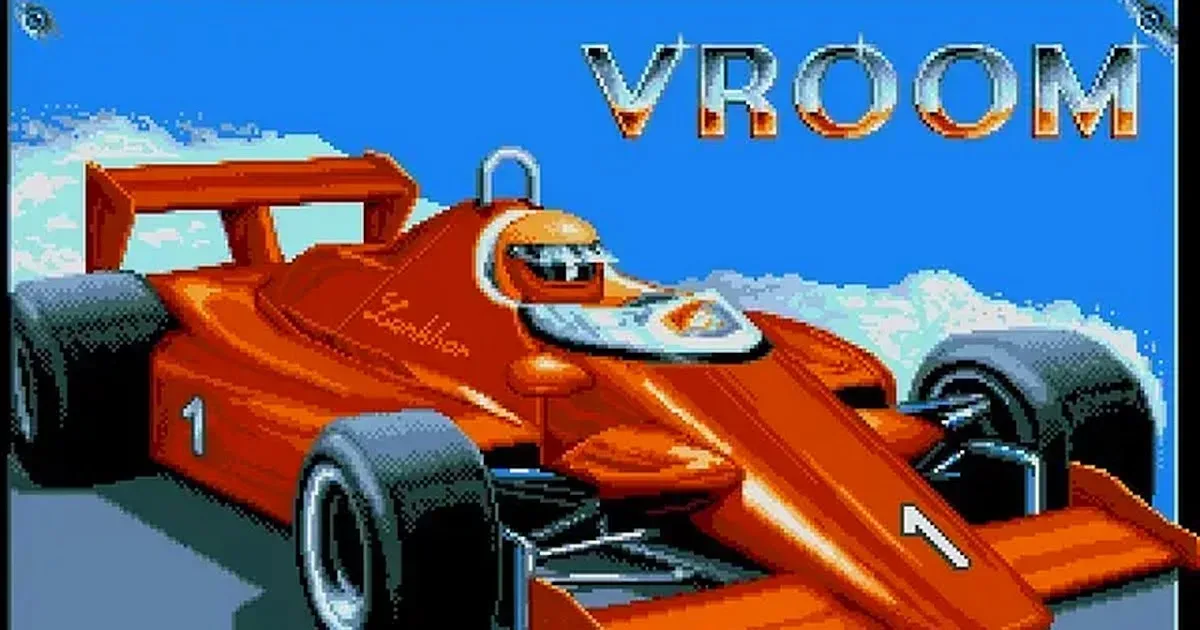
Vroom Enhanced is now available from developer Vesuri, giving the 1991 racing game Vroom a targeted modernization for expanded Amiga hardware. The update concentrates on the things that define an arcade racer’s feel: motion speed, frame delivery, sound timing and input behavior. For players using a 68020-or-better Amiga, its headline change is especially meaningful: the game can run at its original NTSC speed even on PAL setups.
That is not a new sequel or a wholesale reinvention of Daniel Macré’s racer. It is a compatibility-and-performance-focused enhancement of a game originally published by Lankhor, one that arrived in 1991 across the Atari ST, Amiga and MS-DOS. The intent is straightforward: preserve Vroom while removing some of the regional timing and usability compromises that can get between players and a fast racing game.
What Vroom Enhanced changes
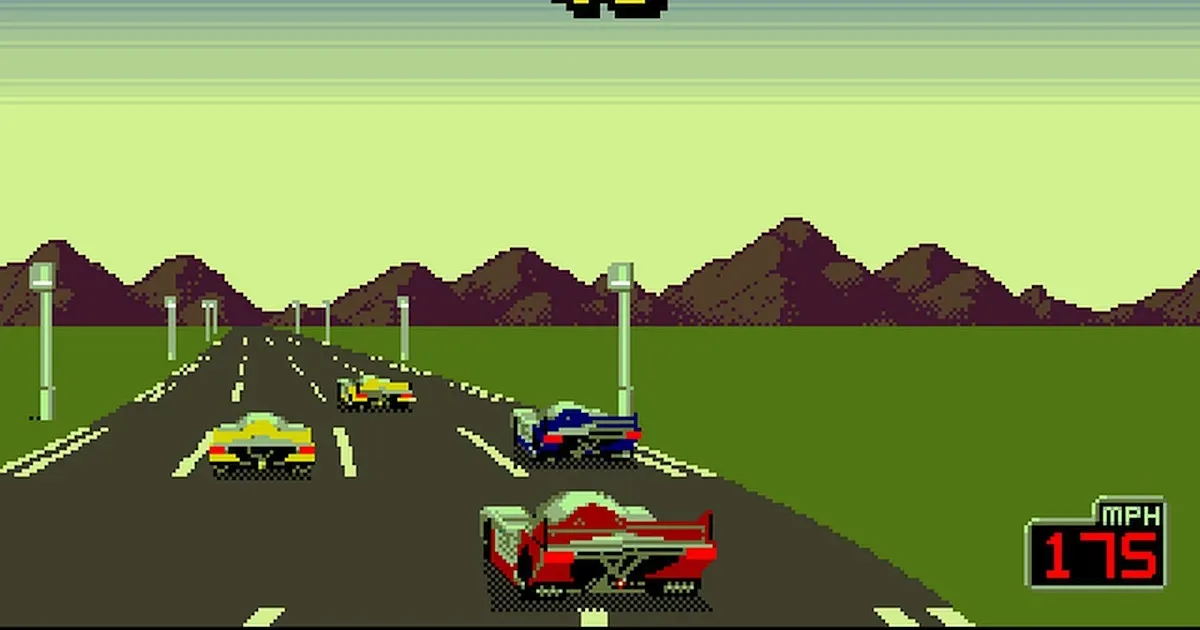
On Amiga systems with a 68020 CPU or higher, Vroom Enhanced unlocks the game’s full original NTSC speed on PAL machines. It renders at 50 or 60 frames per second and uses interpolated movement between game steps.
Those phrases describe two closely related parts of how smooth a racing game appears. A frame rate is the rate at which visual frames are drawn. A game step is an individual update in the game’s underlying simulation or logic. Interpolation creates intermediate visual positions between those steps, aiming to make an object’s travel look more continuous. In a game built around high-speed driving, that can make the flow of the road, rival cars and steering response easier to read visually.
The distinction matters because a game can be playable without every aspect of its presentation being equally fluid. Vroom Enhanced’s stated combination of 50 or 60 fps rendering and interpolated movement is designed to improve the visual cadence while retaining the original game’s pace. It is a practical preservation improvement rather than a change to the racer’s identity.
The PAL-specific benefit is equally important. PAL and NTSC refer to different video-system standards associated with different regional display timing. The update lets compatible PAL Amigas reach the game’s intended NTSC pace, instead of leaving speed tied to a regional timing difference. In a racing game, pace is not merely cosmetic: it affects the rhythm with which players judge corners, traffic and their own inputs.
Expanded Amiga hardware is the key requirement
The performance features are specifically described for 68020+ machines. In other words, the upgrade is aimed at Amiga configurations with at least a Motorola 68020-class processor rather than every possible original setup. That hardware condition is worth checking before treating the full-speed PAL result as a universal change for all Amiga owners.
Vroom Enhanced therefore occupies an interesting place in retro-game maintenance. It is not claiming to replace the original software with a new engine or a modern platform port. Instead, it uses expanded-period hardware to address how the original behaves under particular display standards and to improve several rough edges around sound and controller configuration.
Related coverage includes Vroom Enhanced Gives the Classic Amiga Racer a Smoother, Faster Ride.
That approach should be familiar to anyone following ongoing work around classic systems. Enhancements can be most valuable when they target the small friction points that become conspicuous in repeated play: a slightly wrong tempo, an intrusive audio artifact, or a control-selection step that is less direct than it should be. The same broad interest in keeping Amiga racing lively can be seen in FASTER’s 50fps 2.5D arcade-racing push on Commodore Amiga, though Vroom Enhanced is focused on refining an existing 1991 game.
Audio timing and practice-race cleanup
Vesuri’s update also corrects audio behavior on PAL systems. Music and sound effects now play at their proper tempo, rather than being subject to the timing mismatch the update is intended to solve. Music tempo can be easy to overlook in a technical changelog, but it is part of a game’s original pacing. A racing soundtrack that plays too slowly or too quickly changes the sensation of speed even if the course and car handling are otherwise familiar.
The practice race receives a more specific fix: the update eliminates audio pops and clicks there. These are brief unwanted noises, and removing them is a focused quality-of-life improvement. Practice modes are where players may spend considerable time learning a game’s limits or getting comfortable with a controller, so a recurring audio blemish is precisely the kind of issue worth addressing in a preservation-minded update.
Neither correction needs to be flashy to be useful. Classic games are often remembered as a complete audiovisual experience, not just as code that reaches the finish line. Matching sound effects and music to the appropriate tempo while taking out unwanted artifacts helps keep that experience coherent.
More direct controller selection
Vroom Enhanced adds a configuration option at the splash window for the Red Player. Players can choose that player’s port and input device directly there. The source material does not specify every controller combination supported by the new menu, so prospective users should avoid assuming options beyond the stated ability to select the port and device.
Still, the practical purpose is clear. A splash-window choice puts a basic setup decision in an immediately visible place before play begins. That is useful for users whose preferred controller is not the expected default, and potentially for anyone moving between different input arrangements.
The update also resolves a long-standing mouse-control issue. Previously, rapid mouse movement could send the control marble in the wrong direction. The fix means fast motions should no longer produce that incorrect directional behavior. For a racer where steering decisions happen quickly, an input bug triggered by speed is especially frustrating: the moment a player needs a prompt response is exactly when the control can become unreliable. Addressing it is more consequential than a minor menu polish.
Installed-icon support for the new settings
Vroom Enhanced introduces the settings CUSTOM4, CUSTOM5 and CACHE. The installed icon handles them automatically. The available information does not define the individual function of each setting, so it would be premature to assign meanings beyond their names. What is clear is that users do not need to manually manage the new options through the installed icon.
That automatic handling complements the larger design of the release. A performance-oriented update can become needlessly intimidating if every new option requires manual setup. Here, the headline hardware benefits, the front-end controller choice and automatic treatment of the new settings point toward a smoother path for players trying to get the improved version running.
A focused update to a fast 1991 racer
Vroom earned a reputation for direct, addictive speed-focused racing after its original release, and Vroom Enhanced’s changes are aligned with that reputation rather than at odds with it. Full original NTSC speed on supported PAL Amigas, 50 or 60 fps presentation with interpolated movement, correct PAL audio tempo, practice-race audio cleanup and a repaired mouse-control problem all serve the same goal: making the existing racer behave more cleanly on the appropriate hardware.
For owners of a 68020+ Amiga, the most immediately relevant question is whether their setup can take advantage of the full-speed PAL behavior. For everyone else interested in the history of the game, the update is a reminder that classic releases can still receive careful technical attention decades after their debut. Vroom first appeared on the Atari ST, Amiga and MS-DOS in 1991; Vroom Enhanced keeps the Amiga edition’s high-speed appeal in view while refining the conditions under which it is played.