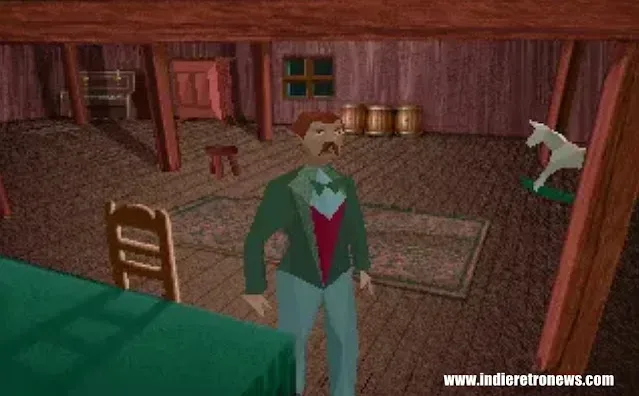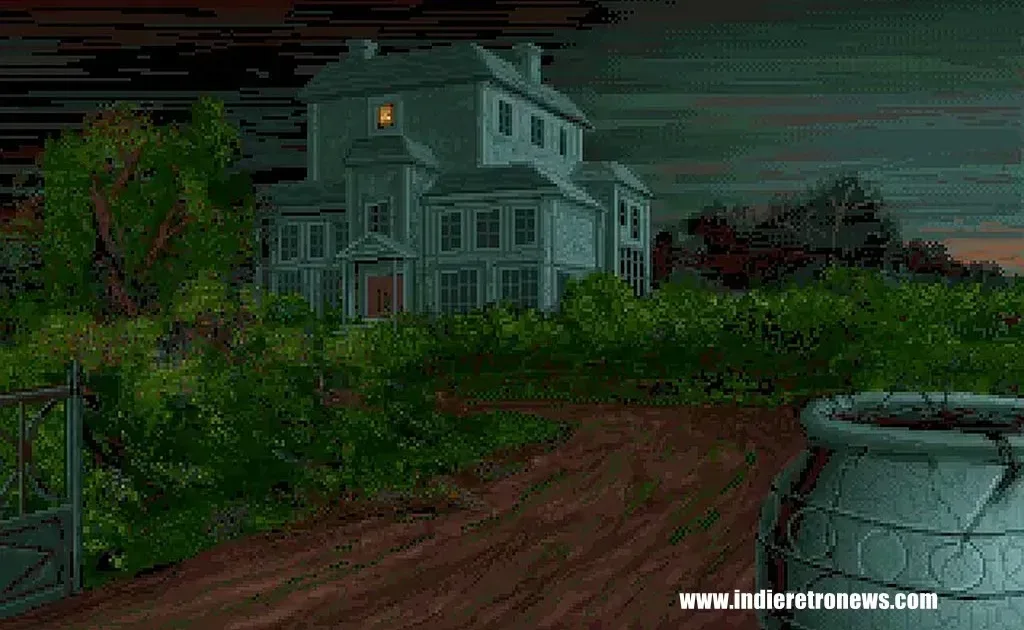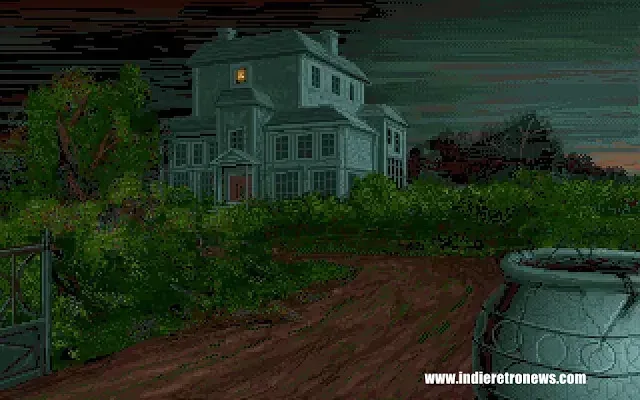
Alone in the Dark is headed to Commodore Amiga hardware through an unusual unofficial porting effort. Rather than recreating Infogrames’ landmark horror adventure as a wholly new Amiga program, the project is designed to execute code from the 1994 Apple Macintosh version and provide the missing bridge between that code and Amiga systems.
That distinction is the whole story’s creaking floorboard. The project operates as a compatibility layer: software that translates expected Macintosh operating-system functions into Amiga-friendly equivalents while the game’s original 68k code is run directly. The approach is intended to retain the Macintosh release as the underlying game build, but route its requests for services such as memory allocation, event handling, file paths and QuickDraw graphics through replacements that work on the target platform.
For Amiga owners, the result is a route to a historically important version of Alone in the Dark using the machine’s own graphics and audio hardware. Visual output is processed into native AGA bitplanes, while sound uses the Amiga’s Paula chip. A WHDLoad installer is already included in EAB’s Retroplay WHDLoad Pack.
The technical angle makes this more than a straightforward conversion story. It is an effort to make one early-1990s software environment understandable to another, with the game code itself doing much of the work it did on Macintosh hardware.
What makes this an unusual port
“Port” can mean several things. A conventional port often involves adapting or rewriting a game so it can be built and run natively for a different computer or console. Here, the supplied details describe another model. The Macintosh version’s 68k instructions are executed directly, while a compatibility layer dynamically translates the system services the game expects.
That is particularly relevant because both the Macintosh version and the Amiga environment discussed here sit within the Motorola 68000-family world. The project does not need to be characterized as an emulation of an entirely unrelated processor. Instead, its key task is handling the differences around the game code: the operating-system calls, graphics conventions, storage paths and input or event behavior that the original Macintosh program expects.
QuickDraw is one of the important terms in that translation. It was the Macintosh graphics system used by software to draw on screen. The compatibility layer converts those original graphics expectations into output suitable for the Amiga’s AGA display hardware and its bitplane-based graphics format. A bitplane is a way of storing image data in separate binary planes; the combination of those planes determines the color information for pixels. In practical terms, the project’s stated goal is not merely to display Macintosh-oriented output somehow, but to process it into a native AGA-friendly form.
Audio is likewise directed to a distinctly Amiga component. Paula is the machine’s sound chip, and the project uses it for the game’s audio. Together with AGA graphics handling, that design gives the compatibility effort a clear hardware-facing purpose: retain the Macintosh game code where feasible, while connecting it to the video and sound systems available in a suitable Amiga configuration.
Related coverage includes Alone in the Dark's Macintosh Version Is Making an Unofficial Move to Amiga.
Why Alone in the Dark matters
Originally made by Infogrames and released in 1992, Alone in the Dark is widely regarded as one of the foundational works of survival horror, alongside Sweet Home. Its place in the genre comes from its unsettling house-bound premise, horror atmosphere and adventure structure rather than from a modern definition of the category alone.
The first game follows investigator Edward Carnby into a haunted house populated by undead threats. Its macabre setting draws on the eerie literary territory associated with H. P. Lovecraft. That context matters for an Amiga revival because the port is preserving access to an early branch of a series that went on to explore very different horror ideas.
The franchise ultimately reached seven entries, with later games extending its subject matter into voodoo, the Wild West and aesthetics associated with H. R. Giger. It also moved beyond games into comic books and live-action films. The new Amiga work is not presented as a new installment or remake of that long-running series; it is focused specifically on bringing the 1994 Macintosh version to another period-appropriate platform through technical translation.
Retro projects are often discussed only in terms of nostalgia, but this one also illustrates a preservation-minded technical question: what does it take to keep software usable when its original code is still present but its assumed operating environment is not? The answer here is not a complete rewrite. It is a layer that catches the game’s expected system interactions and gives them a usable Amiga interpretation.
Hardware and software requirements
This is not described as a universal installation for every Amiga model. The requirements call for an AGA Amiga and a 68020 processor or better, while a 68040 or better is strongly recommended. That recommendation is significant because the compatibility work and game execution have performance demands beyond the minimum configuration.
- AGA Amiga hardware
- A 68020 CPU or higher; 68040 or higher is strongly recommended
- 2 MB of Chip RAM
- 8 MB of Fast RAM, with additional Fast RAM allowing more PRELOAD caching
- WHDLoad 17 or later
- Installer 43 or later
- A supported Kickstart 3.1 image and its RTB
- 8 MB of destination storage plus 24 MB of temporary disk space
Chip RAM is memory accessible to Amiga custom hardware, while Fast RAM is additional system memory that is not shared in the same way with that hardware. The stated 2 MB Chip RAM and 8 MB Fast RAM baseline therefore identifies the intended class of Amiga rather than simply listing a generic total-memory number. The note about extra Fast RAM is also practical: more of it permits additional PRELOAD caching, which means more data can be held ready in memory ahead of use.
WHDLoad is required at version 17 or later. In this setup it is not merely an optional convenience named in passing; the project’s requirements explicitly include it, and the installer is distributed through a WHDLoad pack. Users should also note the separate Installer 43+ requirement, plus the need for the appropriate Kickstart 3.1 image and RTB.
An RTB is part of the required Kickstart setup in the supplied installation details. The important practical point is simple: a Kickstart image alone is not presented as the complete requirement. The corresponding RTB is required too.
Cache guidance for direct AmigaOS launching
The project includes a specific caveat for those launching directly from AmigaOS on 68040 or 68060 systems. In that scenario, users are instructed to run SetPatch with the matching CPU support library installed, and to ensure that both instruction and data caches are enabled.
Those caches are small, fast memory areas used to accelerate access to instructions and data. The instruction cache keeps program instructions readily available to the processor, while the data cache does the same for data being read or written. The supplied guidance does not frame this as a general tweak for every installation; it is explicitly aimed at direct AmigaOS launching on the two specified CPU families.
The cache policy differs depending on how the game is launched. The executable preserves the operating system’s cache policy, while WHDLoad manages its own. That means a direct AmigaOS setup requires attention to the SetPatch and CPU-library guidance, whereas a WHDLoad launch has its own cache management behavior. Users planning an installation should treat those as two distinct operational paths rather than assuming the same cache configuration rules apply in every case.
What Amiga users should take from the project
The headline feature is that this is a Macintosh-to-Amiga effort, not an announced native revival built from the ground up. That makes the original Macintosh release central to the project’s identity. Its 68k code is the code being executed; the added work translates the Macintosh-facing services around it.
It also means prospective users should check compatibility before treating the installer as a plug-and-play option. AGA support, CPU class, memory split, disk space, WHDLoad and Kickstart components are all named prerequisites. The 68040-or-better recommendation and the direct-launch cache notes further suggest that configuration matters.
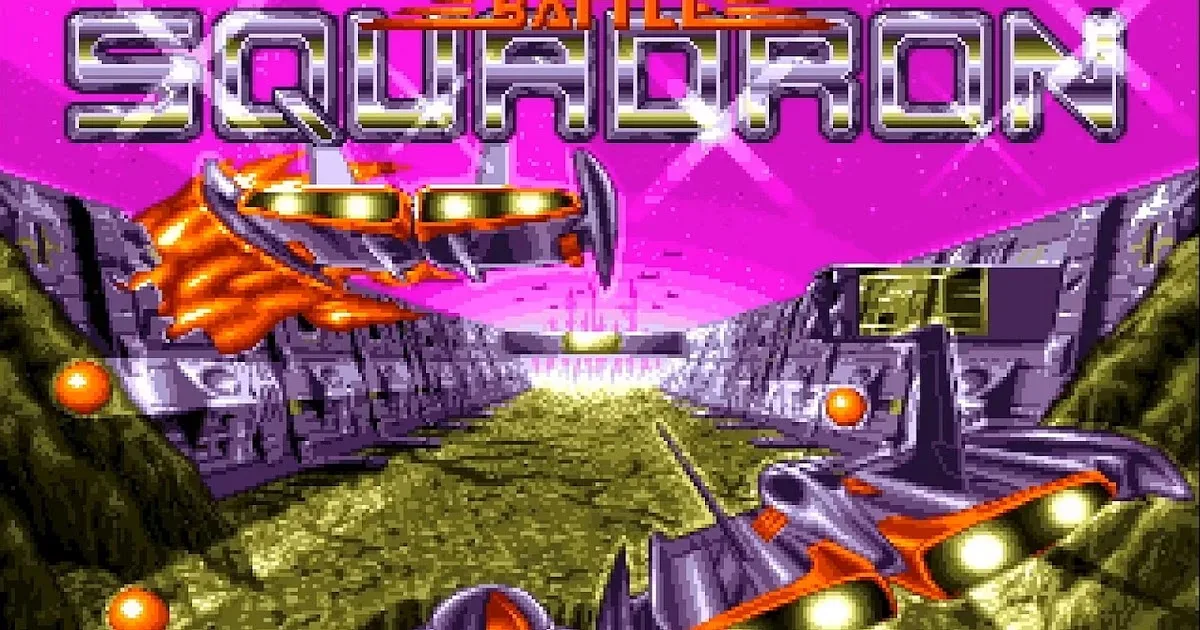
For broader Amiga context, this follows the same enduring interest in giving classic games a new practical home on original hardware and compatible setups. Joking Joystick recently covered another machine-specific revival in Battle Squadron CD32 Remix, though the technical premise here is notably different: Alone in the Dark is being adapted through a layer that translates Macintosh system expectations for Amiga use.
For fans of early survival horror and Amiga software experimentation alike, that distinction is the attraction. The project aims to place Edward Carnby’s haunted-house investigation on an AGA Amiga while keeping the 1994 Macintosh version’s code at its core—and while relying on thoughtful translation of the systems that code originally expected to find.