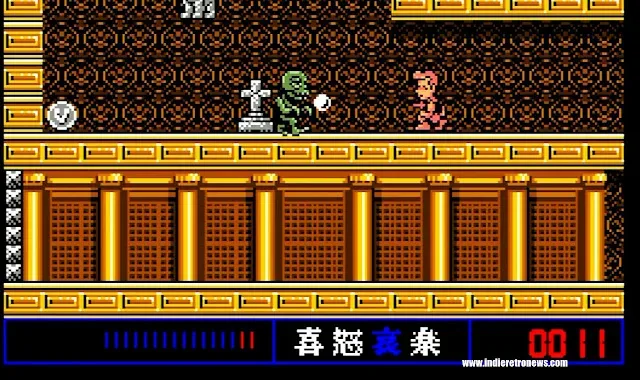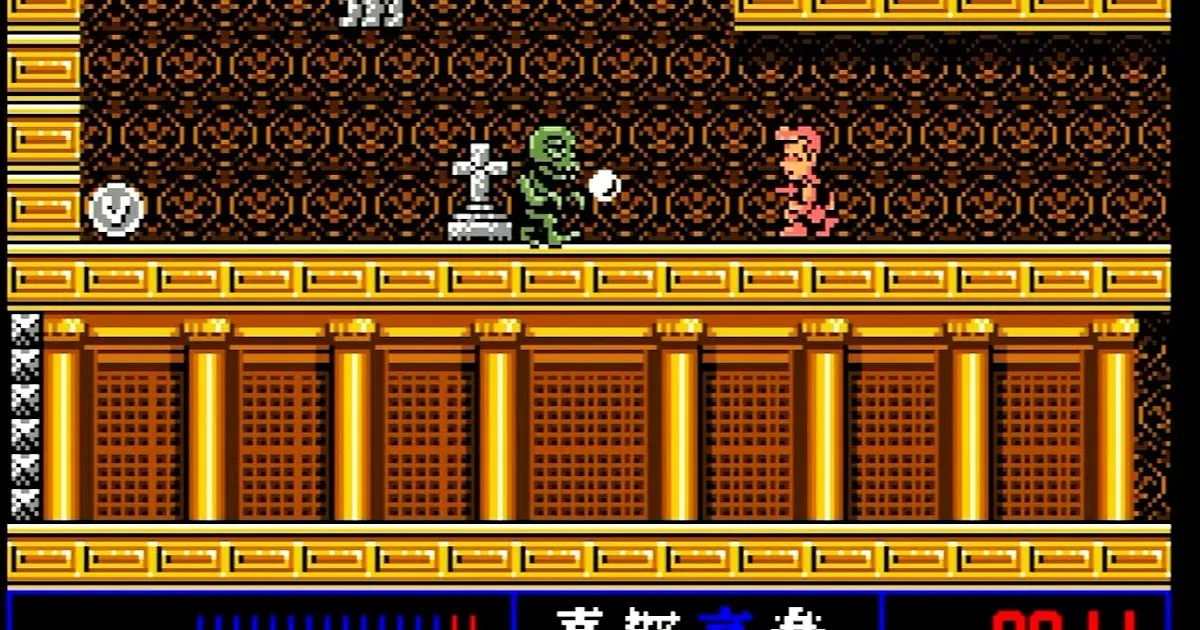
A lesser-known Konami platformer from the MSX2 era has found a new home on Commodore Amiga. Treasure of Usas, originally released for MSX2 hardware, is now available in a version developed by Hoffman. The project aims to bring the Japanese 8-bit adventure across to the Amiga while retaining the identity of its original form rather than treating it as a wholesale remake.
For retro players, that premise is a delightfully specific sort of news: a game with a long history on one regional home-computer platform has been given a route onto another classic machine, decades after both systems’ commercial heyday. It is also the kind of project that makes the Amiga scene continually fascinating. The hardware’s lifespan may belong to history books, but developers are still finding ways to revisit, translate, refine, and preserve games that many players never encountered first time around.
A Konami deep cut gets an Amiga route
Treasure of Usas comes from Konami’s MSX2 catalogue, a library that includes games with considerable historical interest but uneven visibility outside the regions and communities where the MSX format was strongest. That makes ports such as this valuable on a straightforward level: they give curious owners of other vintage systems an opportunity to explore a title that may have passed them by.
Hoffman is also not approaching this as an isolated retro experiment. The developer has previously produced Amiga ports of Metal Gear and Knightmare, two other names associated with Konami’s MSX history. That prior work provides useful context for the new release, even if each conversion should ultimately be judged on its own goals and technical choices. In this case, the stated objective is a faithful, near one-to-one adaptation of Treasure of Usas.
“Near one-to-one” is an important description. It suggests the release is intended to preserve the original game’s structure and character instead of recasting it with newly invented levels, mechanics, or a dramatically different audiovisual identity. Ports can serve several purposes: some are reimaginings, some are upgrades, and some are efforts to make a specific version of a game accessible on hardware it never officially reached. This first Amiga edition appears to fall most clearly into that final category.
Built with the Amiga 500 in mind
The 1.0 release is designed to run on a standard Amiga 500 with 512KB of chip RAM and 512KB of other RAM. That target matters. Rather than requiring an unusually expanded setup, the port is aimed at a machine configuration closely associated with the Amiga experience many enthusiasts maintain, emulate, or seek out today.
Memory specifications are never just dry numbers in a retro-computing project. They describe the boundaries in which a developer has to work: what can be stored, displayed, moved, and updated while keeping a game responsive. Anyone wanting a refresher on the distinction between memory that retains data and memory used for active work can see our overview of why RAM forgets while SSDs remember. For an Amiga port, however, the immediate takeaway is simpler: the project has a clearly stated baseline, and players can compare their setup against it before loading up the game.
The release is currently distributed as ADF floppy images. An ADF is the familiar disk-image format used in Amiga circles, useful for those running original-compatible systems, floppy-based setups, or emulation environments configured for Amiga disk images. The version number is 1.0, which plainly frames this as an initial release rather than a final stop for the project.
Related coverage includes Treasure of Usas Reaches Amiga in a New 50/60Hz Port.
The headline change is smoother timing
The most significant change reported for this port is support for operation at 50Hz or 60Hz. The modification is intended to make play feel more fluid than it could on the original hardware. That is a notable distinction because this is not merely a transfer from one library to another; it is a conversion that uses the destination platform to improve the presentation of motion and responsiveness.
Refresh rate discussions can become technical quickly, but the player-facing point is easy enough to understand. A game updating more frequently has the potential to look smoother in action, assuming the design and implementation are built around that behavior. The new option is therefore especially interesting for a platformer, where movement, timing, scrolling, and the readability of action can shape the entire feel of a game.
It is worth resisting the temptation to turn that feature into claims the release does not make. A 50/60Hz option is not automatically a promise that every element has been redesigned, that difficulty has changed, or that the game behaves identically in every display environment. What is known is more focused: the Amiga version includes a modification for 50Hz and 60Hz running, with the stated aim of a slicker, more fluid experience.
That balance between fidelity and selective enhancement is often where retro ports become most compelling. Preserving an original game does not always mean preserving every technical limitation of its first platform. Sometimes it means maintaining the game’s essence while letting a new machine address an old constraint. The exact line will differ from project to project, and this release’s approach appears deliberately conservative outside its performance-related improvement.
WHDLoad support may follow
While the current version uses ADF images, a WHDLoad package may arrive later for players who prefer hard-drive-based Amiga use. That possibility has been mentioned as a future convenience, not confirmed as a finished feature, so prospective players should treat it as an intention rather than something included with version 1.0.
The distinction is practical. Disk-image distribution fits the feel of a period Amiga release, but hard-drive loading can be attractive for users with suitable setups who want to organize and launch games without swapping virtual or physical floppy disks. A future WHDLoad package would broaden those options; for now, the ADF release is the version available to explore.
An enhanced edition is planned, but it is separate from 1.0
The project is not expected to remain static. A substantially enhanced edition is planned, with completely overhauled graphics by Toni Galvez, a new soundtrack by BanjoGuyOllie, and a new set of sound effects. Those plans point toward a markedly different kind of release from the present version: not simply a preservation-minded conversion, but a version with a refreshed audiovisual layer.
That enhanced edition is still on the horizon and will need further time for polishing. No release date, final feature list, or performance specification has been established here, so the sensible expectation is that it remains a work in progress. The announced contributors nevertheless make the direction clear. The port’s initial version prioritizes closeness to the MSX2 original, while the later edition is intended to give the game a more extensively upgraded presentation.
There is room for both approaches. The 1.0 release gives players a chance to encounter the title now and compare its Amiga implementation with its MSX2 roots. The enhanced edition, whenever it arrives, should offer a separate reason to revisit the game. Retro communities often thrive when archival-minded releases and creative reworks can coexist instead of competing for the same purpose.
A small release with a big preservation-minded appeal
Treasure of Usas arriving on Amiga will not suddenly turn the game into a household name, and that is part of its charm. This is a release for people who enjoy following the routes games take between old platforms, for Amiga owners who appreciate new software tailored to familiar hardware, and for Konami historians curious about a less widely discussed MSX2 title.
Most importantly, it demonstrates that the story of classic software is not fixed at the point of its original release. A game can be rediscovered by another hardware community, carefully adapted to a different machine, and then given the prospect of an optional audiovisual reimagining. With version 1.0 available as an ADF release for the stated Amiga 500 memory configuration, the journey has already begun. The 50/60Hz work is the key attraction today; the prospective WHDLoad package and expanded edition are reasons to keep an eye on where this particular treasure hunt goes next.