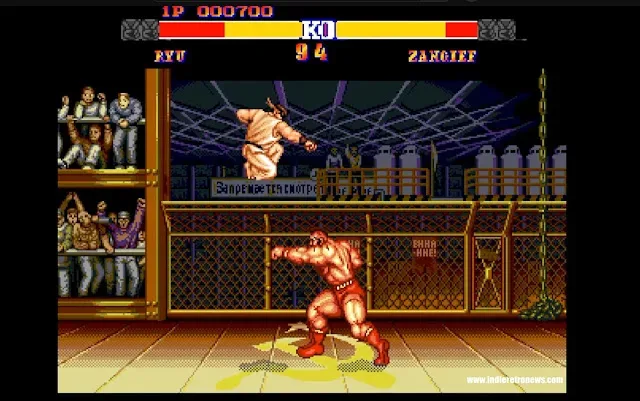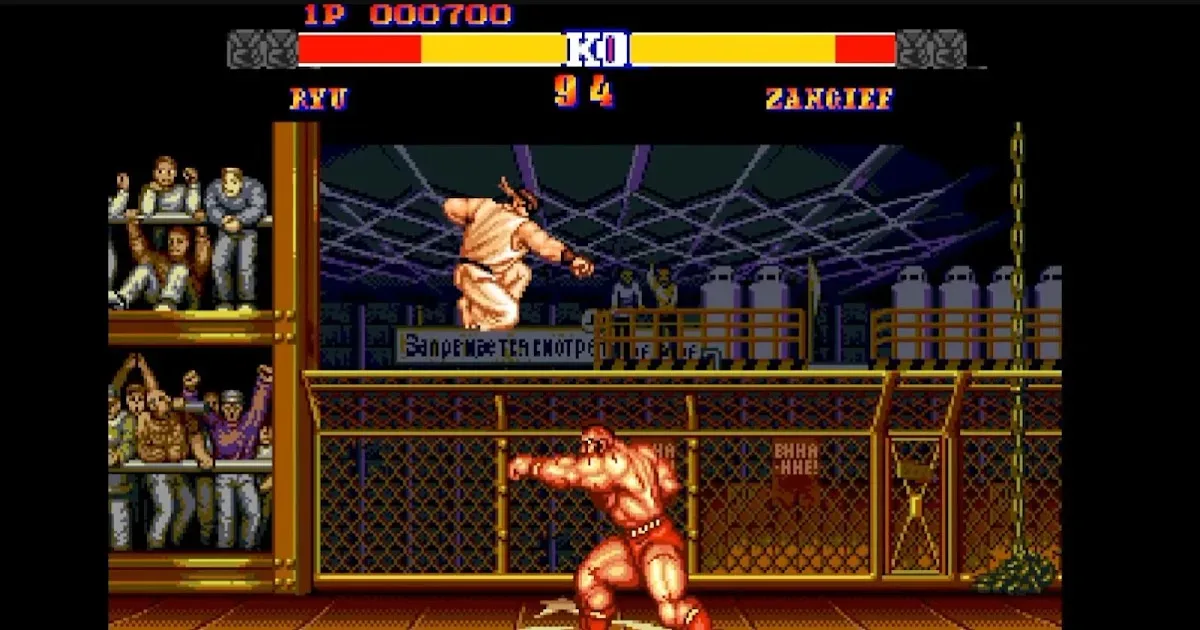
Street Fighter II is once again stepping into the Amiga ring. Developer Str1der, working with AI assistance, is developing an improved version intended to move the classic fighter closer to its arcade roots and beyond the capabilities associated with the original 1990s Amiga release.
The project is still best viewed through its stated technical targets rather than as a finished game: the information available outlines several Amiga configurations, frame-rate goals and a wide-sprite approach. Those details matter because Street Fighter II is the kind of game where responsiveness, animation and the ability to read an opponent’s actions are inseparable from the experience. A stronger port is not simply a prettier curiosity; it could change how convincing the game feels on the machine.
For a broader look at the reported arcade-style performance goals, the project’s stated targets have been outlined here.
The hardware targets currently named
The baseline configuration listed for the project is an Amiga using a 68000 processor, the ECS chipset, 1 MB of chip RAM and 2 MB of fast RAM. On that setup, the stated aim is 50 frames per second.
For more context, explore GloRilla Reaffirms Plan for a Pittsburgh Steelers Anthem Ahead of City Show.
That is a specific and useful claim, because frame rate is a central measurement for a fast 2D fighting game. Put simply, it describes how often the game updates the picture each second. More frequent updates can make movement and animation appear smoother, while also supporting a more immediate visual rhythm. It is not, by itself, proof of a final game’s input response or match quality, but it is a meaningful performance ambition for this kind of conversion.
The project also lists wide sprites, described as mimicking the television stretch associated with the PC Engine. In practical terms, that suggests an attempt to give the fighters a broader on-screen appearance rather than treating the original Amiga presentation as an immutable limit. The wording is important: this is described as an emulation of a visual effect, not as a claim that the Amiga version is becoming a PC Engine version.
For fuller-speed play, the listed options are an ECS Amiga with a 68020 or a faster 68000 setup, with an ACA500 card given as an example. A separate higher-end target is named for AGA hardware: a 68020-equipped Amiga with 2 MB of chip RAM and some fast RAM.
What those terms mean for an Amiga fighting game
The listed specifications can look like a dense row of vintage-computing shorthand, but each item describes a different part of the system budget.
- 68000 and 68020: These are processor families. The project identifies the 68020 as a route to full speed on ECS hardware, while also allowing for a faster 68000-based configuration.
- ECS: This refers to an Amiga chipset configuration named in the project’s baseline and enhanced ECS targets.
- AGA: This is another Amiga chipset target identified for a configuration with a 68020, 2 MB of chip RAM and additional fast RAM.
- Chip RAM: The shared-memory portion specified in the project requirements. The baseline calls for 1 MB, while the AGA target calls for 2 MB.
- Fast RAM: Additional memory separately called for in the published configurations: 2 MB in the baseline ECS listing, and an unspecified amount of extra fast RAM in the AGA listing.
It would be a mistake to treat these requirements as a simple quality ladder or to assume that every setup will provide the exact same result. The stated configurations instead show an effort to serve more than one class of Amiga hardware. The baseline is attached to a 50 fps target; fuller speed is associated with a 68020 ECS system or faster 68000 configuration; and AGA has its own stated hardware profile. Until further material establishes precisely how modes, visuals and performance differ, those should remain distinct targets rather than promises of identical output.
Why Street Fighter II is such a demanding fit
Street Fighter II began in arcades before reaching a wide range of home systems, including the Amiga, Atari ST and ZX Spectrum. Its reach is part of why an Amiga improvement project has immediate appeal: this is not an obscure game being reconstructed for a single platform, but a landmark fighting game with a long history of conversions and comparisons.
That history also creates a clear standard. Arcade Street Fighter II is remembered not just for individual characters or backgrounds, but for how those elements work together during a match. Fighters need to be large enough to read. Their poses need to communicate attacks and recovery. The game needs to convey jumps, projectiles, spacing and contact quickly enough that players can make decisions. A port can have recognisable characters and music yet still feel compromised if the action appears sluggish or the characters are poorly proportioned.
The stated focus on speed and sprite width therefore points in a sensible direction. It is an attempt to address the presentation and motion of a game whose identity depends on two combatants sharing a single screen. A wider visual treatment may help the fighters feel more substantial, while higher update performance is relevant to the pace at which the contest is displayed.
That does not establish the project’s final animation set, sound, controls, roster, modes, stage treatment or release plans. None of those details have been provided. The available information supports a narrow but interesting picture: a technical effort to improve Street Fighter II on Amiga hardware and bring it nearer to an arcade-style feel.
AI assistance: what is confirmed, and what is not
AI is identified as part of Str1der’s work on the project. That alone does not tell us what the toolset has done. It could be involved in asset work, development assistance, experimentation or another part of the production process; the supplied details do not specify which.
That distinction is worth keeping clear. “Made with AI help” is not a technical specification, nor does it automatically describe the quality or origin of every graphic, sound or line of code. The more concrete information is the intended result on specific Amiga configurations: 50 fps on the named 68000 ECS arrangement, wide sprites, full-speed aspirations for stronger ECS or accelerated setups, and an AGA target.
For retro-development observers, the sensible question is not whether AI is present in the abstract. It is whether the finished work meets its stated goals on the hardware it claims to support. Frame pacing, animation readability, loading behaviour and responsiveness are the kinds of outcomes that determine whether an ambitious technical project becomes a satisfying version of a fighting game.
What Amiga owners should take from the requirements
The project’s current specifications give prospective players a starting point for checking their systems. An ECS Amiga with a 68000, 1 MB of chip RAM and 2 MB of fast RAM is the listed configuration for the 50 fps target. Those seeking the stated full-speed ECS experience are pointed to a 68020 or a faster 68000 setup such as an ACA500 configuration. For the named AGA route, the requirement is a 68020, 2 MB of chip RAM and some fast RAM.
That makes the project especially notable as a hardware-aware improvement effort rather than a one-size-fits-all re-release. Classic-computer software often has to balance the desire to support original systems against the advantages offered by expanded memory, accelerators and later chipsets. Here, the provided targets openly acknowledge that different hardware can shape the intended performance level.
Players should nevertheless avoid reading beyond the specification list. There is no supplied release date, distribution method, price, demo information, compatibility matrix or confirmation of exactly which machines have been tested. There is likewise no basis to claim a complete replacement for the earlier Amiga port. The developer’s goal is to improve on it and bring the result closer to the arcade game; the final comparison will depend on the completed build.
A promising technical ambition, with plenty still to show
The most encouraging part of the project is its clarity about the areas it is trying to improve. Street Fighter II benefits enormously from fluid, legible action, and the stated combination of a 50 fps ECS target, wider sprites and stronger-hardware paths addresses the core visual-performance challenge directly.
It also arrives with the right degree of uncertainty for an in-progress retro project. The hardware targets are concrete, but much of the game remains undescribed. That is not a criticism; it is simply the line between an announced technical direction and a finished release. For now, Str1der’s work is one to watch for Amiga players who have always wanted the system’s Street Fighter II to land a more convincing arcade-style combo.
Retro game projects frequently invite nostalgia, but this one earns attention through something more practical: it names the machines, memory and processors it intends to use. If those goals are realised, the result could offer a meaningful new way to experience a foundational fighter on Commodore hardware.