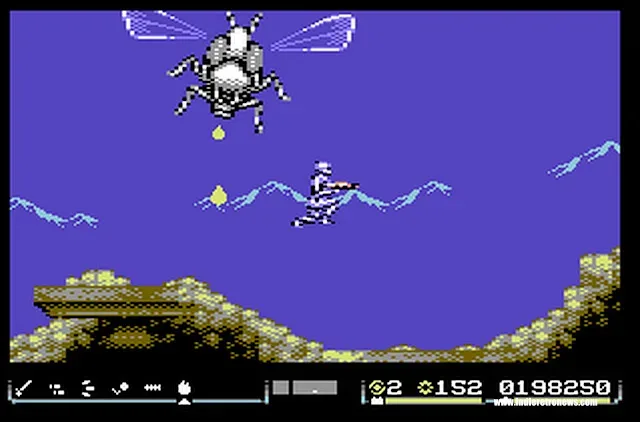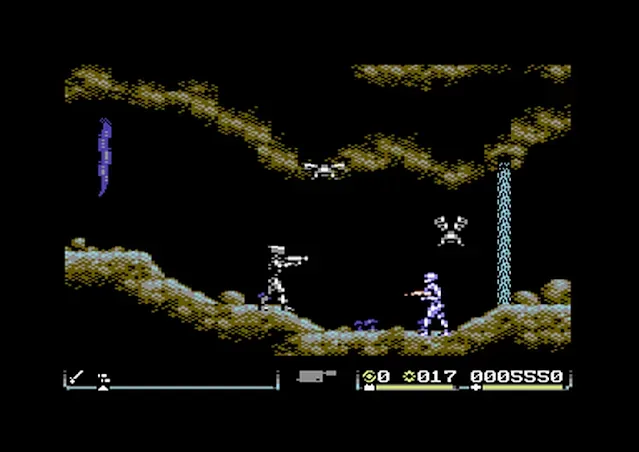
Steel Ranger 2 has arrived on Commodore 64, bringing a considerably bigger sci-fi action-adventure to the long-lived home computer. Developed by Covert Bitops, the game follows 2018’s Steel Ranger, a side-scrolling release that earned substantial praise in the C64 homebrew community and was voted among that community’s top 10 C64 games of all time.
That history makes the sequel’s ambition especially notable. Steel Ranger 2 is built around an overhauled gameplay engine, smoother performance, expanded weapon options and a world containing more than 800 individual screens. It also promises full-framerate multidirectional scrolling, a 45-minute original SID soundtrack, multiple save slots, and story outcomes that branch based on player choices.
For a platform still attracting ambitious new software, the release is another reminder that “retro” does not necessarily mean small in scope. The Commodore 64 release is designed as a substantial exploration-and-combat campaign rather than a brief throwback diversion. Players will be charting a hostile planet, looking for hidden areas, strengthening their Ranger armour, managing a varied arsenal and confronting bosses as they piece together a new threat to humanity.
A return to a universe still dealing with Omega’s aftermath
The sequel is set in 2224, six years after humanity defeated Omega, the rogue artificial intelligence at the center of the earlier conflict. With Omega and its mechanical forces beaten, human civilization has begun rebuilding in what appears to be a newly peaceful period.
That recovery is interrupted by long-range orbital bombardments against human colonies and space stations. The attacks are traced to Earth, now described as a desolate wasteland. There, old automated defense systems have unexpectedly reactivated. A mere system fault is initially considered, but nanobot residue found at the strike sites points to a more deliberate and dangerous explanation.
The United Military deploys its Rangers to investigate. Players take the role of a commanding officer aboard the scout ship UMS Flail, but the operation rapidly unravels. The officer is stranded on the hostile planet and must survive long enough to establish what is behind the renewed attacks.
It is a premise that gives exploration a clear purpose. Rather than treating the planet simply as a sequence of stages, the game frames it as the location of an investigation: a place packed with remnants of a disastrous past, working defense machinery and evidence that may change the apparent cause of the crisis. The central question is not just how to escape Earth, but why its weapons systems are firing again and who, if anyone, is directing them.
Exploration, movement and combat are the central pillars
The original Steel Ranger took inspiration from Turrican and Metroid, and the sequel continues in that action-adventure lane. The supplied details point to a structure where progression comes from both physical exploration and character improvement. More than 800 screens gives the campaign room for areas to be discovered rather than merely passed through.
Related coverage includes Steel Ranger 2 Lands on Commodore 64 With Massive Sci-Fi Action Campaign.
Multidirectional scrolling means the view can move with the player in more than a simple left-to-right path. For a game focused on finding secrets and navigating a planet, that matters: the playable space can be designed around vertical routes, branching paths and locations that encourage a return visit once the Ranger is better equipped. The stated full-framerate presentation refers to the game maintaining its intended smooth update rate while it scrolls, a key goal for action that asks players to react quickly to enemies and hazards.
The Ranger’s second-generation armour can be upgraded for improved mobility and a larger energy capacity. Mobility upgrades should make the character more capable of reaching difficult routes or operating in more demanding encounters, while energy capacity provides more endurance. The details do not set out a specific upgrade tree, so prospective players should not assume particular movement abilities or progression gates. What is clear is that armour growth is part of the game’s survival loop, not merely a cosmetic system.
Hidden areas are another stated part of the experience. Those secrets fit naturally with a large screen count and armour upgrades: attentive exploration is positioned as a meaningful activity alongside direct combat. The game’s design appears to reward players who investigate its hostile environments instead of treating every route as a straight line toward the next boss.
A broader kit for a punishing mission
Combat is built around more than one default shot. Players can change firing modes on the standard rifle and use mines, smartbombs and energy blades. Each of these tools suggests a different tactical role, though the exact behavior and limits of every firing mode have not been detailed.
- Standard rifle: the core firearm with multiple selectable firing modes.
- Mines: an additional offensive option that can broaden the Ranger’s response to threats.
- Smartbombs: a heavier tool distinct from ordinary rifle fire.
- Energy blades: a close-range option within an otherwise weapon-heavy loadout.
The result is a more varied arsenal than a single gun with incremental damage increases. Switching between tools is likely to be part of meeting the game’s challenge, especially as players face dozens of enemy types and what are described as punishing boss battles. Bosses, in particular, give a multi-weapon system a reason to exist: they can demand positioning, resource use and an understanding of which offensive tool suits the immediate danger.
Smartbombs are worth separating from ordinary weapon fire as a design concept. In the game’s listed arsenal, they are their own item rather than another rifle mode. That distinction signals an option intended for situations where basic shooting may not be enough. The source material does not define their area, damage or inventory rules, so those details remain unknown, but their inclusion adds another decision to the player’s combat toolkit.
The energy blades also help give the Ranger a means to engage at close range. Their presence does not confirm how melee combat works in practice, but it broadens the game’s stated set of attacks beyond projectiles. In an action-adventure with distinct enemy types, that range is important: a larger set of tools can support encounters that feel different without needing to rely on a single response every time.
Choice-driven outcomes add another layer to the campaign
Steel Ranger 2 includes choice-driven branching narrative outcomes. This is a meaningful addition for a game already centered on investigating an apparent conspiracy. Choices can make the player’s decisions part of the story’s resolution rather than limiting the campaign to a single fixed result.
There is no supplied detail on the choices themselves, the number of possible endings or whether routes through the game change alongside the narrative. It would therefore be premature to treat branching outcomes as confirmation of multiple full campaigns. Still, the stated feature gives the mission a potentially personal dimension: the player’s decisions can affect where the story goes after the UMS Flail investigation leaves its commander isolated on Earth.
Multiple save slots are practical here. A long exploration game with a large world, upgrades and divergent story results benefits from letting players maintain more than one record of progress. It can support separate playthroughs or preserve a point in the story without requiring a player to overwrite every prior save. The exact save system is not specified, but the inclusion is valuable for a campaign that combines scope with outcomes that can differ.
PAL, NTSC and modern C64 setups
The release supports both PAL and NTSC systems with identical audiovisual performance. PAL and NTSC are television and computer video standards associated with different regions, and the distinction has historically mattered to software performance and timing. Here, the stated goal is parity: players on either system should receive the same audiovisual result.
That focus on compatibility continues in the digital edition available through Protovision. It supports disk images for multiple physical-drive options as well as an EasyFlash cartridge build. In practical terms, the release is not confined to one storage format. Players can select the version that suits their Commodore 64 hardware arrangement instead of being limited to a single distribution method.
The EasyFlash build is especially relevant to cartridge-oriented setups, while disk images address C64 configurations using compatible drives. The supplied information does not list every supported device or installation process, so prospective buyers should check the product’s technical requirements before choosing a version. The broader point is straightforward: the game has been prepared with several modern retro-hardware paths in mind.
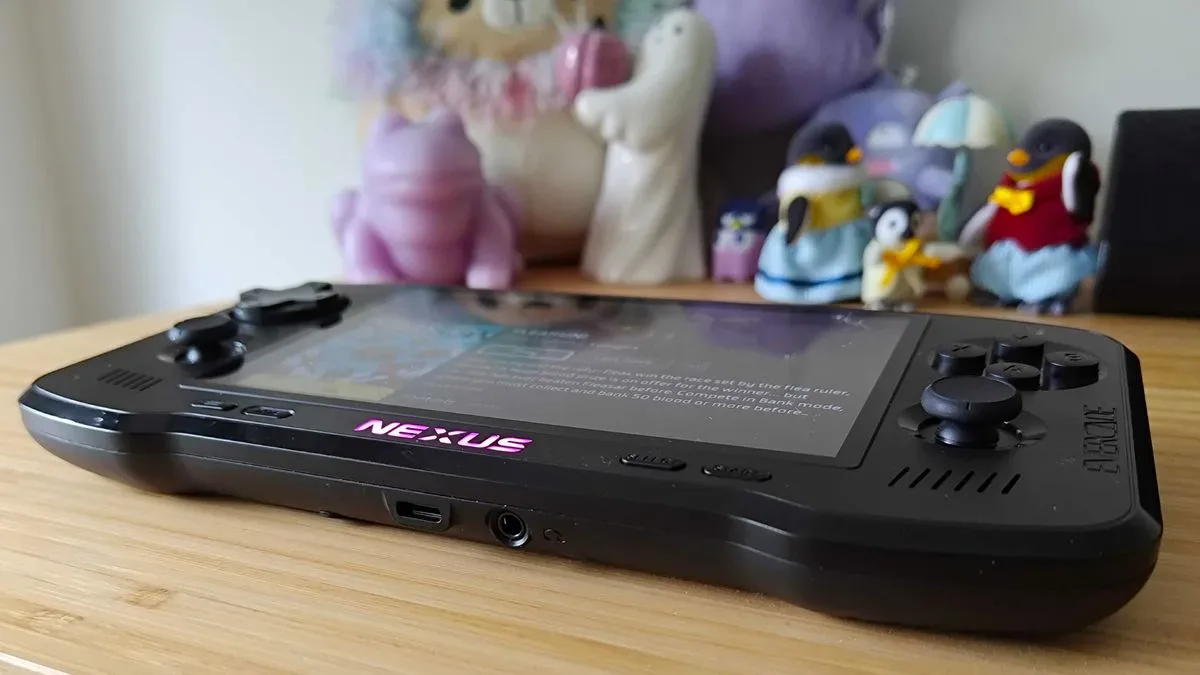
Its arrival also sits comfortably beside a wider stream of new physical-minded and hardware-conscious retro projects. For another look at that continuing space, see our coverage of Evercade Nexus and physical retro gaming.
Why Steel Ranger 2 stands out
The appeal of Steel Ranger 2 is not reducible to its platform. A new Commodore 64 game is inherently notable, but Covert Bitops is presenting one with a substantial map, smooth multidirectional movement, a wide combat kit, upgradeable armour, original music, save support and branching narrative outcomes. Those components point to a project designed around sustained engagement.
Its premise also supports that scale. Earth is not merely a backdrop for another mechanical invasion; it is the suspected origin of attacks against humanity’s recovering colonies, a former home world turned wasteland and a site of reactivated automated weapons. Nanobot traces add a second layer of uncertainty to the apparent malfunction, while the stranded commander supplies the immediate personal stakes.
Players interested in the C64’s modern development scene now have a new action-adventure built to ask more of them than reflexes alone. Steel Ranger 2 combines screen-by-screen discovery, equipment progression, weapon selection, bosses and investigation in a campaign whose final direction can vary with player decisions. That is an ambitious mission for the Ranger—and an even more ambitious one for the machine hosting it.