
Sony has revived one of its most recognizable portable-audio silhouettes with the MDR-3R, a wired headphone refresh based on the MDR-3 model that accompanied the first Walkman portable cassette player in 1979. It is a deliberately old-school proposition in an era of wireless earbuds: light headphones, a simple visual design, and no wireless connectivity at all.
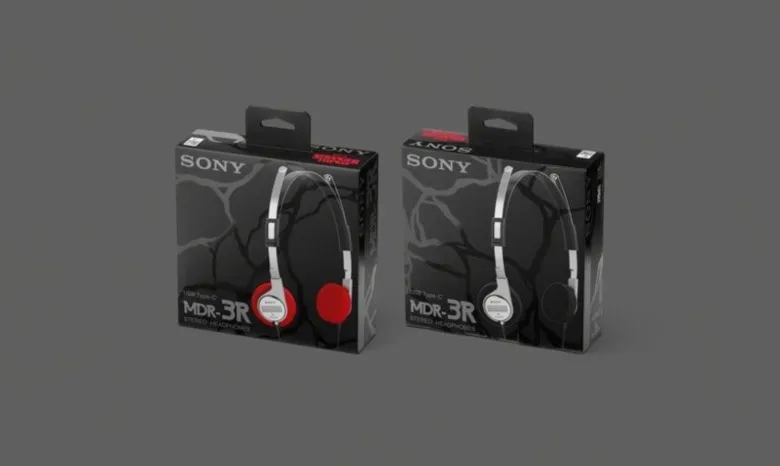
The new model is not presented as a recreation frozen in 1979. Its central concession to the present is USB-C rather than a 3.5mm headphone jack, while a built-in microphone and a physical volume knob give it basic calling and control functions. Sony is offering two versions: a $60 standard MDR-3R with blue and orange earpads, plus an $80 Stranger Things edition with black and red earpads and a logo on the headband. Both are available now.
A familiar shape with a purposeful update
The point of the MDR-3R is immediately clear: retain the visual language of the Walkman-era original instead of turning it into another anonymous modern headset. The headphones closely resemble the earlier MDR-3 design, and the colored earpads help keep that period-minded personality front and center.
That means the appeal is likely to be as much about the object as its specifications. The MDR-3R is described as very light and simple, and it does not attempt to position itself against high-end studio headphones. “Studio cans” is informal shorthand for headphones intended for more demanding monitoring or production work; Sony’s revival is better understood as a straightforward personal-listening design with a conspicuously retro exterior.
There is a useful distinction here. Retro design can mean copying an old form, while a retro product can also mean preserving an older way of using technology. The MDR-3R does both to a degree. It borrows the 1979 look and insists on a cable, placing it well outside the always-connected, pairing-driven expectations built around many current headphones.
Wired by design, not by omission
The MDR-3R’s lack of wireless connectivity is not a missing footnote. It is one of the defining decisions of the product. Sony has made a wired headphone that asks buyers to accept a physical connection as part of the experience rather than providing wireless as an alternative.
Yet the cable itself is modernized. Instead of the 3.5mm jack associated with much older personal-audio gear, the MDR-3R uses USB-C. USB-C refers to the smaller, reversible connector now used across many contemporary devices. In practical terms, it creates an intentional mix: the visible design and tethered listening model look backward, while the plug and call functionality address current hardware habits.
The integrated microphone is another major break from the original period. The first Walkman companion could not have been expected to handle phone calls; the MDR-3R can. A volume knob also keeps a core control on the headset itself. Neither addition changes the basic idea of a simple wired pair, but both reduce the friction of using it as an everyday accessory rather than as a display-only nostalgia piece.
Related coverage includes Sony’s MDR-3R Brings Walkman-Era Headphones Back With USB-C.
What has changed—and what has not
- Then: The MDR-3 lineage reaches back to 1979 and the first Walkman portable tape player.
- Now: MDR-3R uses USB-C, includes a microphone for calls and has a volume knob.
- Still retro: The headphones are wired, visually close to the earlier model and have no wireless option.
- Positioning: They are light, simple headphones rather than a stated high-end studio-focused product.
Two color schemes, one TV tie-in
The standard MDR-3R pairs blue and orange earpads and is priced at $60. It is the version that most directly sells the wider throwback concept: an older visual identity revived with a few functional changes.
The alternate release is branded around Stranger Things, the Netflix series that ended its run last year. Its hardware is essentially the same as the standard model, but it trades the blue-and-orange treatment for black and red earpads and puts the show’s logo on the headband. That branding carries a $20 premium, bringing the price to $80.
For buyers deciding between the two, the available details suggest the choice is chiefly aesthetic and collectible rather than technical. There is no indicated feature difference beyond the show logo and the changed color treatment. The standard version is therefore the lower-cost route to the MDR-3R itself, while the branded version is aimed at people who specifically want the connection between an ’80s-set cultural phenomenon and a Walkman-adjacent headphone design.
That fit is straightforward even if the timing is a little unusual: the special edition arrives after the series has completed its run. Its value proposition is not a new-season tie-in but a recognizable visual crossover, using red and black colors and a logo to turn the headset into a piece of franchise-styled tech.
Why this kind of revival has an audience
The MDR-3R arrives amid a broader appetite for products that soften or reject some conventions of contemporary technology. Simple digital typewriters, boomboxes and other cassette players, instant cameras, and flip phones have all been part of that renewed interest. Even RadioShack has framed retro technology as part of its comeback plan.
Those products are not all asking for the same thing. An instant camera emphasizes a physical result; a cassette player foregrounds a legacy music format; a flip phone takes a different approach to mobile-device design. What connects them is a preference for visible controls, more bounded functions, and objects that look distinctly unlike the sleek, screen-centered gadgets that dominate much of modern tech.
Sony’s headphone refresh fits this movement particularly neatly because the original MDR-3 was connected to the first Walkman. The Walkman association is not merely a styling reference: it makes the new headphones a callback to a landmark idea in personal audio, where listening could be carried around as an individual, physical activity. The updated MDR-3R does not restore cassette tapes, but its cable, lightweight build and pared-back feature set preserve some of that tactile identity.
There is also a difference between nostalgia and utility that the MDR-3R tries to bridge. A purely commemorative reproduction might preserve old connectors and omit modern conveniences. Sony instead uses USB-C and adds calling support, signaling that the product is meant to function in a current setup while looking like it belongs to a much earlier one.
Practical expectations before buying
The available information provides a fairly clear picture of what the MDR-3R is and is not. It is a wired USB-C headphone with a microphone and onboard volume control, sold in two color-and-branding variants. It is lightweight and intentionally simple. It is not wireless, and it should not be assumed to offer the kind of performance expected from expensive studio-oriented headphones.
That makes connection type an especially important consideration. Anyone drawn primarily to the 1979 styling should note that this is not a 3.5mm-jack reissue; USB-C is fundamental to the refresh. Likewise, shoppers who want to move between devices without a cable should look elsewhere, because wireless connectivity is not offered as a fallback option.
For those comfortable with those boundaries, the appeal is unusually direct. The MDR-3R avoids pretending that every revived classic needs to become a premium, feature-dense gadget. Its pitch is a recognizable shape, a cable, a modest set of contemporary conveniences, and a price difference that is clearly tied to a franchise-branded edition rather than an announced hardware upgrade.
Retro revivals have also become a familiar part of game and entertainment culture, whether through anniversary collections or merchandise built around older aesthetics. For another recent example of an anniversary-led return, see BloodRayne’s 25th-anniversary plans. Sony’s MDR-3R takes a quieter route: no major reinvention, just a Walkman-era design updated enough to work as a contemporary wired accessory.
At $60 for the standard model and $80 for the Stranger Things version, the decision is likely to come down to taste. The standard blue-and-orange pair most visibly honors the original’s visual heritage. The black-and-red variant adds a specific piece of pop-culture branding for those who want that association. Either way, the underlying message is the same: sometimes a cable, a knob, a mic and a well-remembered silhouette are the whole point.