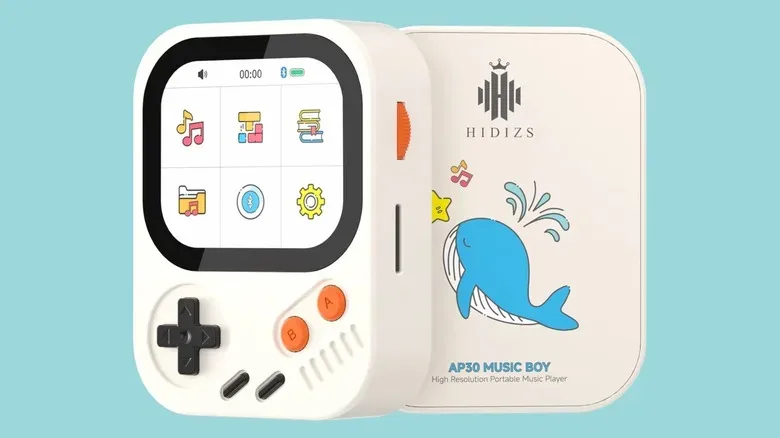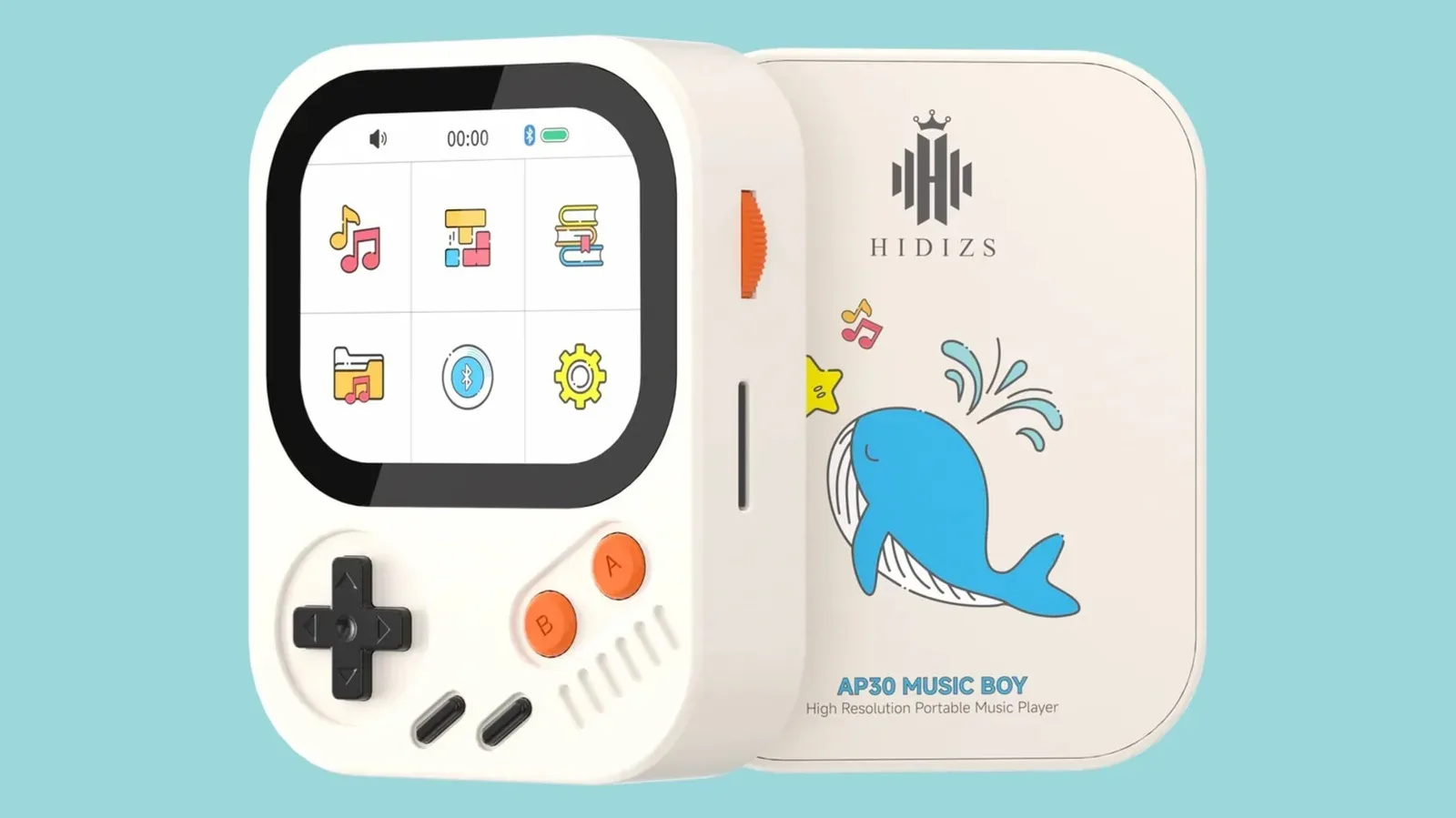
A Game Boy-shaped device with a bright little screen and front-facing buttons is attracting attention again—but this one is built to play music rather than cartridges. HIDIZS’ AP30 Music Boy crowdfunding campaign closed after reaching HK$3,954,885, roughly $504,311 at the reported conversion, far beyond its HK$40,000 target of about $5,100. That is more than 98 times its original goal.
The AP30 Music Boy is presented as a compact high-resolution digital audio player with styling clearly inspired by Nintendo’s classic handheld. It is not simply a nostalgia shell, however. The stated specifications include a dedicated digital-to-analog converter, support for a wide range of audio formats, wired headphone connections, Bluetooth 5.3, expandable microSD storage and the ability to operate as a USB-C portable DAC for a phone or computer.
It is also a useful snapshot of why retro-shaped hardware continues to resonate. The player promises some of the tactile appeal associated with older handhelds—physical buttons, a side scroll wheel, local files and a device focused mainly on one job—while adding modern audio hardware. In a world where music normally arrives through the same screen that delivers messages, feeds, calls and alerts, a dedicated player makes the act of listening feel deliberately separate.
A crowdfunding result far beyond the starting target
HIDIZS set the campaign’s initial target at HK$40,000. By its close, backing had climbed to HK$3,954,885. The campaign has concluded, although late backing remains available. Shipping is slated to begin in October.
The total does not by itself guarantee what the final product experience will be, nor does it change the normal uncertainty that comes with crowdfunded hardware. A funding total is best read as evidence of demand and enthusiasm, rather than a substitute for independently verified performance. Still, the scale of the overfunding is notable: it suggests that the mix of small-scale audio hardware and handheld-game visual language has found an audience larger than a conventional niche music-player pitch might imply.
HIDIZS has previously run successful campaigns for audio players and related equipment. The AP30 is therefore positioned as another device from a company already working in portable audio, rather than an isolated novelty with no stated connection to audio hardware.
What is inside the AP30 Music Boy?
Two versions have been listed. An aluminum model weighs 80 grams, while a plastic version weighs 56 grams. Both target portability rather than the bulk of a phone-sized media device. The stated carrying options include a magnetic case designed to attach to a phone, a lanyard and a clip for a bag, tote or backpack.
- Display: 2-inch, 296×240 HD IPS screen.
- Master chip: RKNanoD.
- DAC chip: CS43198.
- Amplifier chip: RT6863.
- Connections: 3.5mm and 4.4mm audio ports, plus Bluetooth 5.3.
- Storage: no internal storage stated; microSD expansion supported up to 256GB.
- Battery: 1,200mAh, with claimed runtime of eight to 10 hours when wired and six to eight hours when using wireless playback.
- Audio support: MP3, WAV, APE, FLAC, ALAC, OGG, WMA, DSF and DFF; PCM up to 192kHz/24-bit and native DSD256.
That list contains several terms that are useful to unpack, especially because the AP30’s proposition is more involved than “an MP3 player that looks like a Game Boy.” A DAC, or digital-to-analog converter, turns a digital music file into the analog electrical signal headphones and speakers use. Every device capable of playing audio needs some form of conversion, but the AP30 uses a dedicated DAC chip and can also serve as an external USB-C DAC for another device.
Related coverage includes AP30 Music Boy Kickstarter Tops $500,000 With Game Boy-Inspired Hi-Res Audio.
In practical terms, that USB-C mode means a listener can connect the Music Boy to a phone or computer and have the player handle audio decoding and output. The listed 3.5mm jack is the familiar conventional headphone socket. The 4.4mm connection is another wired output option found on some audio gear. Bluetooth 5.3 gives the device a wireless route for listeners who would rather use compatible Bluetooth headphones or speakers.
The player’s format list covers both familiar compressed files and formats often associated with local high-resolution libraries. MP3 and OGG are commonly used compressed audio formats, while WAV is an uncompressed format. FLAC and ALAC are lossless formats, meaning they are designed to preserve the original audio data while reducing file size compared with uncompressed files. DSF and DFF are formats associated with DSD audio.
PCM, or pulse-code modulation, is a common method for representing digital audio. The advertised ceiling of 192kHz/24-bit describes the maximum PCM playback specification listed for the device. DSD is a different digital-audio approach; “native DSD256” is the stated DSD capability. Those figures will matter most to people who already keep compatible local files. They should not be confused with a guarantee that every recording will sound dramatically different, since the original file, headphones, settings and listener preferences all remain part of the equation.
Local storage is part of the point
The AP30 has no built-in storage listed, so using it as a standalone music player means supplying a microSD card. The supported capacity is up to 256GB. That is a limitation worth understanding before treating it as an all-in-one music device, but it also fits the product’s focused design. Rather than signing into a broad app ecosystem, users build a library of files and take that selected collection with them.
For listeners who already manage local music, the microSD approach provides a straightforward division between their phone and their listening device. The phone can remain a communications and general-purpose tool; the player can hold albums, playlists or long-form audio intended for uninterrupted time. The relevant trade-off is equally straightforward: the user must obtain, organize and transfer compatible files, rather than relying entirely on a streaming catalogue.
The controls reinforce that dedicated-device idea. The AP30 uses physical buttons on its front and a side-mounted scroll wheel. It offers six EQ presets as well as user customization. EQ, short for equalization, adjusts selected frequency ranges in an audio signal. A preset can, for example, change the balance a listener hears, while a custom EQ allows more personal tuning. The value of that will vary by headphones and taste, but it is an option beyond basic play, pause and track-skipping control.
Retro design, with a few actual games
The Game Boy influence is not limited to the casing. Alongside music playback, the AP30 can be used as an e-book reader and includes six retro-inspired games. The stated selection includes a Tetris-like title and Snake. These are small extras, not the central reason the device exists, but they are an intentional match for its visual identity.
There is an important distinction between homage and replacement here. The AP30 is an audio player with some simple games, not a Game Boy-compatible gaming handheld. Its appeal lies in borrowing the familiar visual grammar of an era: compact proportions, a display surrounded by controls and a handheld object that asks for direct button presses rather than swipes through a feed.
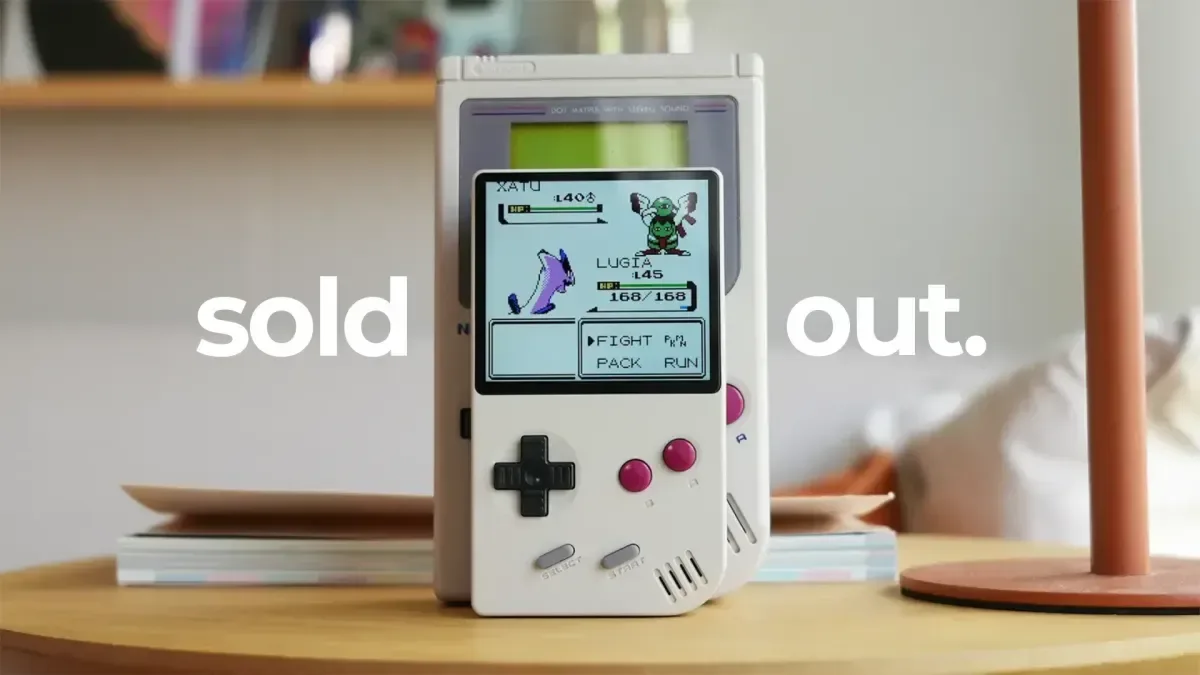
That overlap of old and new hardware cultures is also visible in the wider retro handheld scene. Devices can look backward while serving contemporary niches, whether they are made for classic games, emulation, music or other focused uses. For another example of modern interest in specialized handheld hardware, see the report on the FPGB Mini’s limited restock outlook.
Why a “dumb” device can be a sophisticated choice
Calling a product like the AP30 “dumb tech” is useful shorthand, but it can obscure what buyers may actually want. The hardware is not technically simple: its listed audio support, dedicated components, USB DAC mode and wired output options are all specialized features. What is simplified is the purpose. The device is built around listening, storing files and offering a few restrained side functions rather than becoming another portal to endless messages and social applications.
That distinction explains why the player’s apparent contradictions make sense. It has Bluetooth and USB-C, but it also relies on buttons. It supports high-resolution playback, but uses a deliberately old-fashioned portable form. It attaches to a modern phone, yet may be most attractive when it helps put the phone aside. The product is not rejecting current technology so much as narrowing technology’s role.
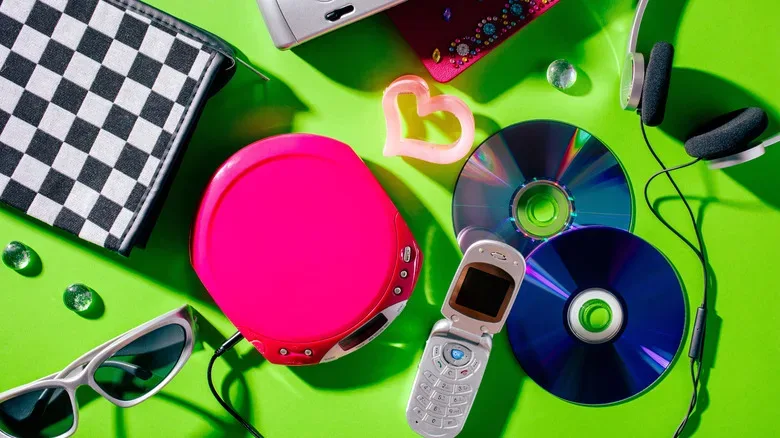
The broader appeal of minimalist devices has been linked to a desire for offline capability and fewer distractions. Flip phones that leave out social media and music players designed around aesthetics reflect the same impulse. For people whose music is normally inseparable from notification banners and active chats, a separate player can establish a practical boundary: listening time does not have to become phone time.
Its retro look also speaks to ongoing interest in Y2K-era and earlier consumer design, particularly among younger users. The attraction need not depend on having owned the original hardware. A device can evoke an era of specialized gadgets and less consolidated online life even for people encountering that aesthetic later. The AP30’s success suggests that the desire is not merely to own a faux-vintage object. It is to combine that object’s apparent clarity of purpose with modern connectivity and audio flexibility.
Who the AP30’s feature set is for
The AP30 Music Boy makes the clearest case for a particular kind of listener: someone who values local music files, wants a very small carry device and enjoys the physical, Game Boy-inspired presentation. The dual wired outputs and dedicated DAC language are likely to be especially relevant to headphone users who care about portable audio options. Its USB-C DAC function also gives it a second role for people who want to connect it to a phone or computer.
It will be less naturally suited to someone who expects internal storage or wants a streaming-first experience with every music service built into a single gadget. The product’s stated storage model requires a microSD card, and its pitch is rooted in intentional separation from the phone rather than replacing the phone’s broad convenience.
That is exactly why the campaign’s response is interesting. The AP30 does not try to be a complete smartphone alternative. It asks whether a device can earn space in a pocket by doing one experience—portable, self-contained listening—with more personality and fewer competing demands. More than $500,000 in crowdfunding support indicates that plenty of people think the answer may be yes.