Flash games were built for a web that often felt gloriously immediate: open a page, wait for a loading bar, and suddenly there was a puzzle game, a stick-figure brawler, a strange cartoon, or an elaborate strategy game running in the same place people read blogs and chatted with friends. Flash also underpinned far more than games, from web menus to early streaming video. Its disappearance as a browser plugin therefore put a vast, unusually fragile section of internet culture at risk.
Adobe ended support for Flash Player on December 31, 2020. By then, HTML5 and other web standards had reduced the need for a dedicated browser plugin, while Flash had accumulated security vulnerabilities that could not be adequately resolved. The result was sensible from a security standpoint, but severe for preservation: a game that once worked by visiting a URL might no longer run in a modern browser at all.
That is why Flash preservation is more consequential than a nostalgia trip. The old web contained an enormous range of small, experimental works that were not sold in boxes, released on consoles, or necessarily designed to survive beyond the site that hosted them. Fortunately, several projects and platforms now provide ways to revisit that material. The routes differ considerably: some use browser-based emulation for immediate access, while one major archive asks players to download software and game files locally.
Here are six worthwhile places to start, what distinguishes each one, and what their differing approaches say about keeping browser-game history playable.
What made Flash difficult to preserve?
Flash was a platform, not a single game format. Creators used it for games, animation and interactive websites, and its broad role helped enable a period of exceptionally low-friction online publishing. A developer could make a relatively compact project and put it in front of an audience on a portal. Communities could then discover, rate and discuss it without needing a console platform holder or a retail release.
That convenience also created a long-term vulnerability. A game could depend on a particular host page, a browser plugin, external assets, and the expectations of an online service that may no longer exist. Preserving the game file is vital, but it is not always the whole task. The work also needs a compatible environment in which it can run.
Emulation is central here. In this context, an emulator is software that recreates enough of an older runtime environment for the original content to work on current hardware and operating systems. Ruffle is an open-source Flash emulator used by several browser-focused preservation efforts. Its practical value is that it lets modern browsers run many older Flash works without requiring people to install the unsupported original Flash Player.
This distinction matters. “Playable again” is not necessarily identical to “exactly as it once was in every circumstance,” especially for a medium as dependent on websites and software stacks as Flash. But access through an emulator can turn a lost-looking game into something people can actually study, enjoy and share.
Related coverage includes 6 Places to Play and Preserve Classic Flash Games in 2026.
1. Flash Museum: a huge browser-first library
Flash Museum is a digital preservation project centered on classic Flash games and animations. It reports a library of more than 100,000 games and over 20,000 animations, spanning dozens of genres. That scale makes it useful both for someone chasing one remembered favorite and for anyone who wants to browse the sheer breadth of the format.
The project uses Ruffle so titles can run in current browsers without the security exposure of the old plugin. For casual visitors, that browser-first approach is the major attraction: there is no need to begin with a large standalone install simply to find out whether a childhood favorite still holds up.
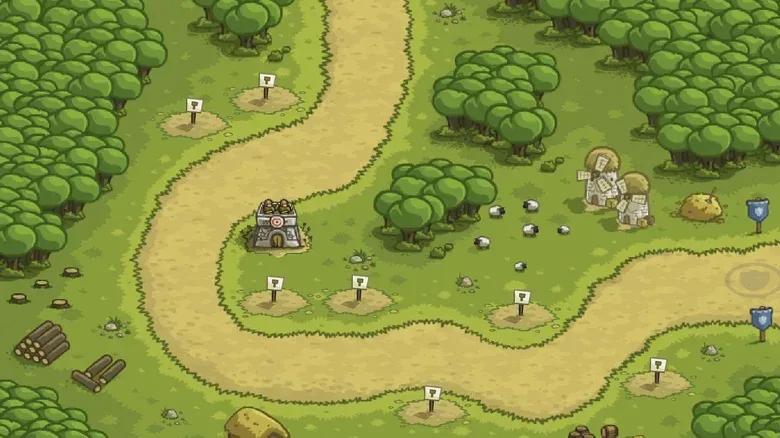
Its animation catalogue is as important as its games. Works including Salad Fingers, Charlie the Unicorn and Badger Badger Badger are available alongside games such as Kingdom Rush, Tanks and Meat Boy. That mixture reflects the reality of Flash as a creative ecosystem rather than merely a delivery mechanism for quick games.
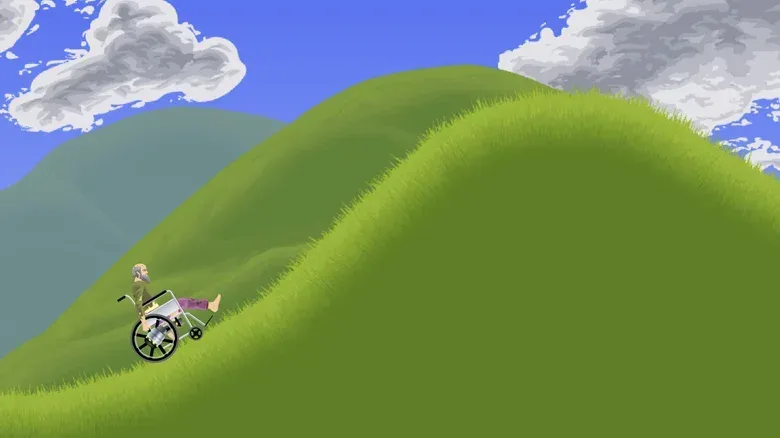
For a single starting point, Happy Wheels is a recognizable choice. Released in 2010, it is a side-scrolling obstacle game built around ragdoll physics and graphic cartoon violence: crashes and hazards can leave its characters in gruesome states. It is a clear example of how Flash games could develop a strong identity through a simple premise, expressive simulation and easy-to-understand controls.
2. Newgrounds: the community platform that kept evolving
Newgrounds is not solely a Flash archive, yet it remains inseparable from the story of user-generated games and art online. It still offers playable Flash games and continues to accept new publications, placing old work and newer submissions in the same broader creative community.
Historically, its community voting system helped decide which uploads remained visible by filtering out lower-quality submissions. That structure helped give the platform a particular role: it was an open venue for creators, but discovery was shaped by audience response. Plenty of work from the era could be edgy or PG-13 in tone, and that rougher, experimental identity distinguishes Newgrounds from more tightly curated portals.
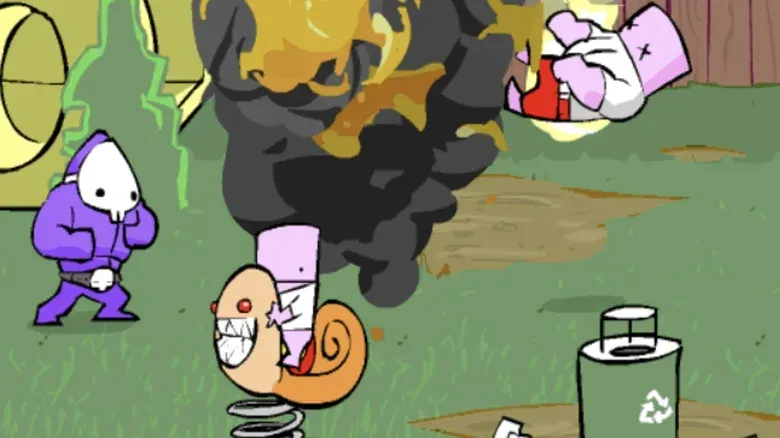
It also served as an early home for projects and people who would go on to be associated with much larger games. Super Meat Boy began as a Flash game there, while Castle Crashers was started by developers involved with Newgrounds. Salad Fingers and Charlie the Unicorn were also first published there. These connections make the site useful not just as a playable library, but as a record of the creative networks that linked animation, game development and online fandom.
Its classic playlists include Stick RPG, a popular game that reduces the open-ended crime-game formula to a stripped-down 2D form. For players, Newgrounds is particularly appealing when the goal is to encounter Flash in the context that made it culturally significant: a stream of odd ideas, amateur breakthroughs, enduring hits and fresh work all sharing a platform.
3. Kongregate: a snapshot of an enormous portal catalogue
Kongregate is another major portal with a substantial legacy collection. Before Flash’s end, it stopped taking new game submissions, effectively freezing a catalogue of more than 120,000 titles. In April 2026, however, the company announced that it would once again accept new games after expanding into mobile publishing.
That timeline makes Kongregate an interesting case. Its archive represents a large body of a specific browser-game era, but the platform is not simply a sealed historical exhibit. The renewed openness to submissions means the site again has a relationship with current creators as well.
Its archived Bloons is an especially useful touchstone. First made in Flash and released in 2007, the original is a focused single-player puzzle game: launch darts and pop a required number of balloons while using as few shots as possible. The idea is compact, legible and highly replayable. It later expanded into a much larger franchise spanning PC, mobile and Netflix, illustrating how a small browser concept could become the foundation for a cross-platform series.
For players looking for the portal experience rather than a narrowly defined museum collection, Kongregate’s scale is the draw. It offers the possibility of wandering through a large archived catalogue where famous games sit beside projects that may be remembered only by a small group of players.
4. Armor Games: a curated alternative
Armor Games also became a major independent-game destination in the 2000s, but its model differed from the more open upload systems used elsewhere. Rather than allow every creator to publish directly, it selected titles and invited certain developers into a curated collection.
That editorial approach shaped the platform’s reputation. Armor Games was associated with more polished, family-friendly work than the occasionally more abrasive material found on Newgrounds. Neither approach is inherently better for preservation—open platforms document more of the messy creative field, while curation can make high-quality work easier to discover—but the contrast is useful when revisiting the period.
The archive now contains more than 3,700 Flash games, including Warfare 1917 and Crush the Castle. Armor Games also helped launch Kingdom Rush, another reminder that browser portals were not merely repositories for disposable diversions. They could be meaningful launchpads for games with a long life beyond their initial web release.
Some legacy titles have also been migrated to Armor Games’ Steam storefront. That is a different preservation path from browser emulation: rather than recreating a historical browser setting, a migrated release places an older game in a current PC storefront. Both models can be valuable, though they answer slightly different questions about access and context.
5. Flashpoint Archive: the comprehensive local-download route
Flashpoint Archive is the option for people who prioritize breadth and a more self-contained setup. Launched in 2017 after Adobe announced Flash’s end, it was created specifically to preserve this portion of internet culture. Its collection now exceeds 150,000 Flash games and animations.
Unlike the browser-oriented services above, Flashpoint hosts content for users to download and run on their own devices. This can be especially useful for more complicated titles, because it aims to let games operate closer to their original forms rather than solely through an in-browser presentation.
The archive offers two primary packages. Flashpoint Infinity begins as a smaller download and lets users obtain individual games as they select them. Flashpoint Ultimate is the all-in option, including the full collection in a package larger than 2TB. The difference is practical rather than philosophical: Infinity favors lower initial storage demands and selective downloading, while Ultimate is for someone who wants the complete library locally.
That size also communicates the preservation challenge. Flash is often remembered through tiny games and short cartoons, but tens of thousands of works add up to a massive cultural record. The archive includes Dad ’n Me, a 2D brawler originally released on Newgrounds in 2005, among its many titles.
Flashpoint’s local approach asks more of the user, but it offers a serious answer to a basic archival concern: access should not rely exclusively on a single page remaining online. Anyone exploring the wider technical world of keeping older games alive may also find our coverage of a PlayStation Vita emulator snapshot useful context for how preservation-oriented software continues across different platforms.
6. Internet Archive: Flash in a public digital-library model
The Internet Archive approaches Flash from the perspective of a public digital library committed to long-term access to webpages and other physical and digital materials. As Flash support disappeared, this mission naturally extended to games and animations that were at risk of becoming inaccessible.
Its objective is notably close to the original appeal of browser games: let people open a page and play. To accomplish that, it integrated Ruffle with its existing Emularity emulator. Emularity is the system used to make archived software accessible through the browser; Ruffle provides the Flash-specific emulation piece in this case.
For someone who wants convenience, that arrangement is compelling. It emphasizes the notion that a Flash game was often a web object first—something encountered through a link, playable with little preparation. Preserving that accessibility is not the same as preserving every social or technical detail of the original website, but it preserves an essential part of how audiences experienced the medium.
Choosing where to begin
The best destination depends on what “preservation” means to you on a given day.
- Choose Flash Museum for an enormous in-browser catalogue spanning games and well-known animations.
- Choose Newgrounds for the ongoing community setting and the historical overlap of games, cartoons and creator culture.
- Choose Kongregate for a portal archive with more than 120,000 frozen-era titles and a return to accepting submissions.
- Choose Armor Games for a smaller, curated selection with an emphasis on polished releases.
- Choose Flashpoint Archive for the largest stated collection and a downloadable, local-running approach.
- Choose Internet Archive for a public-library preservation model and convenient browser play through Emularity and Ruffle.
None of these services can undo Flash Player’s retirement, and the security issues that led to its end should not be ignored. What they demonstrate instead is that the end of a platform does not have to be the end of its works. Through emulation, downloadable collections, migration and archival access, a huge body of browser games can remain available—not only as artifacts of a particular online childhood, but as playable evidence of a creative era that helped shape modern independent games.