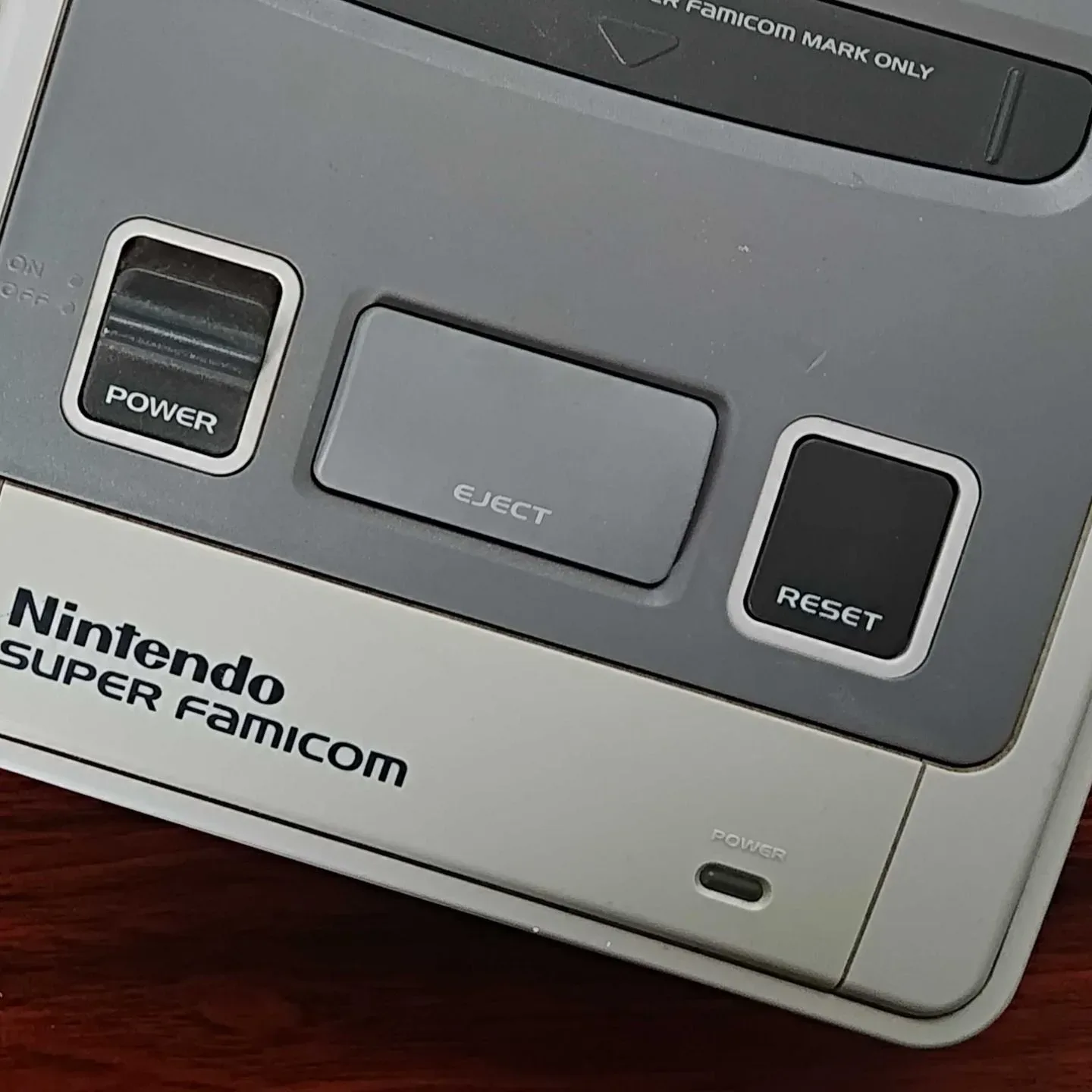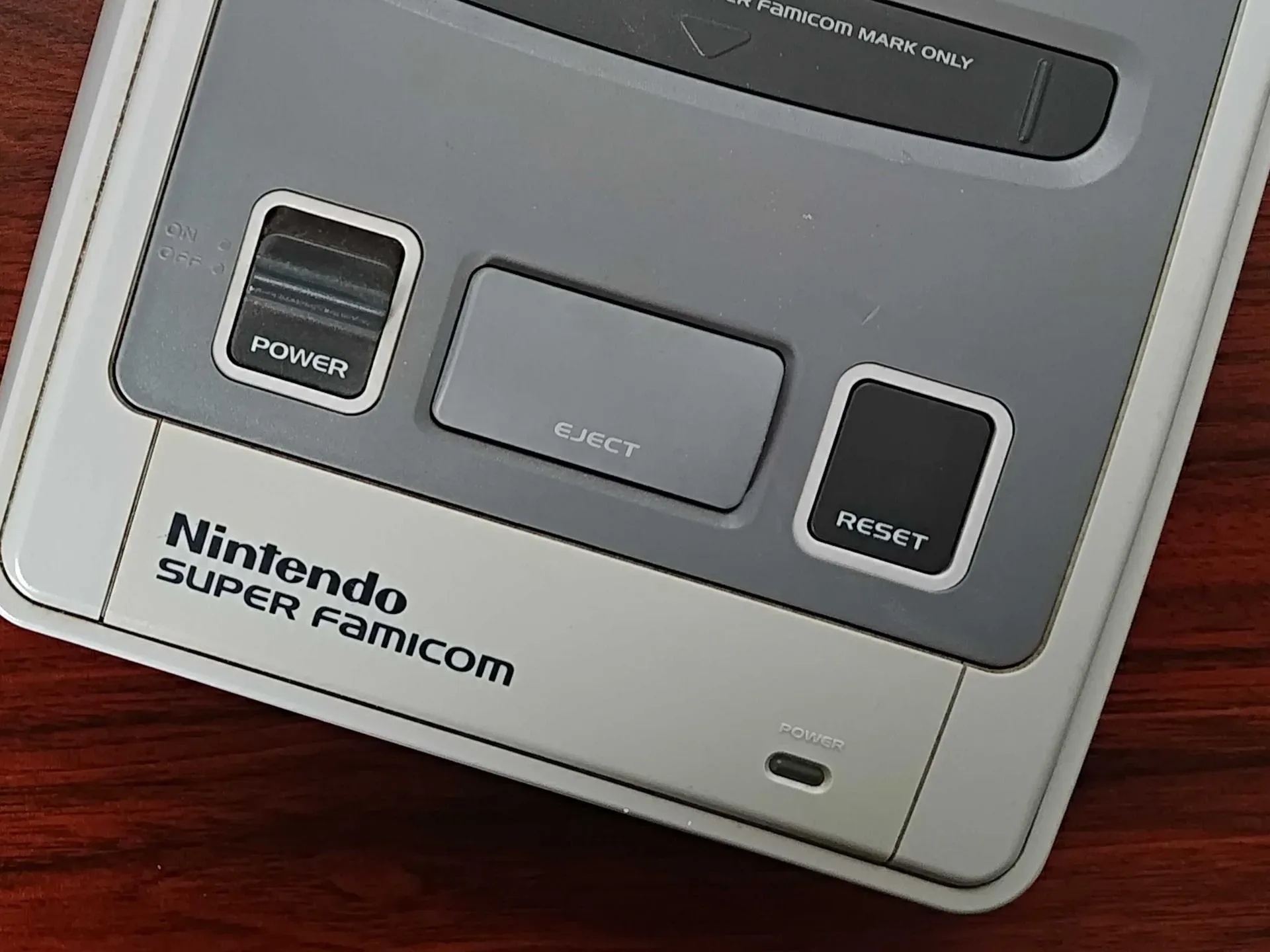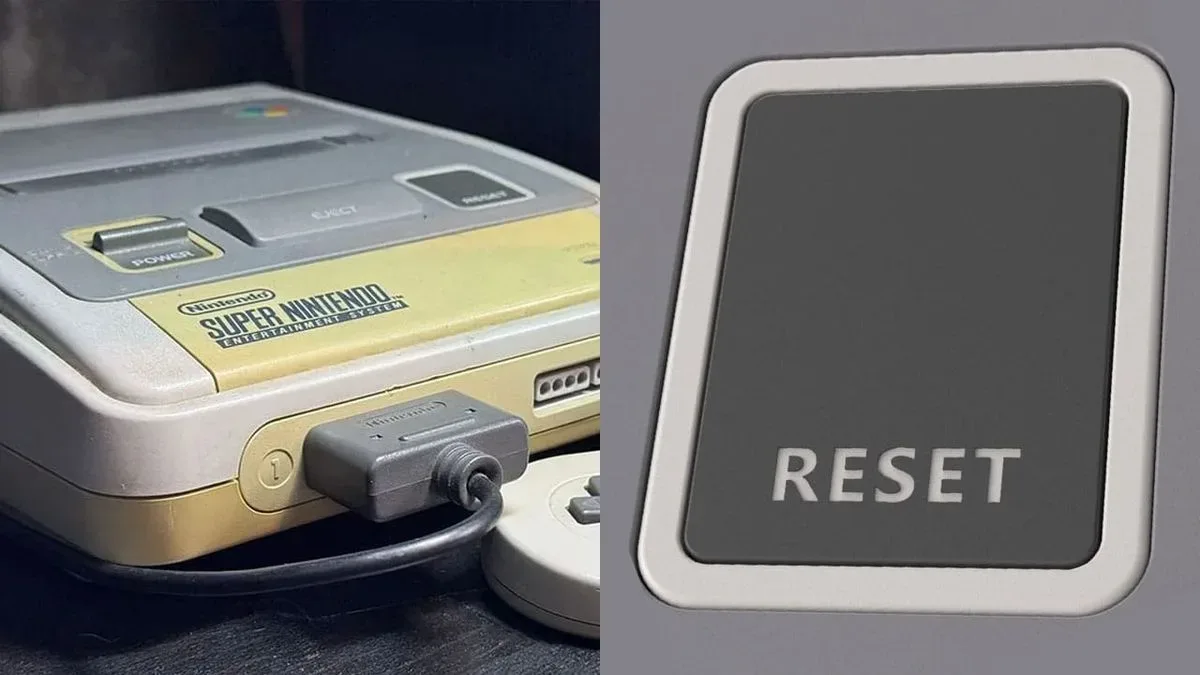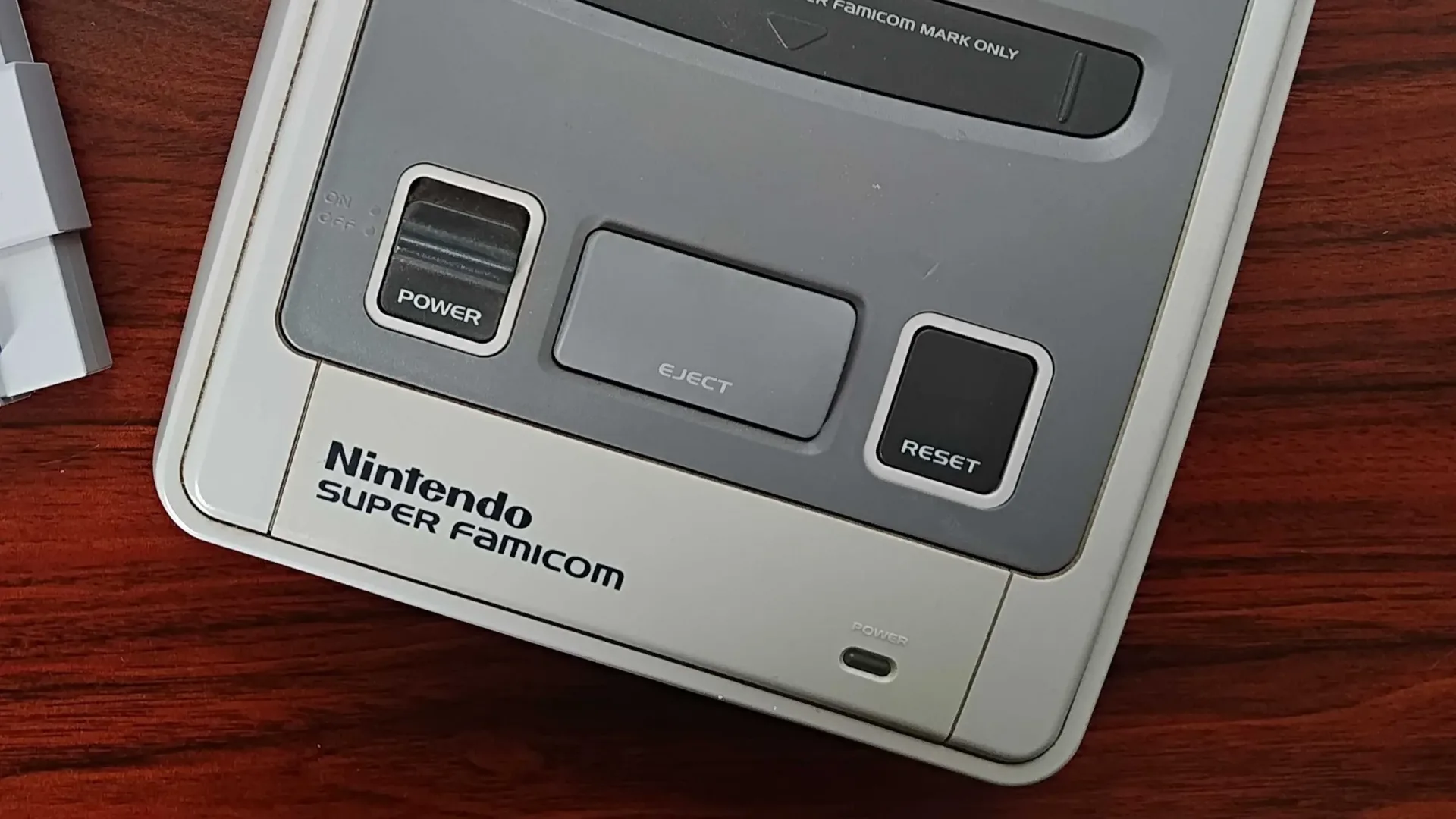
Retro Remake appears to be taking aim at the 16-bit era. The hardware maker has teased an FPGA-based Super Nintendo project called Codename SSNT/SuperFPGA, offering a close look at what appears to be a reset switch and the message, “It’s time to run it back.”
That is not much to build a spec sheet from, and Retro Remake has not yet established whether the project is a standalone console, an accessory, or something else. Still, the teaser makes one point reasonably clear: the company’s next retro-hardware idea is built around the visual language of Nintendo’s Super Nintendo family rather than its existing PlayStation-inspired SuperStation platform.
The more notable promise is about regional identity. In replies around the teaser, Retro Remake founder Taki Udon said the project will cover “all regions.” A shown grey button recalls the PAL Super Nintendo and Super Famicom look, rather than treating the North American SNES shell as the only version worth reproducing. For players who grew up outside the US—or who simply prefer the Super Famicom’s softer grey body and multicolored-button aesthetic—that is a small but meaningful detail.
What has actually been confirmed
At this stage, the confirmed information is limited:
- Retro Remake is teasing a project named Codename SSNT/SuperFPGA.
- The project is described as Super Nintendo-related and FPGA-based.
- The teaser imagery focuses on a SNES-style reset control.
- Retro Remake says regional designs are part of the plan, including inspiration from PAL Super Nintendo and Super Famicom hardware.
Everything beyond that requires caution. There is no confirmed price, release timing, cartridge compatibility list, controller support, video-output specification, operating system, game-library approach, or final product name. Nor is it confirmed that existing SuperStation One owners will be able to add SNES support to their current hardware.
The reset-switch image may suggest a separate unit: it appears to show a low-profile control with styling distinct from the SuperStation One. But a component close-up is not a full product reveal. Retro enthusiasts should resist filling in the blanks with their preferred feature list until Retro Remake shares a proper hardware overview.
FPGA explained: why the label matters
FPGA stands for field-programmable gate array. In plain language, it is a chip that can be configured to behave like particular hardware circuitry. In retro gaming, FPGA projects generally aim to recreate the logic of an original console at the hardware level, rather than relying solely on conventional software emulation running atop a general-purpose processor.
That distinction matters to enthusiasts because it shapes what they expect from a machine: close timing behavior, hardware-like responsiveness, and a focused way to play old games through modern display connections. It does not, by itself, guarantee that every game, accessory, unusual cartridge chip, controller, or display mode will work perfectly. The eventual implementation and feature set will matter far more than the three-letter acronym on a teaser.
Related coverage includes Retro Remake Teases Super Nintendo FPGA Hardware With Regional Designs Planned.
It is also worth separating the technology from the physical design. An FPGA SNES could be housed in a case that looks nothing like a 1990s console. Retro Remake’s early messaging implies it considers the enclosure part of the appeal, not merely a container for the electronics. That is where the regional-design commitment becomes important.
Regional shells are more than a cosmetic footnote
“SNES” can describe several visibly different machines. North American hardware has its distinctive boxier form and purple-toned controls. PAL Super Nintendo systems and Japan’s Super Famicom are associated with a different silhouette and grey styling; the Super Famicom in particular is remembered for its colored face buttons.
For a company recreating classic hardware, choosing one shell means choosing whose childhood version becomes the default. Retro Remake’s stated intention to cover multiple regions acknowledges that the SNES was not one universally identical object.
There is a practical side as well. A project that plans for regional variants may need to clarify exactly what “all regions” means when it reaches a full announcement. Are the differences purely external? Will there be multiple case options? Does the plan involve any distinction in cartridge handling or system behavior? Those are open questions, and buyers should not assume answers from the button teaser alone.
Nevertheless, even an external-only choice has value. Retro hardware sits at the intersection of play and design memory. Someone who remembers a PAL Super Nintendo or Super Famicom on the TV stand may care about the form, color, labels, and button shapes as much as the underlying method used to run a game.
A gap exists after the Super Nt
An FPGA Super Nintendo is not an unprecedented concept. Analogue previously offered the Super Nt, a premium FPGA recreation of the system. Its absence from regular availability, however, leaves an opening for another dedicated solution.
That makes Codename SSNT/SuperFPGA a potentially sensible direction for Retro Remake. Rather than entering an already crowded push toward another Nintendo 64 option, a modern SNES-focused device could address demand for a machine from a hugely important cartridge era. The key word remains could: usefulness will depend on the final feature set, compatibility ambitions, build quality, distribution, and price—none of which have been detailed.
The choice also fits Retro Remake’s current identity. The company is known for the SuperStation One, a PlayStation-inspired system described as MiSTer-based. Moving from a PlayStation-shaped project to a Super Nintendo-shaped FPGA project suggests an interest in dedicated hardware tributes rather than a single all-purpose retro box.
What SuperStation One owners should not assume yet
Owners of a SuperStation One may understandably wonder whether SSNT/SuperFPGA could be an expansion. The naming and visual tease leave that possibility unconfirmed. A modular add-on could be appealing for people who want to keep one hardware ecosystem on their shelf, while a separate SNES-style console would better serve the visual homage implied by the teaser.
At present, neither interpretation is official. This is exactly the kind of early hardware tease where an attractive image can create a false sense that the product architecture is already known. Until Retro Remake identifies the device’s relationship, if any, to SuperStation One, prospective buyers should regard it as a distinct unannounced project.
That restraint is particularly useful in the retro-device market. The eventual experience can turn on basics that a teaser does not cover: whether original cartridges are used, how saves are handled, whether original controllers are supported, which connections are included, and what setup is required. No claims about those areas have been made here.
Retro Remake’s recent hardware activity
The SSNT/SuperFPGA tease comes shortly after Retro Remake announced the $25 SuperStation Memory Card. The card has a built-in screen and is described as performing Free McBoot-related functions on original PS1 and PS2 hardware, in a similar vein to the PSXMemcard Gen 2.
Free McBoot is relevant here because it is associated with PlayStation 2 memory-card-based functionality. Its mention helps show that Retro Remake is not limiting itself to console-shaped units; it is also exploring accessories that interact with original PlayStation-era systems. That product does not tell us what SSNT/SuperFPGA will include, but it reinforces that the company is actively expanding its retro-hardware catalog.
For a broader look at the current trickle of retro-device teases, see our coverage of Anbernic’s RG DDS dual-screen handheld tease. The two projects are aimed at different types of players, but both illustrate how much consumer hardware news currently begins with partial images rather than complete specifications.
What to watch for in the full reveal
Retro Remake has created a promising premise, especially for players who have felt underserved by US-centric SNES reproductions. The next announcement needs to answer the questions that determine whether that promise becomes a compelling product.
- Standalone or add-on: Whether SSNT/SuperFPGA is its own console or connects to another Retro Remake product.
- Regional implementation: Whether regional coverage means case variants only or extends to other hardware considerations.
- Compatibility: What games, cartridges, peripherals, and controllers the hardware is intended to support.
- Connections and setup: The eventual display, power, and interface options.
- Cost and availability: The price, release window, regions served, and purchasing process.
For now, Codename SSNT/SuperFPGA is an early signal rather than a buying decision. But it is a well-aimed signal: a dedicated FPGA Super Nintendo project, with explicit attention paid to PAL and Super Famicom visual heritage, addresses a real blind spot in many modern retro-console recreations. The reset button may only be a button, but in this case it is also a declaration that the SNES revival should not come in just one regional flavor.