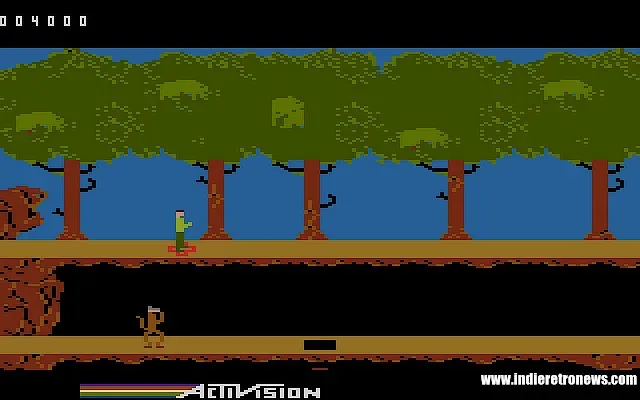
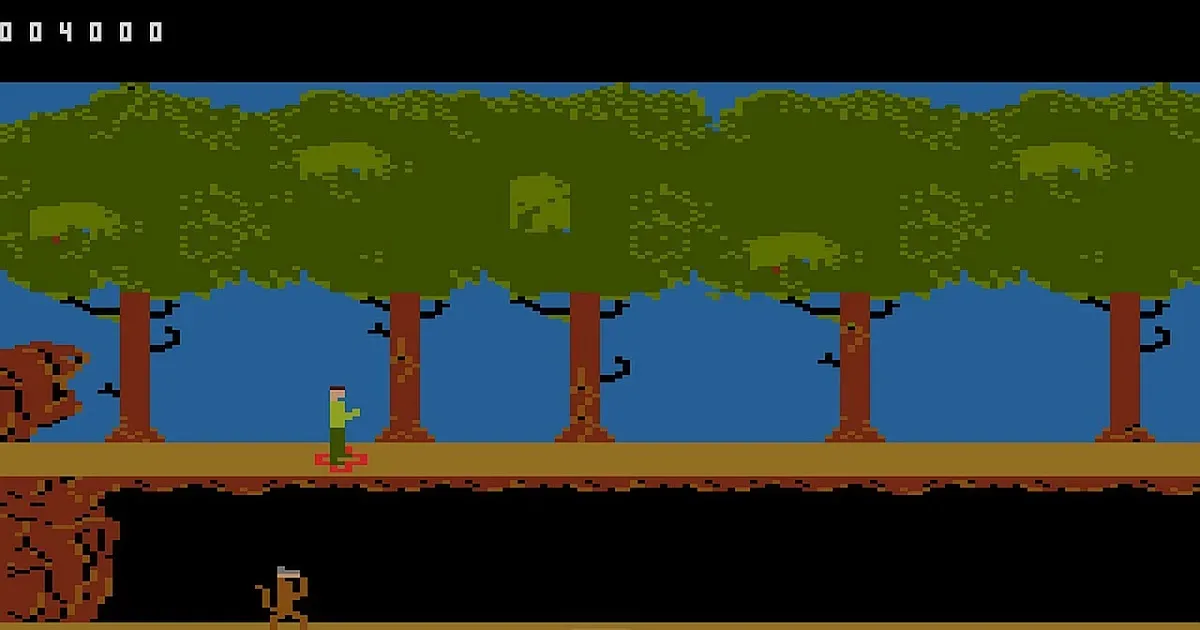
Anthonello Phallani is developing an unofficial Commodore Amiga version of Pitfall II: Lost Caverns, and the project is taking a notably specific route through the game’s history. Rather than using the more familiar Atari 2600 release as its direct template, the work is based on Mike Lorenzen’s expanded 1984 edition for Atari 8-bit computers and the Atari 5200.
That distinction matters. The Atari 8-bit/5200 version is not simply the same adventure presented on different hardware. It contains an additional adventure beyond the main quest, with another cavern, more demanding hazards and new enemies. Phallani’s current Amiga build has the main game taking shape, while the extra Adventurer’s Edition cavern remains in development.
The project targets an Amiga 500-class machine using Original Chip Set, or OCS, hardware. Its stated baseline is a standard-clock Motorola 68000 processor and 1 MB of RAM, with joystick controls. Planned formats are a bootable ADF disk image and a Workbench executable, offering two familiar ways to run software in an Amiga setup.
Why the Atari 8-bit version is the key reference
Pitfall II is associated with David Crane’s platforming series, but this reconstruction specifically follows the expanded version credited to Mike Lorenzen. For players, the important practical result is scope: the intended Amiga game is meant to include the extended Atari 8-bit and Atari 5200 adventure rather than stopping at the standard Atari 2600 content.
For more context, explore GTA 6 Deal Watch: DualSense Edge, Headsets and Game Codes Reported Below List Price.
The additional cavern is more than a footnote for archival completeness. A second adventure changes what a faithful port needs to preserve: not only screens and movement, but the expanded challenge curve, fresh hazards and enemy encounters that follow the original quest. Because that portion has not yet been implemented, prospective players should regard it as a stated goal rather than a finished feature.
That careful wording is worthwhile with works in progress. A project can have a playable main route and still be incomplete relative to the particular edition it aims to reproduce. Here, the clearest measure of progress is that core systems are already present, while the bonus Adventurer’s Edition content is still being built.
What is in the current build
The reported build includes the essential ingredients of the subterranean expedition: vertical scrolling, underground exploration, balloon rides, extended jumps, animated water and checkpoints. It also includes classic Activision-style introductory credits and is intended to retain the original’s visual character, handling and soundtrack.
Related coverage includes Pitfall II Amiga port takes on Atari’s expanded adventure.
- Vertical scrolling: the view can move up and down with the character, supporting caves that extend beyond a single static screen.
- Underground exploration: the game’s action is built around navigating an interconnected cavern environment rather than a straight sequence of stages.
- Balloon rides: these provide a movement method beyond running and jumping, and are part of the game’s recognizable traversal identity.
- Extended jumps: longer leaps place added importance on timing, positioning and reading the space ahead.
- Animated water: this is a small but meaningful visual feature when recreating an older game’s atmosphere and movement cues.
- Checkpoints: these mark player progress during the adventure, reducing the need to restart from the beginning after every setback.
Those systems are a useful indicator that this is being approached as a ground-up Amiga development rather than a simple repackaging of an older binary. The stated intent is to mirror the Atari 8-bit original’s look, feel and music while making use of the target machine’s own hardware.
How the Amiga hardware fits the plan
The specified display mode is 320 by 200 pixels with 16 colours. On paper, those numbers may sound modest today, but the point of the project is not modern visual escalation. It is to make an edition of Pitfall II feel at home on OCS Amiga hardware and within its technical character.
Three named Amiga components are central to that approach: the Blitter, the Copper and the Paula audio chip.
Blitter-assisted rendering
The Blitter is dedicated hardware that can help copy and manipulate blocks of graphics in memory. In a scrolling action game, that capability is relevant to the routine visual work of moving playfield elements and updating the display. Phallani is using Blitter-assisted rendering as part of the project’s OCS-focused design.
Copper-assisted display work
The Copper is another custom Amiga component associated with coordinating display changes. Alongside the Blitter, it is listed as supporting the game’s graphics rendering. Mentioning both chips signals a build designed around the Amiga’s custom hardware rather than treating the machine solely as a 68000 CPU with a screen attached.
Four-channel Paula audio
For sound, the project uses the Amiga’s native four-channel Paula audio. “Four-channel” refers to four audio voices that can operate independently, a fitting basis for recreating the game’s soundtrack in an Amiga-native form. The stated goal is fidelity to the Atari 8-bit version’s music and overall feel, not a newly arranged soundtrack or a reinterpretation.
Together, these decisions outline a clear preservation-minded technical brief: retain the traits of the selected Atari version while expressing them through the Amiga 500/OCS platform’s own display and sound architecture.
ADF or Workbench executable: what the formats mean
The planned bootable ADF option is intended for a disk-image style launch path: the software can be started by booting into it. The Workbench executable, by contrast, is meant to run from the Amiga’s desktop environment. Providing both is a practical compatibility choice for Amiga users, since preferences can differ between a game-like direct boot and loading software through Workbench.
Neither format alone establishes a release date, price or final distribution plan, and none has been specified here. What is known is the intended platform baseline: Amiga 500/OCS, standard-clock Motorola 68000, 1 MB RAM, a 320 × 200 16-colour display and joystick control.
An adaptation with a precise target
Retro ports are often described broadly as remakes or conversions, but this one has a narrower and more interesting identity. It is an unofficial Amiga reconstruction of a particular expanded Pitfall II lineage. That means its eventual completeness will depend on more than whether Harry can explore caverns, make extended jumps or ride balloons. The remaining Adventurer’s Edition cavern is part of what separates its target version from the standard Atari 2600 release.
For now, the project’s appeal is in that combination of priorities: a main adventure already showing the defining exploration and traversal mechanics, a commitment to Amiga OCS-specific rendering and four-channel audio, and a stated effort still underway to bring across the expanded content. Readers tracking the development can find additional project context in this report on the Amiga OCS rebuild.
The result could be especially compelling for fans who know why the 1984 Atari 8-bit and 5200 version stands apart. Until the additional cavern is in place, however, it is best viewed as an actively developing reconstruction with its central systems established and its most distinctive remaining content still to come.