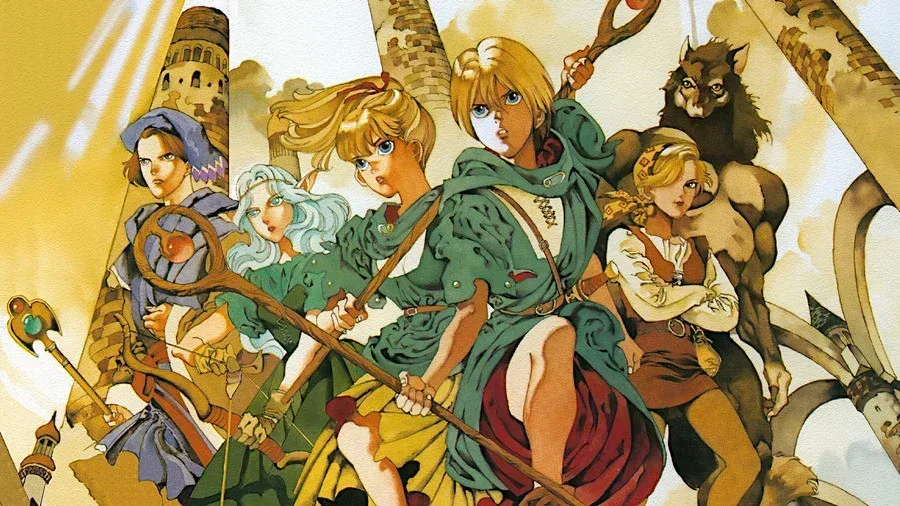
There is no shortage of beloved role-playing games in the Super Nintendo and Super Famicom library, which is precisely why a Japan-only release from 1993 can slip between the cracks. Ancient Magic: Bazoe! Mahou Sekai, a Hot-B RPG that never received an official English localization in its original era, is getting another chance to be noticed. Publisher Mebius is preparing a Nintendo Switch release in Japan for November 26, 2026.
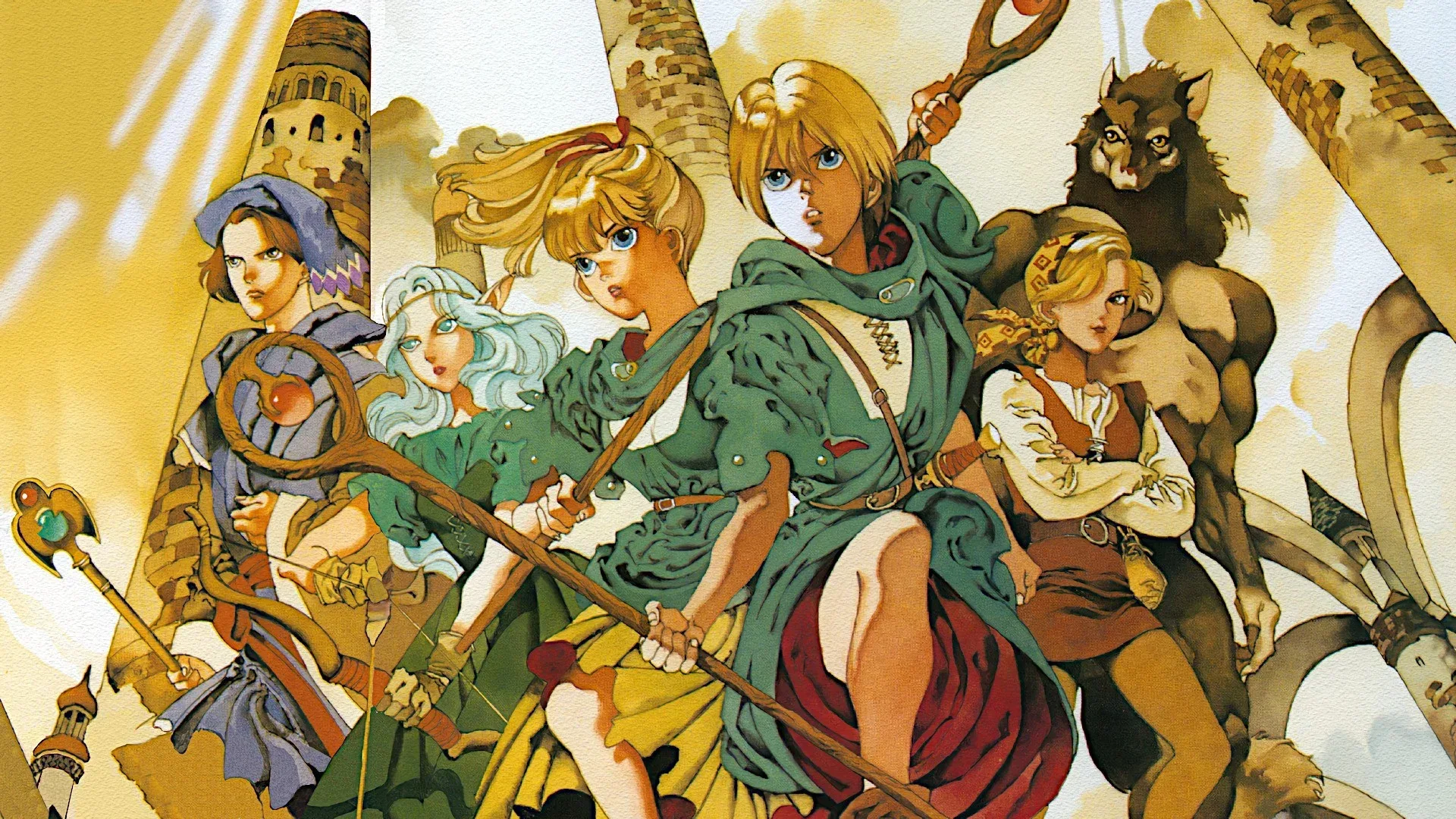
The return is notable less because it promises to rewrite the 16-bit canon and more because it puts a difficult-to-access curiosity back into circulation in both downloadable and boxed forms. The game is associated with character artwork by Akihiro Yamada, whose broader body of work reaches across anime, manga and video games. For collectors, art-focused RPG fans and people assembling a list of strange Super Famicom deep cuts, this is the sort of release that can turn a footnote into a real object again.
A 1993 RPG that stayed in Japan
Hot-B originally released Ancient Magic: Bazoe! Mahou Sekai exclusively in Japan in 1993. Its absence from the English-language SNES market matters: plenty of games gain an international reputation through local distribution, magazine coverage and decades of easy rediscovery, while others remain largely known through imports, emulation, fan communities and translated documentation.
Ancient Magic belongs closer to the latter group. It has not historically carried the same profile as the era’s most frequently celebrated RPGs, and its reputation is not one of flawless polish. That distinction is worth keeping intact. A new Switch edition does not automatically make every older game an overlooked masterpiece; sometimes it simply creates a more convenient route to a game with peculiar strengths, rough edges and a place in a much larger history.
The game’s appeal appears to rest substantially on its setting, its cast and a story that becomes more surprising as it develops. Promotional material for the reissue emphasizes the quality of its characters, its world-building and its twists. Those are ambitious claims, naturally, and they should be read as promotional framing rather than a promise that every player will come away converted. Still, the emphasis helps explain why a relatively obscure Hot-B RPG remains worth revisiting more than three decades later.
Switch editions, prices and what the limited package contains
Mebius has outlined three versions for the Japanese release. The digital edition is priced at 2,980 yen. A standard physical version will cost 4,400 yen. For collectors willing to commit considerably more shelf space and budget to a single 16-bit revival, there will also be a limited edition for 11,000 yen.
The limited edition is set to include the regular game software, an original soundtrack containing the game’s background music, and a large-format Bazoo! Magical World Original Art Collection. Its packaging will use original artwork by Akihiro Yamada. The materials use “Bazoo! Magical World” for the art-book title, while the original game is identified as Ancient Magic: Bazoe! Mahou Sekai; import buyers should therefore pay attention to listing details rather than assume every piece of product text will use one identical romanized name.
- Digital edition: 2,980 yen
- Standard physical edition: 4,400 yen
- Limited edition: 11,000 yen
- Limited-edition extras: game software, original soundtrack and a large-capacity original art collection
- Release date: November 26, 2026, in Japan
Physical preservation is an obvious part of the attraction here. Retro reissues can be most useful when they preserve not only executable software but also the surrounding material that made older games feel like authored packages: box art, illustrations, music and printed context. The limited edition seems designed around that idea, with Yamada’s artwork acting as a central reason to choose the bigger release rather than merely an extra tucked into the margins.
Why Akihiro Yamada’s involvement stands out
Yamada’s name gives Ancient Magic an immediate point of interest beyond Hot-B’s catalogue. He worked on The Twelve Kingdoms anime and the Record of Lodoss War manga, while his video-game credits include Castlevania: Dracula X, Kingdom Grand Prix, Mystic Ark and Front Mission 3. That is a broad creative trail, and it makes the dedicated art collection more than a routine “premium edition” insert.
For a game from an era when box and manual art often formed a major part of its identity, an art book can be a practical preservation piece as well as a collector’s perk. It gives players a way to engage with the designs without relying on scans of aging original materials. It also foregrounds a contributor whose work may be more immediately recognizable to some potential buyers than the game itself.
That does not mean the reissue should be treated as an Akihiro Yamada museum piece with a cartridge attached. Ancient Magic is still an RPG that needs to stand on its own narrative and mechanical merits. But the artwork is clearly part of why this return has an identity, particularly for fans drawn to the cross-pollination of 1990s Japanese games, manga and animation.
The language question remains important
Anyone outside Japan interested in the Switch release should be especially careful about language expectations. The original game did not receive an official English localization, and the announced information identifies this as a Japanese Switch launch. No official English-language version is confirmed in the available release details. A boxed Switch game is not, by itself, evidence that it will be accessible in English.
There is, however, an English fan translation created by Aeon Genesis. The group characterizes Ancient Magic as a modest, conventional RPG in its basic foundations that grows more unusual later, while also noting disappointment with how its ending is handled. That assessment is useful because it leaves room for both sides of the game’s identity: this is not necessarily a hidden essential for everyone, but it may reward players who give its story enough time to unfold.
The fan translation’s existence has also helped the game remain discussable among English-speaking retro enthusiasts. In many cases, unofficial translation projects preserve access to games that publishers did not localize at the time. They can introduce a title’s characters and story to a new audience, while an official rerelease can make the underlying game commercially available again in its home market. Those are related forms of preservation, but they are not the same thing.
A useful reminder that reissues need clear labels
Ancient Magic’s Switch revival arrives in a landscape where old games are regularly repackaged for new hardware, yet the important questions have not changed. Is it digital, physical or both? What regional storefront is involved? What languages are supported? Is there archival material? Does a limited edition add something meaningful, or simply a larger box? Mebius has at least made the basic format and price structure clear, and the soundtrack plus art collection give the premium edition a defined purpose.
For prospective importers, the remaining detail is the language situation. Since only a Japan release has been specified, it is sensible to avoid presuming an English script or localization option unless a product listing explicitly confirms one. That small check can prevent the classic collector experience of eagerly opening a long-awaited retro revival and discovering that the real boss battle is reading the menu.
It is also a timely reminder that access is more complicated than simple hardware compatibility. Players considering any older-console setup or retro release can benefit from doing the practical homework before checkout; our guide on mapping the connection before buying a retro console HDMI adapter covers the same principle from the hardware side. Know what you are buying, what your setup can handle, and what expectations the product actually supports.
An unusual second life for a Hot-B deep cut
Ancient Magic: Bazoe! Mahou Sekai is not returning with the cultural weight of a household-name franchise. Its interest comes from being a less-traveled branch of the Super Famicom RPG library: a 1993 Japanese exclusive from Hot-B, carrying Yamada’s character designs and a reputation for taking its story in unexpected directions despite an uneven presentation.
On November 26, 2026, Japanese Switch owners will have a new official option to revisit it through a download, a standard boxed copy or an art-and-music-focused limited package. For everyone else, the announcement is both a welcome preservation-minded reappearance and a reason to watch the fine print. The strange little RPG has surfaced again; whether this particular edition is the right route in depends on the buyer’s interest in Japanese-language imports, physical collecting and one of the Super Famicom’s more obscure magical worlds.