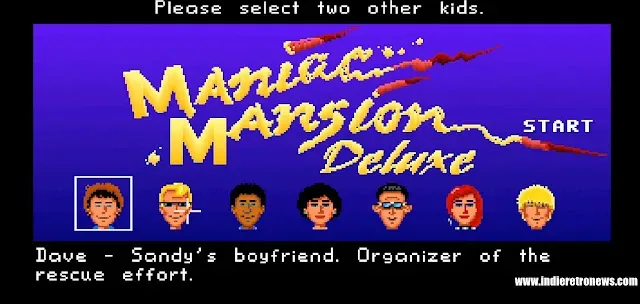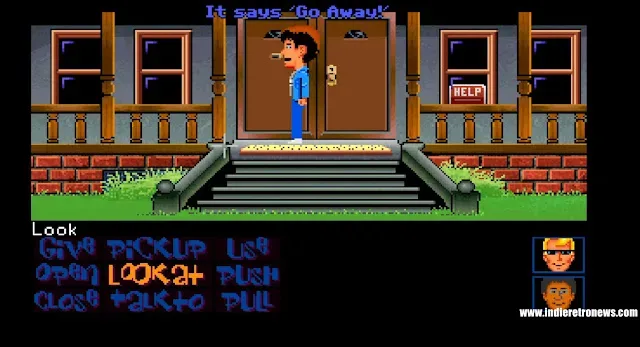
Tecniman has released the final 2.0 version of Maniac Mansion Deluxe AGA, a native Amiga remake of the classic Lucasfilm Games adventure’s PC version. The noteworthy part is not merely that the game now runs on Amiga hardware: it was rebuilt around a newly written engine while drawing on the original PC installer’s assets and scripts to reproduce the adventure’s rooms, puzzles, cutscenes and character behaviour.
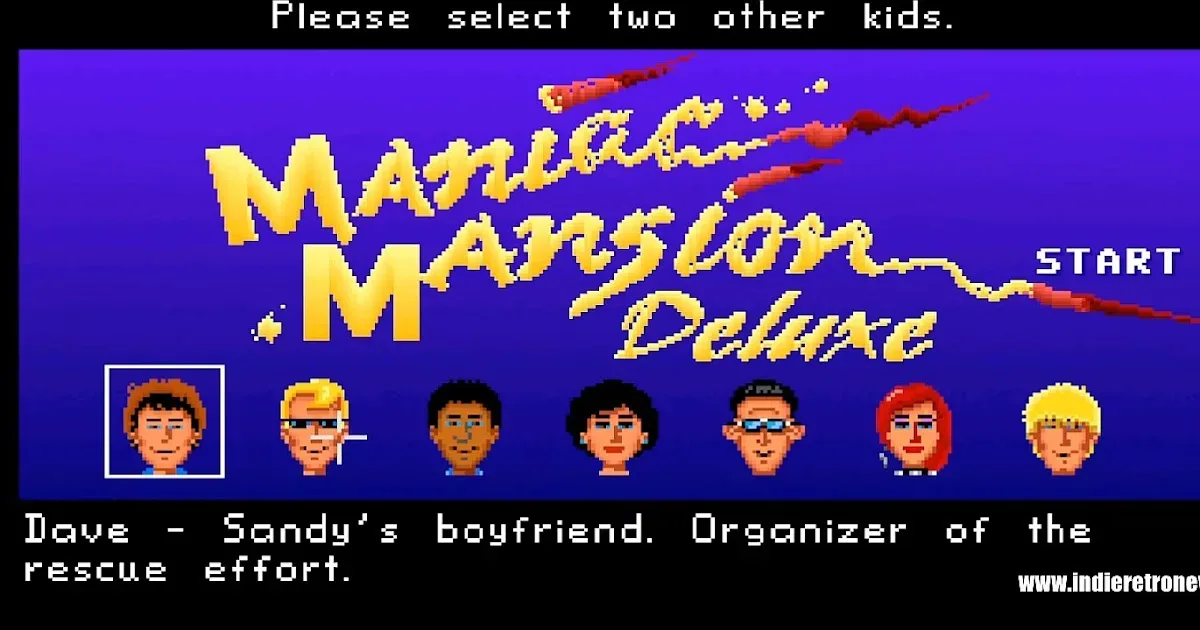
For retro-computing fans, that distinction matters. A remake can range from a light presentation update to a complete reinterpretation. This project is described as the latter on the technical side: the underlying runtime was created from scratch, with the aim of preserving the game’s content and behaviour on an Amiga target. Version 2.0 is positioned as the final release and includes a new intro screen, localised graphics and fixes for visual problems involving the fence, the TV advert and dungeon graffiti.
A full adventure’s worth of moving parts
The supplied scope gives an idea of what the engine has to coordinate. Maniac Mansion Deluxe AGA contains 36 playable rooms, 41 scene sequences, 67 inventory items, 18 music tracks, 87 sound effects and four intro clips. An adventure game is especially sensitive to small implementation discrepancies because progress depends on the connections between locations, objects, scripted scenes and characters. A missing object state, a badly timed scene trigger or a character behaving incorrectly can turn into a progression blocker rather than a cosmetic defect.
That is why the work described here goes beyond displaying screens or loading a few animation files. Rooms need to present the right art, accept the appropriate interactions and preserve relevant game state as players move elsewhere. Inventory objects need to be available, usable and tracked correctly. Cutscenes must start under the intended conditions. Character behaviour needs to align with the puzzle structure. The reported process included manual testing, bug fixing and close comparisons with the underlying source material.
AI tools were used to help analyse the original game and assist with code reviews, but they were only part of the development process. The account makes clear that the practical work of achieving smooth operation still required extensive human verification. That is a useful reminder of where automated assistance fits in a preservation-minded project: it may accelerate inspection or identify issues, but it does not replace confirming that a complicated interactive system actually behaves as intended.
Why a stock Amiga 1200 is a demanding target
The primary target is a stock Amiga 1200 with a 68020 processor, AGA graphics and 2 MB of Chip RAM. That specification is central to the remake’s engineering. “Chip RAM” is memory shared with the Amiga’s custom chips, including the hardware responsible for graphics and audio tasks. With only 2 MB available, holding a visually detailed adventure’s many backgrounds, masks and related data in memory at once is not realistic.
The solution is a room-by-room loading approach. When the player leaves a room, the custom engine discards that room’s data from memory before bringing in the next area. In everyday terms, it is a deliberate trade-off: instead of trying to keep the whole mansion resident, the game gives the active location priority. This is the kind of memory discipline that lets a large adventure fit the intended machine without assuming a faster processor or extra memory.
The game’s art also creates challenges beyond raw file size. Object masks are used when the engine needs to control which portions of an image are shown or obscured. In an adventure scene, a character may need to appear behind a foreground object rather than on top of it. That effect is often described as layering or occlusion: the foreground scenery must cover the right part of the character at the right time. Getting this wrong makes a scene look immediately unnatural, even if the player can still move and interact.
Related coverage includes Maniac Mansion Deluxe AGA 2.0 Brings a Full Adventure Remake to Amiga.
Tecniman also worked through screen-transition issues. Transitions are easy to overlook when they work, but they sit at the junction between two major systems: unloading the outgoing room, loading the incoming room and keeping the visual presentation coherent. On constrained hardware, an effect that seems simple can expose timing, data-loading or drawing-order problems. The final release’s emphasis on visual bug fixes suggests attention was paid not only to whether the content was present, but also to how it was presented.
Paula handles the soundtrack and effects
Audio is routed through ptplayer, with music modules and sound effects played via the Amiga’s Paula chip. Paula is the machine’s dedicated custom chip for audio, among other duties, and using it directly is part of what makes this a native Amiga-focused build rather than a generic conversion with the platform treated as an afterthought.
A music module is a compact, pattern-based audio format rather than a conventional streamed soundtrack. It combines short samples with instructions about when and how to play them. That makes modules well suited to systems with tight storage and memory constraints, but reliable playback still has to coexist with the rest of the game’s workload. The listed 18 music tracks and 87 sound effects indicate that sound is a substantial component of the remake, not a single background tune attached to an otherwise silent port.
For players, the practical implication is that the project’s technical choices are built around the Amiga’s own capabilities. Visual loading is managed against Chip RAM limits, while music and effects are sent through the platform’s established audio hardware. It is an approach that values an appropriate fit to the machine as much as basic compatibility.
Hardware coverage includes CD32, PiStorm and Vampire V4
The release was tested on real hardware across several configurations: an Amiga CD32 with a hard drive, an Amiga 1200 accelerated with a 68030, a PiStorm setup and a Vampire V4. This range is meaningful because old-computer projects can encounter differences between a baseline configuration, processor upgrades and modern accelerator-style setups. Testing across them does not guarantee that every possible system configuration will behave identically, but it provides evidence that the developer checked more than one environment.
The stock Amiga 1200 remains the stated primary target, which is particularly relevant for users deciding whether they need an upgrade to run it. The described target is not an accelerated tower system or an expanded configuration; it is a standard A1200 with a 68020 and AGA graphics. Faster or alternative hardware was part of the testing picture, rather than the baseline requirement presented for the remake.
Vampire V4 users have one specific troubleshooting option. If they encounter mask flickering, they can set the CPUFAST ToolType to YES. A ToolType is an Amiga icon-based configuration setting that can alter how an application launches. In this case, it provides a practical compatibility toggle for a particular visual symptom on that hardware family, rather than changing the game’s content.
Installation and the two included executables
Installation is described as copying the game folder to Workbench, while leaving the Data directory unchanged. Workbench is the Amiga’s desktop environment, so this points to a straightforward folder-based setup rather than a more involved installation procedure. Keeping the Data directory intact is important because it contains the game material expected by the executable.
There are two editions of the program: a standard executable and a Test edition used for bug logging. The normal executable is roughly half the size of the Test build. Players who simply want to play should launch the standard version, while the Test edition’s purpose is diagnostic. Separating those roles is sensible: development-oriented logging can be useful while tracking down faults, but it is not necessary for a regular play session.
- Copy the complete game folder to Workbench.
- Do not alter the Data directory.
- Launch the standard executable for normal play.
- Use the Test edition only when bug logging is needed.
- On Vampire V4, set CPUFAST to YES only if mask flickering appears.
What the final 2.0 update represents
The release is a compact example of why retro game work is often as much engineering as nostalgia. Bringing a familiar point-and-click adventure to a different vintage platform involves retaining far more than dialogue and artwork. It requires an engine that can manage interactive logic, room states, object behaviour, animation layering, transitions and audio within the limitations of the target system.
Version 2.0’s fixes may sound narrow on paper, but fence, advertisement and graffiti issues are the sort of details that show the value of continued polish. The mansion is a visual space as well as a puzzle space; foreground art and scene details need to render correctly if the remake is to feel complete. Paired with the new intro screen and localised graphics, the update focuses on both technical correctness and presentation.
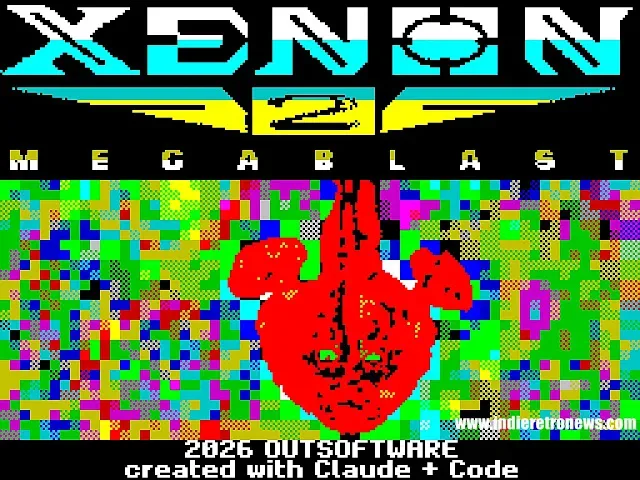
It also arrives amid continued interest in software that extends the practical library of classic hardware. Recent projects have shown that older machines are still receiving ambitious releases, as with the eventual ZX Spectrum 128K release of Xenon 2 Megablast. Maniac Mansion Deluxe AGA takes a different route: not a belated port of a shelved version, but a ground-up Amiga engine designed to recreate a full adventure on an AGA-era system.
For Amiga owners, the headline is clear. The final version offers a substantial adventure remake built with a stock A1200 in mind, tested across several real-hardware configurations, and accompanied by clear setup guidance for its standard and diagnostic builds. For anyone interested in the craft behind retro releases, its more lasting point is the work hidden underneath: disciplined memory use, rendering solutions for foreground scenery, platform-specific sound playback and repeated manual comparison needed to make a sprawling adventure function as a coherent whole.