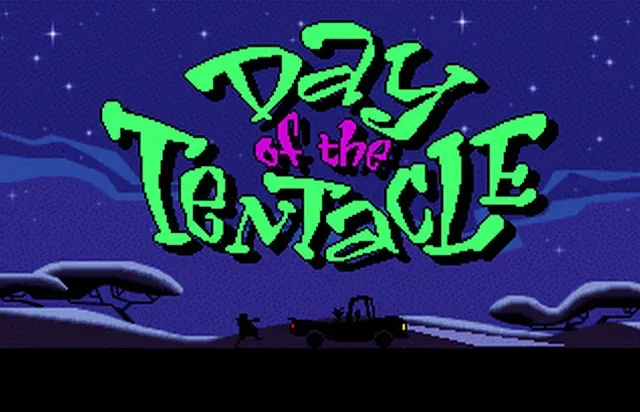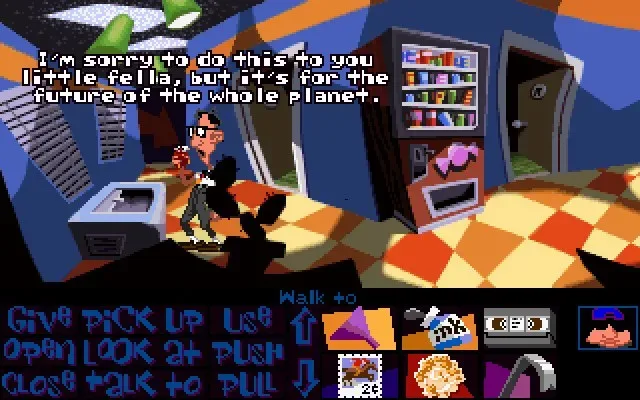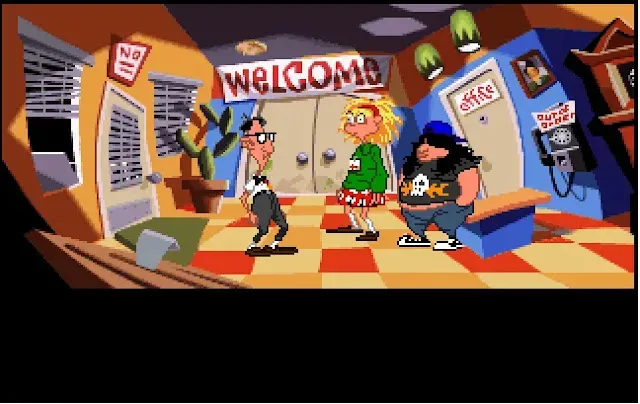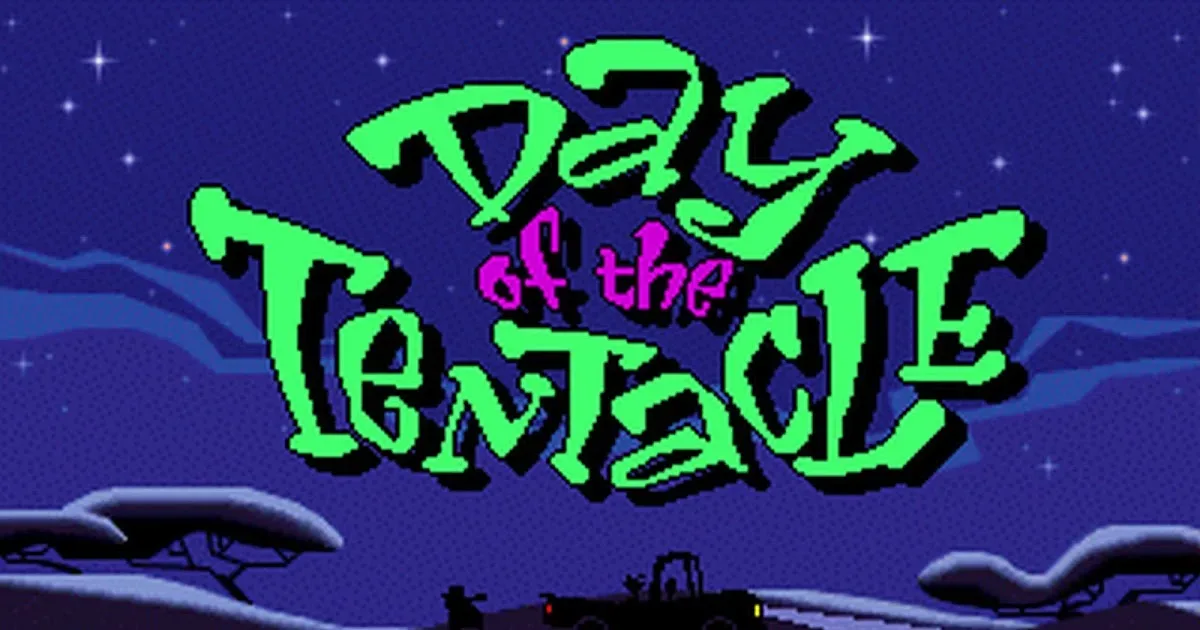
Day of the Tentacle, LucasArts’ 1993 time-travelling cartoon adventure and sequel to Maniac Mansion, is being brought to Amiga hardware in a new AI-assisted native port by Darasco. The project is planned around the realities of several very different Amiga configurations: a 32-colour version for comparatively modest systems, a fuller 256-colour version for the Amiga 1200, and a separate CD32 build.
That hardware-specific approach is the important part of the story. This is not simply one build with a single performance target. The supplied details describe separate versions intended to balance colour output, memory use and processor demands across the Amiga family. The 32-colour edition supports Roland MT-32 sound and is aimed at machines using a 68000 processor with 512KB of Chip RAM and 4MB of Fast RAM. The 256-colour edition is intended for a stock Amiga 1200, while the CD32 version keeps the 256-colour presentation but omits MT-32 support so it can operate on the stock console.
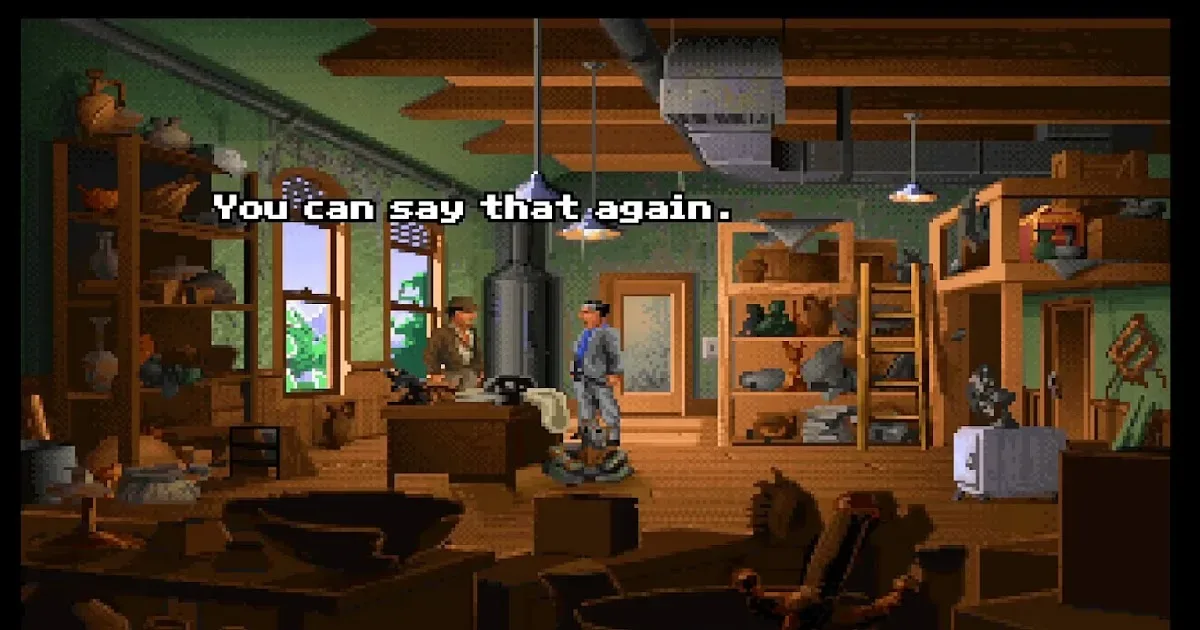
For a game remembered for its boldly drawn characters, exaggerated animation and densely staged point-and-click scenes, the question is not merely whether it can run. It is how much of that visual identity can be retained at each hardware level without turning the experience into a compromise of constant slowdowns or unwieldy memory demands.
A long-delayed Amiga fit for a 1993 adventure classic
Day of the Tentacle originally arrived in 1993 as a follow-up to Ron Gilbert’s Maniac Mansion. Its premise follows three unlikely friends working across time to stop a mutated Purple Tentacle from conquering the world. The game’s design revolves around cartoon logic, inventory puzzles and cause-and-effect actions spread between different eras.
For more context, explore Armani Caesar Says Pregnancy Reveal Led to Loss of 50,000 Followers.
Although the game has a large reputation among adventure-game fans, it did not receive an official Amiga release. An unofficial Amiga AGA version has circulated, but this new effort is distinct in being described as a native Amiga port. In practical terms, “native” means the software is being built to run directly on the target Amiga environment rather than being presented as a version dependent on a separate modern platform layer. That designation matters to players who want a release tailored to original hardware and its constraints.
The project’s AI assistance is also explicitly part of its description. The available information does not specify which portions of development used AI, nor does it detail the workflow behind the conversion. It would therefore be premature to assign the technology credit for any one element of the final result. What is clear is that the port is being discussed as an AI-assisted production, and that its early reception has focused less on the label than on its performance and image quality on Amiga systems.
For further details on the reported configuration targets, see the project coverage.
Related coverage includes Day of the Tentacle Receives New AI-Assisted Native Amiga Port.
What the 32-colour and 256-colour options mean
A colour count is not a complete measure of a game’s visual quality, but it is a consequential technical choice on vintage hardware. More available colours can help a cartoon game preserve smoother shading, more varied background art and closer approximations of its original palette. It can also require more data to be stored and moved around, which places greater pressure on memory and can affect performance.
The 32-colour build is the accessibility-minded version here. It is listed for a 68000 processor, 512KB of Chip RAM and 4MB of Fast RAM. The 68000 is the processor family associated with many classic Amiga systems. Chip RAM is memory shared with the machine’s custom graphics and audio hardware, making it especially important for a game that must continually display artwork and sound. Fast RAM, by contrast, is additional memory intended to be accessed by the CPU without that same shared-hardware role.
Those distinctions explain why the stated Fast RAM requirement and subsequent community observations deserve attention. A point-and-click adventure may not demand reflex-heavy input, but it can still rely on large scene data, animation, interface assets and audio resources. Extra Fast RAM can give a program more room to work without crowding the memory used by graphics hardware. That does not automatically guarantee ideal performance in every configuration, yet it makes the reports of stronger results with Fast RAM technically unsurprising.
Early comments from Amiga users have been positive about both the OCS and AGA-oriented versions when Fast RAM is present. The 32-colour edition, in particular, has impressed players enough that some feel its output appears to have considerably more colour depth than its stated specification. That reaction is a useful reminder that palette choice, careful art conversion and display technique can matter as much as a headline colour number. A well-selected 32-colour palette can communicate a surprising amount of the source artwork’s character.
The Amiga 1200 version asks more of the machine
The 256-colour version is designed for the stock Amiga 1200, but reports indicate that players are seeking better results by either booting without a startup-sequence or adding Fast RAM. This is not a contradiction of the intended target. “Runs on stock hardware” and “runs most comfortably under every use case” are different standards, particularly with an older computer that may be configured in many ways.
A startup-sequence is the set of instructions an Amiga executes during boot to load its usual environment and services. Booting without it can reduce the number of background components occupying memory or using system resources. That can leave more available for a demanding game. It is a practical configuration option for enthusiasts, though the provided information does not establish a single best setup or quantify exactly how much improvement a stripped-down boot provides.
Adding Fast RAM offers the more straightforward upgrade path for users who have it. Community impressions indicate that extra memory benefits the OCS and AGA versions, and the more demanding 256-colour Amiga 1200 build is the clearest case where headroom could be welcome. Anyone approaching the release on original hardware should therefore treat the listed specifications as a starting point, then consider their machine’s memory configuration and normal boot setup before judging responsiveness.
OCS, AGA and why those labels matter
The early feedback refers to OCS and AGA versions. These labels identify different generations of Amiga graphics capability. The practical takeaway is that the port is not framed as a one-size-fits-all release. Its 32-colour configuration is positioned for more modest 68000-based hardware, while the 256-colour option is linked to the Amiga 1200’s AGA-era capabilities.
That split is beneficial for preservation-minded players as well as people who simply want to play. It gives owners of less powerful setups a version designed around their machines rather than leaving them outside the project entirely. At the same time, it gives Amiga 1200 users a version that pursues a more colour-rich visual presentation. Rather than treating lower-spec support as an afterthought, the port appears to make it one of its core design decisions.
CD32 gets the 256-colour presentation, with one audio trade-off
The standalone Amiga CD32 edition is also set to use the 256-colour version. It is said to run seamlessly on stock console hardware, but it does so without Roland MT-32 support. The MT-32 is a Roland sound module associated with richer synthesized music on compatible software. Its inclusion on the computer-oriented versions gives appropriately equipped users an additional audio option; its omission from the CD32 build is presented as part of maintaining straightforward stock-console operation.
This distinction is helpful because it sets sensible expectations. The CD32 release is not merely the computer version placed onto a disc-shaped format with every optional audio path preserved. It is a dedicated console-oriented configuration with a clear priority: 256-colour graphics and smooth use on unmodified CD32 hardware. Players interested in MT-32 output should look toward the versions that support it, while CD32 owners can focus on the fact that their platform has its own full-colour route into the game.
Why this port is notable beyond the novelty factor
Classic computer ports often raise two competing expectations. Some players want the most faithful-looking possible conversion; others want a version that respects the exact system they still use. The different editions of Day of the Tentacle suggest an effort to address both, without pretending that a 68000 system and an Amiga 1200 have identical capabilities.
The result is also a useful example of why retro releases need to state their requirements precisely. “Amiga version” can mean radically different things depending on whether a player owns a 68000 machine, an Amiga 1200 with no extra memory, an expanded system, or a CD32. Here, the available details give prospective players concrete guideposts: 32 colours, 68000, 512KB Chip RAM and 4MB Fast RAM for one route; 256 colours and an Amiga 1200 for another; and a stock-friendly CD32 edition with no MT-32 audio support.
Early community reports are encouraging, especially the praise for the 32-colour version’s apparent visual richness and the repeated emphasis on Fast RAM. They remain early impressions rather than a comprehensive compatibility verdict, and results may depend on each owner’s configuration. Still, the combination of multiple builds, explicit hardware targets and positive initial feedback makes this a meaningful development for Amiga adventure-game fans.
Most importantly, it gives one of the era’s best-known cartoon puzzle adventures a route onto hardware it never officially reached at the time—while acknowledging that the original Amiga ecosystem was never a single, uniform target.