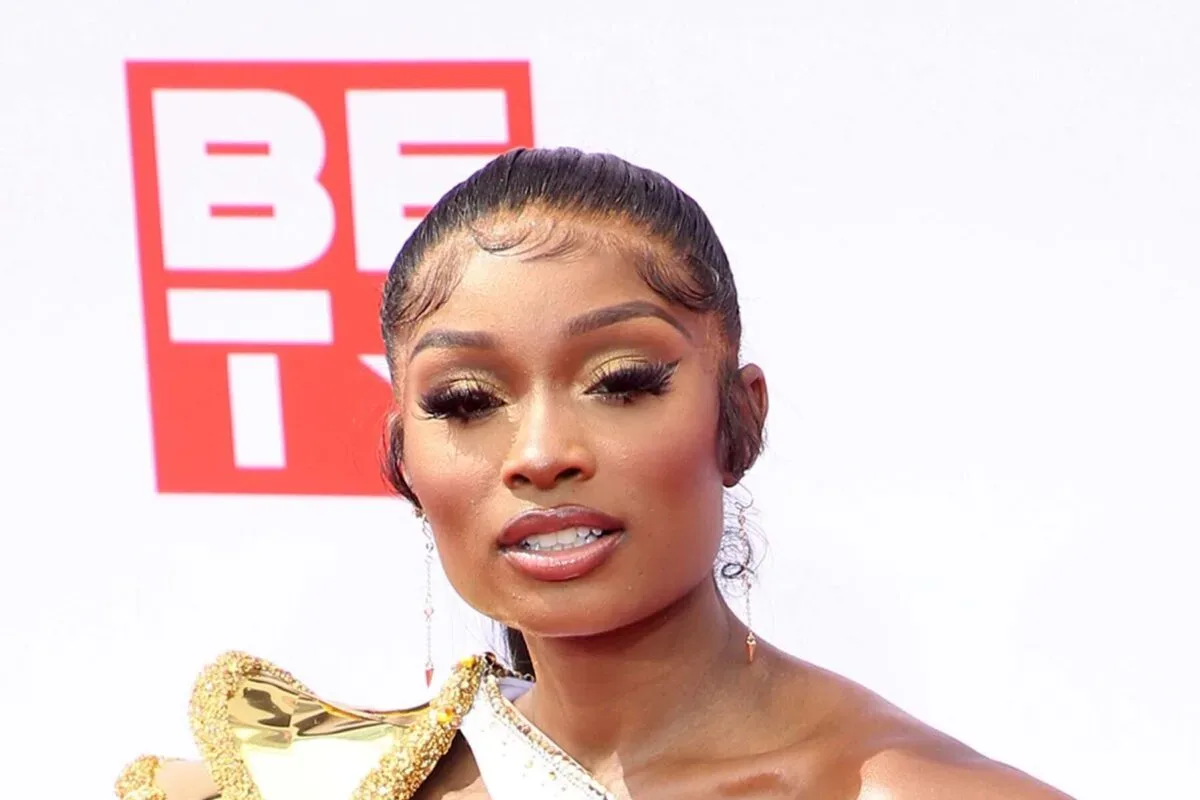
Armani Caesar says the public response to her pregnancy reveal included a dramatic social-media fallout: she estimates that she lost roughly 50,000 followers after sharing the news.
The Buffalo rapper discussed the reaction during an October 27 episode of Lip Service, describing a phone that “was going crazy” and comments that were “in shambles.” Her account is a stark illustration of how an artist’s online audience can respond when a public persona changes—or simply becomes more complete than the version some followers expected.
But Caesar’s comments were not limited to a follower count. She connected motherhood to a broader reassessment of her priorities, the example she wants to set for her daughter and the subject matter she wants to bring into her music. She also described burnout from maintaining a career across recording, touring and retail with a relatively small team.
A follower drop, and what Caesar says changed
Caesar characterized much of her social-media following as male, a detail that helps explain why she sees the reaction as part of a larger tension around image and audience expectations. Her public-facing identity has incorporated rap, fashion and entrepreneurship. Yet she said becoming a mother altered the values she wants her daughter to see reflected in her work and life.
Beauty and business ambition remain parts of Caesar’s identity, but she said she does not want those to be the only things her daughter recognizes as valuable. Integrity, in her view, belongs in that picture too. The result is not merely a private change in outlook: Caesar said she wants that growth to appear in her songs.
That distinction matters. An artist can acknowledge a personal transformation without making it a creative one. Caesar is signaling the opposite. She has described a coming project with more intimate material, including postpartum struggles and difficulties in her private life. Postpartum refers to the period after childbirth; in this context, Caesar is identifying it as a subject she intends to address in her music rather than keeping it outside her artistic output.
There are no released song titles, project date or track list attached to those remarks. What is clear is the intended shift in perspective: Caesar wants to write from circumstances that are more personal than a tightly managed public image can easily capture.
Online popularity is not the same as an artist’s entire audience
Caesar’s estimate of 50,000 lost followers is substantial, especially because artists use social platforms to communicate with listeners, promote releases and present their broader brand. Still, a follower count alone cannot explain who left, why they left, whether they were active listeners or what the longer-term impact will be.
It does, however, underline a practical reality of online celebrity. Followers may arrive for one facet of a performer’s image and react negatively when the person behind that image shares a major life development. Caesar’s response, as she described it, is not to preserve that older framework at all costs. Instead, she is placing greater importance on motherhood, integrity and artistic candor.
That is a meaningful contrast with the logic that often dominates social media, where visibility can encourage public figures to treat every personal decision as content calibrated for maximum approval. Caesar’s comments suggest that approval from every corner of a follower base is less important than aligning her work with the life she is living.
Her experience also frames the word brand in practical terms. A brand is often discussed as if it were a fixed image, but an artist’s career can span recording, live shows, style, business ownership and family life. Caesar’s situation shows how a brand can become restrictive if audiences only accept selected aspects of the person behind it.
Music, touring and Armani’s Closet
Caesar said managing music, touring and her boutique with a small team had pushed her toward burnout. Burnout is more than ordinary fatigue: it describes a state of sustained emotional and physical depletion associated with ongoing pressure and workload. In Caesar’s account, the strain comes from several demanding roles overlapping at once.
Her boutique, Armani’s Closet, did not emerge separately from her music profile. In a 2022 interview, Caesar explained that the business grew out of outfits and photographs she was already posting. Fashion was already part of how she presented herself publicly; turning that interest into a retail venture created a second business to oversee alongside her recording career.
At that time, she acknowledged that dividing her attention between the two was still a learning process and said she had added more help. Her more recent comments indicate that the balancing act has remained significant, particularly when combined with touring and motherhood.
For artists, diversification can create opportunity, but it can also multiply operational responsibilities. A boutique requires attention distinct from writing or recording music. Touring introduces its own schedule and travel demands. A small support structure can make every decision, delay and unexpected need feel more immediate. Caesar’s discussion of burnout places the glossy side of artist entrepreneurship beside its less visible management burden.
That context makes her proposed turn toward more personal writing especially notable. It is not presented as a change made in a vacuum. It comes after years of maintaining several professional lanes and after a public response that, by her estimate, removed tens of thousands of people from her social following.
From Buffalo to Griselda and major festival stages
Caesar signed with Griselda in 2020, becoming the label’s first female rapper. Westside Gunn welcomed her as a fellow Buffalo artist whose association with the crew stretched back more than a decade.
That signing preceded a busy period that included appearances at Coachella, Rolling Loud, Day N Vegas and Made in America. Caesar said those performances were also her first times attending those festivals at all. Rather than first experiencing the events as a fan, she arrived on their stages as a performer.
Those bookings are useful context for the workload she now describes. Festival performances are only one component of an artist’s career, but they sit alongside the recording, promotion and travel demands that can accumulate quickly. Caesar was also building her boutique and learning how to allocate her time across both businesses.
Her first Griselda-era album, The Liz, arrived in 2020. She followed it with The Liz 2 in 2022. The latter is a 17-track project featuring Westside Gunn, Benny The Butcher and Conway The Machine, as well as Kodak Black on “Diana.” Caesar initiated the Kodak Black collaboration herself by sending him a direct message.
That detail complements the picture of an artist working beyond a single lane. Caesar’s career has involved label affiliation, collaboration, touring, fashion and retail. Her recent comments add another layer: an intention to make room for vulnerability and personal reality in music shaped by all of those pressures.
What listeners can and cannot infer about the next project
Caesar has identified postpartum struggles and issues in her private life as subjects she plans to explore. That is enough to establish a more personal direction, but it is not enough to predict the sound, scope or release timing of the project. It would be premature to assume a full stylistic departure based solely on her comments.
What can reasonably be taken from her remarks is that motherhood has changed the standard she is applying to her own work. The goal is not just to be seen as attractive or successful in business; it is to represent values she considers important for her daughter, including integrity. That may influence lyrical themes, but Caesar has not laid out a detailed creative blueprint.
For fans, the immediate takeaway is less about a promised format than the perspective behind it. Her next material may provide an opportunity to hear an artist address the demands of parenthood, recovery after childbirth, personal strain and professional overload from inside her own writing.
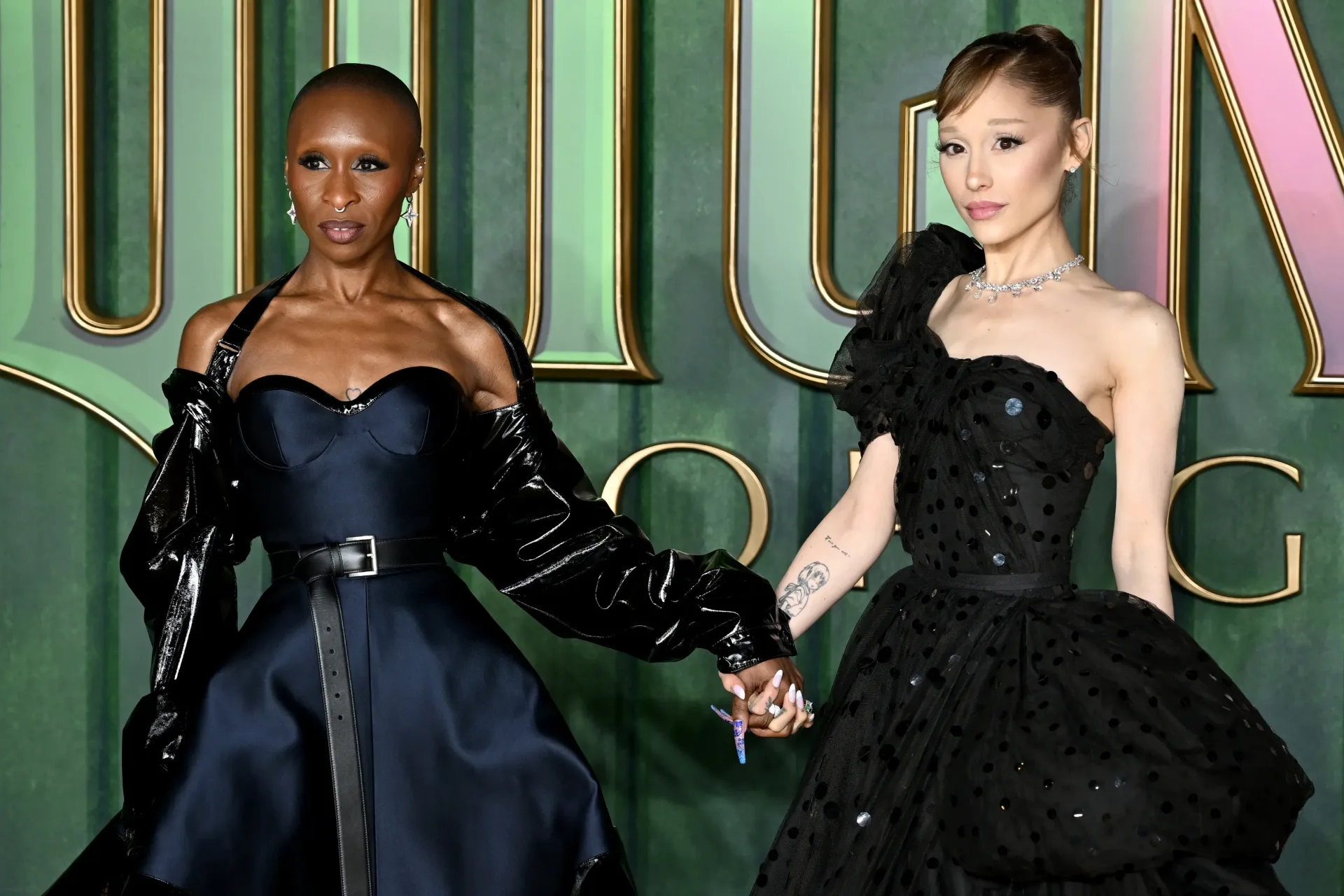
Caesar’s story also belongs to a wider pop-culture conversation about the public’s sense of entitlement to personal disclosure. Similar scrutiny has touched other entertainers navigating what audiences expect to see from their relationships and private lives, as explored in Cynthia Erivo’s response to attention around her friendship with Ariana Grande. The circumstances are different, but the common thread is the pressure placed on public figures when their real lives do not fit a simplified public narrative.
For Caesar, the reaction to her pregnancy announcement was painful enough to register in a major loss of followers. Yet her remarks point toward a decision not to shape her music solely around the audience that departed. Instead, she is describing an artistic evolution rooted in responsibility, exhaustion, family and a clearer sense of what she wants her daughter to inherit from her example.