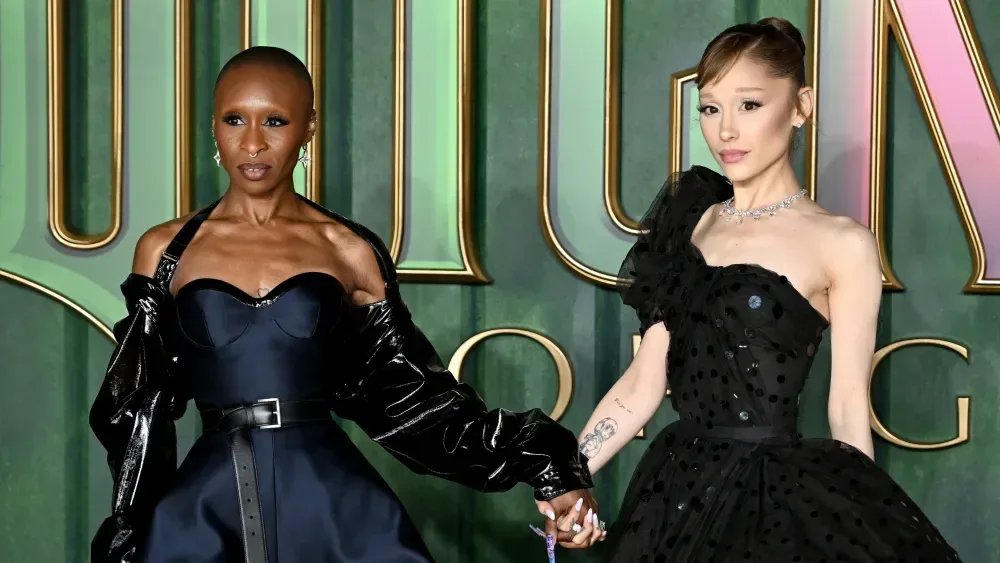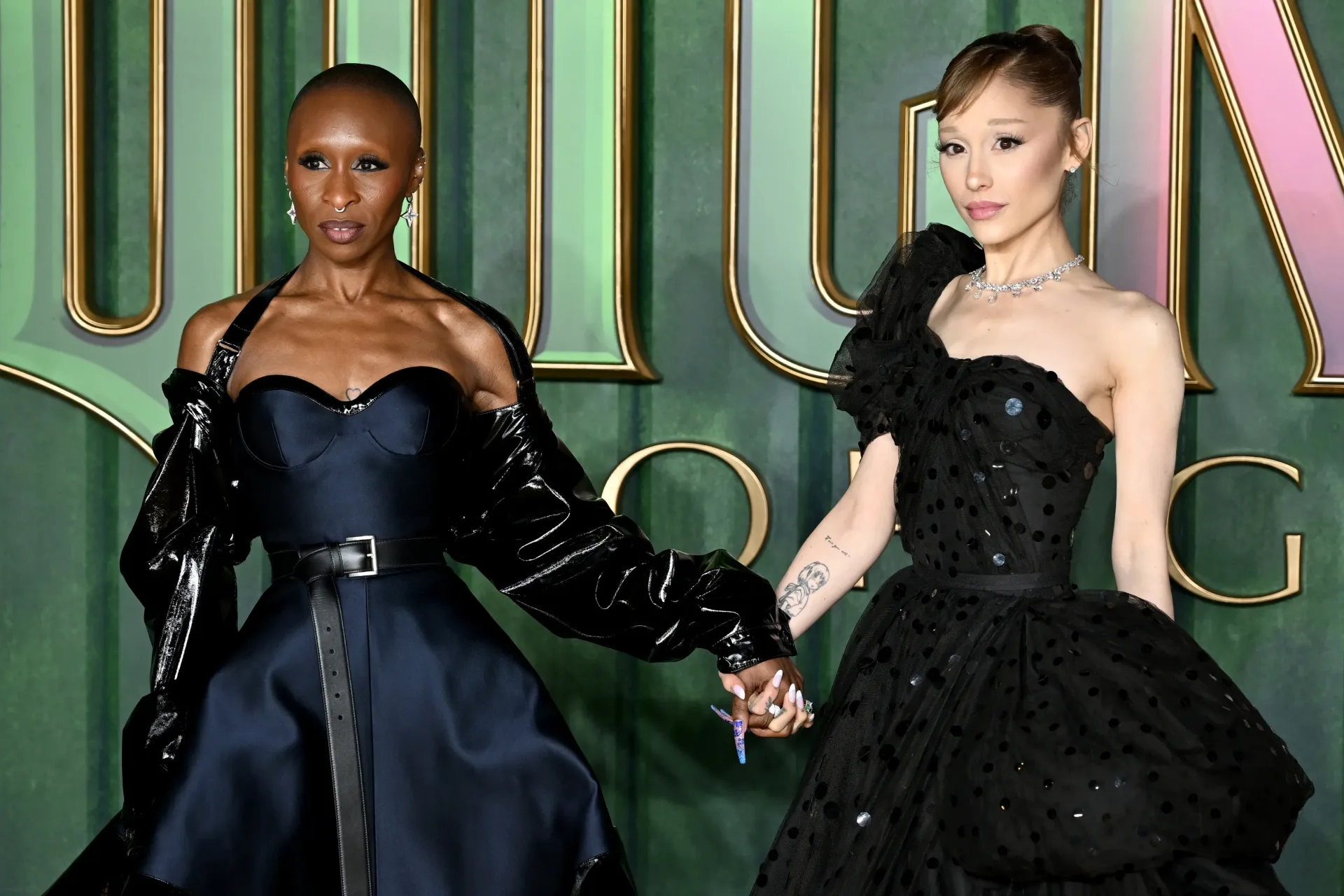
Cynthia Erivo has addressed the wave of online scrutiny surrounding her friendship with Ariana Grande during the promotional run for Wicked, arguing that ordinary expressions of connection were repeatedly treated as something to decode, doubt or ridicule.
Erivo plays Elphaba opposite Grande’s Glinda in Jon M. Chu’s film adaptation of the musical. As the two actors promoted the 2024 film and its sequel, clips of them embracing, crying, laughing and physically reassuring one another spread widely online. Their closeness became a recurring subject of commentary rather than simply a feature of a demanding, high-profile press tour.
In discussing that response while promoting the courtroom drama Prima Facie, Erivo said she was struck by the number of viewers who seemed eager to diagnose the relationship from afar. Her central objection was not that people noticed the friendship; it was the assumption that two women being visibly close must signal a problem.
“There was this weird sort of… annoyance… at the fact that two women could actually be friends,” Erivo said. “Like, why are they friends? Why are they connected? There must be something wrong with them.”
When a press-tour moment becomes a permanent clip
Movie promotion now unfolds in an environment where short interview fragments can quickly become the entire conversation. A gesture can be replayed apart from the original question. An emotional answer can be converted into a reaction image. A supportive interaction can be assigned a narrative that neither participant intended.
That is particularly relevant to the moments that became attached to Erivo and Grande’s Wicked campaign. The pair’s hugs and tears were widely circulated, as was a moment in which they held one another’s index fingers while discussing the film. The latter was often referred to online as “holding space,” a phrase that became a major meme during the rollout.
The details may be small, but Erivo’s comments frame the larger issue plainly: online audiences often demand access to public figures’ emotions while also policing how those emotions are shown. In her view, the criticism created an impossible standard. If she and Grande were openly moved, they faced mockery and suspicion. If they had appeared distant or uninterested, that too would have invited commentary.
“It’s a double-edged sword,” Erivo said, adding that a lack of visible emotion would likely have produced a different kind of criticism.
Related coverage includes Cynthia Erivo Addresses Scrutiny of Her Ariana Grande Friendship.
That dynamic is worth separating from a simple disagreement over whether any one viral clip is amusing. Public figures will always be discussed, and a campaign for a major musical naturally places its stars under an enormous spotlight. Erivo’s point is about the escalation beyond observation: warmth between colleagues was repeatedly recast as evidence demanding amateur psychological analysis.
Erivo’s question: why was friendship itself suspect?
Erivo’s response focuses on a basic premise that can get lost in meme cycles. Co-stars can form genuine friendships. A press tour can be emotionally intense. And artists who have spent substantial time with material and one another can react to that experience openly without their behavior becoming inherently suspicious.
That does not require viewers to experience every interview moment in the same way. Some people may find an especially earnest exchange unfamiliar, overly formal or simply not to their taste. But there is a difference between recognizing that reaction and insisting that an unfamiliar form of emotional expression must be fake, unhealthy or strategically calculated.
Erivo challenged the premise that there is one correct way to appear in public. She described the implied demand as though someone should prescribe exactly how much emotion is acceptable to show. Her phrasing captures the contradiction: laugh and cry too much, and people object; show too little, and people may call the stars detached.
For audiences, it is a useful reminder that edited viral material is not a complete account of a relationship. It presents a slice of a conversation, a press appearance or an event. The certainty with which online observers can attach motives to that slice is often far larger than the evidence in the clip itself.
The Singapore red-carpet incident and the “bodyguard” label
Erivo also revisited a far more serious moment from the Wicked promotional circuit: an incident on a red carpet in Singapore in which a man grabbed Grande. Erivo moved immediately in response. She described the moment as terrifying and said her immediate thought was to get the man away from them.
Afterward, some online commentary began calling Erivo Grande’s “bodyguard.” Erivo said she was uncomfortable with that framing, explaining that she understood it as rooted in misogyny and misogynoir.
Misogyny refers to prejudice, hostility or entrenched contempt directed at women. Misogynoir is a term for the particular intersection of anti-Black racism and misogyny experienced by Black women. Erivo’s use of the word matters because she is not merely objecting to a nickname. She is pointing to the assumptions that can shape who is imagined as protective, threatening, emotional or physically imposing—and how quickly a normal, protective response is assigned a role rather than understood as friendship.
Her description of the incident is direct: she saw someone grab her friend and reacted. That need not be treated as proof of a standing arrangement or a character type. As Erivo put it, the action was one she would take for any friend, and one she would hope a friend would take for her.
The distinction is especially important because the label can appear complimentary on the surface. It may suggest competence or loyalty. Yet Erivo’s objection addresses what it can erase: her own personhood, the danger of the moment and the ordinary humanity of stepping in when somebody nearby is frightened or being touched without consent.
What the reaction says about celebrity commentary
Erivo and Grande’s press-tour visibility is part of the job of launching a major film, but publicity does not make every spontaneous response available for unlimited interpretation. The public can see an interaction; it cannot automatically know the full friendship, each person’s intentions or the emotional context that preceded a camera-ready moment.
There is also a practical lesson in how to engage with viral culture. Before sharing a clip with a diagnosis attached, viewers can ask a few simple questions:
- Is the clip showing enough context to support the claim being made?
- Am I treating visible emotion as evidence of performance simply because it is intense?
- Would I read the same behavior differently if the people involved looked different or were of a different gender?
- Am I making a joke about a real safety incident rather than acknowledging what occurred?
Those questions do not prohibit criticism, humor or discussion. They set a more reasonable threshold before commentary turns into certainty about strangers’ private lives. They also make space for a point Erivo stressed throughout her remarks: being emotionally present is not, by itself, a fault.
Wicked put Erivo and Grande at the center of a highly visible cultural moment, and their press appearances clearly became part of that story. Erivo’s comments do not ask the public to ignore what it sees. They ask why empathy, affection and friendship appeared to provoke so much irritation in the first place.
For more on how public relationships and celebrity moments travel through contemporary entertainment culture, see our coverage of Selena Gomez and Demi Lovato’s Rare Beauty collaboration.