MagicX is adding another intriguing sketch to the increasingly crowded wall of retro handheld concepts. The company has revealed the Pocket Dream, a vertical-format device still in its design phase and positioned as an evolution of the previously shown Mini Dream. It is not a finished product, a release date has not been provided, and many of the important details remain unresolved. Still, the early specifications and successive design mock-ups offer a useful look at what MagicX is trying to build: a compact emulation machine shaped for quick sessions rather than sprawling sofa marathons.
The Pocket Dream’s central idea is immediately familiar. Its upright layout deliberately calls back to landmark portable systems such as Nintendo’s Game Boy and Bandai’s WonderSwan, while its proposed feature set belongs firmly to the modern handheld-emulation market. MagicX is pitching the design as better suited to one-handed use, commuting, short bursts of play and quick pick-up-and-play moments. That is an ambitious ergonomic target for a device carrying a D-pad, face buttons and two analog sticks, but it explains why the vertical silhouette matters more here than simple nostalgia.
A Mini Dream offshoot, not a replacement
The Pocket Dream is described as an evolution of the Mini Dream, rather than evidence that the earlier device has been abandoned. MagicX has indicated that the Mini Dream is still planned. At this stage, the Pocket Dream appears to share much of that project’s technical direction while swapping its physical format for something taller and narrower.
MagicX has been moving quickly through the affordable retro-handheld space. Its existing efforts include a single-screen DS-style handheld and the One 35, a device notable for having two D-pads. That willingness to try less conventional control arrangements helps make the Pocket Dream easier to read as a genuine experiment rather than a routine rectangular handheld in a new shell.
The company’s preliminary Pocket Dream outline lists the following:
- Dimensions: 107 × 72 × 22 mm
- Display: 3.3-inch OLED
- Chip options: the same four SoC variants proposed for Mini Dream, spanning Linux and Android models
- Battery: 3,500mAh
One cited configuration uses a Rockchip RK3566 for the Linux version. The broader mention of four system-on-chip variants means buyers should not treat the RK3566 as a confirmed specification for every eventual Pocket Dream. It also means performance, software support and platform compatibility could vary considerably depending on which model, if any, reaches production.
A 3.3-inch OLED screen is the clearest promise so far
Among the early details, the 3.3-inch OLED panel may be the Pocket Dream’s most concrete attraction. OLED is a meaningful word in this class because screen quality can do as much for older games as raw processing muscle. Strong contrast, deep blacks and vivid color can flatter pixel art, menu interfaces and arcade classics alike. On a small vertical machine, though, the size and aspect ratio will matter just as much as the panel technology.
A vertical screen naturally suits systems and games designed around a taller playfield, as well as classic handheld libraries. Widescreen content, meanwhile, may require borders, cropping, scaling compromises or a smaller active image. The Pocket Dream’s appeal will therefore depend on the type of retro library a player wants to carry. It is not automatically the universal answer to every emulation use case, and it is not trying to look like one.
Related coverage includes MagicX Teases Pocket Dream, a Vertical Retro Handheld With OLED Ambitions.
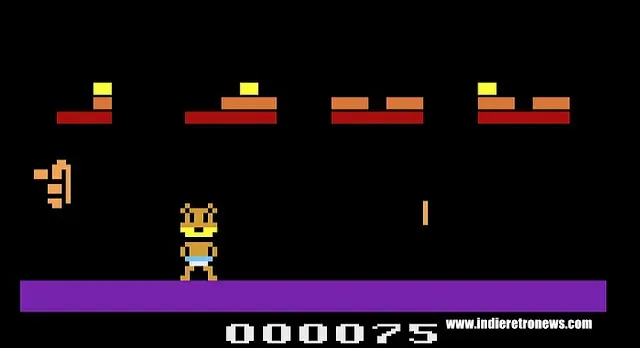
There is also a nice thematic fit in a pocketable vertical screen at a time when retro hardware continues to inspire new releases. The appeal of original platforms has hardly disappeared; projects such as a recent Atari 2600 release built around an acid-rain cash dash underline why old games and old formats remain part of an active gaming conversation. Emulation handhelds sit beside that enthusiasm, offering another way to organize and revisit a personal collection of compatible software.
Two layouts show MagicX is still listening
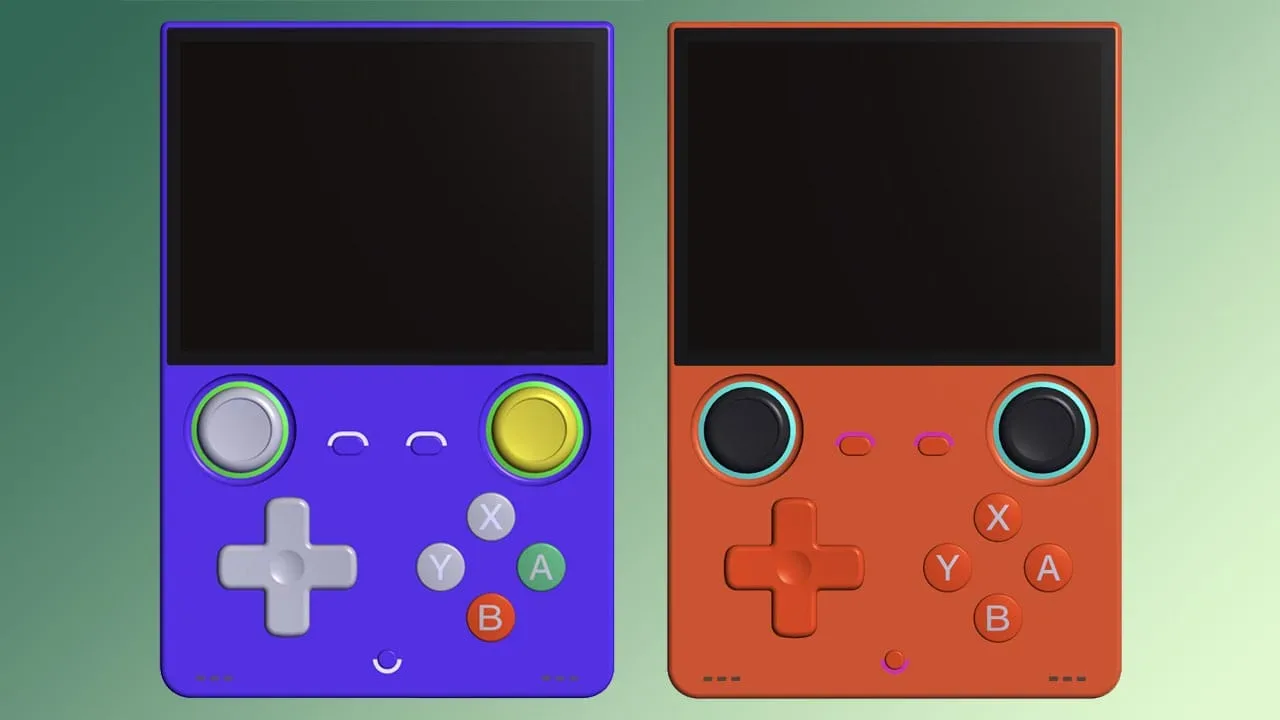
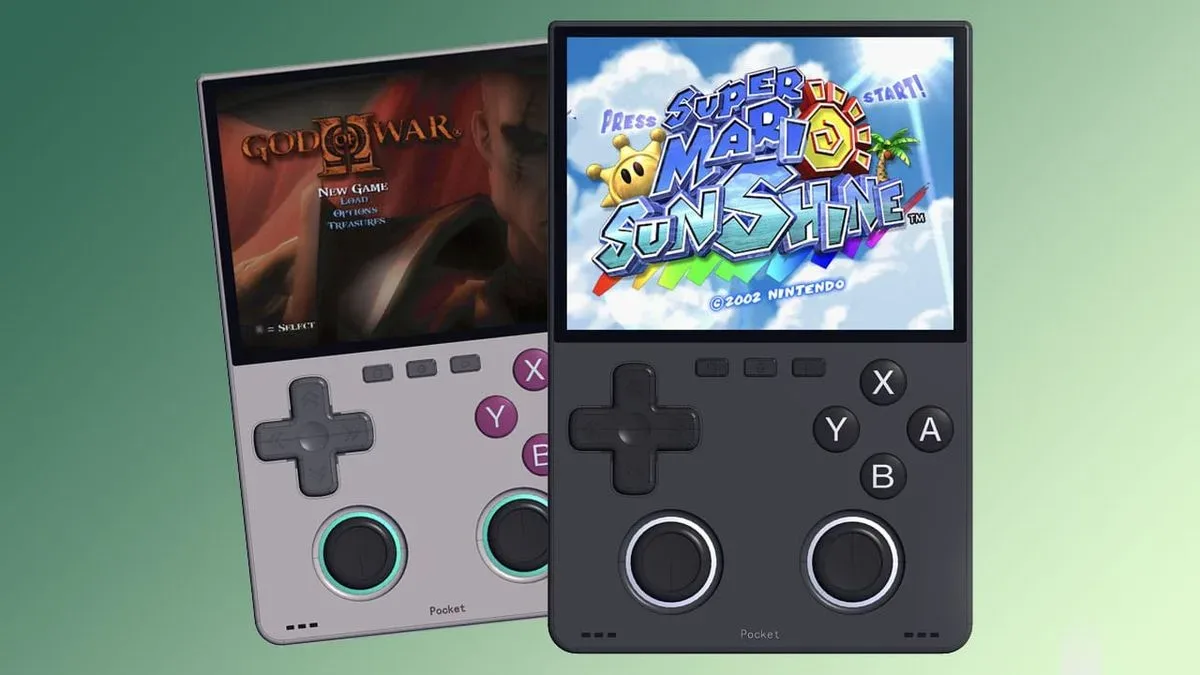
The Pocket Dream has already appeared in at least two distinct front-layout concepts. The first placed both analog sticks below the display, with the D-pad and standard face buttons positioned farther down the body. A small illuminated element near the lower edge gave the device a face-like look and invited comparisons to the Powkiddy RGB20S. Its color treatment also brought a distinctly GameCube-flavored energy, particularly in the more playful multi-color options shown in promotional material.
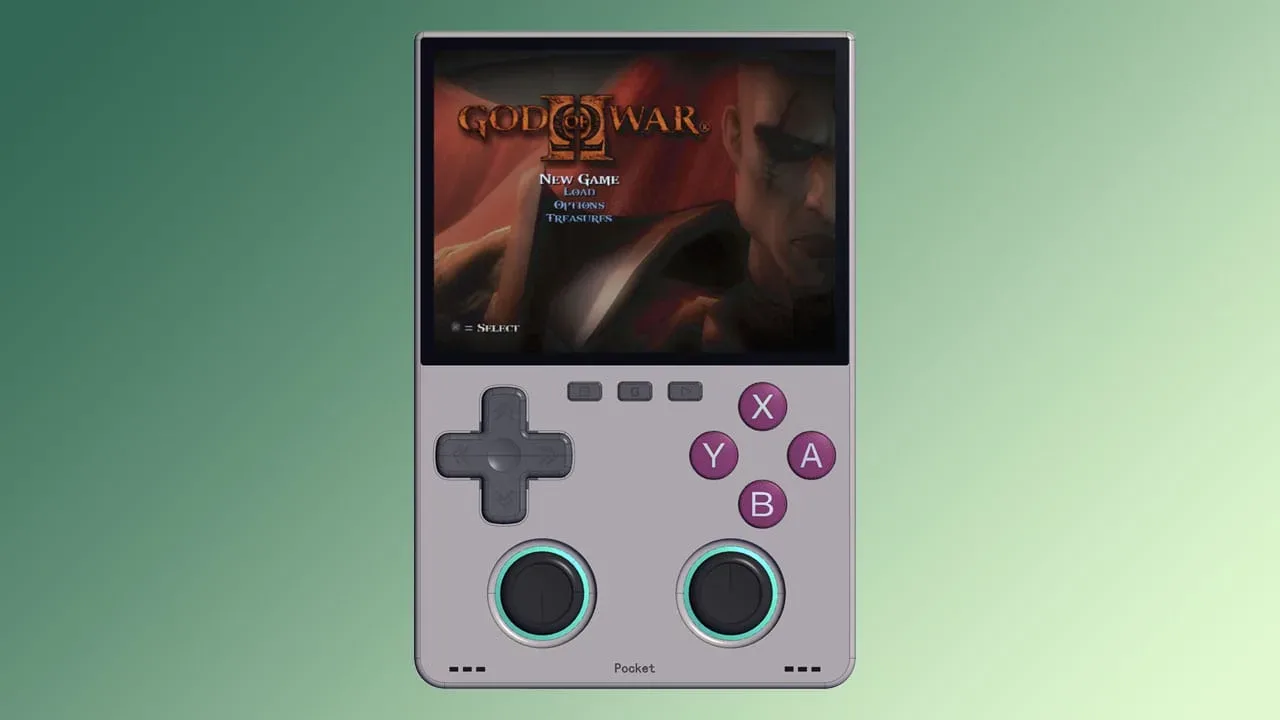
After community feedback, MagicX rearranged the controls. The revised concept moves the analog sticks and D-pad into different positions, while relocating the previously low-mounted button or light element upward. The result has a cleaner, more composed appearance and resembles the general vertical-handheld direction associated with the Trimui Brick.
Neither arrangement can be judged properly from a render. That caveat is especially important with vertical devices. The question is not just whether the buttons fit on the front shell, but whether thumbs can comfortably reach them without forcing the hands into awkward positions. Analog sticks at the bottom may keep a screen visually uncluttered, yet they can be less natural to access during longer sessions. Conversely, raising controls may improve reach while making the machine feel more crowded.
MagicX’s one-handed-play pitch adds a further complication. A one-handed grip can make sense for menu navigation, simple games or short interruptions on public transport. But a game that needs the D-pad or analog stick plus face buttons will still ask a great deal of a single hand. The Pocket Dream could be convenient for occasional inputs without being universally practical as a true one-handed gaming device. That distinction will matter when a real unit exists.
GameCube and PS2 imagery should be treated as a claim, not a guarantee
The more attention-grabbing part of the Pocket Dream tease is the performance implication. New promotional images use Super Mario Sunshine and God of War II, signaling a claimed goal of GameCube and PlayStation 2 emulation. Those platforms are a major step above the older systems that many inexpensive Linux handhelds handle comfortably, and performance is rarely a simple yes-or-no matter.
Even when a handheld can boot a GameCube or PS2 title, results may differ game by game. Speed, graphical settings, emulator maturity, resolution, heat management and the specific processor all affect the experience. The Pocket Dream’s multiple proposed SoC variants make the uncertainty even larger. A promotional image is not the same as a compatibility list, sustained gameplay demonstration or a guarantee that every title for those libraries will run well.
The sub-$100 territory discussed around the project is also not confirmed pricing. MagicX has not supplied a price for the Pocket Dream. Affordable PS2-capable handhelds are not impossible in principle—the Mangmi Air X has been cited as achieving PS2 emulation below $100 with a Qualcomm Snapdragon 662—but that hardware comparison does not establish what a Rockchip-based Pocket Dream can do. Different chips, operating systems, cooling decisions and emulator configurations can lead to dramatically different outcomes.
For prospective buyers, the sensible approach is to separate the Pocket Dream’s current promises into three piles:
- Early hardware direction: a compact 107 × 72 × 22 mm vertical body, 3.3-inch OLED display and 3,500mAh battery are the stated targets.
- Design experimentation: the control placement and cosmetic details are visibly evolving, so the pictured shell may not be final.
- Performance ambition: GameCube and PS2 imagery communicates a goal, but it does not yet demonstrate broad, reliable compatibility.
Why the Pocket Dream could still find an audience
There is room for a device like this if MagicX can land the basics. The handheld market is full of horizontal systems that borrow the proportions of console controllers. A smaller vertical unit can feel meaningfully different: easier to slip into a bag, more reminiscent of classic portables and potentially better suited to games intended for brief sessions. The OLED screen and dual-stick concept also suggest MagicX wants more flexibility than a strictly Game Boy-like recreation provides.
At the same time, the Pocket Dream has several hurdles to clear before it can be recommended over established alternatives. Its final chipset lineup needs to be explained clearly. The quality of its controls, display implementation, firmware and build materials cannot be inferred from early art. Battery capacity alone says little without real power-draw information. And the claimed upper ceiling of GameCube and PS2 needs to be demonstrated across games rather than represented by two famous box-art-friendly examples.
For now, Pocket Dream is best understood as a promising concept with an appealing premise: a modern, OLED-equipped vertical handheld that tries to balance retro charm, portability and more ambitious emulation aspirations. MagicX has shown that it is willing to revise the physical layout before launch, which is encouraging. The next useful update needs to answer the practical questions—final controls, final processors, software, price and actual performance—before this dream can be treated as a handheld reality.