Saving a video game is not as simple as putting its files somewhere safe. For a player, preservation means a much more practical promise: that a game bought today can still be installed, launched and understood years from now, even if a storefront changes, a launcher disappears or a publisher reorganizes its catalogue.
That promise is central to GOG’s approach to older PC games. The store has expanded far beyond the “Good Old Games” name it began with, but its core preservation argument remains unusually direct: each game sold there includes a standalone installer that can be downloaded and backed up without requiring a continuing connection to an online server. Its launcher provides familiar conveniences such as cloud saves and automatic updates, but the offline installer remains the important part of the equation.
For preservation-minded players, that distinction matters more than a slick library interface. It shifts the focus from temporary access mediated by a service to a copy a customer can retain. It does not make the difficult legal work of preserving games vanish, nor does it settle every question around ownership of digital software. It does, however, give players a usable fallback if they want to keep their own archival copy.
Why DRM changes the preservation conversation
Digital rights management, or DRM, is technology intended to control access to software and deter unauthorized copying. It can take many forms. Some protections are so integrated into a game platform that many users may barely notice them; others are far more visible and controversial. The shared issue is dependency: a DRM system can place a launcher, authorization check or server between a legitimate owner and the game they paid for.
Marcin Paczynski, GOG’s senior business development and partnerships manager, puts the company’s position in blunt terms: “There is no game preservation with DRM.” That statement expresses an ideal rather than a claim that every protected game immediately becomes inaccessible. Plenty of DRM-protected releases remain playable. The preservation concern is what happens when the systems validating access are no longer maintained, or when a player’s ability to reinstall relies on infrastructure they do not control.
GOG launched in 2008, at a time when many PC players saw DRM as an unwelcome obstacle rather than a background technical detail. Its continued use of downloadable offline installers is therefore not merely branding. A person can store an installer locally and use it without relying on an online server, creating a degree of independence that is increasingly relevant as players question how durable their digital libraries really are.
The renewed public attention around campaigns such as Stop Killing Games has made that practical distinction more visible. Paczynski says GOG noticed increased interest in offline installer downloads as the movement gained traction. That is a useful signal: preservation is not only about institutions, researchers or collectors. It is also about ordinary players deciding whether a game can remain playable on their own terms.
There is a limit to what an installer alone solves. Games can have complicated rights situations, missing materials and technical problems on newer systems. Yet a DRM-free copy avoids adding an access-check dependency to that list. In preservation terms, it is one fewer moving part between the software and the person trying to run it.
Related coverage includes GOG's Preservation Mission: DRM-Free Classics, Lost Extras, and Licensing Labyrinths.
Compatibility work needs restraint, not nostalgia goggles
Preservation is often mistakenly framed as a choice between untouched originals and radical remakes. In reality, bringing an old PC game to a current audience can require careful compatibility work, visual adjustments or quality-of-life features. The hard question is not whether a game should ever be changed. It is whether a change keeps its character intact.
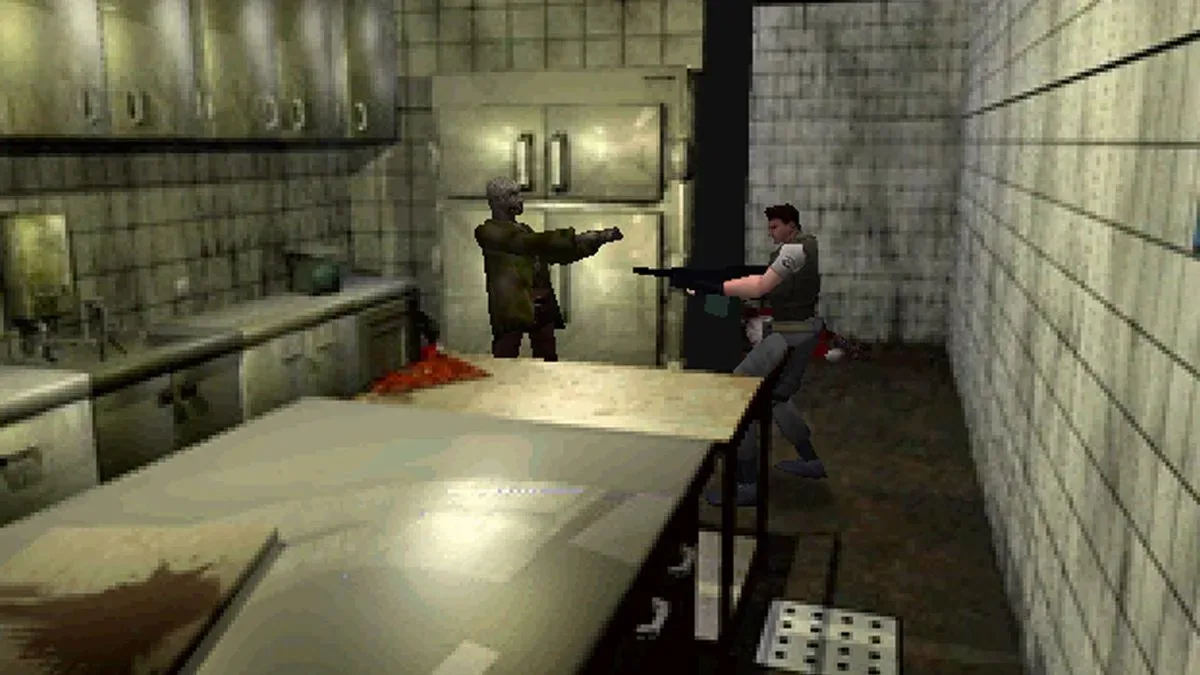
GOG’s technical producer Adam Ziółkowski described that judgment call through the release of Resident Evil. The team considered replacing its traditional tank controls with a modern control arrangement, but did not do so. Tank controls can feel cumbersome to newcomers: movement is tied to the character’s facing direction rather than simply following the direction pressed on the controller. But in this case, controls are not a detachable inconvenience. They are entwined with the game’s pacing, navigation and difficulty.
Changing that system would have meant substantially rewriting the game, Ziółkowski explained, because so much of the original design is built around it. Keeping the classic scheme was therefore a preservation decision. It recognized that friction can sometimes be part of a work’s structure, not evidence that the work has been neglected.
That does not mean every original limitation deserves ceremonial protection. Thief Gold offers the opposite example. GOG was approached by a modder who had created full controller support, including a radial menu for selecting inventory. A radial menu is a circular selection interface that lets a player choose items by moving toward a segment of a wheel. In a game where stealth, awareness and atmosphere are crucial, the test was whether that addition disrupted immersion or the established gameplay loop. GOG concluded it did not and incorporated the support.
The contrast is instructive. One update would have altered a foundational design relationship, while the other made interaction more accessible without overturning the game’s identity. This is not a formula that can be applied automatically across every old release. It is an editorial and technical decision made title by title.
That nuance matters because “preserved” should not automatically mean “frozen in every accidental inconvenience,” just as “modernized” should not automatically mean “better.” A responsible re-release has to ask what players are actually being asked to experience: the game’s intentional systems, or merely the barriers created by obsolete hardware assumptions.
The game is only part of the artifact
Classic PC games were often sold with more than a disc or set of disks. Manuals, maps, lore guides and other boxed extras—frequently called feelies—could be part of how a player learned a game’s world or even solved its puzzles. GOG distributes digitally, but it tries to include digital versions of that surrounding material where possible.
That work is less straightforward than it sounds. Paczynski says that, for many older games signed to the service, a publisher has provided little beyond the title itself. GOG then has to locate the game materials independently. Staff collections can help, and items not held internally may be sought through marketplaces such as Amazon or eBay. In some cases, the company has paid significant sums for an item because digitizing it was important to completing the release.
Manuals in alternate languages make the challenge still clearer. A version distributed in one region may be difficult to find elsewhere, and community assistance can be valuable in locating it. Yet finding a document does not automatically grant the right to distribute it. Paczynski notes that legal constraints can prevent some otherwise appealing additions from being included.
This is an important correction to the idea that preservation means simply locating a usable copy online. A legal commercial release requires rights clearance; a coherent archival package may require artwork, documentation and other materials that no longer sit neatly in a publisher archive. The code can survive while much of the context around it goes missing.
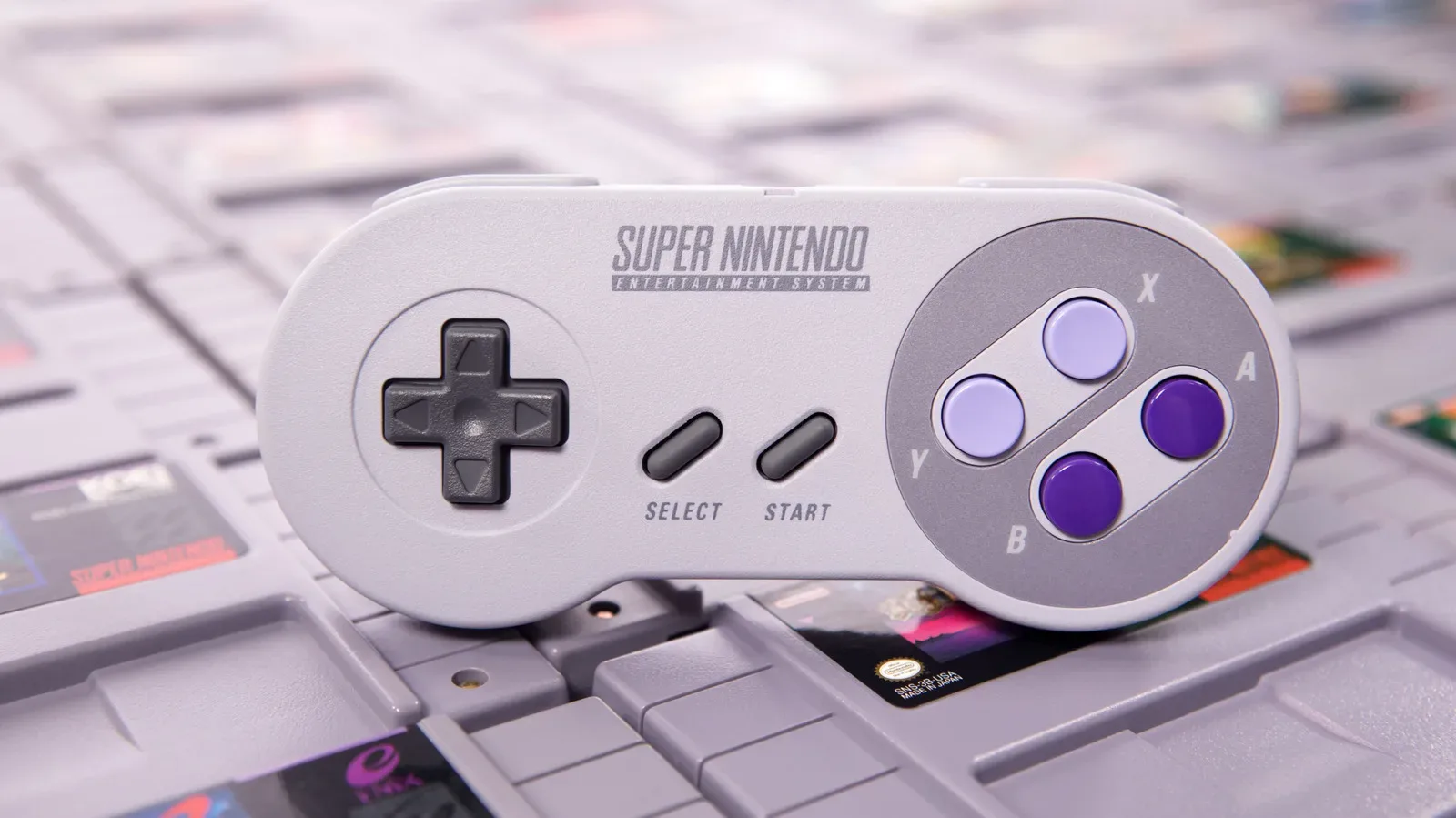
The physical side of video-game history remains relevant here, even for a digital storefront. Maps and manuals are evidence of how older games were presented and played. That connection also helps explain why original boxed software still has appeal for collectors, a topic reflected in the continuing market for original SNES games. But digital preservation can make at least some of those materials broadly available without requiring every player to obtain a scarce physical copy.
A physical-release dream meets a real-world rights problem
GOG’s current distribution is fully digital, though Paczynski has described an aspirational model in which customers could select a game from their GOG shelf and order a physical edition. It is an appealing thought: a legitimate digital library paired with an optional shelf-ready copy.
For now, it remains a hope rather than a product plan. Physical editions involve manufacturing and fulfillment, but the bigger obstacle can be licensing. Rights that permit a digital version do not necessarily cover every physical component or territory. Once maps, manuals, art and other extras enter the picture, the number of permissions required can grow quickly.
That complexity also undercuts a common assumption that an old game is easy to restore if a major company owns the original developer. Paczynski used Westwood Studios’ Dune games as an example. Electronic Arts acquired Westwood and has the game code, assets and associated materials, but that is not the same as owning every right needed for a new release. The games were connected to the 1984 film rather than directly to the books, bringing Universal Pictures and producer Dino De Laurentiis’ rights interests into the wider chain. De Laurentiis has since died, adding another layer to a rights situation already spread among several parties.
In other words, possession of the executable does not settle the matter. Intellectual property rights can be divided among game code, characters, brands, film adaptations, music, artwork and distribution agreements. A legal release has to account for whichever rights apply, and an older deal may not have anticipated modern digital distribution at all.
Ziółkowski’s interest in bringing the Amiga puzzle-platformer Fury of the Furries to GOG illustrates another variation. The game’s rights were acquired by Namco, which later repurposed it as the Pac-Man-themed Pac-In-Time. Even a comparatively obscure favorite can thus become tangled with a larger company’s catalogue and a later reworking.
Preservation needs a business case
There is a romantic version of preservation in which every lost classic is simply rescued because it deserves to exist. The practical version needs money, staff time and legal work. Paczynski is candid that GOG remains a business and that sales matter. If a title can support the expense of licensing, technical preparation and supplementary materials, it is easier to make the case to bring it back.
That commercial dimension is not a betrayal of preservation. It is one way preservation becomes repeatable instead of occasional. GOG also operates its Patrons program, a $5 monthly subscription intended to support its preservation initiatives. Subscribers receive benefits including behind-the-scenes material and a degree of input on the games the team prioritizes, but the model is also close to a direct contribution toward work that may not map cleanly onto immediate sales. More than 10,000 people have signed up.
There is an unavoidable tension with piracy. Paczynski acknowledges that many old games are already obtainable online for free, including titles whose licences have become difficult or impossible to trace. But unofficial availability does not replace a maintained, legal edition with installers, compatibility work and documented extras. Nor does it pay for the painstaking work needed to create one.
The challenge, as Paczynski describes it, is scale. A strong business case can make it possible to revive almost any individual game; the industry contains far more games than can be processed one complicated negotiation at a time. That is why player support for official re-releases has consequences beyond convenience. It helps prove that old software has a viable audience and that preserving it can be more than a one-off rescue mission.
GOG’s model will not dissolve every licensing maze or preserve every title before its materials disappear. Its significance lies in treating the problem as both technical and cultural: keep the game runnable without a server, preserve the supporting documents when legally possible, improve access cautiously, and recognize that rights holders need a reason to cooperate. It is a less glamorous process than a surprise remake announcement, but it is the kind of work that gives older games a credible route into the future.