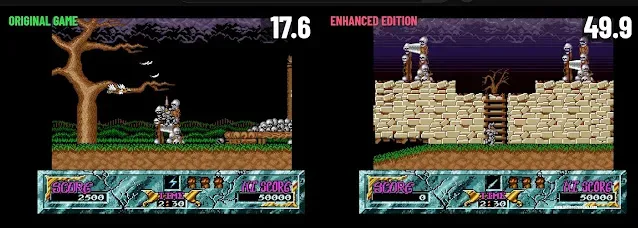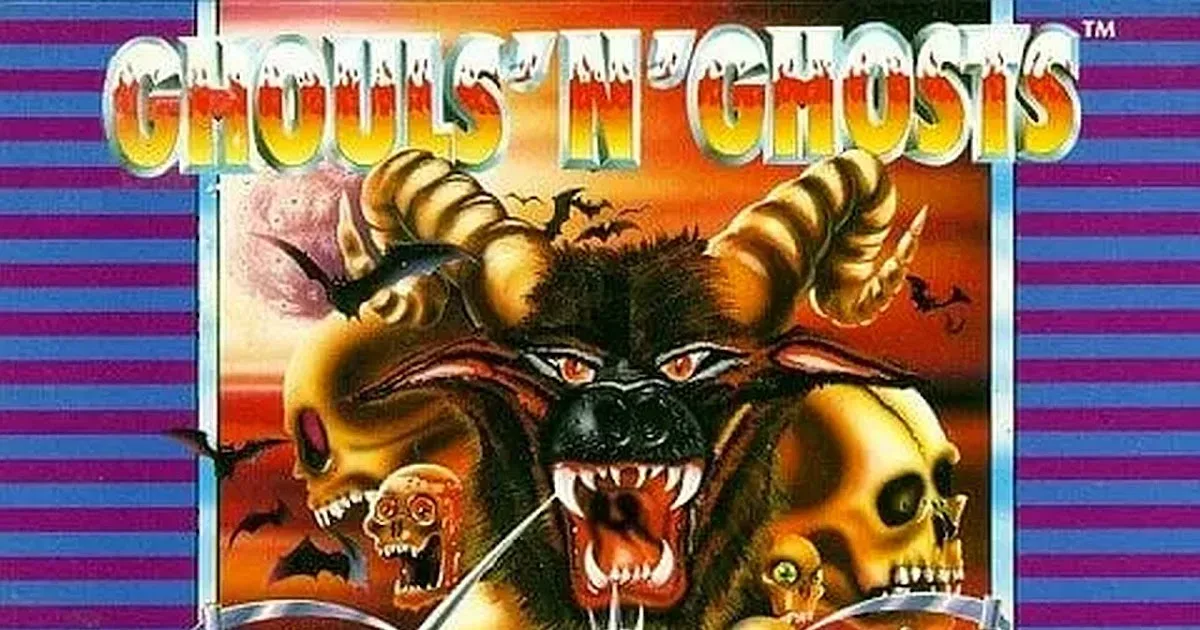
The 1989 Commodore Amiga edition of Ghouls ’n Ghosts is the target of a technical enhancement project from Modern Vintage Gamer, one designed to make much better use of the machine without changing the game underneath. The headline improvements are visual and performance-oriented: vibrant copper skies, more colour, an optimized renderer, 50 Hz scrolling, smoother object movement and a version of Arthur built around hardware sprites.
That is an important distinction for a game with a committed retro audience. This is not described as a redesign of Capcom’s arcade classic, a new level set, or a rewrite intended to alter its challenge. The project retains the original core game logic at its native speed. In practical terms, it aims to preserve the way the Amiga port plays while changing how convincingly the hardware presents that action on screen.
An Amiga port with room to stretch
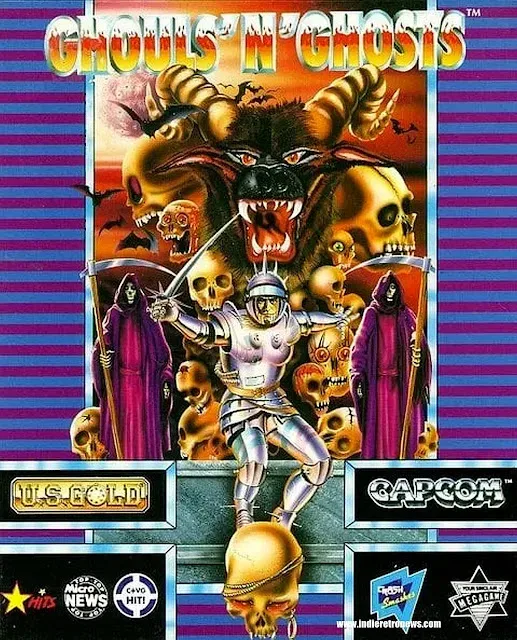
The original Amiga conversion was developed by Software Creations and published by U.S. Gold. It was a respectable effort for its period, but it did not take advantage of the Amiga’s custom hardware. That limitation sits at the centre of the enhancement work.
Ports from the era often had to balance a platform’s strengths against development time, technical approaches and the task of bringing an arcade game to very different home hardware. Here, the opportunity is not simply to add decorative shine. It is to shift work toward capabilities the Amiga was specifically built to handle, with the intended result being a more fluid image during one of gaming’s most relentlessly hostile action platformers.
Ghouls ’n Ghosts gives its hero very little room for error. Arthur moves through dangerous stages while enemies, projectiles and large on-screen threats demand quick responses. In a game built around momentum and precise visual reading, smoother scrolling and object motion can matter beyond surface-level presentation. They can make movement through the world easier to follow, even when the underlying game rules remain exactly as they were.
What the new technical terms mean
50 Hz scrolling
Scrolling is the movement of the background as a player travels through a stage. The project promises silky-smooth 50 Hz scrolling, meaning the display update is being presented at 50 cycles per second. For side-scrolling action, that can make the landscape appear to travel more continuously instead of stepping forward in visibly coarser increments.
The point is not that smoother scrolling makes the game easier or changes Arthur’s abilities. The stated plan is to leave the logic and native speed alone. Rather, it is an attempt to make the visual layer keep up with the action in a way that feels more natural to the Amiga hardware.
Hardware sprites
A sprite is a movable graphic: in this case, Arthur is the key example. A hardware sprite uses dedicated graphics support instead of asking the main rendering process to draw every part of that character in the same way as the background. The enhancement gives Arthur a hardware-sprite-based implementation, which contributes to the stated goal of more fluid movement.
Related coverage includes Ghouls 'n Ghosts Enhanced Project Gives Amiga Port a Major Technical Upgrade.
For players, the most useful way to think about this is simple: the character on screen can benefit from the computer’s specialized display tools. It is a technical choice with an immediately visible purpose, rather than a change to Arthur’s controls, animation design or gameplay behavior.
Copper skies and colour
The project also introduces copper skies and an added splash of colour. “Copper” refers to an Amiga display-hardware feature that can help vary visual presentation across the screen. In this enhancement, its use is associated with richer skies, helping give the stages a more vibrant backdrop.
That matters because a port’s identity is not just its enemy placement or level structure. Colour, background treatment and screen motion strongly shape whether a version feels lively, oppressive, clear or flat. The project’s visual changes are therefore substantial in appearance, while its preservation of original game logic makes the approach conservative where play is concerned.
Faithfulness has a limit: busy scenes can still slow down
The enhancement is not presented as a magic cure for every difficult rendering situation. Performance dips can still occur when the display is crowded with multiple large enemies. That caveat is worth keeping front and centre, especially for anyone expecting every scenario to run identically smoothly.
It also makes the project’s goal clearer. The work seeks a major hardware-driven improvement in scrolling, movement and presentation, not a claim that the original game has been transformed into an entirely different technical build. Retaining the core logic at native speed preserves the port’s original behavior, while the remaining slowdowns acknowledge the demands of particularly crowded encounters.
For retro players, this combination may be the appealing part. A revision that aggressively changes responsiveness, timings or challenge can become a different version of a beloved game. An enhancement that keeps those foundations intact while improving the visual delivery offers another kind of preservation: it lets an old port remain itself, but makes a stronger case for what it could have looked like with deeper use of the host system.
Code archaeology is part of the story
Development has also uncovered long-hidden secrets in the original game code. No specific discoveries have been detailed here, so it would be premature to turn that tease into claims about unused content or restored features. Still, the finding underlines one of the most intriguing side effects of revisiting old software at a technical level.
Enhancement work is often a form of code archaeology. To optimize rendering while preserving game logic, a developer has to understand how an existing program is structured and where its behavior is established. That close examination can expose details that were buried for decades, whether or not they ultimately become part of the player-facing update.
In this case, the stated focus remains firmly on the finished game experience: improve the Amiga-specific presentation, protect its original gameplay foundation, and accept that the busiest scenes may still push the system. The hidden-code discoveries are a compelling bonus, not a substitute for the core technical objective.
What players should take from the project
- Expect presentation upgrades, not redesigned gameplay. The original game logic remains untouched and runs at native speed.
- Look for smoother motion. The project highlights 50 Hz scrolling, fluid object movement and a hardware-sprite Arthur.
- Expect a more colourful screen. Copper skies and expanded colour are central parts of the visual overhaul.
- Keep expectations realistic in crowded action. Multiple large enemies can still bring performance dips.
- Watch the patching route. The project references a GNG Enhanced BPS Patch and an online BPS patcher, indicating an enhancement applied to an existing game image rather than a newly described standalone release.
A BPS patch is a small file that records the differences needed to modify one file into another. In this context, it is the delivery format named for the enhancement. Players should take care to use the appropriate original file and patching method, rather than assuming that any similarly named copy will be compatible.
The project arrives in a wider moment of renewed interest in programming for classic home computers. For another recent Commodore 64-focused example, see Caveman’s prehistoric platform and puzzle adventure on Commodore 64. The common thread is not nostalgia alone: it is the ongoing effort to explore what older machines can still do, whether through new software or thoughtful work on an existing game.
For the Amiga edition of Ghouls ’n Ghosts, the promise is especially focused. Arthur’s punishing quest is meant to retain its original logic and speed, but the path through it could look considerably more alive: faster rendering, smoother scrolling, fluid objects, richer skies and hardware-assisted character display. That is a careful kind of modernization—one that treats the original port as something to refine rather than replace.