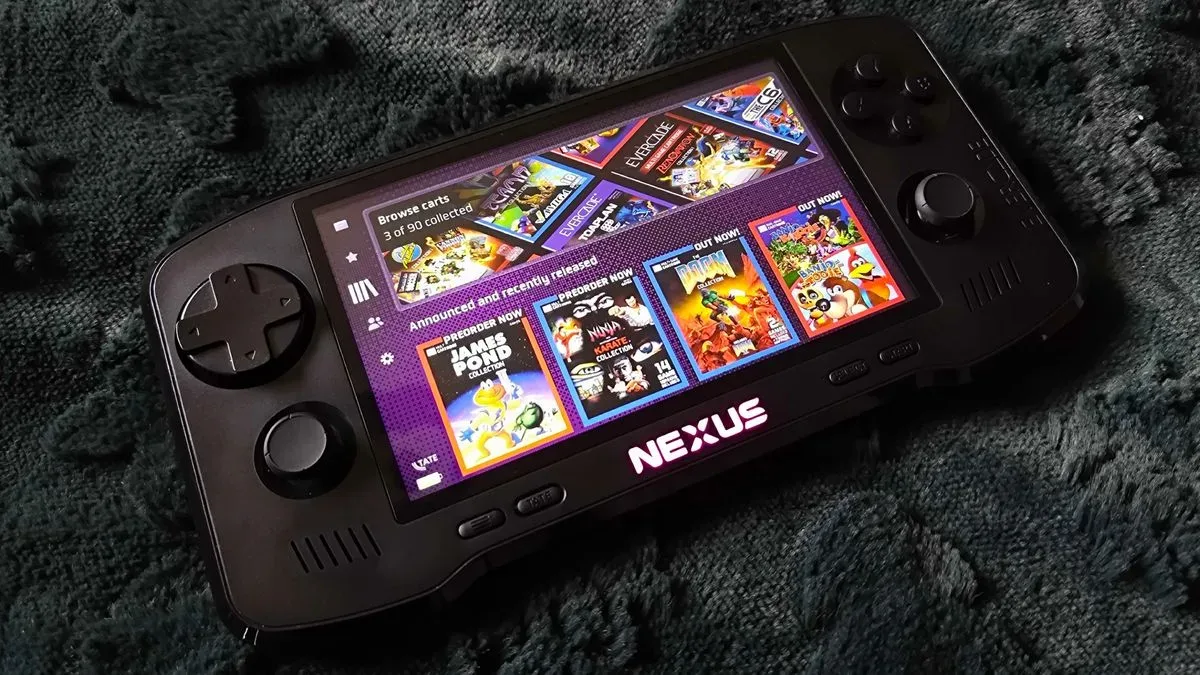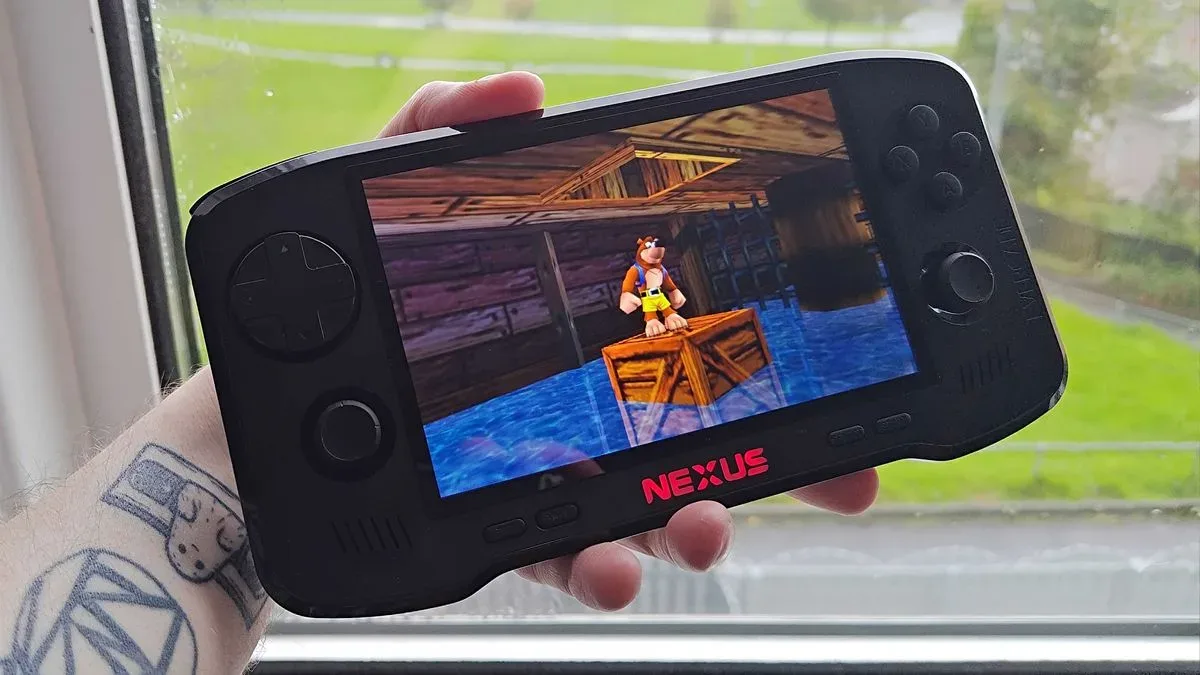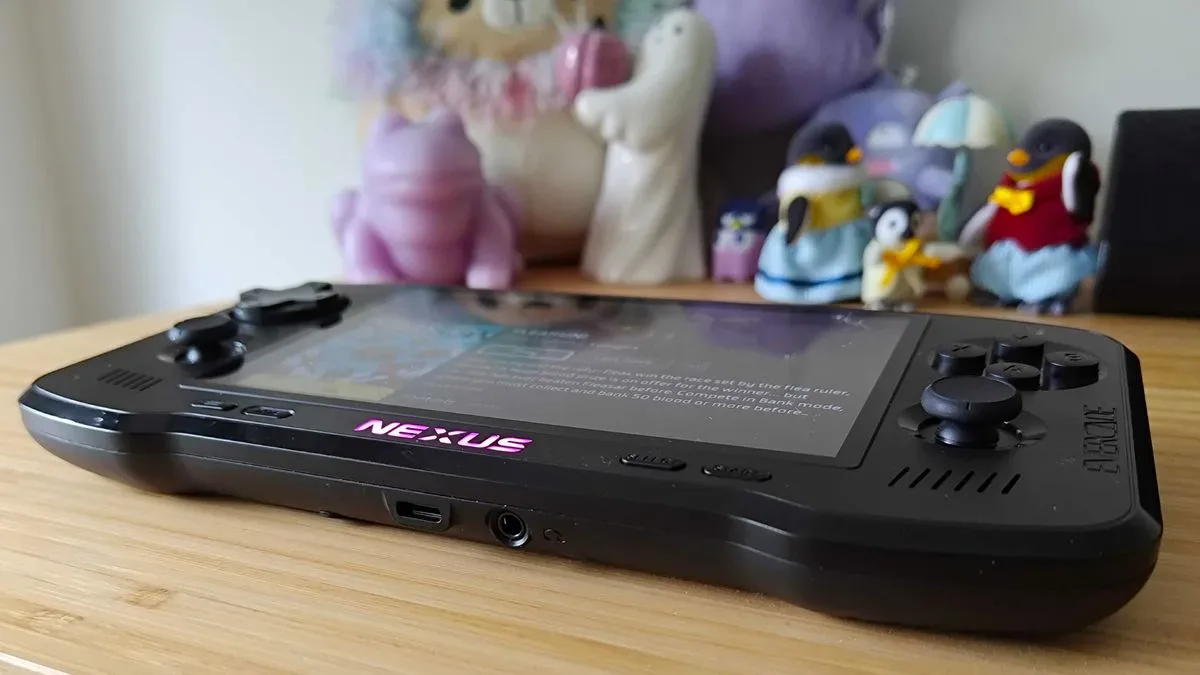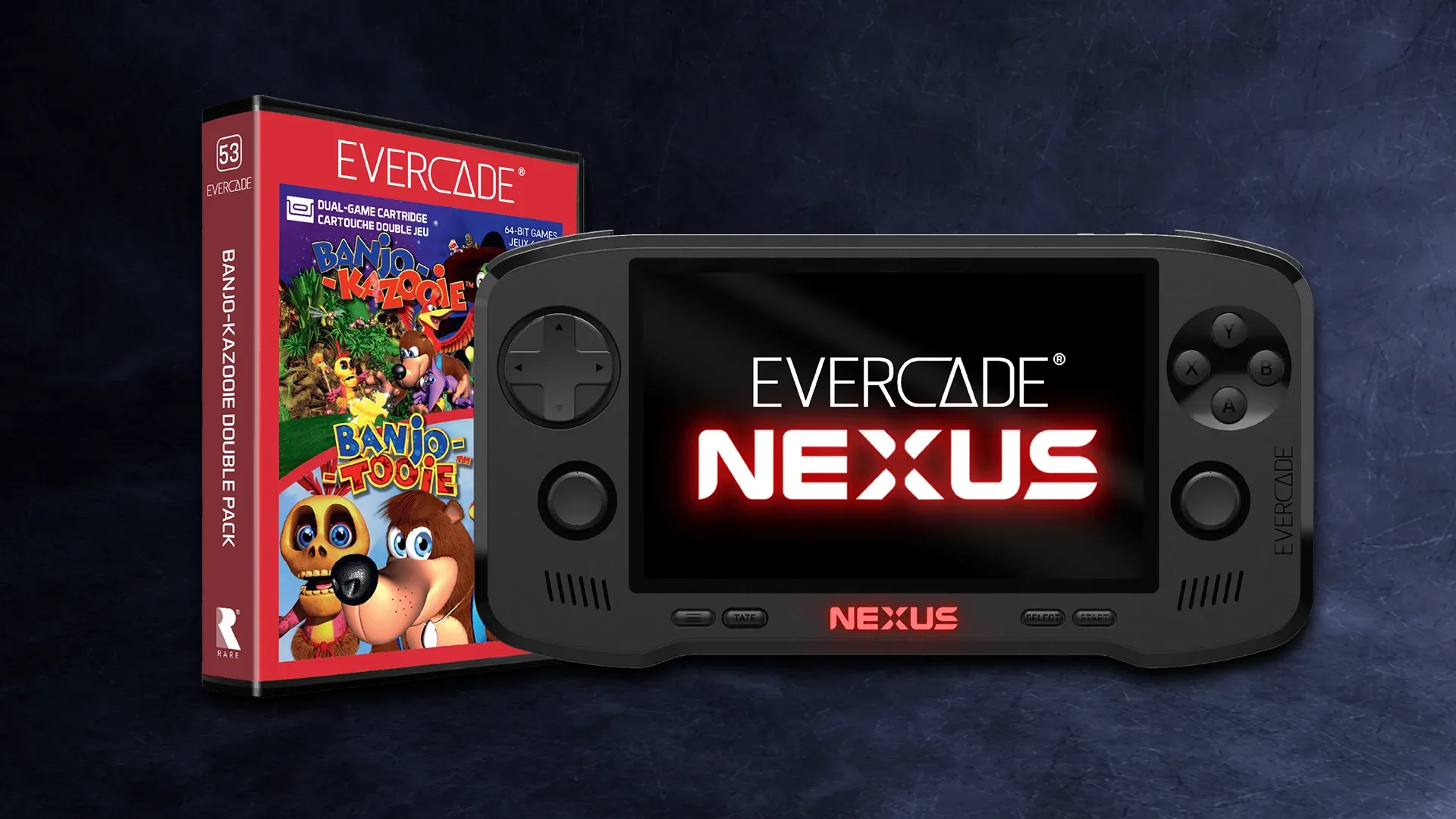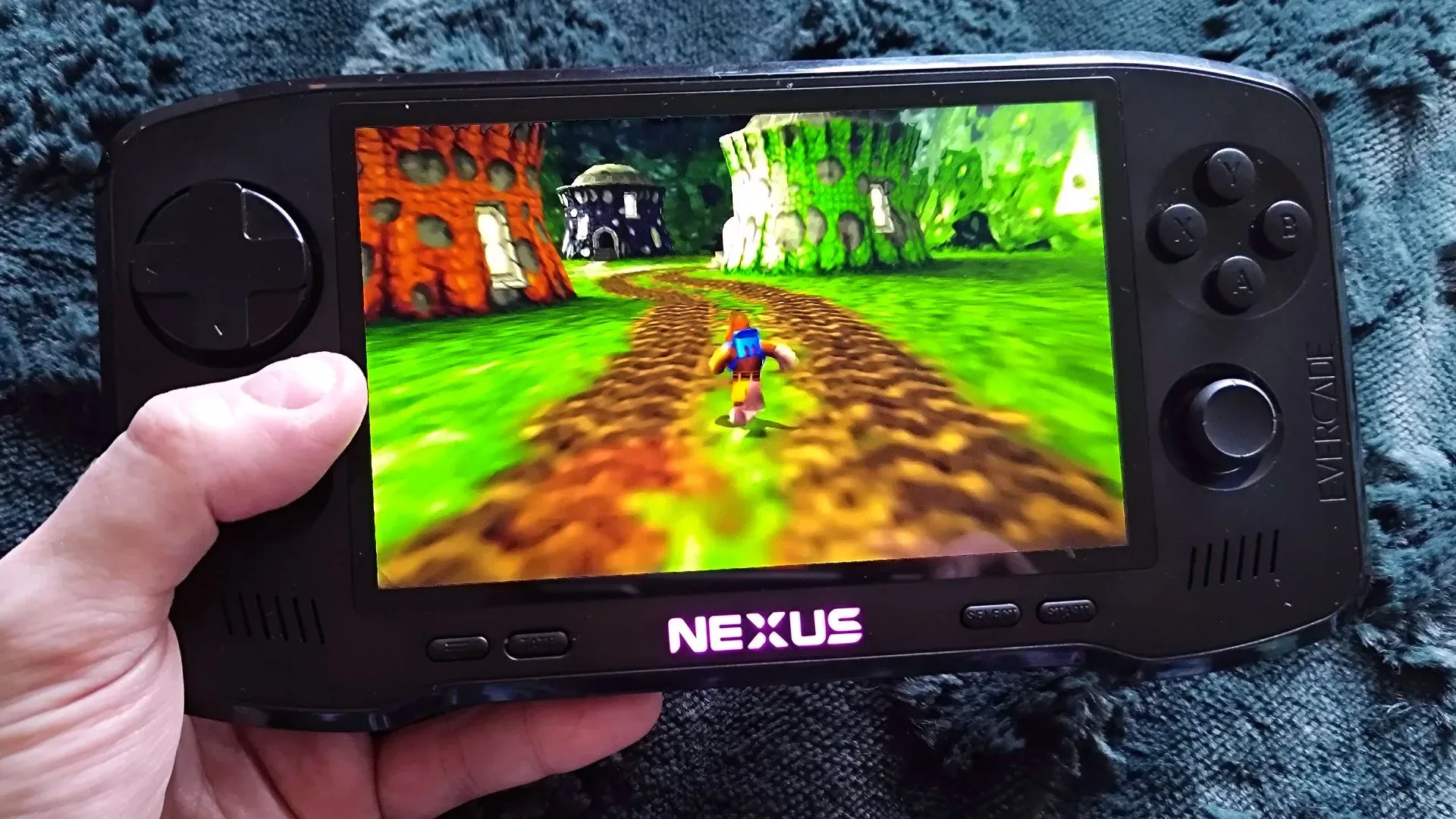
Blaze’s Evercade Nexus has launched as a $199.99 retro handheld built around a proposition that is increasingly unusual: buy cartridges, put them in a dedicated game machine and play without needing an internet connection. Its headline games are Banjo-Kazooie and Banjo-Tooie, while the wider Evercade library offers access to more than 700 games through physical releases.
That makes the Nexus more than a new portable for old games, at least in intent. It is an extension of a platform that already includes the original Evercade handheld, the Super Pocket and the Evercade Alpha arcade cabinet. The Nexus moves that cartridge-based approach further into 3D software and adds dual thumbsticks, aiming to make the system a practical home for games whose controls do not comfortably fit a traditional single-stick retro layout.
A handheld that treats cartridges as the point
The easy comparison is with the crowded field of Linux- and Android-based handhelds. Those devices can be remarkably flexible, especially for players who already maintain their own game backups and know how to configure emulators. But flexibility is not the Nexus’s central promise. The Evercade machine is a defined console platform with its own licensed cartridges and software library.
That distinction matters because the route to playing older games on a general-purpose emulation handheld can involve turning personally owned games into ROMs: digital files that an emulator can read. An emulator is software designed to reproduce the behavior of another game system. A ROM, in this context, is a copy of a game’s data. Both terms are frequently used in retro gaming discussions, but setting up such a library is not the same experience as buying a cartridge release intended for one platform and inserting it into the device.
The Nexus is designed for the latter. It offers an offline route to a catalog of officially released games without subscriptions, account-dependent downloads or a requirement to keep a network connection active. That does not make it the most technically feature-packed handheld in its price range. It does make it one of the clearer attempts to keep a contemporary, licensed physical-game ecosystem operating in the portable space.
Banjo arrives as native Nexus software
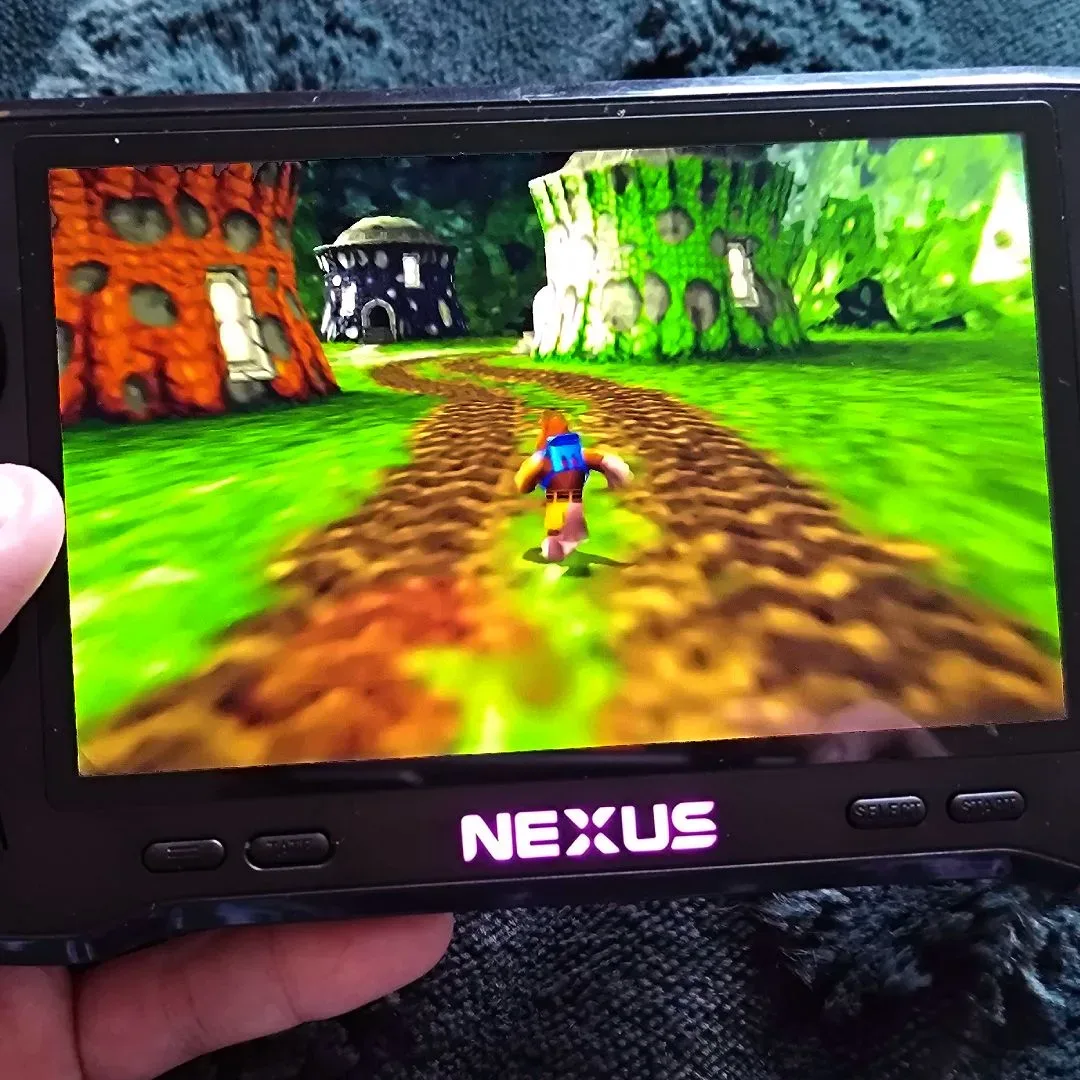
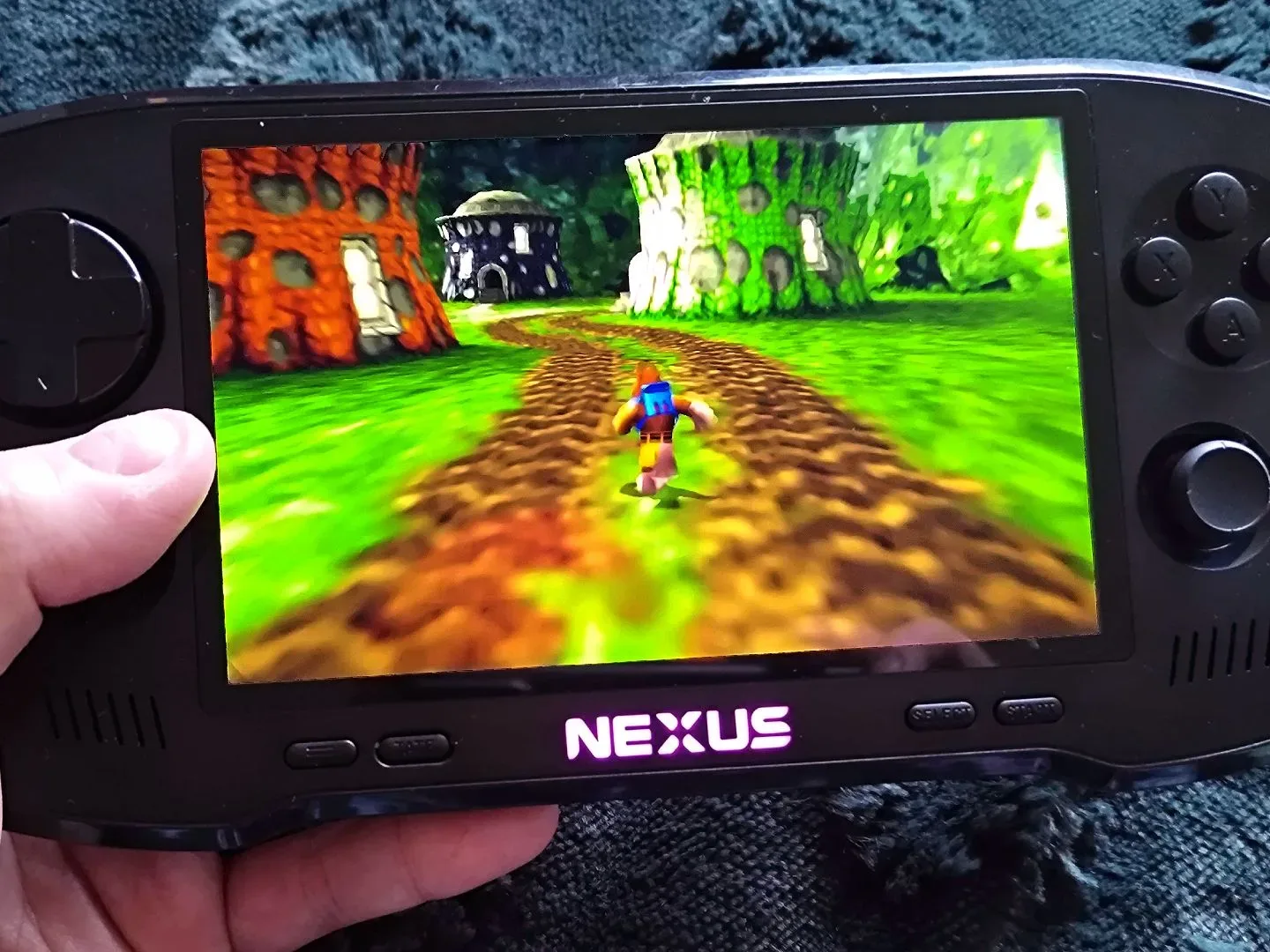
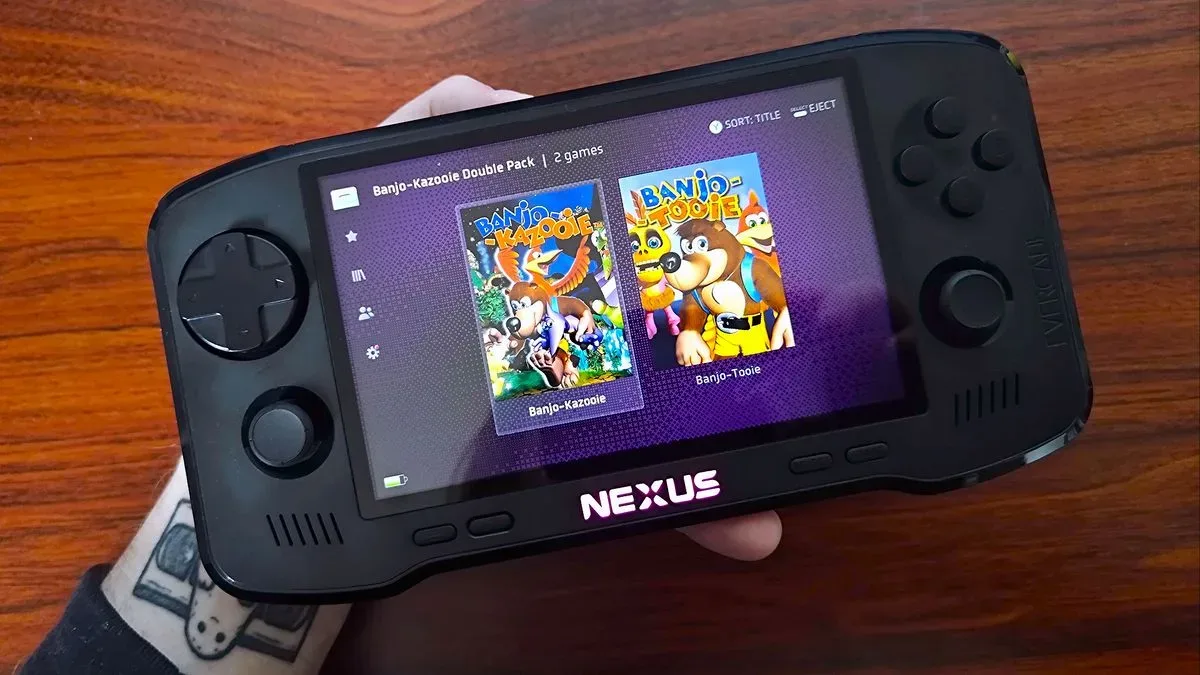
For many players, the strongest immediate draw will be the inclusion of Banjo-Kazooie and Banjo-Tooie. The pair are presented as ground-up ports for the Nexus rather than games requiring users to tune an emulator or hunt through settings. The handheld runs them at 60 frames per second and at an 840 x 512 resolution, with no mods or tweaks required.
The addition is significant for a platform previously associated chiefly with older 2D games. Three-dimensional games place different demands on both hardware and controls, and the Nexus’s dual-thumbstick layout is a key part of that step. Players can use a more modern control arrangement for movement and camera input rather than forcing a 3D adventure into a layout built for much earlier consoles.
It is also a useful example of what “native port” means here. A native port is software adapted to run directly on the target hardware and operating system. That differs from emulation, in which one system imitates another system’s hardware behavior. The practical appeal is simplicity: the games are ready for the Nexus out of the box, without a separate emulator setup process.
Related coverage includes Evercade Nexus Launches With Physical Cartridges and Banjo-Kazooie.
That does not settle every question about whether the Nexus is the best possible way to revisit the two games. A powerful Android or Linux handheld may offer owners of established ROM libraries broader system coverage and more customization. The Nexus instead makes a more focused argument: it is a dedicated platform with licensed releases and a physical format, and its Banjo ports are built around that platform’s hardware.
Where the $200 machine falls short
The Nexus’s focused design comes with trade-offs, particularly at $199.99. It does not include an AMOLED display or Hall-effect thumbsticks. AMOLED screens are valued for their contrast and deep blacks, while Hall-effect sticks use magnetic sensing rather than the conventional contact-based approach associated with wear-related analog-stick drift. Neither omission automatically makes the Nexus unsuitable, but both are notable when comparing its specification sheet against other handhelds around the same price.
The custom operating system also launches without a sleep function. A sleep mode lets a handheld pause its active state while using very little power, so a player can quickly resume later. It is a basic convenience feature for a portable device, particularly for longer games, and its absence is one of the clearer day-one shortcomings. Blaze has said a patch is planned to add it.
There is no HDMI output, either, so the device is not positioned as a simple handheld-to-television solution. Players seeking a portable that can double as a living-room machine should take that limitation seriously. The system also does not place a major emphasis on detailed CRT scanline controls or save states.
Scanlines are visual effects intended to mimic the horizontal lines associated with older CRT televisions; some retro players consider them part of the period look. Save states are emulator-style snapshots that can preserve play at virtually any moment, rather than only at a game’s built-in save points. Their absence will matter more to players accustomed to highly configurable emulation devices than to those who mainly want a cartridge console with a curated library.
The practical audience for Evercade Nexus
The Nexus is not likely to replace every retro setup. Its value is clearest for a few specific kinds of player.
- Players without original libraries: Someone who loves older games but does not own the original cartridges, discs or backup files gets a straightforward licensed path into the Evercade catalog.
- Offline-first players: The device’s cartridge model and lack of internet reliance suit people who prefer their game access not to depend on a storefront, subscription or active download service.
- Physical-media collectors: Evercade releases use numbered clamshell cases and include full-color manuals, turning the game library into a set of shelf-ready releases rather than account-bound purchases.
- Banjo fans who want low-friction portability: The native 60fps ports, 840 x 512 presentation and dual-stick controls are the Nexus’s clearest software showcase.
For collectors, the distinction is not simply decorative. A physical cartridge and its manual create a visible library that can be organized, displayed and used without scrolling through a digital storefront. That will not appeal to everyone; physical cases take space, and cartridges can never match the instant all-in-one breadth offered by a large digital library. Still, Evercade’s numbered cases and manuals make the releases deliberately collectible in a way that download codes are not.
There is a wider preservation angle, too, though it needs careful framing. Owning a cartridge is not a universal solution to every challenge around old games, licensing or hardware longevity. The Nexus itself remains a modern electronic device with its own operating system and planned patches. Yet a cartridge platform does remove one particular point of friction: access to a purchased game is not framed around maintaining a subscription or retrieving a download from an online store.
Analysis: a niche machine with a coherent purpose
Judged solely by a conventional handheld-specification contest, the Nexus has conspicuous gaps. No AMOLED display, no Hall-effect sticks, no HDMI output, no launch-day sleep mode and limited emphasis on CRT effects or save states leave it vulnerable against broadly capable Android and Linux alternatives. Players who already have a carefully curated retro setup may reasonably decide that $200 goes further elsewhere.
But that comparison can overlook what Blaze is trying to make. The Nexus is not merely selling the ability to run legacy software. It is selling a controlled, cartridge-led ecosystem in which the hardware, licensed game releases, packaging and offline use all reinforce one another. The physical format is not a side feature; it is the product’s organizing principle.
That perspective makes the system’s compromises easier to understand, even if it does not erase them. A configurable emulation handheld serves the player who wants one device capable of many jobs. The Nexus serves the player who wants a dedicated console with a defined catalog and contemporary physical releases. Neither approach invalidates the other.
For retro hardware fans, the arrival is another indication that physical gaming is not limited to maintaining vintage equipment and seeking second-hand originals. The Nexus offers new cartridges for a current device, alongside prominent 3D software designed for it. And for anyone chiefly interested in spending an evening as a bear with a bird in his backpack, it offers a notably direct route there.
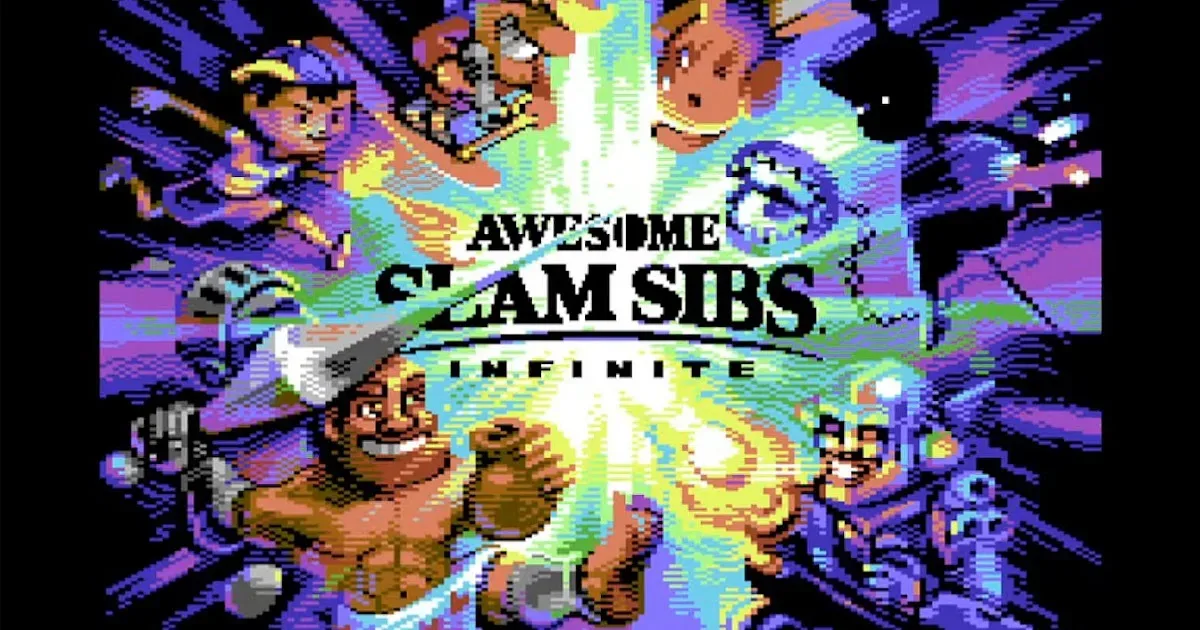
Players weighing the Nexus against other old-school setups may also want to follow the continuing homebrew side of the hobby, where releases such as a new Commodore 64 multiplayer brawler show how active retro-focused development remains across very different kinds of hardware.
Shop the products
Check current price, model and availability at the retailer.