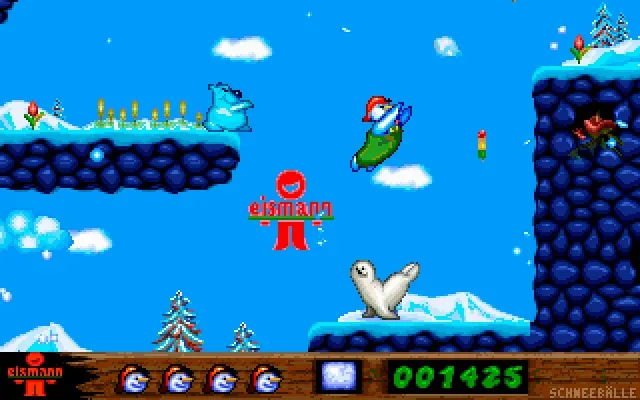

A colourful slice of DOS-era winter platforming is headed back to hardware that feels equally at home beneath a CRT. mc68060 has created an Amiga conversion of Eddy & Co, the platform game first released for DOS in 1995 as a free promotional title for Eismann.
This is not framed as a modernized remake or a stripped-down reinterpretation. The port is built around a deliberately period-minded presentation: it comes as a single floppy-disk image and uses a traditional trackloader. In practical terms, that means the game is meant to evoke the loading and booting experience of a commercial Amiga release from the mid-1990s, rather than simply placing an older game in a contemporary launcher.
The conversion is intended for the Amiga 1200 and Amiga 4000, provided the machine has the AGA chipset and Kickstart 3.0 or later. Crucially for owners of original equipment, an unexpanded Amiga 1200 with its standard 2 MB of chip RAM is sufficient to run it. Additional fast RAM raises the visual mode from 64 colours to the full 256-colour presentation.
A snowy platformer with a score-chasing streak
Eddy & Co puts players in charge of Eddy and three companions as they make their way through a large, frozen setting. Its four stages revolve around the familiar but enduring platform-game rhythm of running, jumping, avoiding environmental dangers and dealing with enemies before reaching a major confrontation.
The hazards are distinctly seasonal. Snowdrifts and icy obstacles complicate movement, while stormy rain clouds add to the wintry atmosphere. The opposition is equally eclectic: rats, bats, polar bears and werewolves are among the creatures encountered on the route through the game’s chilly landscapes. Each stage culminates in a boss encounter, and defeating that boss is necessary to open the exit and advance.
Its collectible items serve different mechanical roles rather than existing solely as set dressing:
- Sweets increase the player’s high score.
- Ice crystals restore health.
- Cakes grant the ability to throw snowballs at approaching enemies.
That arrangement gives the game a clear split between score play, survival and offense. Players who collect sweets are pursuing a higher score; crystals offer recovery after mistakes; and cakes provide a temporary or situational combat tool. The individual item functions are simple, but they make the decision to explore spaces and approach enemies more meaningful than a platformer filled with only one kind of pickup.
What the hardware requirements mean
The key phrase in the requirements is AGA, short for Advanced Graphics Architecture. It is the graphics chipset associated with later Amiga models including the Amiga 1200 and Amiga 4000. Accordingly, earlier non-AGA Amigas are not listed as supported hardware for this release.
The minimum specification is refreshingly direct: an A1200 with 2 MB of chip RAM and Kickstart 3.0 or higher can run the game. Chip RAM is memory shared with the Amiga’s custom hardware, including its graphics and audio systems. For someone bringing an unmodified A1200 out of storage, the stated compatibility matters more than a vague suggestion that the game needs upgrades: no expansion is required for basic operation.
The trade-off is colour depth. A stock configuration runs Eddy & Co in 64-colour mode. Install fast RAM and the port can use 256 colours. Fast RAM is memory intended for the processor rather than the Amiga’s custom chips; here, its practical benefit is explicitly visual, allowing the game to display its fullest colour mode. Players with expanded machines can see the more lavish version, while stock-hardware users are not excluded from the game itself.
That is a sensible division for a conversion designed around original systems. It preserves a low barrier to entry for the A1200 audience while leaving a visible benefit for people whose machines have been expanded over the years.
Why the floppy and trackloader approach matters
A disk image is a digital copy of the contents and structure of a floppy disk. Presenting the game as one disk image does more than establish a retro aesthetic: it places the release in the same practical format expected by Amiga owners who use floppy-based setups or appropriate disk-image hardware and software.
The trackloader is part of that period character. Rather than treating the Amiga merely as a processor and display target, the release adopts an old-school loading approach associated with disk-based games. The result is a port that seeks to feel at home on the platform, including in the moments before play begins.
That focus is especially fitting for a game born in the 1990s. The original was a DOS promotional release, and the Amiga edition does not attempt to disguise those roots behind a newly invented identity. Instead, it translates the game to another machine of the same broad era while leaning into the material rituals of that machine: a floppy image, a trackloader and support for unexpanded hardware.
Chris Huelsbeck’s music is part of the appeal
The conversion also retains a notable musical connection: its soundtrack is by Chris Huelsbeck. In a platformer structured around four substantial stages, music has a particularly important role in holding together the game’s rhythm. Players repeatedly move through hazards, gather items and face enemies, so a strong soundtrack helps give each return to the game a sense of momentum and atmosphere.
Here, the snowy art direction and winter-weather obstacles make that audio element more than a technical footnote. The game’s identity is built around an overtly cold, colourful fantasy landscape rather than a generic set of stages with a few seasonal decorations. Music, visuals and the snowball-throwing power-up all point toward the same festive, frosted tone.
A practical fit for AGA Amiga owners
For an Amiga player, the most useful detail is that compatibility is not limited to a heavily upgraded system. The listed baseline is an AGA Amiga 1200 or 4000 running Kickstart 3.0 or later, and a standard 2 MB chip-RAM A1200 qualifies. Fast RAM is an enhancement path, not a minimum requirement.
For players interested in the technical side of AGA software, the 64-versus-256-colour distinction provides a straightforward reason to compare configurations. The core platforming experience remains available on stock hardware, while the fuller palette offers an incentive to use an expanded setup where possible.
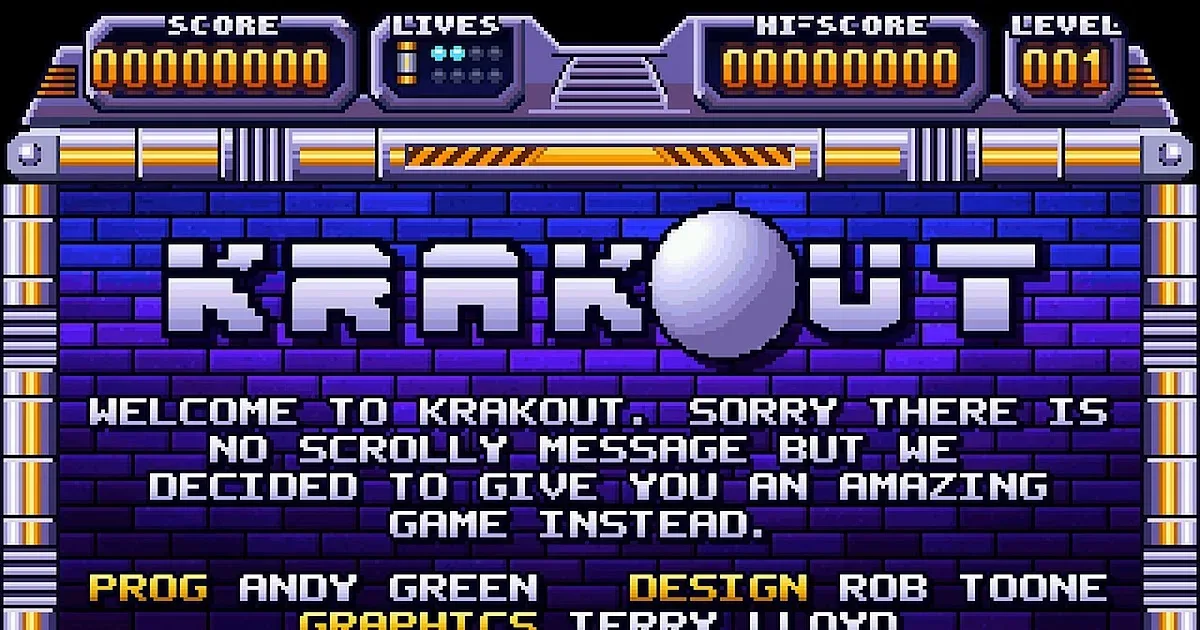
It also joins a small but appealing run of releases that continue to find specific uses for the A1200’s capabilities. For another example of software aimed at stock A1200 hardware, see the AGA-enhanced edition of Krakout.
What to expect from Eddy & Co
Players should expect a focused 2D action-platform game rather than an open-ended adventure. Progress depends on traversing four large stages, coping with icy terrain and weather-themed obstacles, overcoming an unusual bestiary, and defeating each area’s boss to gain access to the next exit.
Within that structure, the collection system supplies a few different priorities. A cautious player may value ice crystals as protection; an aggressive player may seek cakes to pick up the snowball attack; and score-focused runs have sweets to chase. It is a compact set of ideas, but one well suited to a platformer whose identity comes from bright snowy scenery, straightforward movement challenges and an unmistakably mid-1990s sensibility.
The important takeaway: Eddy & Co is now positioned as an AGA Amiga experience with unusually accommodating baseline requirements. It preserves the original game’s 1995 DOS identity, packages it in a single-disk, trackloader-style format, and gives expanded systems a 256-colour visual option without leaving standard 2 MB A1200 owners out in the cold.