Long before crossover rosters became a routine part of blockbuster games, Disney reportedly explored a toy-box brawler that would have put characters from wildly different films into the same arena. The project was called Disney’s Action Figure Face Off, and its central idea was delightfully direct: Disney heroes would appear as action figures and fight one another in a game conceived along the lines of Nintendo’s Super Smash Bros.
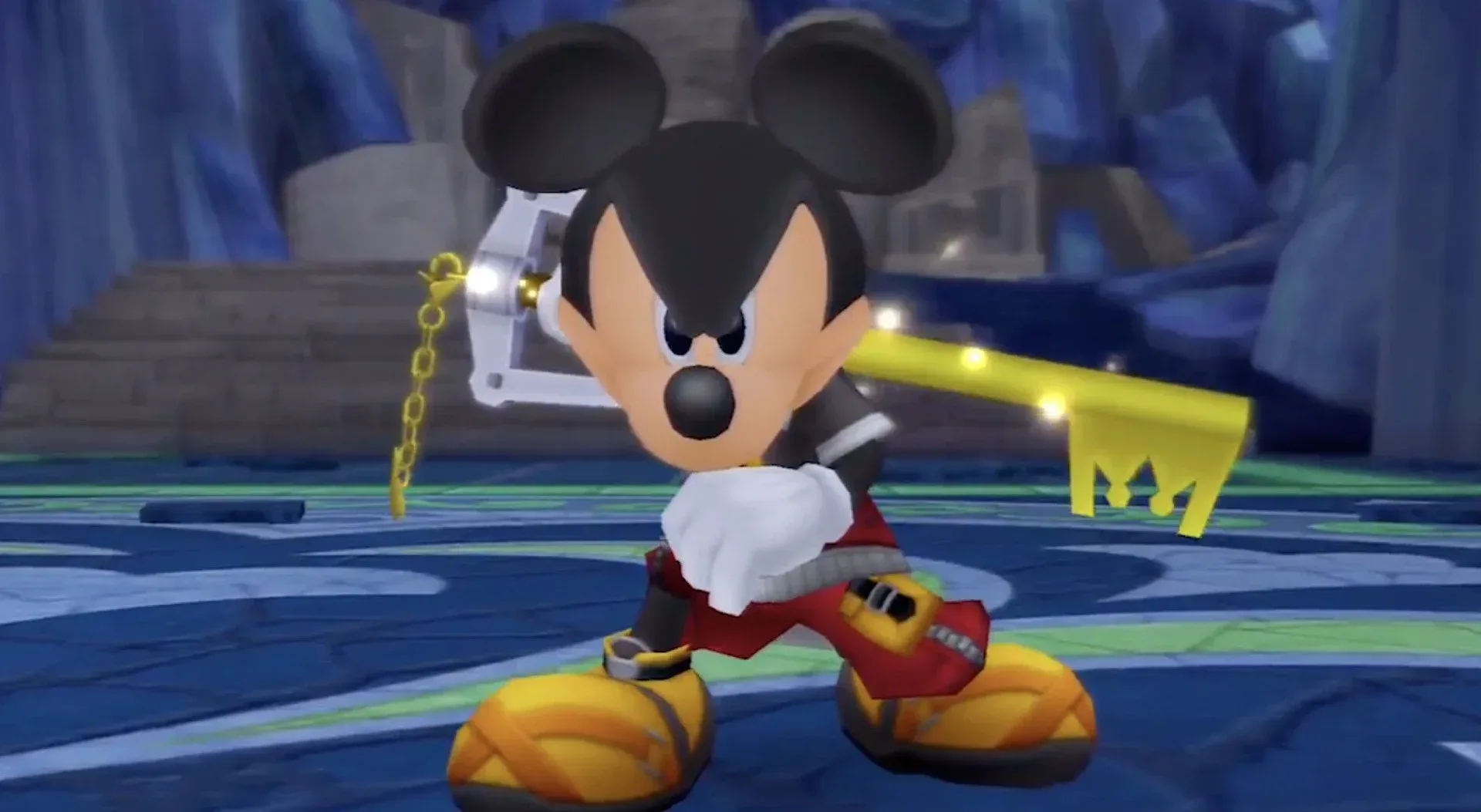
The game never made it beyond a prototype, but comments from former Disney Interactive concept artist Ken Christiansen help fill in a fascinating piece of its history. More importantly, they describe how Kingdom Hearts helped change the internal conversation around Disney characters sharing a game space. A crossover that once faced resistance became a creative possibility, then a pitch, then—briefly—a prototype.
It is easy to look at today’s media landscape and assume that a lion from the Pride Lands, a mermaid from Atlantica and an explorer from Treasure Planet sharing a screen was inevitable. The surviving account suggests it was anything but. Disney’s catalog was enormous, but turning that catalog into a single game meant clearing a conceptual hurdle: allowing characters and worlds built as separate properties to mingle without their original stories serving as a wall between them.
Kingdom Hearts made the impossible pitch feel plausible
Christiansen was credited as one of the senior artists on the original Kingdom Hearts, alongside Mary Ann Ramirez, who died in 2017. He has characterized his own contribution as limited: costume concepts for Donald and Goofy, plus work on concept art for the Monstro area. Still, that involvement gave him a view of the tension surrounding the game’s early crossover premise.
Disney had reportedly been uneasy about the prospect of characters from unrelated films entering each other’s worlds. The example recalled was the unusual image of The Lion King and The Little Mermaid crossing paths. Creatives and producers saw the appeal in mixing everything together, but the corporate comfort level had to catch up.
Kingdom Hearts eventually proved that the idea could work. Its success did not mean every later internal concept received approval, but it apparently loosened the boundaries for pitches that would previously have sounded too strange or too risky. That is the key context for Disney’s Action Figure Face Off: it was not simply an attempt to imitate a popular fighting-game format. It was a test of whether Disney’s wider library could be treated as one giant playset.
The action-figure framing was a clever answer to the crossover problem. Rather than insisting that every character literally inhabited the same canon, the concept could position them as toys brought together under a Toy Story-like premise. Tarzan, characters from The Lion King, and figures tied to Treasure Planet were among the properties envisioned. This made the collision of settings feel like an extension of childhood play rather than a continuity headache.
A pitch built to dominate the room
The game’s path through Disney’s approval process was as physical as it was conceptual. Christiansen described a presentation culture centered on imposing boards: huge foam-core displays, roughly six to eight feet long and around four feet tall, filled with printed artwork and prominent logos. Their purpose was immediate visual impact. Executives could be walked through the concept in front of a single, carefully arranged object that sold tone, characters and commercial potential at a glance.
That approach explains why images from old concept portfolios can be so evocative. They were not necessarily a glimpse of a game close to release. They were designed to communicate a game’s promise before production was guaranteed—sometimes before its mechanics had been fully settled. A striking roster image could do a great deal of work in a room where a project’s next step depended on whether its premise could be understood in seconds.
Some concepts did become real games. Christiansen pointed to Disney’s Extreme Skate Adventure, associated with Ramirez, as an example of a project that made the transition from internal presentation to released product. Action Figure Face Off did not get that far. It reportedly reached prototype status before being abandoned, with Disney favoring projects viewed as safer, including games attached directly to films and television programs.
That choice fits the broader shape of licensed-game development in the era. A tie-in had a built-in marketing event, recognizable artwork and a clear answer to the question of why it existed now. A crossover fighter had a more difficult business case. It could potentially use many beloved properties, but it was not pinned to a single theatrical or TV campaign. It required decision-makers to see long-term brand value in the collision itself.
Activision’s possible role, and the platform mystery
There is very little public documentation of Disney’s Action Figure Face Off. References on the professional profiles of former Activision staff, including software engineer Peter Walsh and associate producer Lara Sweeney, indicate that Activision may have been lined up to develop or otherwise bring the game forward. That would make sense alongside Activision’s previous work on Disney’s Extreme Skate Adventure, but the available evidence does not establish every detail of the arrangement.
The intended platforms are similarly uncertain. One professional listing connects the concept to PlayStation 2 and PC. Another cites PlayStation 2, Nintendo GameCube and Xbox. The shared point is the PlayStation 2-era setting; beyond that, the conflicting platform lists should be treated as unresolved rather than converted into a definitive release slate.
- Known: the project was titled Disney’s Action Figure Face Off.
- Known: it was envisioned as an action-figure crossover fighter with a Super Smash Bros.-style comparison.
- Known: it reached the prototype stage but was cancelled.
- Suggested, not fully confirmed: Activision was involved.
- Uncertain: whether the final target lineup was PS2 and PC, or PS2, GameCube and Xbox.
That uncertainty is worth preserving because unreleased games so often acquire false precision over time. A lone platform entry, an old image, or a résumé credit can be enough to create a confident-looking database record. In reality, prototypes can be moved between platforms, scoped for several systems, or cancelled before a final production plan exists. The incomplete paper trail is part of what makes this particular artifact of Disney game history intriguing.
Why the idea still lands
There is a special kind of appeal to a lost crossover fighter because its appeal is instantly playable in the imagination. Players can picture odd matchups, toy versions of familiar locations, exaggerated accessories, and the inevitable debate over which character would have had the most annoying special move. It belongs to the same social space as the arguments and small betrayals that make local versus games memorable. For a humorous refresher on that shared-screen ritual, see The Unwritten Rules of Couch Multiplayer, Now Written Down.
At the same time, the concept was more than a novelty roster. The action-figure device could have created a visual language all its own. Toy-scale environments, plastic versions of famous costumes and objects that behave like improvised playroom weapons all seem compatible with the premise. Yet no surviving description establishes specific stages, move sets, modes or final character roster. Those details remain a tempting blank space, not an invitation to invent a game that was never completed.
The later arrival of Disney Infinity makes the abandoned pitch feel especially prescient. That series embraced the broad mixing of Disney-owned worlds that had once required careful persuasion. Its toy-based format also echoes the instinct behind Action Figure Face Off, even though the two projects are not the same game and should not be treated as a direct production lineage.
Ultimately, this cancelled prototype captures a turning point. Kingdom Hearts demonstrated that Disney crossover storytelling could resonate. Creatives began testing bolder answers to the question of what could be done with so many separate properties. Disney’s Action Figure Face Off was one answer: a playful, potentially chaotic fight between action-figure versions of Disney icons. It never escaped the prototype phase, but its existence shows just how close the company may have come to putting its own spin on the all-star platform fighter.