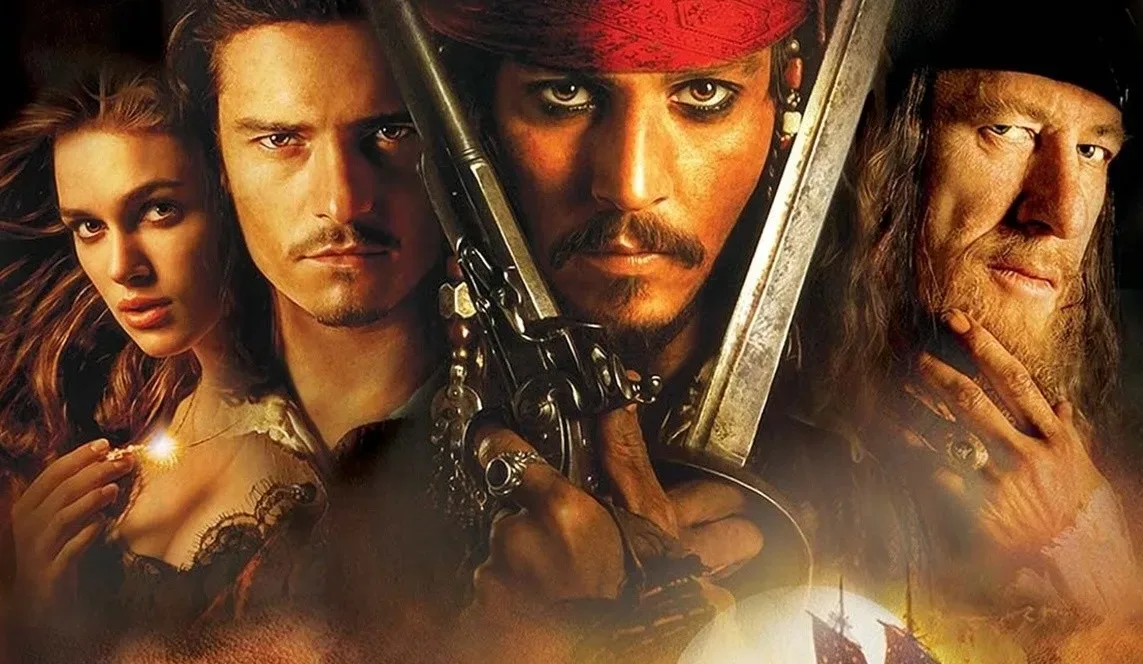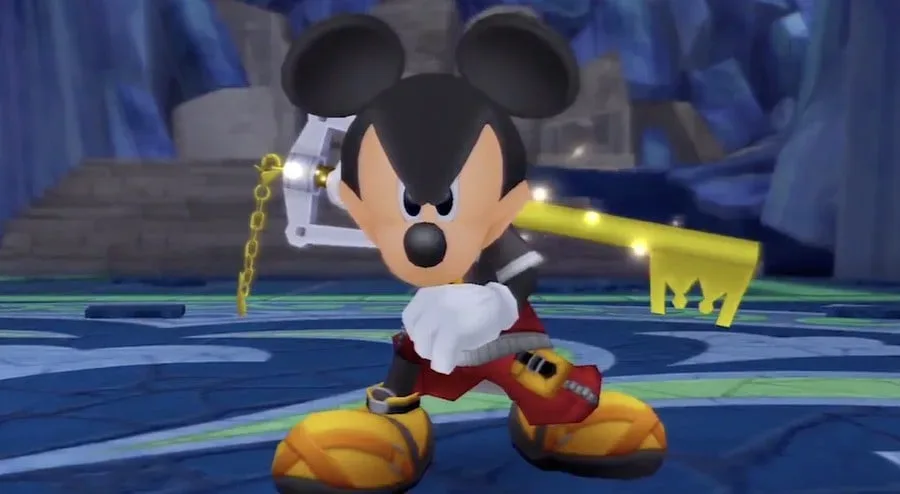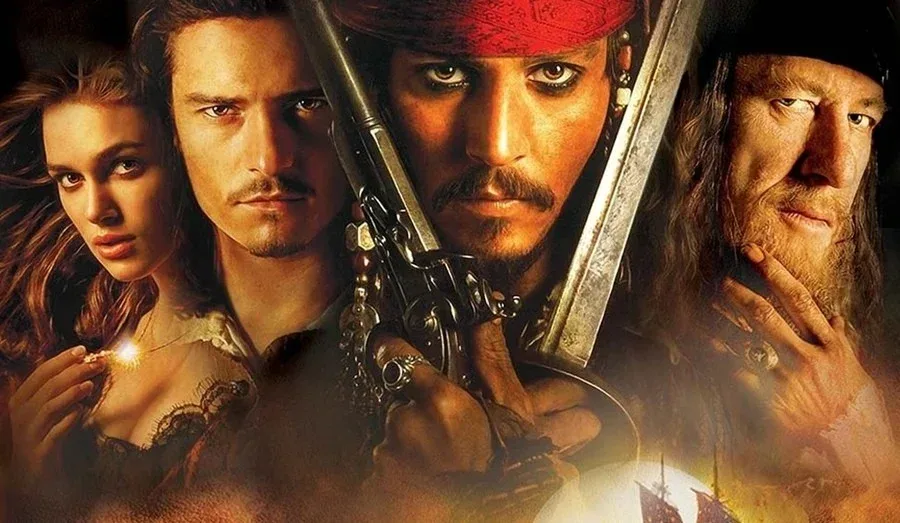
Pirates of the Caribbean: The Curse of the Black Pearl looks, in hindsight, like it should have been the easiest possible videogame assignment. There are duels, cursed treasure, supernatural enemies, escapes, ship battles, eccentric characters and a world built to accommodate every kind of action-adventure excess a developer could want. Yet players who went looking for a close console adaptation in 2003 instead encountered something far stranger: a Pirates-branded version of an existing naval combat game rather than a purpose-built recreation of the film’s undead-gold-and-cannonfire spectacle.
Former Disney Interactive concept artist Ken Christiansen has described a chain of decisions that helps explain how that happened. His account suggests the company initially prioritized a videogame based on the 2003 film The Haunted Mansion, then changed course only after early responses indicated Pirates might be the far bigger hit. By that point, the normal runway for a major licensed production had disappeared. The resulting rush produced a compromise for the first movie—and, later, helped sink a much more ambitious proposal for a follow-up.
The early choice: Haunted Mansion over Pirates
Christiansen recalled that scripts for both films reached the Disney Interactive team around 2001. From his perspective, the decision seemed straightforward. Pirates was already packed with gameplay possibilities, while The Haunted Mansion did not appear to offer the same obvious foundation for a conventional action game.
But the internal direction went the other way. Pirates was set aside while attention moved to The Haunted Mansion. Christiansen’s interpretation was that the presence of Eddie Murphy made Mansion seem like the safer corporate bet, while a pirate adventure was treated with greater skepticism. At the script stage, Pirates also did not yet have the finished Johnny Depp performance that would make Captain Jack Sparrow such a defining part of the movie’s identity. It was, in Christiansen’s recollection, viewed more simply as an action picture in a genre believed to be risky.
That choice mattered because movie tie-ins usually need substantial lead time. A game cannot be summoned by firing a cannon into the night and shouting “content synergy.” Assets, tools, gameplay systems, approvals, casting arrangements and platform work all take time. The closer a game is meant to track a movie, the more difficult a late start becomes. A studio needs to build not only combat and movement, but environments, narrative structure and a convincing version of the film’s characters before the marketing machine starts demanding screenshots.
The Haunted Mansion did receive its game: a 3D adventure released for PlayStation 2, Xbox and GameCube, developed by High Voltage Software and published by TDK Mediactive. It did not include Murphy, despite the apparent importance of his involvement to the film’s perceived prospects, and its critical reception was mixed.
When Pirates suddenly looked like the safer bet
While work on The Haunted Mansion game continued, the outlook reportedly shifted. Early screenings of The Curse of the Black Pearl generated enthusiasm, and executives began to see Pirates differently. Christiansen said there was suddenly an urgent demand for a game. The trouble, as he framed it, was painfully simple: the team had needed that instruction roughly a year earlier.
With a bespoke console project no longer practical on that schedule, Bethesda’s existing pirate game became the shortcut. The game in question was adapted into Pirates of the Caribbean for PS2 and Xbox, built around naval action rather than a direct, full-film adventure. Keira Knightley contributed voice work, but the game was not designed from the ground up to tell the movie’s story.
Related coverage includes Why The Curse of the Black Pearl Missed Out on a True Game Tie-In.
That distinction is key. A license can change names, art and some presentation quickly enough to meet a release window, but it cannot instantly transform the underlying design. The 2003 console release could offer swashbuckling atmosphere and ships because its base already dealt in pirates and seafaring combat. What it could not easily become was a tightly authored journey through the film’s specific set pieces, characters and supernatural mythology.
The handheld side was similarly detached from what many moviegoers may have expected. Pocket Studios’ Game Boy Advance title took the form of a prequel and did not have likeness rights for several principal performers. Rather than one unified game adaptation across platforms, fans received separate projects with different relationships to the film. That is a familiar enough tale from the licensed-game era, but it is still an especially odd outcome for a movie that seemed so inherently game-ready.
The sequel-era game that could have been
The most tantalizing part of Christiansen’s recollection concerns a later concept pitch, around 2004, aimed at the next film in the series. Discussions reportedly involved Stormfront Studios, the Bay Area developer behind The Lord of the Rings: The Two Towers. Stormfront’s work on that game offered a useful template: close-quarters action, multiple heroes moving together and a strong sense of cooperative momentum.
Christiansen began shaping concept art around that sort of play. The plan, as described, was not merely to repaint another pre-existing game with a Pirates logo. It was to use an engine and structure compatible with a party of characters travelling together through a larger pirate fantasy. For a property whose first movie included cursed skeletal pirates, it could have been a natural home for ensemble action.
There was also a disagreement about tone. Christiansen recalled a senior figure arguing that the game ought to stay grounded in the real world. To the artist, that instruction made little sense after a film filled with supernatural transformations and magical treasure. His own concepts leaned in the opposite direction: exaggerated pirate mythology, monsters and fantastical creatures, including ideas as wild as gryphons, leviathans and an elephant with a fish tail.
That creative clash reveals an important fork in the road. A Pirates game could have treated the brand as a historical adventure with muskets and wooden ships, or accepted that its strongest imagery was gloriously unreal. The movie had already established a world where moonlight revealed the dead beneath human skin. There was no obvious reason a game had to confine itself to a museum-diagram version of the Caribbean.
And for multiplayer, the premise had obvious potential. A crew is practically a pre-written co-op party: one player can swordfight, another can handle ranged attacks, another can chase objectives or manage bizarre supernatural threats. Anyone who has survived the diplomatic collapse caused by choosing teams on a sofa will recognize why shared objectives and distinct roles matter; the unwritten rules of couch multiplayer are much easier to follow when every player feels useful.
Layoffs stopped the project in concept phase
The proposed Stormfront-linked game never reached retail. Christiansen said Disney Interactive laid off its remaining internal concept artists during the concept stage, including him. He later returned as a freelancer, but was then directed toward concepts for Tron 3.0, an unrealized successor to Monolith Productions’ 2003 Tron 2.0.
That left the sequel period without the substantial console adventure the first film had appeared to warrant. The games connected to Pirates of the Caribbean: Dead Man’s Chest were handheld releases from developers including Griptonite Games and Amaze Entertainment, rather than the Stormfront-style multiplayer retail project that had been discussed.
None of this means the abandoned proposal was guaranteed to become a classic. A concept phase is not a finished design, and talks about an engine or a possible development partner are not the same thing as a signed, completed production. Christiansen’s account describes a project that was being explored, not a game players were ever promised. There is no released build to assess, no proven feature list and no way to know how the various creative and business constraints would have resolved.
Still, the story makes the first film’s game situation considerably clearer. The disappointing fit between The Curse of the Black Pearl and its console tie-in was not necessarily a failure to see the property’s potential. At least among people working on concepts, that potential was visible early. It was a timing problem created when the company backed another movie, then reacted to Pirates’ momentum after the opportunity for a full-scale parallel production had largely passed.
It also leaves behind an irresistible alternate history: a 2000s Pirates action game from a studio experienced with cinematic fantasy combat, built around a travelling crew and unafraid of cursed monsters and nautical nonsense. Instead, players got a hurried adaptation, a handful of handheld detours, and the lingering feeling that one of the era’s most gameable blockbusters arrived at port without the right crew aboard.