One of the Famicom’s more memorably named action games is lining up for a return. Tengo Project is developing Cybernetic Attack Final Mission, a modern remaster of Natsume’s 1990 scrolling shooter Final Mission. In North America, that same game arrived under the spectacularly blunt title S.C.A.T.: Special Cybernetic Attack Team, a name that has never been accused of underselling its cybernetic credentials.
Publisher Winning Entertainment Group has identified the project as Tengo Project’s next release. The announcement offers an early look at an update that aims to preserve the old game’s pixel-art identity while revising and expanding the experience around it. There is not yet a confirmed release date, platform list, or breakdown of every new feature, so the important details remain deliberately airborne for the moment. Still, the team has confirmed that Cybernetic Attack Final Mission will be shown at Tokyo Game Show 2026, which begins on September 17.
That gives fans of obscure-but-beloved 8-bit shooters a specific date to circle, preferably with a tiny orbiting satellite drawn beside it.
From Final Mission to S.C.A.T.
The original Final Mission was developed by Natsume and released for the Famicom in 1990. Its American localization took on the title S.C.A.T.: Special Cybernetic Attack Team. The new project uses the name Cybernetic Attack Final Mission, bringing the Japanese title back into the foreground while retaining the game’s central sci-fi premise.
That premise is precisely the kind of high-voltage future fiction the 8-bit era handled with a straight face and a lot of explosions. The story is set in 2029, where New York City is threatened by an intergalactic warlord called Vile Malmort. After attacks on multiple cities across the United States, Malmort connects a space station to New York, creating a gateway through which his forces can assault Earth.
The response comes from the Special Cybernetic Attack Team: cyborg fighters originally named Arnold and Sigourney. These human-machine heroes fly into the conflict to beat back Malmort’s troops and protect New York, the United States, and, one assumes, the general continued existence of the planet.
The apparent absence of those original character names from the remaster material is notable. They were unmistakable pop-culture winks even in 1990, and the new presentation appears to be moving away from them. No replacement names have been formally detailed in the available information, but the remaster is clearly not treating the old roster as untouchable museum property.
A shooter built around movement and satellites
Final Mission belongs to the scrolling shoot-’em-up tradition, but it is not confined to a single direction. One or two players battle through stages featuring both horizontal and vertical scrolling, confronting dense waves of enemies while collecting stronger weapons. Its most recognizable mechanical flourish is the use of orbiting satellites that can fire in eight directions, offering players a flexible way to cover hostile approaches.
The setup naturally invites comparisons with Capcom’s 1988 arcade game Forgotten Worlds, another shooter associated with characters protected by rotating satellite weapons. The comparison is useful as a broad point of reference, though Final Mission has its own Famicom-era identity: a compact, aggressive science-fiction shooter built around adapting one’s firing coverage as enemies attack from all sides.
Its two-player option is also worth emphasizing. Retro shooters can become exercises in concentrated self-preservation, but cooperative play changes the mood immediately. Instead of one player trying to cover every blind spot, two pilots can divide attention, improvise under pressure, and accidentally wander into each other’s lines of fire. That last bit is not a defect; it is practically part of the furniture. For anyone preparing to share a screen when this remake arrives, the unwritten rules of couch multiplayer remain useful survival literature.
Tengo Project’s approach to the revival
Tengo Project has become associated with revisiting classic pixel-action games through remasters that try to make old design language feel vivid rather than merely preserved. For Cybernetic Attack Final Mission, the stated plan is to refresh the original game’s play while recreating its audiovisual character in a retro-futuristic style.
That wording matters because it signals something more substantial than simply placing an old ROM behind a newly designed menu. The game is being framed as an updated edition that wants to retain the visual and audio sensibility of its 8-bit origin. Whether that ultimately means revised stage layouts, altered balancing, new modes, quality-of-life improvements, or a mixture of all four is not yet known. The announcement does not provide enough information to treat any of those possibilities as confirmed.
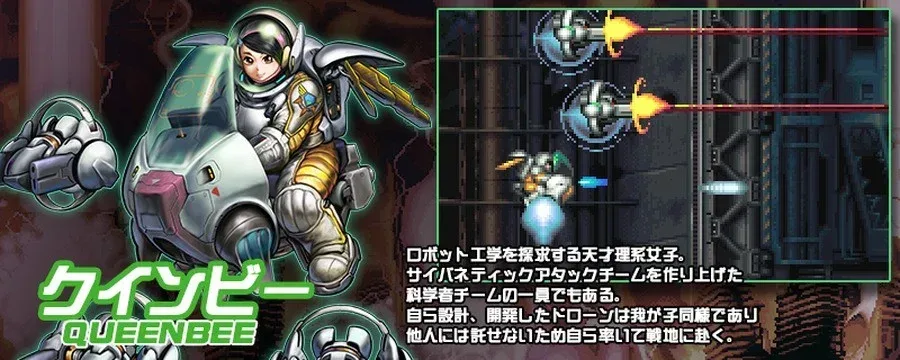
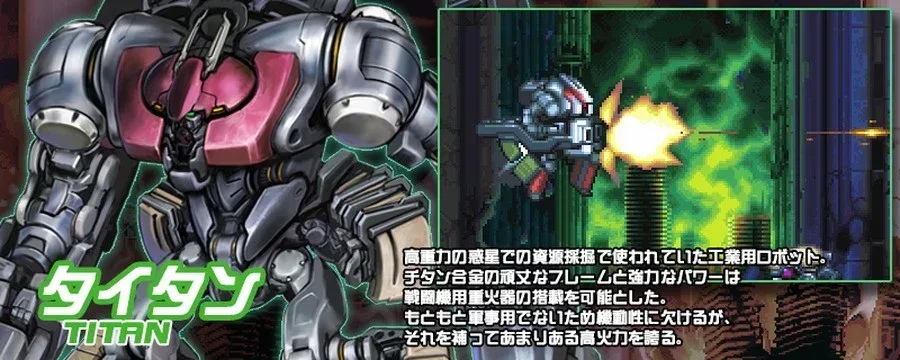
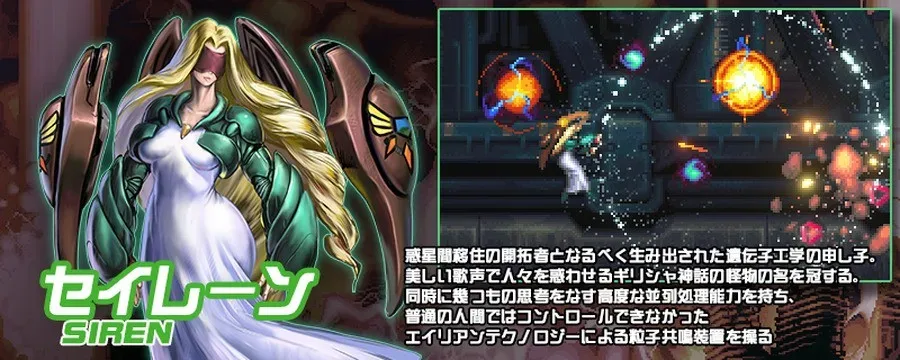
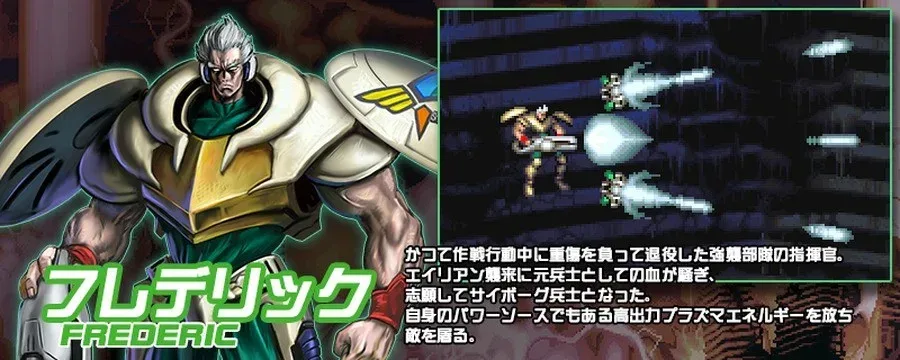
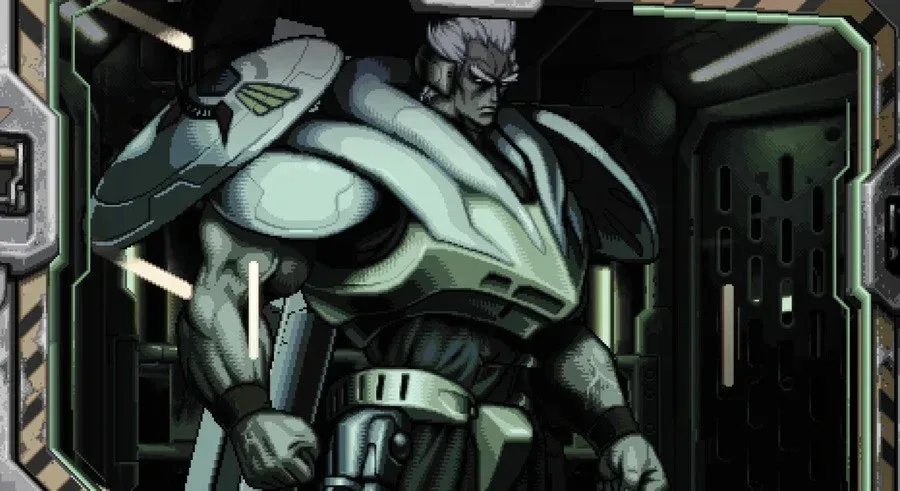
What is confirmed is an enlarged playable lineup. The original cyborg duo will not be the entire story this time. Titan, described as a powerful mech monster, is joining the cast, alongside Queen Bee, a smaller and more whimsical-looking character who rides a jetbike. The contrast between them is wonderfully direct: one sounds built to stomp through a metal door, while the other sounds capable of arriving stylishly at a laser siege.
Additional characters could give the remake a different personality from its source material, especially if their size, equipment, movement, or satellite behavior changes the rhythm of combat. However, those gameplay distinctions have not been outlined, so it is safest to regard Titan and Queen Bee as confirmed playable additions rather than assume how they will function.
A notable fit for Tengo Project
The project follows Tengo Project’s work on another Natsume-associated classic, The Ninja Warriors. That earlier game originated as a follow-up to Taito’s arcade hit, and Tengo Project’s later remaster demonstrated an interest in rebuilding vintage action games with a bold pixel-art presentation rather than sanding away their period character.
That history makes Final Mission a logical next candidate. It comes from a period when shooters were often expected to do a remarkable amount with limited hardware: establish a world, present an arsenal, support escalating action, and make every screen feel as if it could explode at any moment. The original game’s satellite mechanic, alternating scrolling directions, and co-op support gave it features that remain easy to explain decades later.
There is also an appealing oddity to this choice. Big-name retro properties receive revivals constantly, but S.C.A.T. has lived more as a cult favorite and a piece of enthusiast shorthand than as a franchise with yearly visibility. Reintroducing it under a title closer to its Famicom identity may allow the new game to be legible both to players who knew the North American cartridge and to those encountering its premise for the first time.
What Tokyo Game Show may clarify
Tokyo Game Show 2026 is the next confirmed stop for Cybernetic Attack Final Mission. Since the event opens September 17, it may bring a fuller trailer, a closer look at the new characters, or answers on platforms and release timing. None of those specifics have been promised, but the game’s presence should make it the most likely occasion for a clearer picture of Tengo Project’s goals.
Until then, the essentials are straightforward. Natsume’s 1990 Famicom shooter is being remade by Tengo Project; Winning Entertainment Group is publishing it; the updated game is called Cybernetic Attack Final Mission; and Titan and Queen Bee are confirmed as additions to the playable cast. The original’s New York-under-siege setup, scrolling shoot-’em-up action, upgradeable firepower, and orbiting satellites are central to the game being revisited.
For a title once known abroad by an acronym that sounds like a classified military department, that is a fittingly loud route back into view. Malmort’s space-station gateway is opening again. This time, it may have a mech monster and a jetbike waiting on the other side.