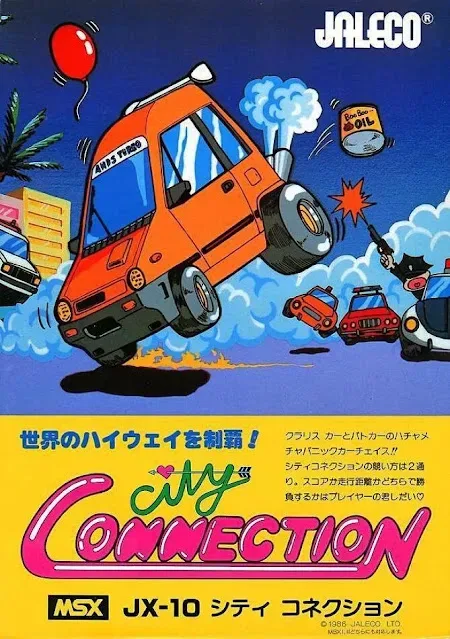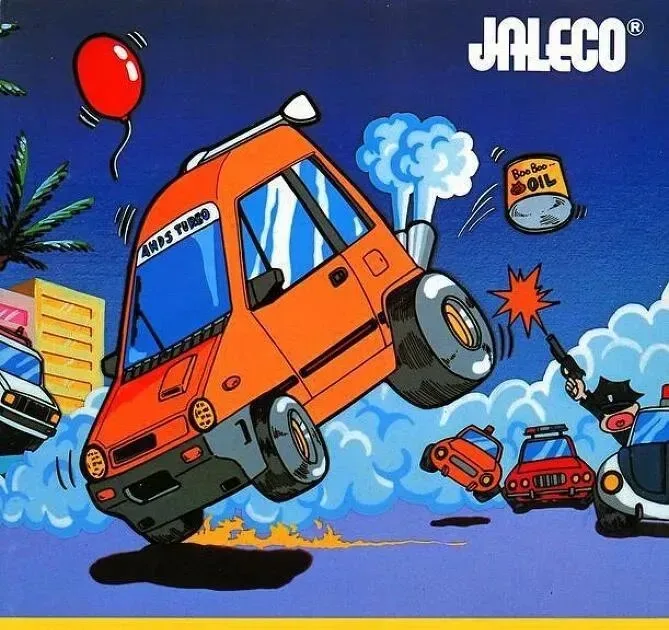
Jaleco’s 1985 arcade game City Connection may be getting an unusual second life on Commodore’s Amiga: a native Amiga AGA conversion said to have been built through a closely guided collaboration between developer ruliovega and the ChatGPT-6 / Astra AI model.
The project is notable not simply because another arcade favorite is headed toward an enthusiast platform, but because of the specific technical claim behind it. This is described as a genuine Amiga executable for AGA-equipped hardware, rather than an arcade emulator running on an Amiga or a 6809 CPU interpreter operating during play. In other words, the stated goal is a conversion designed around the Amiga’s own hardware instead of a layer that imitates the original arcade board.
That distinction will matter to Amiga fans who still enjoy seeing what the machine can do when a game is built for it directly. It also makes this a fascinating preservation-adjacent experiment: an old arcade design is being studied, disassembled and translated into code intended for another period machine, with AI doing a major share of the implementation work but a human tester steering the results.
A 1985 arcade road trip for Amiga hardware
City Connection is the colorful arcade game in which a small car tears across layered roads, hopping gaps and attempting to paint the route while avoiding traffic and other hazards. Its visual identity is built around scrolling roadways, bold backdrops and a clean, energetic arcade presentation. That makes it a sensible but not necessarily effortless candidate for an Amiga conversion. The game may look direct in motion, yet achieving a convincing version on different hardware requires careful handling of graphics, timing, sound and gameplay behavior.
The proposed baseline is a stock Amiga 1200 with PAL AGA, a Motorola 68020 processor and 2 MB of Chip RAM. That is an important limitation to spell out. The target is not described as a heavily expanded Amiga configuration relying on modern accelerator cards or extra memory. Instead, the work is intended for the standard capabilities associated with the A1200’s AGA era.
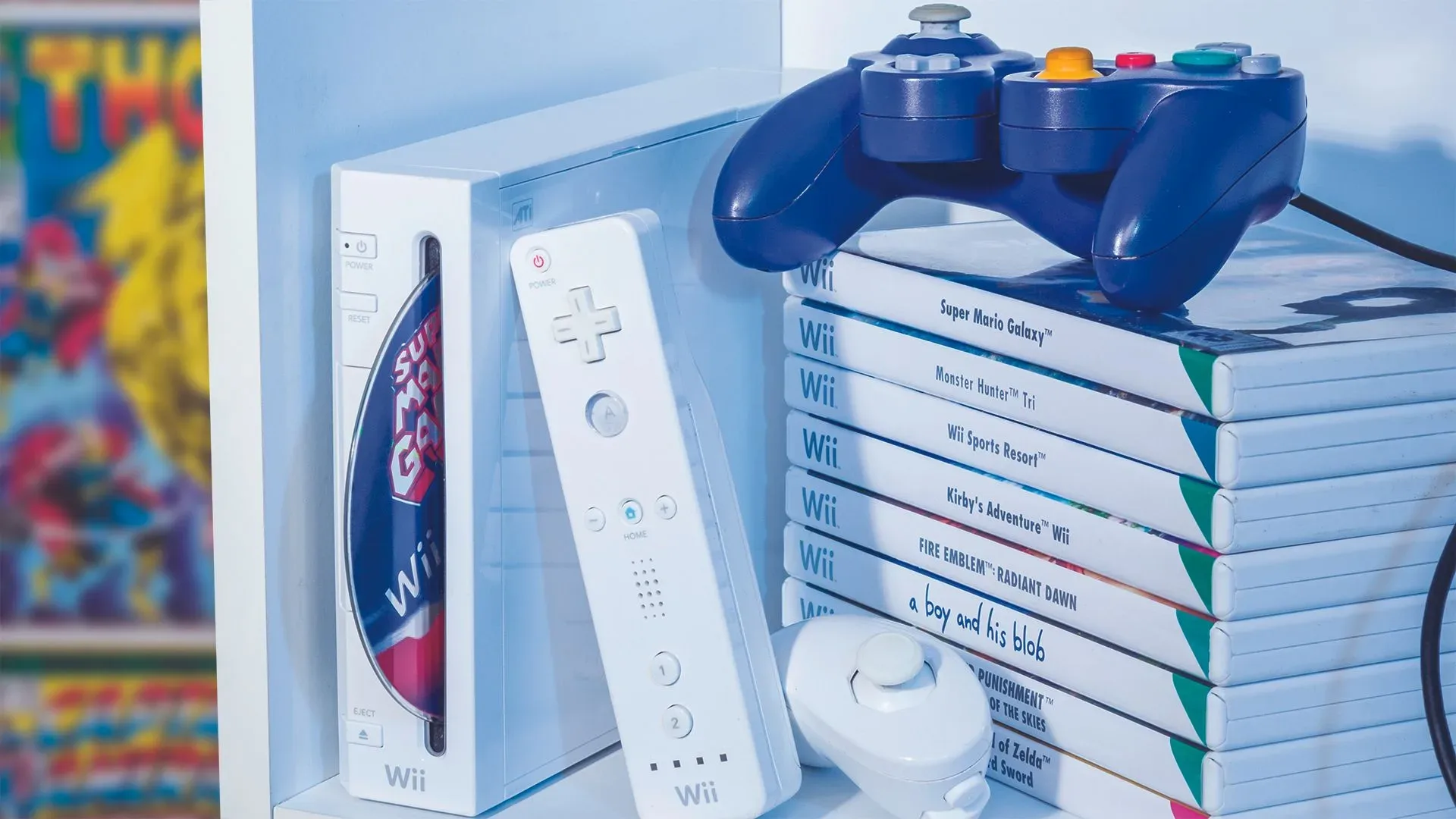
For retro audiences, that target also gives the project a clearer identity. There is a special appeal in software that meets an old machine where it lives, rather than treating original hardware as a mere shell for something that requires substantial upgrades. The same passage of time that places systems such as the Wii and PlayStation 3 in retro conversations has only made projects for earlier computers feel more remarkable; even the Wii and PS3 now sit in the retro club, while the Amiga remains a platform whose technical personality inspires dedicated new work.
Native AGA rendering, not an emulation wrapper
The reported conversion uses native AGA techniques, including planar graphics, hardware scrolling, Copper palette updates, Blitter operations and double-buffered background restoration. Those terms are not decorative technical confetti; they point to a design that is meant to use the Amiga’s custom-chip toolset in the way period software would.
Planar graphics are central to how classic Amiga visuals are represented, with display information arranged across bitplanes rather than in the chunky pixel layouts familiar from many later systems. Hardware scrolling can reduce the need for the CPU to redraw every screen movement manually. The Copper, a specialized Amiga co-processor, can perform display-list style changes such as palette adjustments at particular points in a frame. The Blitter is another famous custom component, built to move and manipulate blocks of graphics data efficiently.
Related coverage includes City Connection Is Being Rebuilt for Amiga AGA in an AI-Assisted Retro Experiment.
For a game structured around roads, scenery and a persistent heads-up display, separating how those elements are maintained is sensible. The reported build gives the backgrounds, roads and HUD their own treatment. Double-buffered restoration is also cited, suggesting attention to stable redraw behavior as the car, enemies and scrolling environment change from frame to frame.
None of those individual features automatically guarantees a perfect game. Native development still has to reconcile differences between the arcade original and the A1200’s display modes, memory arrangement, processor budget and audio hardware. But the approach described here is much more ambitious than merely placing an existing arcade emulation environment on an Amiga and calling it a port.
Music is being approached as conversion work too
Audio is another area where the project’s stated method is deliberately specific. The music is not described as a MOD conversion, and the Amiga is not said to be emulating the original game’s sound CPU or sound chips in real time. That positions the soundtrack as an adapted Amiga implementation rather than a live recreation of the arcade board’s sound architecture.
MOD music is one of the Amiga’s best-known musical legacies, so avoiding that route is an interesting choice. It does not mean a MOD-based approach would inherently be wrong; it means this project is presenting itself as a broader native adaptation, with its own strategy for translating the original sound to the target machine. As with the renderer, the key point is that the Amiga is expected to do the job through a conversion built for its capabilities, not through continuous hardware emulation.
An AI-assisted build still required human direction
The project is attributed to a roughly 15-hour collaboration involving ruliovega as play-tester and the ChatGPT-6 / Astra model. Ruliovega reportedly supplied the original ROMs and gave hands-on feedback throughout development. The AI selected City Connection from mid-1980s candidates and then worked from an early concept toward a functional conversion.
That account is more nuanced than a story about pressing a button and receiving a completed retro game. The work reportedly passed through 18 iterative stages. Those stages included an initial proof of concept, disassembly work, native programming, custom conversion tools and preparation of a launcher. The human role was especially important as a feedback loop: a play-tester can flag whether a behavior feels wrong or whether a visual mismatch matters, while the implementation system can revise code and assets in response.
The claimed workflow also illustrates a basic truth about old-game conversion: generating code is only one part of the assignment. A game is a mesh of rules, timing, graphics, collision behavior, sounds, transitions and small presentation details. A build can start successfully, display sprites and react to inputs, yet still differ substantially from the arcade reference in ways players notice immediately.
Quality control reportedly consumed the real effort
Perhaps the most interesting detail is that programming and disassembly were reportedly among the quicker parts of the process. The larger share of the project’s time went to quality control, including comparisons of millions of pixels between the arcade original and the Amiga conversion. The purpose was to identify bugs and reduce visual differences in pursuit of a pixel-faithful result.
That claim should be understood as a description of the development process and its intended accuracy, rather than a substitute for independent verification on real hardware. “Pixel-perfect” is a demanding label, particularly when two systems have different display characteristics and a game’s feel is influenced by more than the image on screen. Input response, game speed, audio timing and edge cases all matter. Still, using large-scale image comparisons is a meaningful sign that the work aimed beyond a loose homage.
It also demonstrates where AI-assisted development may be most useful in an archival or retro-coding context. An automated system can repeatedly compare outputs, locate differences and help generate fixes at a scale that would be exhausting by hand. Human feedback remains essential for deciding which differences are meaningful, checking that the game actually plays correctly and maintaining a clear goal for the final conversion.
What makes this experiment worth watching
There are two stories intertwined here. One is a traditional retro-computing story: a 1985 arcade game is being rebuilt for the Amiga 1200 using the platform’s distinctive AGA graphics hardware. The other is a modern workflow story, in which AI is credited with disassembly, code generation, utility creation and repeated refinement under human direction.
Neither side should erase the other. The Amiga’s custom hardware, the original arcade game’s design and the tester’s supplied materials and feedback are all fundamental to the reported outcome. The AI-assisted angle is compelling precisely because it is presented as an iterative collaboration with checks, revisions and technical constraints, not as unattended automation.
For now, the available details frame City Connection as an experimental native AGA conversion aimed at stock A1200 specifications. If the project performs as described, it could be an intriguing example of both ongoing Amiga homebrew ambition and a new kind of tool-assisted reverse-engineering workflow—one where the tiny car still has to make every jump, paint every road and avoid every arcade-era headache the hard way.