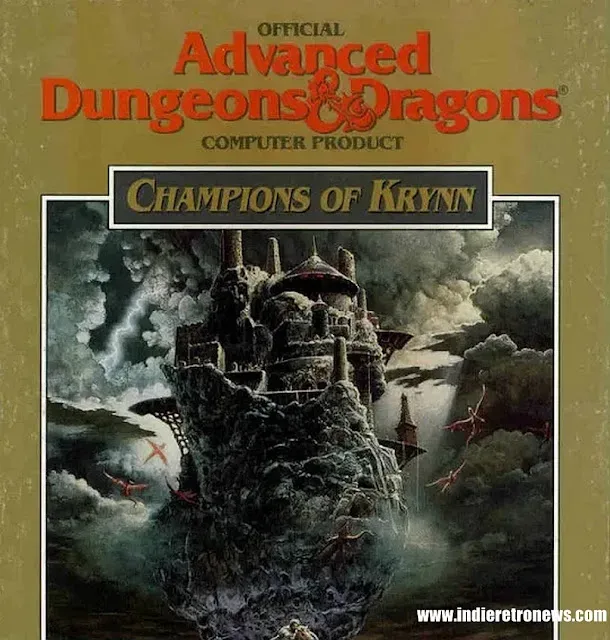
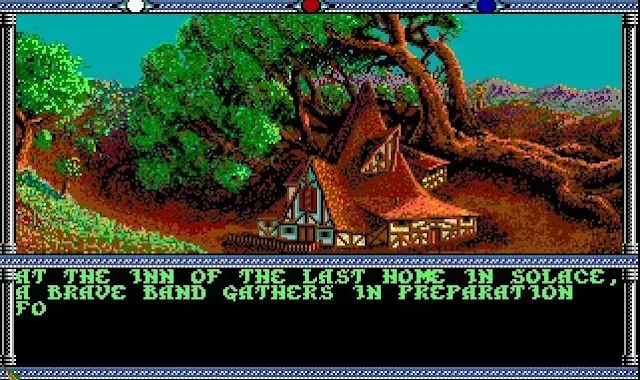
Champions of Krynn, one of SSI’s classic Gold Box role-playing games, has received a new reverse-engineered update intended to make its Amiga version substantially more comfortable on expanded and newer Amiga configurations. The work comes from developer mOoNsHaDo, whose project rebuilds the game’s Amiga executable as a from-scratch C port based on annotated 68000 assembly decompilation, with AI used in the routine-by-routine conversion process.
The immediate appeal is practical rather than cosmetic. The updated executable is designed for systems running Kickstart 3.x, faster processors and newer chipsets—hardware combinations that can expose assumptions made by older software. It also allows the game to multitask in the background alongside normal Workbench applications, a meaningful quality-of-life change for people using an Amiga as a general-purpose desktop rather than treating a game session as the machine’s only job.
A classic RPG meets less-classic hardware problems
Older computer games often behave differently once the hardware around them changes. A title may have been perfectly stable on the processor speed, display mode and memory configuration it originally expected, yet show graphical corruption or crashes when asked to run on a more capable machine. That does not necessarily mean the game’s original design was poor; it can mean timing assumptions, display handling and memory behavior that were harmless on the intended setup are no longer reliable elsewhere.
That is the gap this project is trying to close for the Amiga release of Champions of Krynn. Rather than a narrow workaround for one configuration, the stated goal is compatibility with Kickstart 3.x, accelerated CPUs and newer chipsets. The update also addresses problems that had persisted on expanded machines even when using WHDLoad.
WHDLoad is commonly used to help older Amiga software run from hard-drive-based installations and across a wider range of configurations. Its usefulness does not guarantee that every issue inside every game disappears, however. If a program itself has a race condition, reads memory outside expected bounds, or reacts poorly to a promoted display mode, a more direct code-level correction can still be necessary.
The bugs being targeted
The most technically notable repair concerns a blitter race condition. On Amiga hardware, the blitter is a component used for fast graphics operations. A race condition occurs when the correct outcome depends on the precise timing of events: one part of a program assumes another job has completed, but on a different-speed system that assumption may no longer hold.
Here, the result could be bitplanes left only partly drawn on faster CPUs. Bitplanes are a way Amiga graphics represent image data across multiple layers; incomplete drawing can therefore produce visibly broken pictures instead of a merely subtle rendering error. The identified symptoms include damaged LBM image colors.
LBM is an Amiga-associated bitmap image format. In the context of this patch, the important point is simple: graphics that should appear with their intended color information could be corrupted when the program’s drawing work fell out of sync. Fixing that timing issue should matter most to players on accelerated machines, where faster execution can make old timing-sensitive behavior show up more often.
The project also fixes an IPrefs screenmode promotion issue. Screenmode promotion is a compatibility behavior in which software that requests one display mode is redirected to another more suitable mode. IPrefs is part of the Amiga preferences environment involved with such system-level display choices. When the game and the actual monitor view disagreed, the reported consequences were severe stretching or recurring black-screen flashing.
For players, that means a problem that can make an otherwise working game frustrating before an adventure even begins: the image may technically appear, yet be displayed incorrectly enough to be hard to use. Addressing the mismatch is not a new gameplay feature, but it is an important preservation-minded fix. A game needs to be legible and stable before its original systems can be enjoyed as intended.
Other repairs address black flashing tied to missing save games and out-of-bounds memory reads that could lead to apparently random crashes. An out-of-bounds read happens when software tries to access data beyond the memory area it is supposed to use. Depending on what lies nearby in memory, the result can range from no visible effect to a fault that crashes the program. Removing those reads is especially valuable because failures of this kind can be inconsistent and difficult for players to reproduce.
Why background multitasking matters
The ability to leave Champions of Krynn running while using ordinary Workbench programs is one of the update’s clearest modern conveniences. Workbench is the Amiga desktop environment, and many older games were built around the expectation that they would take full control of the computer during play.
Multitasking does not change the rules, encounters or role-playing structure of Champions of Krynn. What it changes is the surrounding experience. Players can treat the game less like an isolated, single-purpose boot mode and more like an application coexisting with the rest of the desktop. For a game whose sessions may involve party management and saves, that can make the broader machine feel far less hostile to switching tasks.
There is also a preservation angle. Compatibility projects are frequently judged by whether an old game launches at all, but reliable operation is a higher bar. Correct graphics, correct display behavior, dependable saves and fewer unexplained crashes all affect whether the software remains usable on the hardware people actually maintain today.
A reverse-engineered C port, with an explicit AI disclosure
mOoNsHaDo describes the effort as a from-scratch C port of the Amiga version, built by converting annotated 68000 assembly decompilation routine by routine. The project explicitly discloses that various AI tools assisted with the code conversion process.
That distinction is worth keeping clear. This is not presented as a newly designed remake with added story material or an overhaul of the RPG’s fundamental mechanics. It is a technical reconstruction focused on how the existing Amiga version executes, with the goal of preserving its behavior while correcting compatibility and stability faults.
Assembly decompilation is the process of studying low-level machine-oriented code and reconstructing its logic into a form that can be understood and reimplemented. The Motorola 68000 family was central to the Amiga’s software environment, so annotated 68000 decompilation provides the project’s technical starting point. Rewriting routines in C can make it easier to reason about program behavior and apply targeted fixes, but it also demands care: an old game can depend on small details of timing, graphics and data handling.
The stated AI disclosure is useful precisely because it is specific. It identifies AI as an aid used during routine-by-routine conversion, rather than presenting the code as an unexplained black box. The relevant result for players is still the behavior of the executable: whether it better supports the intended configurations and eliminates the identified bugs. For the wider retro-computing community, the project is also an example of how code-recovery work is increasingly intersecting with assisted development tools. That broader subject is already showing up across games technology, including in discussions around generative AI development initiatives, though this Krynn effort is specifically framed around porting and repair.
What players should expect—and what remains uncertain
The supplied details support a focused expectation: people using Kickstart 3.x, faster processors, newer chipsets or expanded Amiga configurations may see a more stable and better-behaved version of the game. The patch directly targets partially drawn graphics, incorrect LBM colors, display stretching, black-screen flashing, save-related flashing and random crashes caused by invalid memory reads.
They do not establish a universal guarantee for every hardware configuration, every install method or every save-state scenario. Compatibility projects benefit from broad community testing because the range of Amiga setups can be extensive. mOoNsHaDo is inviting bug reports and asks players who encounter problems to send their save files to marranosoft@gmail.com. Including the save file can be especially useful: it gives the developer a reproducible point in the game rather than only a description of what went wrong.
Players reporting an issue can help most by being precise about the conditions surrounding it: the Amiga configuration in use, whether the machine has a faster CPU or newer chipset, the selected screen mode, whether WHDLoad is involved, what happened on screen, and the point at which it occurred. Those details are not a substitute for the requested save file, but they can help separate a reproducible code defect from a configuration-specific display problem.
Why this kind of repair is valuable
Retro game preservation is sometimes reduced to finding an old disk image or making a title boot. This update highlights the difference between mere access and usable access. If a classic RPG displays the wrong colors, flickers to black, stretches badly across the monitor, corrupts its graphics on a faster CPU or crashes during play, then its survival is incomplete in practical terms.
The work on Champions of Krynn aims at exactly those friction points. It keeps the focus on the original Amiga game while making its operation more appropriate for the systems enthusiasts are likely to run now. For Gold Box fans with an upgraded Amiga setup, that makes revisiting Krynn less about accommodating old technical compromises and more about getting back to the adventure.