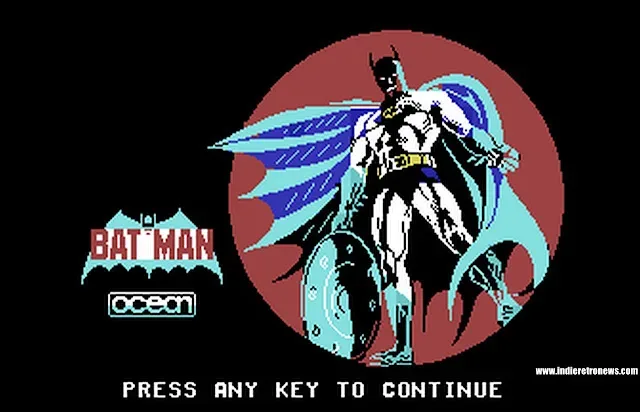
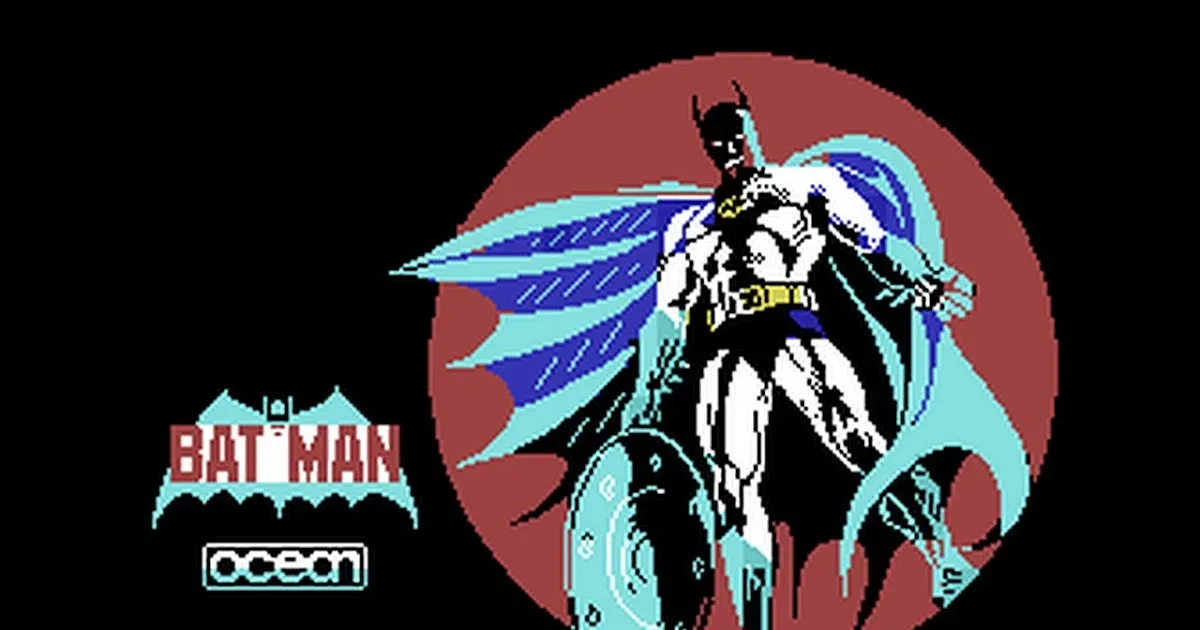
A new conversion of the 1986 isometric Batman action-adventure has been released for the Commodore 64 and Commodore Plus/4. Identified as Batman +8 PAL/NTSC, the project brings the ZX Spectrum original to two closely related but distinctly different Commodore machines.
The release is credited to Absence (ACE) and Exceed (EXD), with code credits for Chronos and Murphy. Its most notable detail is not simply that it targets two platforms, but that it explicitly accounts for PAL and NTSC versions while also addressing the Plus/4’s native audio hardware in its introductory music.
One conversion, two Commodore targets
Commodore 64 and Plus/4 releases can look adjacent from a modern distance: both are home computers from the same era, both have devoted retro communities, and both are commonly associated with compact, single-load game experiences. Yet they are not interchangeable targets. A conversion intended for both systems must contend with separate hardware characteristics, especially where sound is concerned.
That makes the Plus/4 edition more than a nominal second build. The project notes that the intro uses Batman (short) by JCH and employs an advanced frequency converter on the Plus/4’s native TED hardware. The stated purpose is to emulate lower notes.
TED is the Plus/4’s combined video and sound chip. In practical terms, native TED audio has its own frequency behavior and limitations, so music written or arranged with another machine’s sound characteristics in mind cannot always be moved across without compromise. A frequency converter is a technique for translating musical pitch data or playback behavior so that the destination hardware can approximate notes it would not otherwise represent in the same way.
Here, that technical work is specifically tied to the opening tune rather than presented as a sweeping claim about every sound in the game. Still, it is a meaningful sign of attention to the Plus/4 as its own platform rather than merely an afterthought alongside the C64 build.
Why PAL and NTSC labels matter
The PAL/NTSC label is also a useful piece of release information. PAL and NTSC are television standards historically associated with different display refresh rates. For older computer software, those differences can affect more than whether an image appears correctly on a compatible display: timing-sensitive games and music routines can run differently if they assume one standard and are played under the other.
A release that calls out both standards signals that timing compatibility was considered. That does not, on its own, establish exactly how the conversion handles every gameplay or audio routine, and no further implementation details have been provided. It does establish that both PAL and NTSC variants are part of the project’s identity.
Related coverage includes Ocean's 1986 Batman Gets New Commodore 64 and Plus/4 Conversion.
For players using original hardware, compatible replacements, or modern setups designed around vintage systems, that distinction can be important. Retro software often lives across a mixture of regional machines and video configurations. Clear version labeling helps users identify the build that fits their setup instead of treating “Commodore version” as one universal format.
A return for a Spectrum isometric game
The conversion is based on the ZX Spectrum version of Batman, an isometric action-adventure from 1986. Isometric games present a world at an angled, three-dimensional-looking viewpoint while still drawing it on a two-dimensional screen. Rather than the side-on perspective of a traditional platformer, rooms and objects are arranged diagonally, with movement and collision designed around that spatial illusion.
That design approach is especially associated with home-computer games of the period because it could create a sense of depth and interconnected space without requiring actual 3D graphics hardware. The effect is visually distinctive, but it also makes conversion work demanding. Movement directions, room layouts, sprite layering, object interactions, and the clarity of obstacles all have to hold together in a viewpoint where the player is constantly judging diagonal positioning.
The supplied release information does not detail changes to the game’s mechanics, room structure, visual treatment, or controls, so it would be premature to claim a definitive comparison between the new Commodore versions and the Spectrum original. The confirmed point is simpler and still substantial: this is a fresh C64 and Plus/4 conversion of that 1986 Spectrum game.
The Plus/4 angle is particularly notable
New C64 software is a familiar part of the continuing Commodore scene, but a simultaneous Plus/4 target gives this project a broader technical footprint. The Plus/4’s TED-based architecture makes it a machine with its own porting questions, particularly in music playback. The note about lower-note emulation is therefore not just a production footnote; it explains one concrete area where the Plus/4 version required platform-aware work.
It also highlights a recurring value of contemporary retro development: conversion projects can preserve the identity of a historical game while making careful choices around the systems that did not originally receive it. That is different from simply repackaging an existing release. A conversion has to translate software from one machine’s assumptions to another’s, and the results depend on decisions about timing, graphics, input, and audio.
In this case, the project’s publicly stated credits separate release and coding roles. Absence (ACE) and Exceed (EXD) are listed as releasing the conversion, while Chronos and Murphy are credited for code. JCH is credited for the short Batman intro music. Those individual acknowledgements matter in a scene where ports, fixes, conversions, and machine-specific enhancements can involve different contributors.
What is confirmed, and what remains unspecified
Several points are clearly identified by the release notes:
- Batman +8 PAL/NTSC is a conversion of the 1986 ZX Spectrum Batman.
- The conversion is available for Commodore 64 and Commodore Plus/4.
- Absence (ACE) and Exceed (EXD) are listed as release credits.
- Chronos and Murphy are listed for code.
- The introduction uses JCH’s Batman (short).
- On native TED hardware, an advanced frequency converter is used to emulate lower notes.
- The project includes an AI-assistance disclosure.
Other details have not been specified in the supplied material. There is no stated feature list, no supported-device breakdown, no claim of changes beyond the conversion itself, and no supplied explanation of which elements involved AI assistance. The disclosure should therefore be read precisely: AI assistance is acknowledged, but its role is not further described.
That restraint is useful when discussing retro releases. New versions of old software can attract a lot of assumptions—about accuracy, enhancement, performance, or the scope of a platform port—but the available information only supports a defined set of facts. The C64 and Plus/4 conversion, its PAL/NTSC designation, its credits, and its intro-music approach are the key confirmed details.
Part of an active Commodore development culture
This release arrives in a broader environment where older Commodore systems remain active targets for new work, adaptations, and technical experiments. Recent projects have also explored how machine-specific capabilities can shape a revival, as seen with an Amiga AGA treatment of Wizard of Wor focused on arcade speech and memory handling.
The comparison is not about claiming the same technology or goals. The Amiga and the Plus/4 are very different systems. The common thread is the enduring interest in making old software speak more effectively to particular vintage hardware—whether through a conversion, a hardware-aware audio solution, or a newly tuned edition.
For Batman +8 PAL/NTSC, the headline result is straightforward: a 1986 isometric Batman adventure from the Spectrum has reached both the Commodore 64 and Commodore Plus/4. Its handling of PAL and NTSC variants and its stated TED music solution give the project a clearly technical dimension, while the shared release and coding credits document the people behind the conversion.