Resident Evil has long understood that terror works better when somebody is willing to say something a little ridiculous immediately after surviving it. Leon S. Kennedy, especially, has built a reputation on treating impossible biohazards as both a public-safety emergency and an opportunity to deploy a pun with spectacularly questionable timing. New videos circulating online, reportedly assembled from unused game audio, suggest there may have been substantially more of that material waiting behind the curtain.
The recordings are said to include nearly 400 removed voice lines associated with Resident Evil Requiem, alongside more than 600 linked to Resident Evil 4 Remake. They were posted in two separate YouTube videos by modder Keff0. The purported collection encompasses far more than Leon’s dialogue: listeners can reportedly hear material tied to Grace Ashcroft, the Merchant from Resident Evil 4 Remake, and even Requiem’s Chef Zombie.
That is a remarkable quantity of discarded or inaccessible audio, but it is worth keeping a sensible flashlight aimed at the cave wall here. Audio presented as cut content can show lines removed during development, alternate takes, unused triggers, placeholder material, or recordings intended for situations that changed before release. Without official production notes, the exact status and originally intended context of each line remain uncertain. Still, the clips provide an entertaining glimpse at how much writing and performance can be created for a game even when players never hear it in the finished campaign.
Leon apparently had even more ammunition than players heard
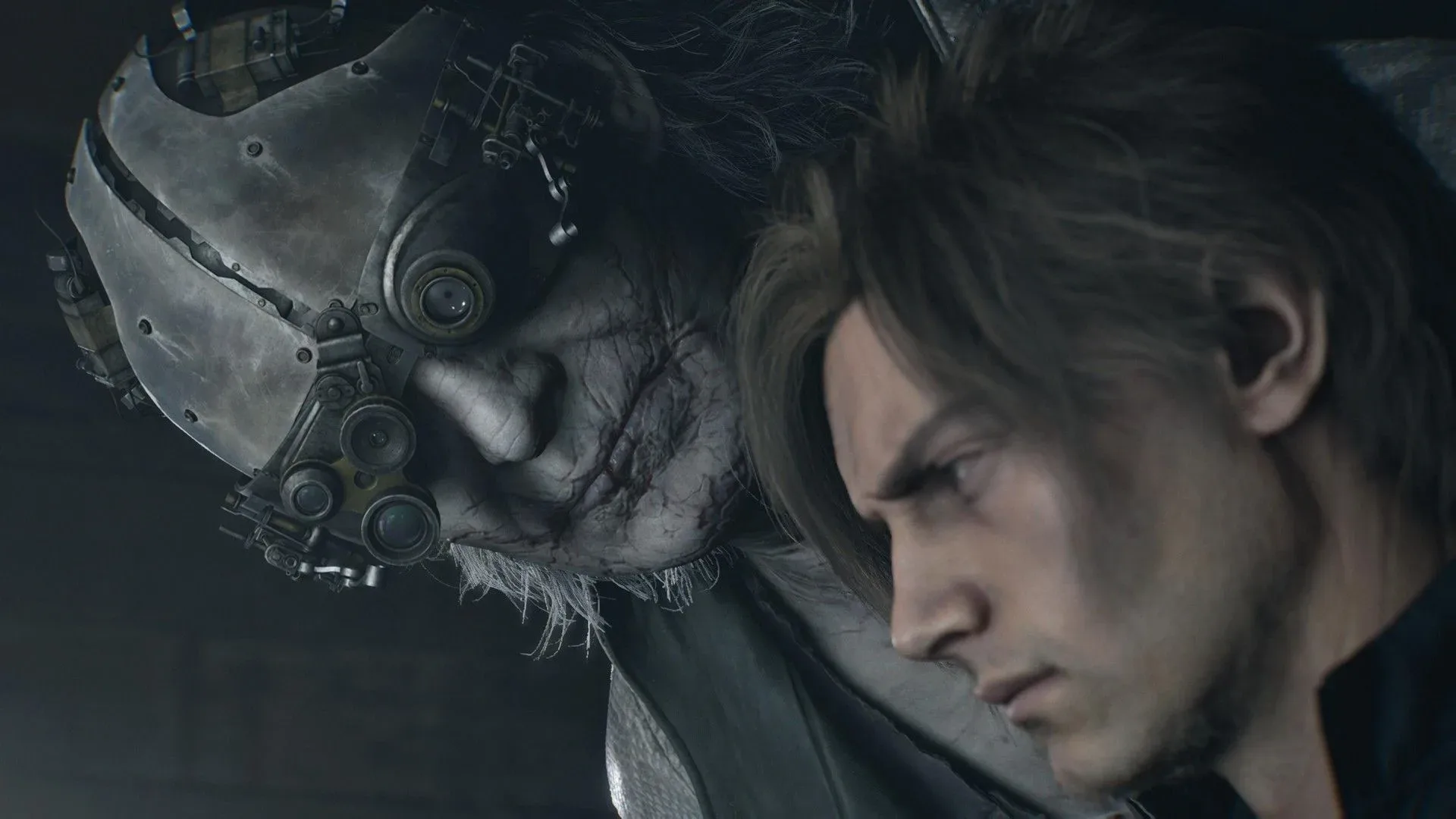
The most immediately shareable material is, unsurprisingly, Leon’s. The character’s ability to remain cool under pressure has always involved an improbable willingness to verbally spar with monsters that do not appear capable of appreciating wordplay. The reported unused lines lean into that persona, seemingly built for combat finishes, environmental mishaps, and encounters with creatures that have already received enough limbs to be considered an administrative burden.
Among the snippets attributed to Leon are:
- “Shucks, no time for an encore.”
- “Someone needs to work on their parallel parking.”
- “Eight legs, no brains.”
- “That again? You’re a bit of a one-trick spider.”
None of those phrases reveals the exact encounter, enemy animation, or player action it was intended to accompany. That missing context is half the fun. “Parallel parking” implies a vehicle, a collision, or a creature with a deeply irresponsible approach to spatial awareness. The spider material sounds like it could have been a repeat-enemy remark, but that is only inference from the language itself. “No time for an encore” could fit almost any theatrical boss exit, shattered stage set, or enemy that has the misfortune of dying twice in front of Leon.
What is clear is the tonal through-line. Leon’s jokes are not merely decoration; they often function as pressure valves. Resident Evil scenarios routinely involve isolation, mutation, pursuit, and environments designed by someone who looked at industrial architecture and asked, “What if every corridor were also a trap?” A concise, corny response after a crisis reminds players that the hero has not been completely swallowed by the nightmare.
Nick Apostolides, Leon’s actor in the modern remakes, is associated with the delivery of these reported lines. A good Leon quip needs a delicate balance: too smug and the danger loses weight; too solemn and the joke drops dead before the monster does. The clips reportedly preserve that familiar rhythm of exhausted confidence, as though this is not the first time a giant creature has made a terrible life choice near him, but it may be the first one to inspire a parking joke.
Related coverage includes Cut Resident Evil Voice Lines Reveal More Leon Kennedy One-Liners.
The Merchant’s missing material sounds characteristically cheeky
Leon is not the only familiar voice apparently represented in the audio. The Merchant is one of Resident Evil 4’s enduring oddballs, a travelling salesman whose calm enthusiasm for commerce persists despite the surrounding village’s catastrophic lack of normal customers. Reported unused lines give him more jokes to work with, including a remark about an herb that begins with “This’ll perk you up” before clarifying, “Relax mate – it’s not that kind of herb.”
Another line attributed to the Merchant advises that it is important to stay young at heart, particularly under the present circumstances. It is very easy to see why dialogue like this might be recorded. Merchants in games often need a pool of reactive barks so repeat visits do not feel mechanically sterile. Yet it is equally easy to see why a line might be removed: a joke can collide with a scene’s mood, overlap awkwardly with player actions, or simply prove less effective than another take once all the pieces are in place.
The point is not that every unused line deserved restoration. Editing is part of game development, and a massive horror production needs to protect pacing with almost ruthless efficiency. Rather, the material makes the scope of that editorial work audible. Players experience the final arrangement; somewhere behind it sits a much larger archive of possibilities, including jokes that were written, performed, implemented to some degree, and then left behind.
Unused dialogue is a window into changing design
Cut-content discoveries tend to attract a particular kind of fascination because they make development feel less fixed. A released game can look inevitable once its story beats, combat encounters, and dialogue have been polished into their final form. Unused assets push back against that illusion. They hint at branching ideas, revised scenes, alternate enemy behavior, or simple contingency planning.
In this case, the reported spread across Resident Evil Requiem and Resident Evil 4 Remake is especially interesting because it includes lead-character banter and background flavour. Grace Ashcroft’s reportedly panicked breathing may have been intended to reinforce vulnerability or proximity to danger. Material for a comparatively minor character such as Chef Zombie suggests that even short-lived figures can receive bespoke audio during production. The total does not automatically mean every line corresponds to a complete missing sequence. It does indicate that voice work can be expansive, with developers preparing for a wide array of events before deciding precisely what belongs in the shipping version.
There is also reportedly a removed Resident Evil 4 Remake line that nods toward Resident Evil Village. Cross-series references are catnip for fans, even when they are not essential to the scene in question. A callback can make a universe feel connected, but it can also distract from a remake’s own setting and story. If the line is genuine, its absence may reflect nothing more dramatic than a choice to keep the focus tight.
Why modding communities keep finding the interesting leftovers
Modders and preservation-minded players frequently notice the overlooked corners of games: dormant assets, unused strings, alternate models, technical behavior, and the small leftovers that illuminate production. These discoveries can create valuable discussion, provided the distinction between verified intent and intriguing evidence stays intact. A file exists; that does not necessarily establish when it was made, why it was removed, or whether it ever belonged to a playable sequence.
The resident tinkering culture around PC games is also why stories about hidden or altered assets keep appearing. For another example of how player-made work can turn a game’s existing structure into something wildly different, see this Elden Ring mod built around a 726-run boss challenge. Modding can be playful, forensic, archival, or all three at once. In the Resident Evil case, the reported videos are prompting the most enjoyable kind of speculation: not “why was this deleted?” so much as “what on earth was Leon looking at when he said that?”
For fans, the best approach is to treat these clips as an optional bonus room rather than a definitive alternate edition of either game. Listen to the lines, laugh at the bad puns, and imagine the encounters. But leave room for ambiguity until more direct documentation emerges. The surviving final games already made their choices; the audio vault simply suggests that Leon Kennedy may once have been even more committed to meeting horror with a one-liner.