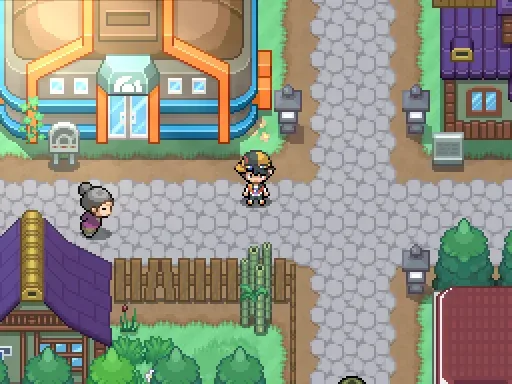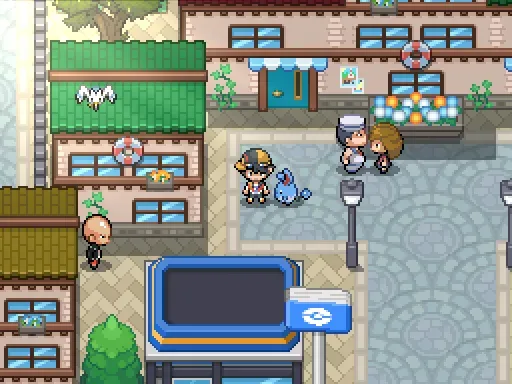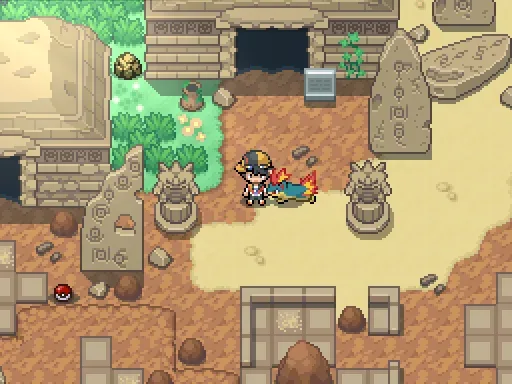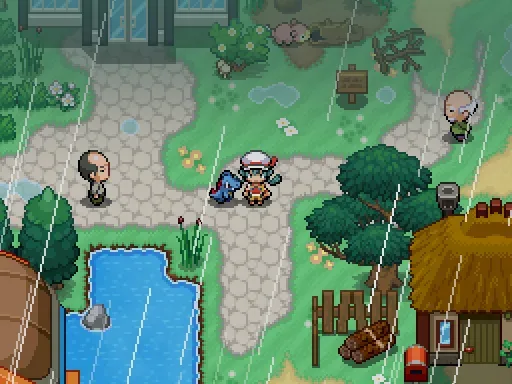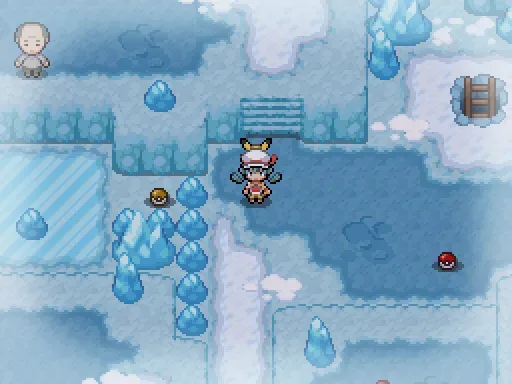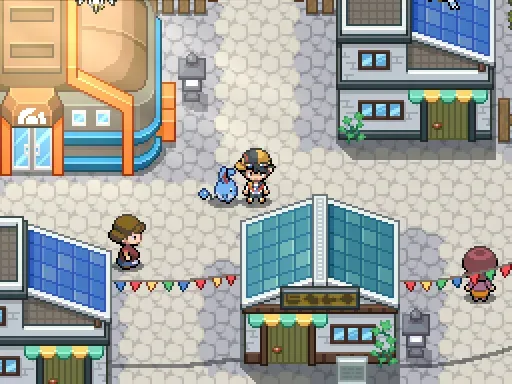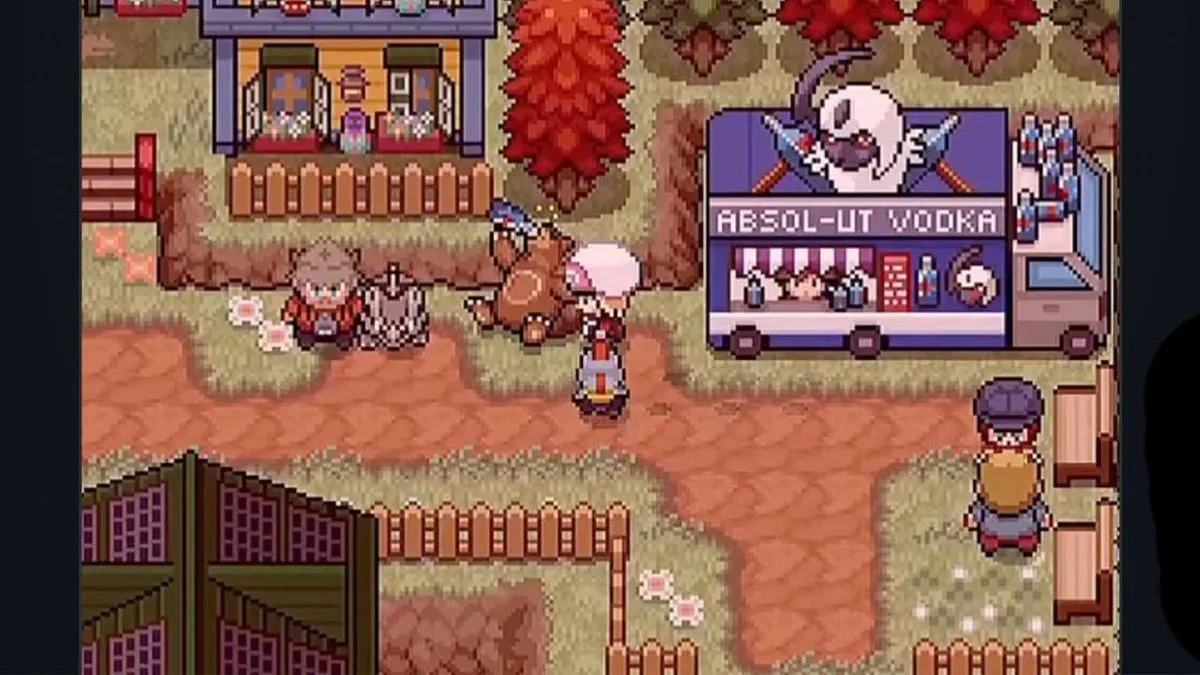
Pokémon GS Vitro, a fan-made reimagining of Pokémon Crystal, is scheduled to arrive on October 30, 2026. The project’s central idea is simple but consequential: revisit Johto with far fewer route-blocking restrictions, a larger Pokédex and a structure that lets players choose their direction much earlier than a conventional linear journey.
It is being built with RPG Maker XP for PC and Android. iOS use is also described as possible through an app called Empo, rather than as a native listed platform. The presentation is said to draw inspiration from Nintendo DS-era Pokémon games, while the game’s systems combine familiar second-generation regions with newer mechanics including Mega Evolutions and modern-style experience sharing.
The pitch is not merely “Crystal, but prettier.” GS Vitro appears to be redesigning how players move through Johto, how wild encounters stay relevant and how major battles respond to a less predictable order of play. That matters because opening up a role-playing game creates a balancing problem: when players can go almost anywhere, the game has to prevent both accidental brick walls and an effortless march through low-level areas.
An open Johto built around earlier choice
GS Vitro is designed to provide access to multiple towns and routes from the outset of the adventure. Rather than treating each new area as a reward only for clearing a previous checkpoint, the project aims to make exploration part of the player’s opening decision-making.
That change has practical implications for a Pokémon-style RPG. In a tightly sequenced game, designers can usually assume a rough range for a player’s team level, available move types and number of captured Pokémon at every major battle. With more routes available at once, two players may reach the same Gym with very different teams. One could prioritize a particular type matchup, while another might head somewhere else purely to find a favourite species.
GS Vitro’s answer is level scaling for wild Pokémon. In plain terms, the levels of Pokémon found in the world are intended to rise alongside the player’s party rather than remain fixed to each map. The stated goal is to avoid a situation in which a player becomes overpowered simply by roaming in an unexpected order, while also reducing the feeling that the game is steering them down one prescribed road.
Level scaling is not a guarantee that every encounter will feel equally difficult. Team composition, move selection and individual battle decisions still matter. But it can keep exploration meaningful by ensuring that a newly chosen route does not become trivial just because it would traditionally have appeared earlier in a linear progression path.
Gym Leaders will not rely on one fixed party
Major trainers are also intended to adapt to the open-ended format. Gym Leaders will have several team variations, and secondary trainers are planned to receive similar treatment. This is an important part of making non-linear progression work: a leader with a single static team can be either punishingly strong for someone who arrives early or dramatically underpowered for someone who explores widely first.
Related coverage includes Pokémon GS Vitro Sets October Release for Open-World Crystal Reimagining.
The exact selection rules for those varying teams have not been detailed, so players should not assume a specific scaling formula or a particular roster at any Gym. What is clear is the design intention: reaching a leader by a different route should not automatically make that battle meaningless.
For players who enjoy building a team around discovery rather than a pre-planned optimal route, that could be the most significant feature of the project. The choice of where to travel is only interesting if the game acknowledges that choice in battle. Different leader and trainer lineups offer a way to preserve uncertainty even when the world grants earlier freedom.
That focus on flexible challenge has some overlap with the broader idea that difficulty options can function as player tools rather than simple labels of success or failure. A recent look at assist modes as a difficulty toolkit explores that wider design question. GS Vitro’s approach is different, but its opening mode choices point toward the same interest in letting players decide what sort of run they want.
Field Moves replace traditional HMs
GS Vitro will replace HMs with Field Moves. HMs, or Hidden Machines, are the traditional Pokémon moves used outside battle to cross obstacles or alter the environment. They have often served as progression gates, requiring a particular move before a player can access a new location.
In GS Vitro, Field Moves are presented as a new name and broader framework for those out-of-battle actions. Some are planned to have distinct functions. The stated example is Rain Dance: certain Pokémon can use it outside battle. The full list of Field Moves and their requirements has not been provided, so it remains unclear precisely how widely they will change traversal or puzzle-solving.
Even so, the system fits the project’s stated aim of reducing early roadblocks. If exploration is meant to begin with multiple available destinations, the game needs ways to make a player’s Pokémon feel useful in the world without repeatedly shutting down movement until a later story trigger. Field Moves appear to be part of that solution.
A 350-Pokémon Pokédex, including Johto, Kanto and some newer additions
The planned Pokédex totals 350 Pokémon. It will include regional Pokémon from Johto and Kanto, plus a limited number of species from newer generations. The project also says those Pokémon can all be obtained normally, which is presented as avoiding dependence on trades or other external methods for completing the collection.
That promise is especially relevant to a fan project built for PC and Android, where players may not have a standard local trading circle or access to formal online services. It should not be read as a complete explanation of every encounter location, rarity or evolution condition; those details have not been outlined. Still, the intended result is straightforward: the expanded Pokédex is meant to be playable as a self-contained collection challenge.
Mega Evolutions are also planned. Mega Evolution is a temporary battle transformation associated with certain Pokémon, generally granting changed stats and sometimes a changed ability or typing. GS Vitro has not publicly detailed which specific Mega Evolutions are included, so there is no confirmed complete list to plan around. Their presence nevertheless marks a substantial mechanical shift from the original Game Boy Color-era framework.
Another smaller visual touch will let Pokémon have slight colour variations, described as being in the vein of Pokémon Stadium 2. This should not be confused with a confirmed statement about any wider shiny, breeding or statistical system. The available information only establishes that subtle colour variation is planned.
Modern convenience features without removing optional risk
GS Vitro lists several quality-of-life features designed to cut down on routine menu work and repeated travel. These include an eighth-generation-and-later-style EXP Share system in which Pokémon stored in the PC gain experience, expanded Pokégear functions, battle-only Turbo mode and a quick-heal option for the active party.
- PC experience: Pokémon left in storage can gain experience rather than falling behind the currently active group.
- Encounter List: a new Pokégear function intended to help track available wild encounters.
- PC Access: another Pokégear feature, allowing access to storage through that device.
- Battle-only Turbo mode: a speed-up function specifically limited to battles.
- Quick heal: an option intended to streamline restoring the player’s party.
These features point toward a game that wants experimentation to be less laborious. PC experience can make it easier to rotate captured Pokémon into a team without prolonged catch-up grinding. Encounter information can support targeted team-building or Pokédex progress. Storage access and quick healing, meanwhile, potentially reduce the time spent on repeat menu and travel tasks.
At the same time, GS Vitro plans to offer two run modifiers from the start: Permadeath Mode, described as Nuzlocke mode, and Random Mode. Permadeath usually refers to a rule set where a Pokémon that faints can no longer be used. “Nuzlocke” is commonly used by players for self-imposed challenge runs, though the exact rules implemented by GS Vitro have not been specified. Random Mode is also listed without a detailed account of what elements it randomizes.
The presence of these selectors gives players a choice between a streamlined adventure and a potentially higher-stakes replay. It also suits the open-world premise. A flexible map, varied trainer teams and an expanded pool of Pokémon can create different journeys across repeat playthroughs, but the ultimate value will depend on the final balance and on how clearly the game communicates its systems.
What is confirmed, and what remains unknown
The confirmed release target is October 30, 2026, with downloads planned through the project’s official website. PC and Android are the stated primary platforms, while iOS play is said to require Empo.
Beyond that, prospective players should keep a distinction between announced features and unspecified implementation details. GS Vitro has confirmed its broad direction: open access to multiple areas, scaling wild encounters, variable Gym Leader teams, Field Moves, 350 obtainable Pokémon, Mega Evolutions, convenience options and optional challenge modes. It has not detailed every Pokémon location, every Mega Evolution, the exact conditions behind every Field Move, or the precise operation of its scaling and randomization systems.
For now, the appeal is clear. Pokémon GS Vitro is attempting to preserve Johto and Kanto as the foundation while reconsidering the restrictions that usually dictate the order in which players experience them. If its open progression and battle balancing work together as intended, the result could give fans of the second generation a very different reason to return to the region when the project launches.