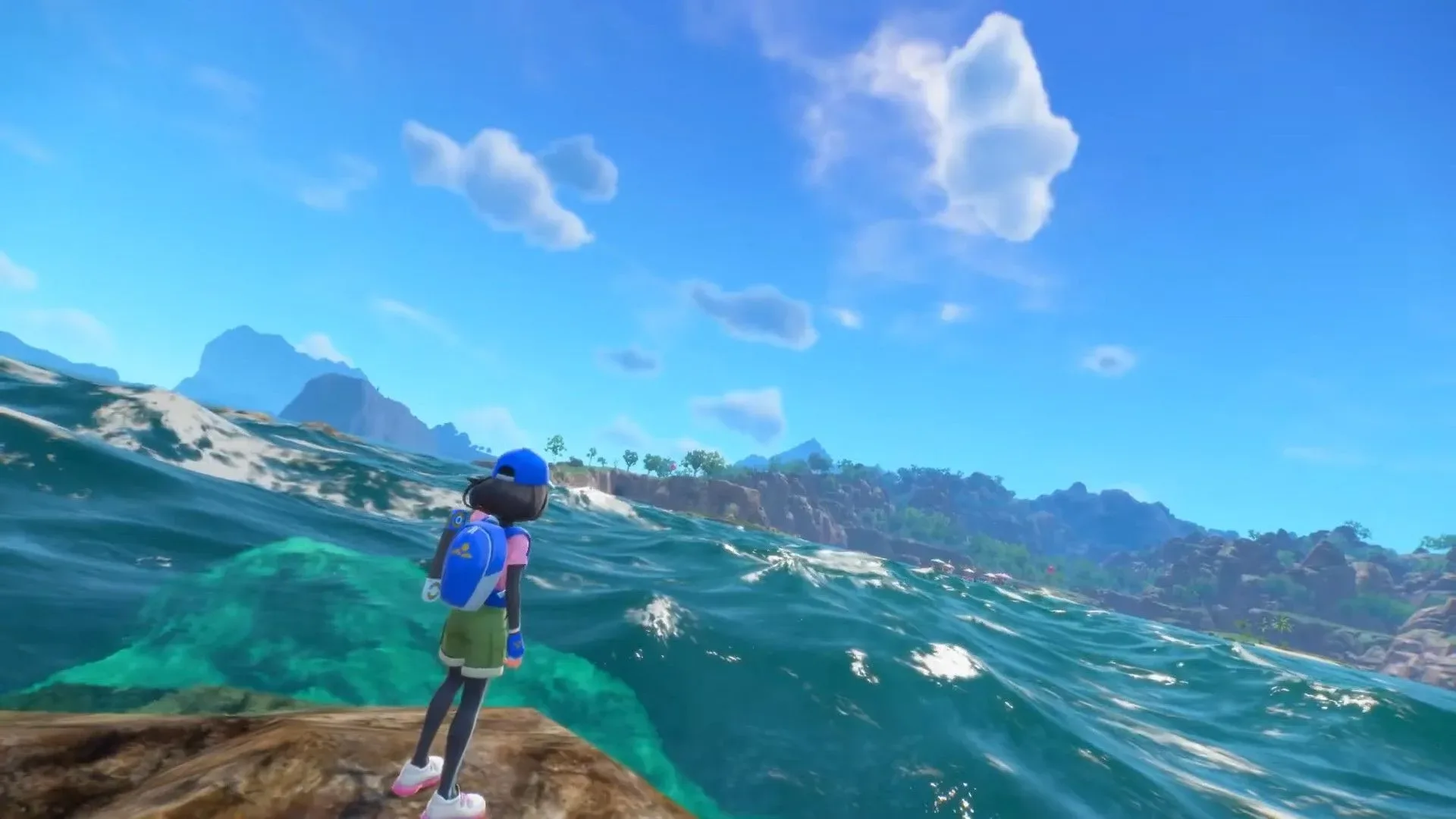
Pokémon’s next mainline RPG appears to be setting sail, and a newly public piece of graphics research has given its waterlogged premise an especially intriguing technical angle. Game Freak programmer Fumiya Narita and University of Tokyo professor Takashi Kanai co-authored research into rendering water and other moving liquids more efficiently while retaining the visual details that make a scene feel active: splashes, ripples, and rolling wave motion.
The work was presented at the Pacific Graphics 2026 conference in Singapore. It does not establish that the technique is being used in Pokémon Winds and Waves, and there has been no confirmation from Game Freak that the research is connected to the game. There was also no in-game demonstration attached to the research. That distinction matters. A developer’s academic or technical work can be valuable on its own without becoming a shipping feature in its next project.
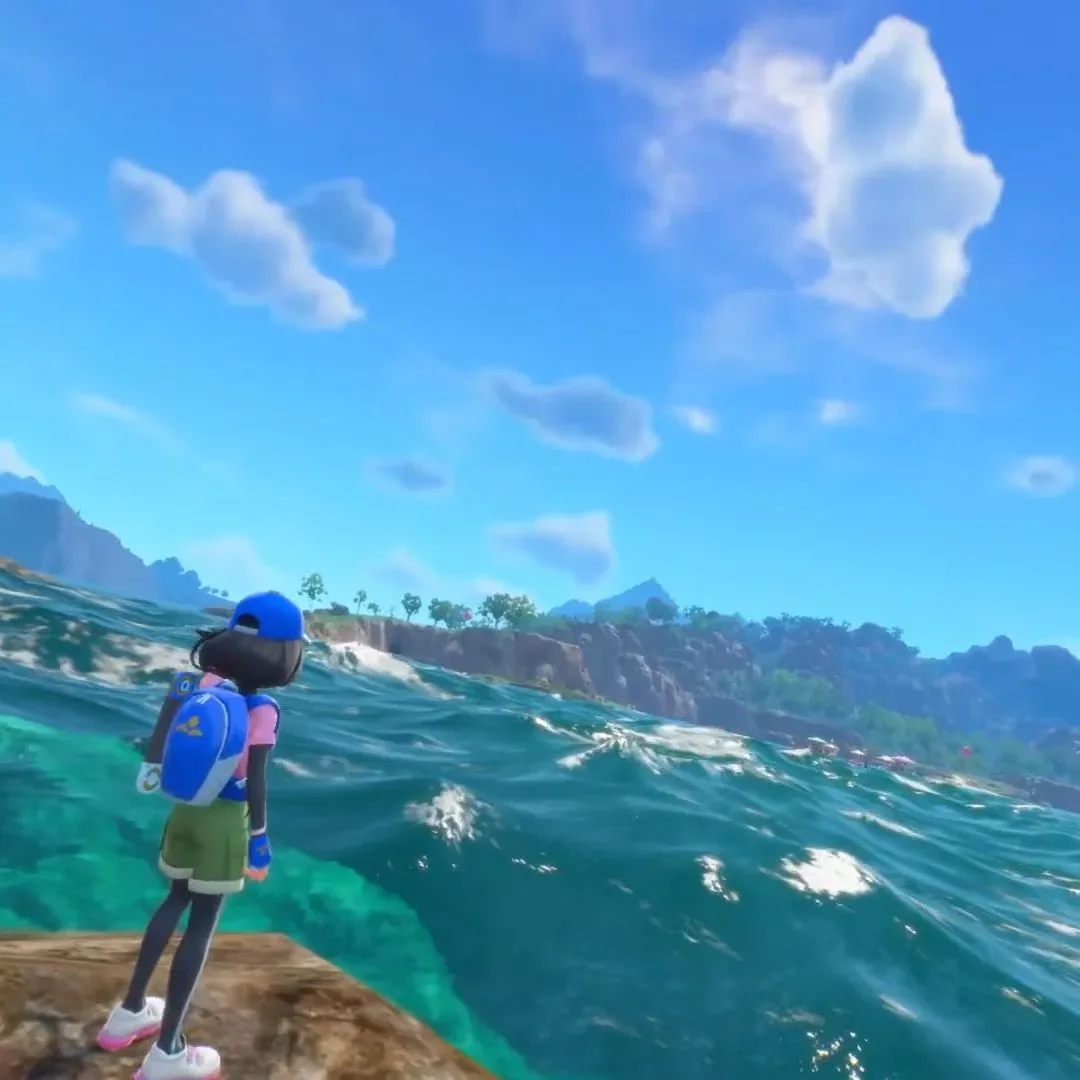
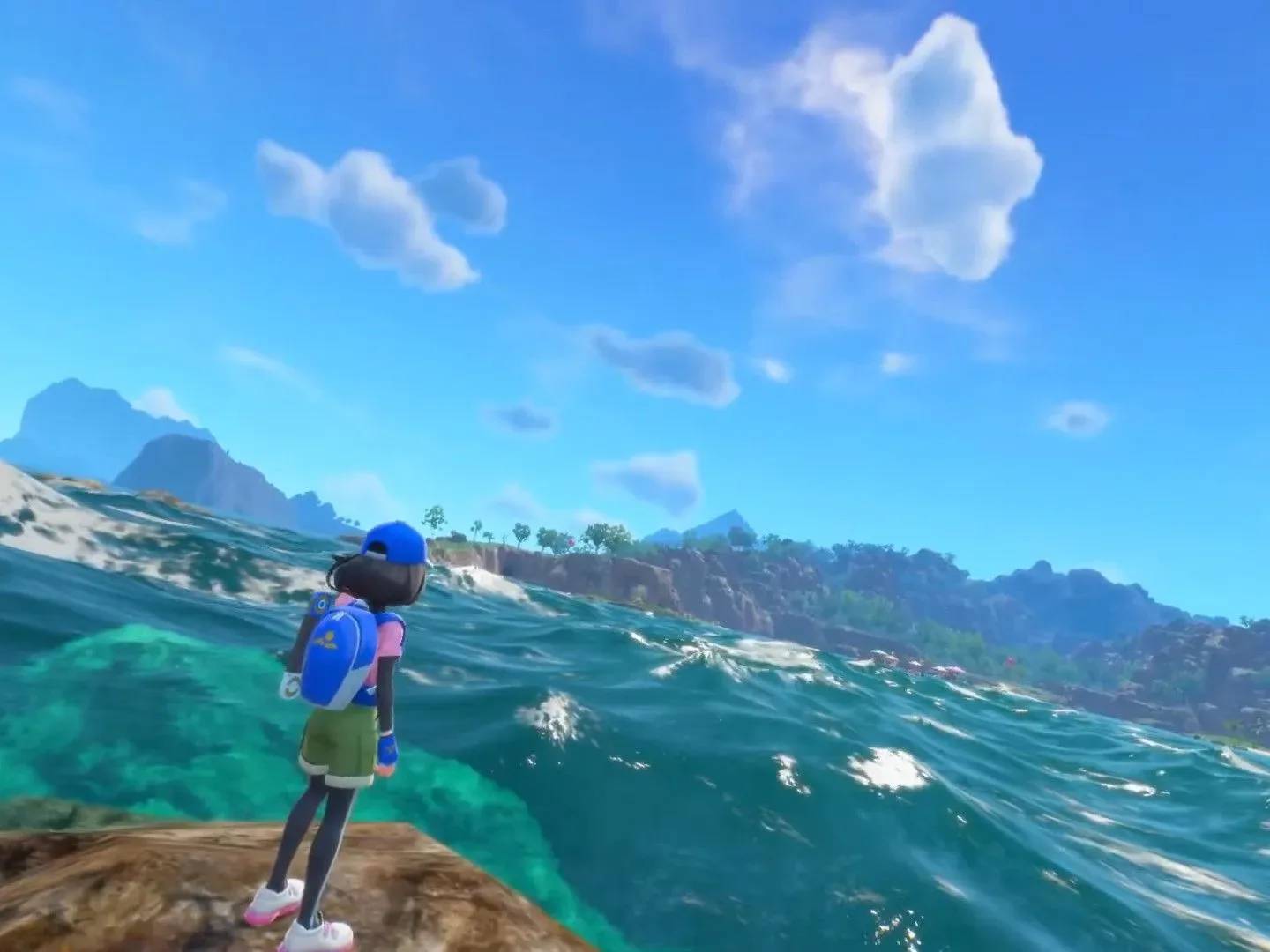
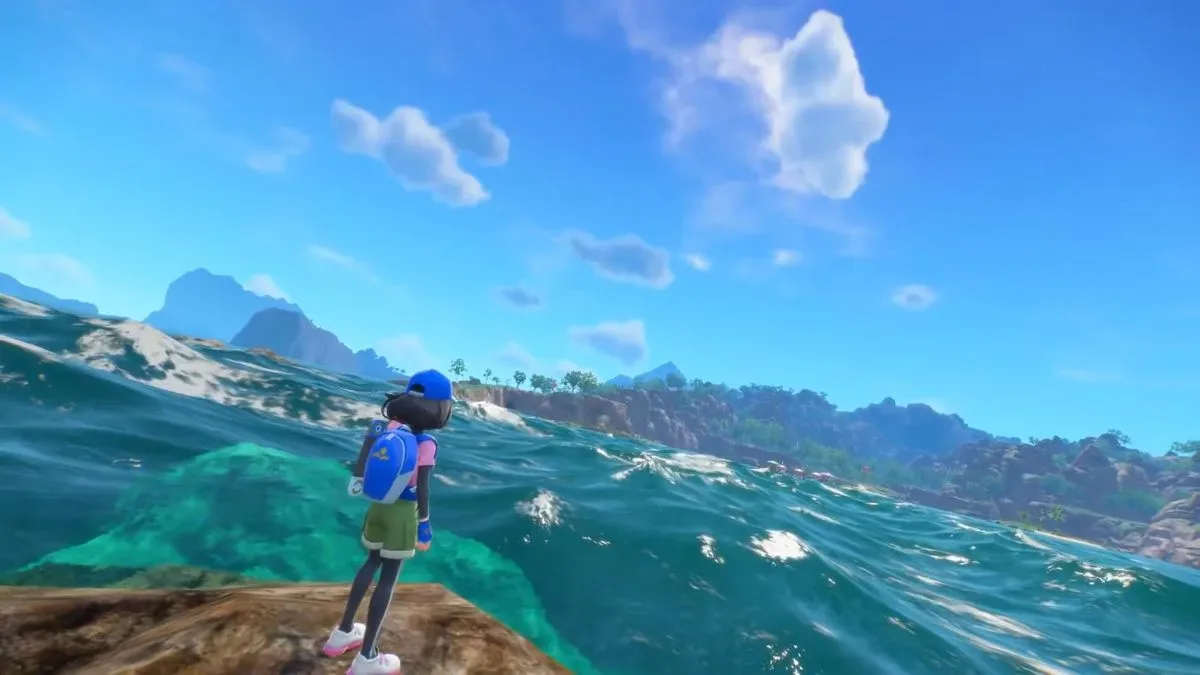
Still, the timing and subject make the possibility difficult to ignore. Pokémon Winds and Waves has been shown with large oceans featuring substantial movement, while its debut trailer also revealed an underwater biome. For a game expected sometime in 2027 exclusively on Switch 2, water is not merely background decoration; it could be one of the central visual problems the game has to solve.
What the research is trying to improve
Water looks simple from a distance. In a game engine, it is decidedly not simple when it needs to react, move, reflect light, and stay believable as the player changes location or viewpoint. A calm sea, shoreline foam, a creature breaking the surface, a waterfall, and drifting underwater currents may all call for different effects. The more detailed the simulation, the more computation it can demand.
The Narita and Kanai paper addresses that broad challenge: how to make detailed liquid physics less computationally heavy without throwing away the highly visible details that sell the illusion. In practical terms, the idea is to reduce or simplify the calculations happening beneath the surface while focusing effort where players are most likely to notice it.
That is a sensible target for interactive software. Unlike a pre-rendered animation, a game must keep producing its image while accepting player input, managing characters and environments, and running its other systems. Every expensive visual feature competes for a limited slice of the hardware’s available performance. The goal is not necessarily to simulate every droplet with maximum physical accuracy. The goal is to spend resources intelligently enough that the motion still reads as convincing.
Simulation, rendering, and the details players actually see
It helps to separate a few terms that are often bundled together under “graphics.” Simulation is the underlying mathematical work used to describe how a liquid moves. Rendering is the process of turning that information into the pixels seen on screen. A game can have a visually attractive ocean without running a fully detailed simulation everywhere, and it can simulate a lot of data without presenting it in a particularly striking way.
The research’s emphasis on preserving visible features is important because people tend to judge game water through immediate cues. They notice a cresting wave, expanding ripples, spray near an impact, or the way a surface changes around an object. Those moments carry more visual weight than invisible calculations taking place far from the camera. If technical methods can identify where detail matters most, developers may be able to reserve their heavier work for those high-impact areas.
Related coverage includes Game Freak Water Research Could Suit Pokémon Winds and Waves' Ocean Setting.
That does not mean a research project promises one-to-one physical realism. Nor does it mean players should expect any specific feature in Pokémon Winds and Waves. It instead points to a familiar development priority: make complicated scenes look alive without allowing one effect to consume the performance budget for everything else.
Why an ocean-focused Pokémon game makes the idea compelling
In the trailer material described so far, Pokémon Winds and Waves does not treat the sea as a thin blue border around a land map. Massive ocean areas and an underwater biome suggest a setting where water could shape the game’s atmosphere, traversal, and sense of scale. Even without confirmed gameplay specifics, that is a more demanding visual setup than a title where lakes and rivers are occasional landmarks.
Large bodies of moving water can expose repetition quickly. If wave patterns are too uniform, the player may start seeing the machinery rather than the sea. If interactions near shorelines or characters are too static, the world can feel less responsive. Underwater spaces present their own challenge: they need to communicate that the player is below the surface while remaining readable enough to navigate. Movement in the water, environmental effects, and the relationship between the camera and the surface all matter to the illusion.
A technique that makes liquid work more efficient could, hypothetically, give developers more flexibility in scenes where ocean motion is always in view. The benefit might be richer movement in focal areas, more stable performance when several effects share a scene, or simply more room for other elements of a dense environment. Those are possibilities, not announced features, but they explain why the research has attracted attention in relation to this particular game.
The word to keep in mind is hypothetical. Knowing that a Game Freak programmer co-authored relevant research is interesting evidence of technical expertise and interests. It is not evidence that a specific ocean system, diving mechanic, wave interaction model, or underwater activity has made it into the 2027 release.
Underwater footage raises questions, not confirmations
The underwater biome shown in the game’s debut trailer naturally invites speculation that players may be able to travel below the waves. The trailer establishes that such an environment exists; it does not settle precisely how it functions. It could be an explorable area, a more limited sequence, or something else entirely. Details about control, combat, encounters, objectives, and traversal remain unconfirmed.
That uncertainty makes the water research more tantalizing, but it should not be used to fill in the blanks. Efficient liquid technology could benefit an underwater environment visually even if the player’s interaction with it is limited. Conversely, an underwater region could appear in the final game without using this research at all. The two facts are compatible, not proven to be connected.
There is another reason not to overread technical papers: game production involves numerous teams and tools. A method discussed in a conference presentation may be adapted, changed, evaluated for future projects, or never integrated into a commercial product. Academic research and production implementation can overlap, but they do not automatically travel together.
The Switch 2 context
Pokémon Winds and Waves is planned exclusively for Switch 2, which makes performance management an obvious topic even before the game’s full technical profile is known. An ocean world is the kind of environment in which optimization can be as artistically important as raw visual ambition. Water, characters, wildlife, terrain, lighting, and draw distance all need to coexist rather than compete until the frame rate springs a leak.
The larger lesson from the paper is less “this game has a secret graphics feature” and more “liquid effects remain a serious engineering problem worth solving.” If an efficient method preserves the details viewers respond to most strongly, it can be useful wherever water is a major component of the scene. That is a particularly relevant concern for a Pokémon adventure whose public imagery has already emphasized vast seas and an underwater setting.
Switch 2 owners should also be wary of drawing hardware conclusions from research alone. A paper’s techniques do not tell us the game’s resolution, performance targets, visual settings, loading behavior, or the exact balance Game Freak will strike between environmental detail and other demands. For more background on the platform’s software ecosystem, see this breakdown of Switch 2 and the NS2JB software-only jailbreak; it is a separate topic from Game Freak’s graphics work, but a useful reminder that platform discussions often need clear boundaries between verified technical information and inference.
What is confirmed, and what remains open
- Confirmed: Fumiya Narita of Game Freak and Takashi Kanai of the University of Tokyo co-authored liquid-rendering research presented at Pacific Graphics 2026 in Singapore.
- Confirmed: The research concerns improving the efficiency of detailed water and moving-liquid simulation while maintaining visually important detail.
- Confirmed: Pokémon Winds and Waves has shown large moving oceans and an underwater biome in its debut trailer.
- Confirmed: The game is expected sometime in 2027 and is exclusive to Switch 2.
- Unconfirmed: Whether the paper’s method will be used in Pokémon Winds and Waves.
- Unconfirmed: Whether the underwater biome means players will freely dive and explore beneath the surface.
- Unconfirmed: The game’s detailed technical targets and how its water will behave in final play.
For now, the research is best viewed as a promising technical parallel to the game’s revealed setting, not a product announcement. It offers a plausible explanation for how a developer might approach the costly task of making an ocean-heavy game look energetic and detailed. The confirmation that matters will have to come from Game Freak and from the final Switch 2 release in 2027.