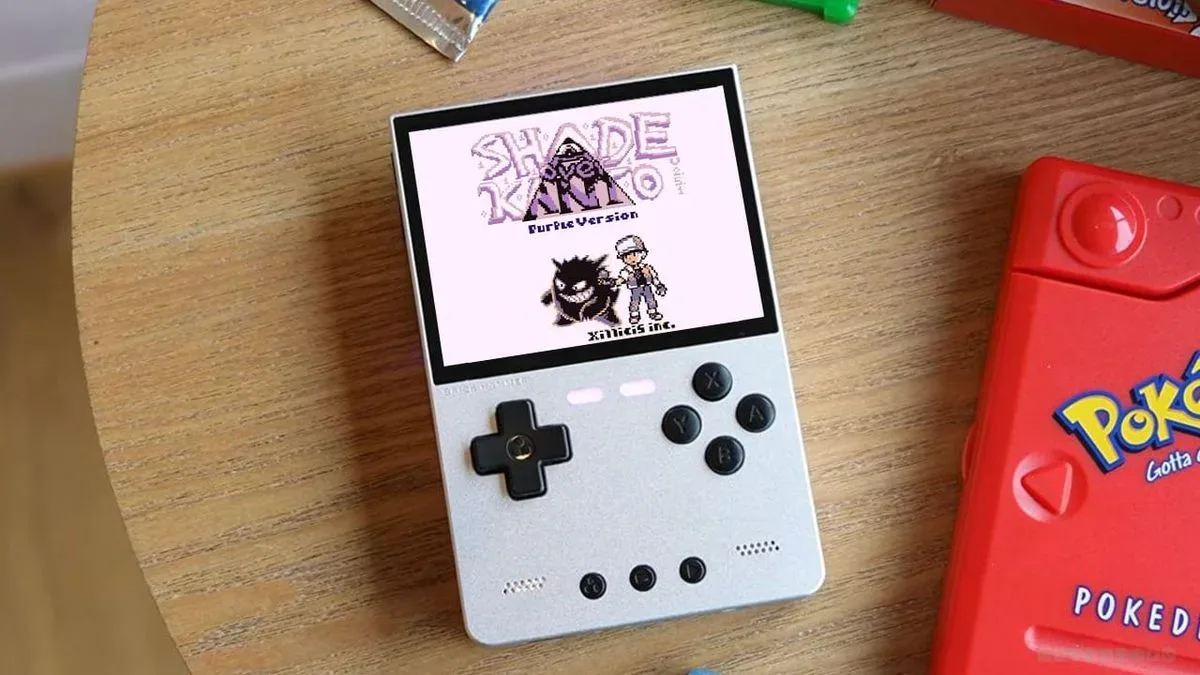
Shade over Kanto is a new ROM hack built around Pokémon Blue, taking the original Game Boy journey in a notably stranger direction. Created by xillicis with members of the ROM-hacking community, the project replaces the familiar tone of a straightforward regional adventure with a haunted storyline tied to Professor Oak, adds a substantially expanded Pokémon roster, introduces new types and moves, and includes an optional Nuzlocke mode for players who want the stakes turned up.
It is a conspicuous choice of foundation. Fan projects often build from later Pokémon games, but Shade over Kanto deliberately uses Pokémon Blue and retains a Gen 1 visual presentation. That creates the central appeal: a hack with the appearance of an early Game Boy Pokémon game, but with creatures, moves and mechanical ideas that reach beyond the original generation.
A Kanto mystery that puts Professor Oak in the middle
Shade over Kanto sends players across Kanto to investigate a threat haunting Professor Oak. That premise gives Oak a more active narrative role than he has in the original game. In vanilla Pokémon Blue, he is crucial at the outset as the professor who gives the player their starter Pokémon, but the adventure is not chiefly about him. The hack’s story instead makes the unanswered question around Oak part of the reason to travel through the region.
The available description presents the result as a Halloween-timed tale, with deliberately unsettling subject matter rather than a minor dialogue rewrite. It also signals a willingness to be irreverent: the game contains crude humour and has been described as carrying the sort of content that would have felt out of place in the original release. Players expecting a clean, all-ages reproduction of the Game Boy script should therefore treat the project as a tonal remix, not a preservation-minded edit.
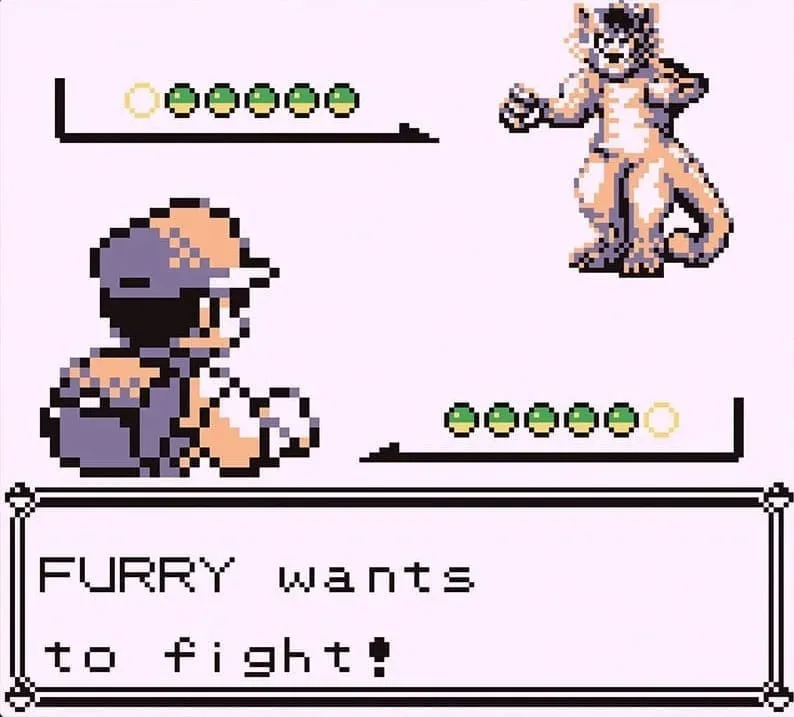
One reported encounter illustrates the game’s unpredictable style: players may come across a challenger identified as a “Furry.” Without more detail on that scene, it is best read as an example of the hack’s comedy and eccentricity rather than a statement about a newly documented gameplay system. Still, it neatly communicates that Shade over Kanto wants to surprise players who assume they already know every beat of Kanto.
What the expanded roster means
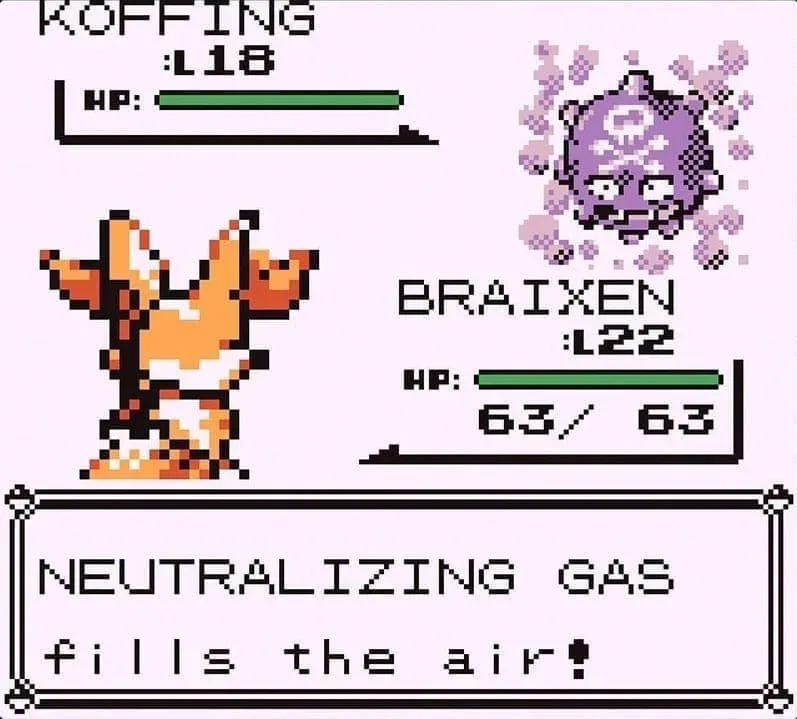
The hack contains more than 100 new Pokémon, alongside new Pokémon types and new moves. Those additions matter because the original Gen 1 games were designed around a far smaller pool of species, types and battle options. Bringing later-generation Pokémon and moves into a Gen 1-style presentation gives the project a broader set of possible team combinations while maintaining the instantly recognizable graphics of the Game Boy era.
A ROM hack is a fan-made modification of a game’s software data. Such projects can alter writing, maps, encounters, battle data and other game content, depending on their scope. Here, the stated focus is not just on a new script: the expansion of Pokémon, types and moves indicates that the battle and collection side of the adventure has been reworked as well.
“New types” is particularly significant in Pokémon terms. A type is the elemental or thematic classification attached to a Pokémon or move, such as Water or Electric in the original games. Types influence battle matchups, including what attacks are especially effective, resisted or otherwise interact differently. Any added types can therefore change how players assess opponents and construct a party. The supplied information does not specify the complete type list or individual balance changes, so prospective players should avoid assuming exactly which later-generation mechanics have been imported.
The same restraint applies to the new moves and the enlarged roster. More options do not automatically reveal which Pokémon appear where, how evolutions work, or which moves are available to each species. What can be said is that Shade over Kanto has been positioned as a more varied Pokémon Blue experience rather than an exercise in keeping the original’s boundaries intact.
Challenging Gym Leaders and a high-pressure ruleset
Shade over Kanto also advertises an “all-star” lineup of challenging Gym Leaders. Gym Leaders are the major badge-holding opponents who structure a traditional Pokémon campaign. They are important because they often function as progress gates: beating them moves the player further through the region, while their teams encourage players to consider levels, move coverage and type matchups rather than relying on a single favourite Pokémon.
In a hack that adds new Pokémon, moves and types, tougher Gym fights can do more than increase difficulty. They can make players engage with the expanded toolbox. A player who comes in expecting the familiar solutions from Pokémon Blue may need to reassess their approach if the opponent roster and available battle mechanics no longer line up with memories of the original game.
For those seeking an even harsher run, the game includes a Nuzlocke mode. Nuzlocke is a community-created style of Pokémon challenge generally associated with limits on catches and permanent loss after a Pokémon faints. The specific rules and implementation can differ from one version or player-made ruleset to another. Shade over Kanto’s description confirms a Nuzlocke mode, but does not detail its exact restrictions, so players should check the hack’s own documentation before planning a run around assumed rules.
That distinction is useful. A difficulty option that is officially integrated into a hack may enforce rules automatically, offer configuration choices, or simply frame a recommended challenge. Until its mechanics are spelled out, it is safer to view Nuzlocke mode as a promise of a more demanding way to play, not as a guarantee of any one familiar rules package.
Why Pokémon Blue is the point, not merely the base
Using Pokémon Blue is more than a technical footnote. The Game Boy look is part of the project’s identity. The appeal described for Shade over Kanto is the contrast between Gen 1 graphics and material that would never have appeared in the original game’s standard version: Pokémon and moves from different generations, a mystery-driven story around Oak, deliberately crude jokes and a Nuzlocke option.
That contrast should be especially attractive to players who know Kanto’s broad geography and story rhythm but want an adventure that does not merely ask them to repeat it. A new narrative threat can make familiar travel routes feel like part of a different journey, while new combat content challenges the assumption that old visual hardware must mean old strategic limits.
The project is also explicitly presented as a human-made community effort, with no AI used in its creation. In this context, that is a statement about authorship and process: the hack credits the work of xillicis and fellow ROM-hacking community members who share an affection for Pokémon Blue. It does not, by itself, establish details about the production pipeline beyond that claim, but it clearly frames the release as a traditional fan-development collaboration.
What players should know before patching
Shade over Kanto is distributed as a patch intended to be applied to a copy of Pokémon Blue. Patching means modifying compatible game data with the fan project’s changes rather than treating the hack as a wholly separate commercial release. Anyone interested should read the project’s instructions carefully and make sure they understand the required process before proceeding.
It is also worth setting expectations correctly. This is not simply Pokémon Blue with a few extra encounters. Its reported feature list covers story, humour, creatures, types, moves, Gym challenge and a dedicated high-difficulty play option. The tone may be the deciding factor for some players: the haunted Oak hook and adult-leaning jokes are features, not incidental additions.
For readers interested in the broader technical side of fan-maintained game software, experimental Vita3K development snapshots offer a separate example of how enthusiast communities continue to build and refine tools around game platforms. Shade over Kanto is a different kind of project—a content modification rather than an emulator—but both reflect the continuing hands-on interest in game software beyond official releases.
A deliberately unfamiliar trip through a familiar region
Shade over Kanto’s strongest hook is its collision of recognizable and unexpected elements. Kanto, Professor Oak and Game Boy-era visuals provide the immediate sense of familiarity. The haunted plot, the expanded pool of more than 100 Pokémon, new types and moves, difficult Gym Leaders and Nuzlocke mode ensure it is not asking players to relive the same adventure unchanged.
For Pokémon Blue fans looking for a fan-made campaign that embraces both retro presentation and a much less traditional sensibility, that combination is the reason to pay attention. Just do not go in expecting a gentle nostalgia trip: the stated goal is a stranger, tougher and more mature detour through Kanto.