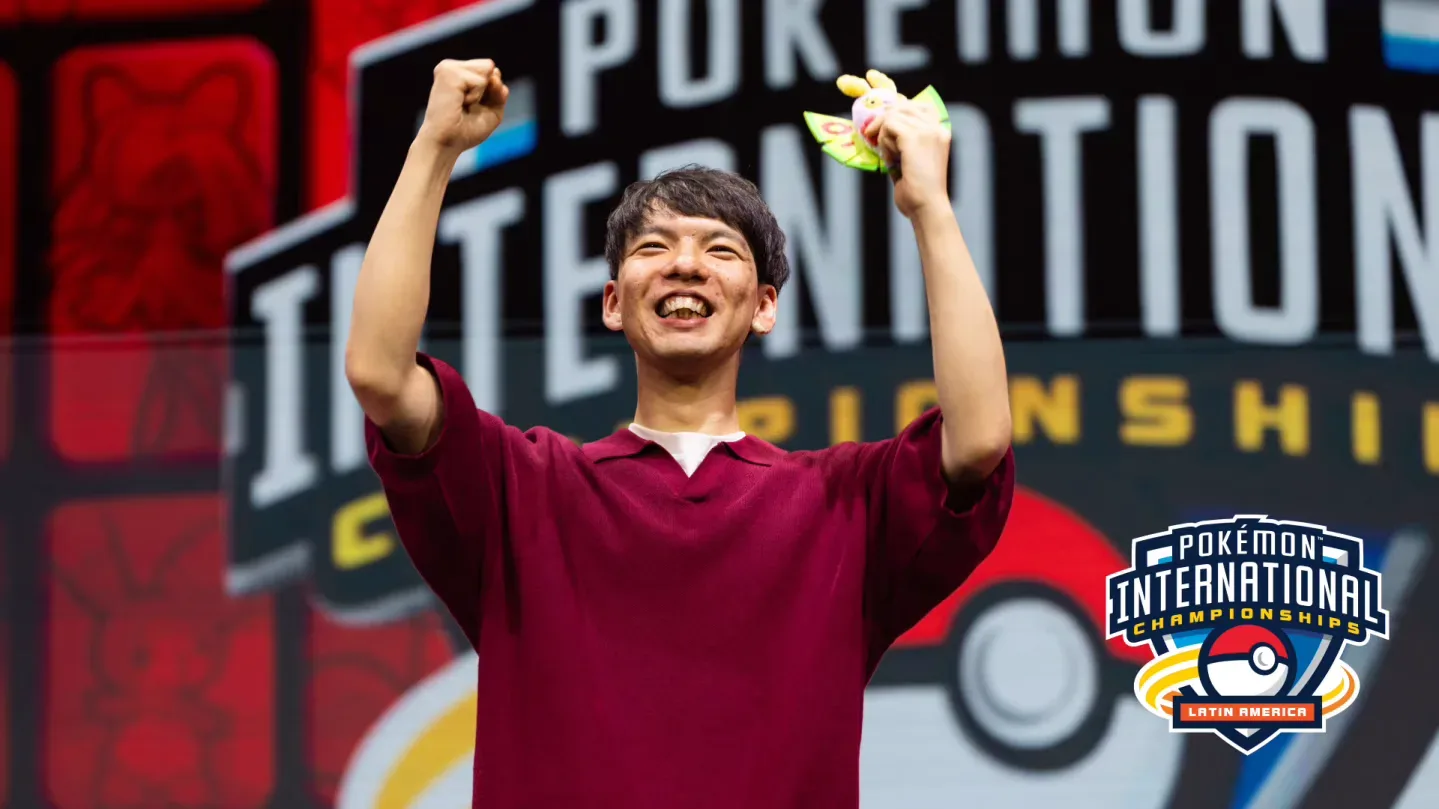
The 2027 Latin America International Championships are finished, with champions decided across Pokémon Video Game Championships (VGC), the Pokémon Trading Card Game (TCG), and Pokémon GO. But the tournament’s most revealing stories are often found a turn or two before the trophy presentation: a well-read switch, an apparently losing position turned into a win condition, or a run through elimination that refuses to stop.
LAIC was also the first International Championships event to include the Mega Evolution—Delta Reign expansion in the TCG and Mega-Evolved Pokémon with adjusted Combat Power, or CP, in Pokémon GO. The formats supplied plenty of new material, yet the standout sequences were not simply a parade of new cards or familiar favourites. They showed how competitive Pokémon rewards preparation while leaving room for nerve, calculation and some wonderfully cruel timing.
Here are the pivotal moments from São Paulo, plus what they say about each competitive format.
VGC: reading a switch can decide everything
One high-profile VGC encounter paired Emilio Forbes with Yuma Kinugawa, the previous year’s LAIC champion. Forbes landed a decisive Low Kick into Kinugawa’s Tyranitar as it switched in, scoring a one-hit knockout.
That description contains much of why doubles VGC is such a captivating spectator game. A switch is meant to reposition safely: it can alter matchups, absorb an attack with a more suitable Pokémon, or preserve a threatened piece. Calling that switch converts a routine attack into a major swing. Forbes did not merely have Low Kick available; he selected it into the correct target at the correct moment.
Why Tyranitar mattered: Low Kick is a Fighting-type move whose power is associated with the target’s weight. Tyranitar is a notably heavy Pokémon, so it is a natural target for the move. More importantly, the knockout came on the incoming turn. The play denied the intended defensive repositioning and gave Forbes the better of a meeting between two established competitors.
The LAIC final then produced a different kind of VGC finish. Masahiro Taoka used Perish Song at the pivotal moment after Forbes switched out Farigiraf. The move ultimately secured Taoka the 2027 VGC Latin America Championship, as Forbes’s Pokémon succumbed to Politoed’s song.
Perish Song is not about winning through immediate damage. It creates a countdown that threatens Pokémon remaining on the field, changing the problem both players must solve. In practical terms, it forces the opponent to consider how to escape the timer, whether they have the switches and board position to do so, and what they must sacrifice if they do not. Taoka had not taken the opening lead, making the timing of the move even more meaningful. He identified the point at which the switch created an opening and transformed a difficult game into a title-clinching position.
The Mega Evolution field was broader than the chatter suggested
Mega Charizard Y and Mega Floette had attracted discussion entering the event, but LAIC’s Regulation Set M-C results point to a more varied VGC environment than that conversation alone would imply. Twelve Mega-Evolved Pokémon reached at least a 5% usage rate in Phase Two. Across the teams of the Top 4 Masters Division players, there were eight different Mega-Evolved Pokémon.
Usage rate is simply the share of teams or appearances associated with a Pokémon in the relevant stage; it is a useful signal of what players expect to be strong and broadly dependable. It is not identical to a win rate, nor does it settle which Mega Evolution is best. Still, twelve options reaching that threshold, followed by eight represented among four top teams, is meaningful evidence that players found multiple viable approaches.
For viewers, that diversity makes scouting more demanding and broadcasts less predictable. For competitors, it means preparing only for the loudest perceived threats is a risky shortcut. The top of a tournament can reward a flexible core, a less common Mega choice that fits a precise game plan, or simply the ability to recognize the opponent’s route to positioning before it arrives.
The TCG: losing a Pokémon can be the winning move
The TCG’s sharpest tactical moment came when Shinnosuke Sato appeared to have Metagross trapped in the Active Spot against Jay Medeiros. Instead of treating the situation as a dead end, Sato played Gravity Mountain to knock out his own Metagross and set up Mega Excadrill ex for the game-winning knockout.
To newcomers, knocking out one of your own Pokémon sounds like the sort of line that gets a judge called over, a decklist inspected, and a concerned friend quietly asking whether you need a snack. In a card game built around limited resources and board states, though, a self-knockout can be an intentional repositioning tool. If an Active Pokémon is unable to retreat or otherwise escape an unfavourable spot, removing it may be preferable to allowing the opponent to dictate the next turn.
The important result is not merely that Metagross left play. Gravity Mountain altered the board in a way that enabled Mega Excadrill ex to take the decisive knockout. It is a compact illustration of the difference between material and tempo. Material is what a player has on the board; tempo is who gets to dictate the sequence of meaningful actions. Sato gave up material, but gained the board state needed to end the game.
That sort of line is particularly valuable for players studying high-level matches. When assessing a difficult board, the question is not always “How do I save this Pokémon?” Sometimes the better question is “What has to change for my winning attacker to take the final knockout?” The answer can be less intuitive than a retreat, an attack or a conventional recovery play.
A Grand Finals comeback built in two turns
Vinícius Fernandez’s Grand Finals turnaround against Damian Fernandez Urroz offered another lesson in identifying the exact route still open. Fernandez was down a game, and Urroz needed only one more Prize card. A Prize card is a reward taken after knocking out an opposing Pokémon; requiring just one means the player is on the brink of winning. Fernandez needed a response immediately to avoid the series ending.
Across two turns, he found one. First, N’s Zorua knocked out Dusclops, even though that Pokémon rarely attacks. Then Special Red Card disrupted Fernandez’s hand. Hand disruption refers to effects that interfere with a player’s available cards, limiting the reliability of a planned sequence. Despite that obstacle, Fernandez found both Boss’s Orders and a Darkness Energy.
That combination allowed him to bring Mega Kangaskhan ex into the Active Spot and use Pecharunt ex’s Irritated Outburst for a one-hit knockout and exactly 300 damage. The result forced a third game. Fernandez then went on to win LAIC.
The drama is easy to reduce to a clutch draw, but the two-turn sequence deserves a little more credit than that. N’s Zorua attacking first established the necessary survival path, while the later cards converted it. High-level TCG games frequently hinge on recognizing unusual attackers and narrow damage totals before the opportunity disappears. Here, a rarely attacking Zorua and a precisely calculated 300 damage were not side notes. They were the foundation of a championship comeback.
The event also had room for a less tactical but no less memorable TCG pairing: 2024 World Champion Fernando Cifuentes met his brother Marco Cifuentes in Swiss Round 13. The match included Fernando taking a Jumbo Ice Cream from Marco’s hand, proving that a family rivalry can retain its essential sibling energy even under tournament lights. The provided highlight leaves the winner for the broadcast to reveal, which is fair: a little bracket suspense is healthier than letting every result escape into the wild.
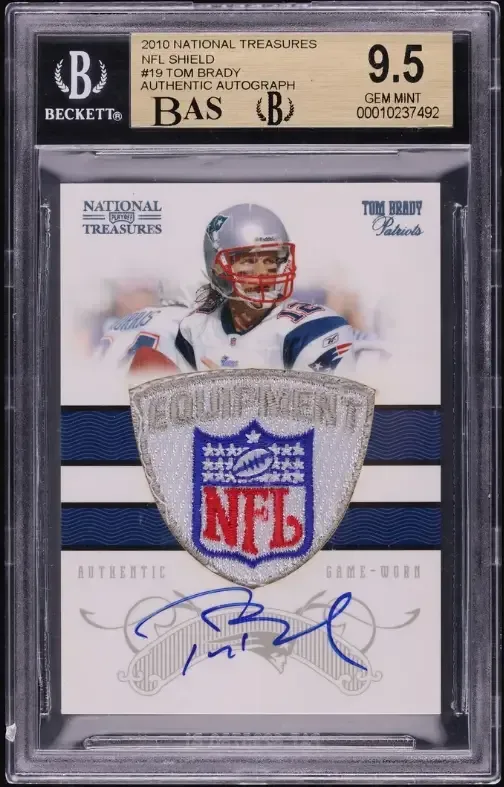
Competitive card games turn moments into both records and objects of memory. For a separate angle on how on-field competition can become cardboard history, see this look at NFL Thanksgiving performances that became memorable football cards.
Pokémon GO: surviving on one HP and surviving the lower bracket
Pokémon GO’s LAIC highlights captured two forms of endurance. In one match, PvpDavid07’s Lopunny narrowly stayed alive and swept all three of CoIin6ix’s Pokémon. The performance came without Mega Mawile, underscoring that a match can turn on the Pokémon actually preserved long enough to finish the job rather than the imposing option waiting in reserve.
One HP is the cleanest possible visual shorthand for pressure in a battle game. There is no cushion for an error and no margin left to absorb another hit. A sweep—one Pokémon defeating the opposing side’s full team—is already a striking outcome; doing it while barely hanging on makes it the kind of finish that spectators remember without needing a spreadsheet.
The tournament’s larger Pokémon GO story belonged to OutOfPoket. He won the event after climbing out of the Loser’s Bracket, taking 15 consecutive matches along the way. He also became the first Pokémon GO competitor to win both the North America International Championships and the Latin America International Championships.
A Loser’s Bracket gives a player who has lost an earlier series another path through an elimination stage, but it demands sustained perfection from that point onward. Fifteen straight wins is not one hot finish; it is an extended refusal to give an opponent the final opening. The landmark is twofold: the scale of the comeback run and the fact that it completed a North America-and-Latin America International Championships double no other Pokémon GO competitor had achieved.
What LAIC’s best sequences actually show
Across three games with dramatically different rules, the common thread was not blind aggression. Forbes anticipated a switch. Taoka understood when a countdown would become inescapable. Sato converted a self-knockout into a winning position. Vinícius Fernandez assembled a narrow sequence while facing a final-Prize threat and hand disruption. PvpDavid07 protected a sliver of health long enough for Lopunny to clear a team, while OutOfPoket made one loss the starting point of a 15-match response.
That is the useful takeaway for anyone watching competitive Pokémon beyond the immediate highlight: momentum is not simply a measure of who is ahead on the board. It can be hidden in a predicted defensive choice, in a timer, in the attacker that becomes available after a sacrifice, in a card still findable after disruption, or in the composure to play one more elimination match.
LAIC introduced a new TCG expansion and adjusted Mega-Evolution CP to the international stage, but its most memorable moments remained intensely human: the courage to pick the awkward line, the awareness to see it, and, in one Swiss-round case, the confidence to steal your brother’s ice cream on camera.